


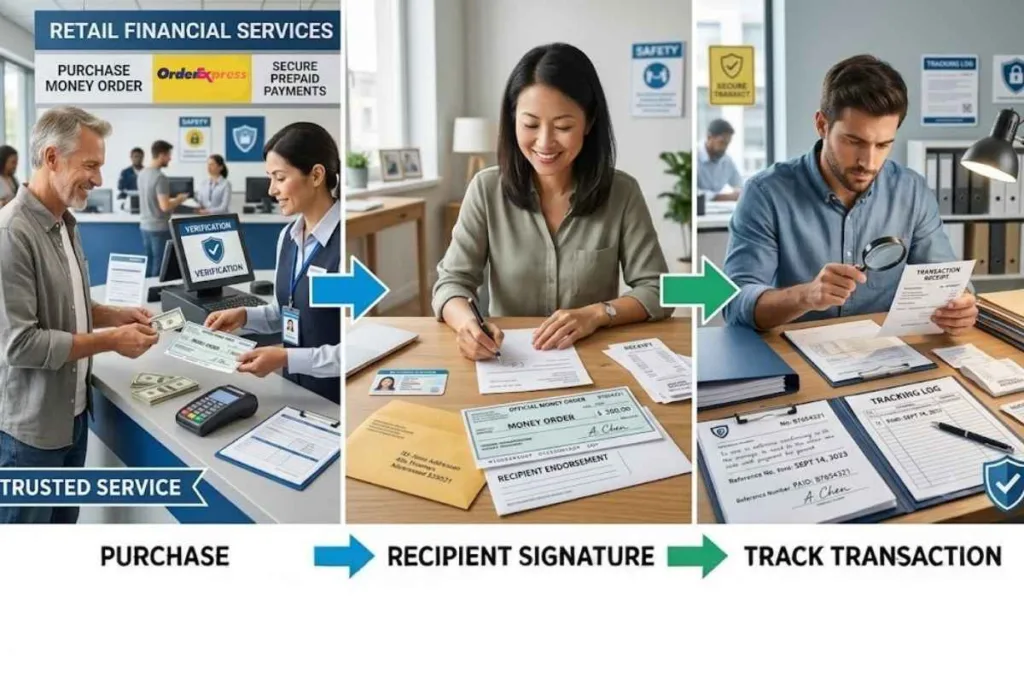
Money orders remain a widely used payment method for people who need a secure way to send or receive funds. Whether you need to pay a bill, make a purchase or send money without using a personal check, understanding how money orders work can help you complete your transaction with confidence. Customers can explore available services through Order Express retail financial services when preparing for a transaction.
Whether you are purchasing your first money order, replacing a lost one, or looking for a secure payment method without using a personal check, understanding the process can help you avoid delays and complete your transaction with greater confidence. This guide explains where to buy a money order, how to fill one out correctly, how to cash it, how tracking works, and practical tips to help protect your transaction.
A money order is a prepaid payment instrument that allows you to send a specific amount of money to a recipient. Unlike personal checks, money orders are funded before issuance, which may make them a practical option for certain transactions.
Understanding Money Orders And When To Use Them
Money orders provide a structured way to make payments when cash, checks or digital payment methods may not fit your needs.
What A Money Order Does
A money order functions as a prepaid financial instrument issued for a specific dollar amount. The purchaser pays the value of the money order plus any applicable fees at the time of purchase.
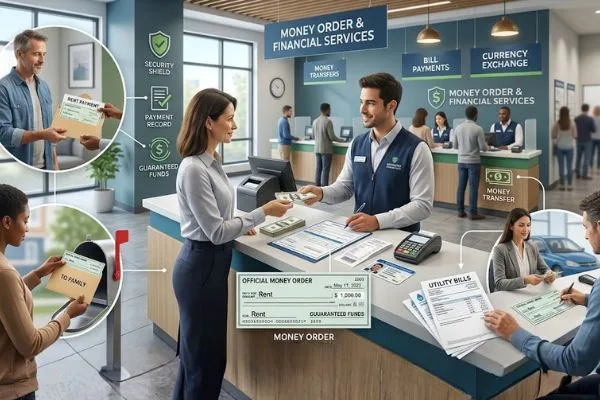
Common uses include:
- Paying rent
- Sending money to family members
- Paying utility bills
- Making purchases that require guaranteed funds
- Completing transactions without a personal checking account
Many customers who use money orders also rely on other retail financial services, including money transfer and currency exchange solutions.
Why Customers Choose Money Orders
Many consumers choose money orders because they provide a documented payment method without requiring a traditional bank account.
A money order may help when:
- A recipient does not accept personal checks.
- You want a payment record.
- You prefer not to carry large amounts of cash.
- You need a payment option that is widely recognized.
Many customers spend time comparing money order service providers and transaction requirements before deciding where to purchase a money order.
Where Money Orders Fit Into Everyday Financial Services
Money orders remain part of a broader financial services ecosystem. Many locations that offer money orders may also provide money transfer services, bill payment options and currency exchange services.
For customers comparing financial service providers, understanding how different transaction types work together can make it easier to choose the right service for a specific need. Some providers also offer additional retail financial services that may support related transaction needs.
Where To Buy A Money Order Near You
Many customers search online for phrases such as “money orders near me,” “where can I buy a money order,” or “money order locations near me” when looking for a convenient same-day payment option.
Common Places To Purchase Money Orders
Money orders are available through various financial service providers and retail locations.
Depending on your area, options may include:
- Money service businesses
- Retail financial service centers
- Grocery stores
- Convenience stores
- Check cashing locations
- Certain financial institutions
Availability, limits and fees may vary by location.
Customers searching for where to buy a money order during time-sensitive situations may notice that service availability, transaction limits and operating hours differ between providers.
What To Bring Before Visiting A Location
Preparing ahead of time can help reduce delays.
Before purchasing a money order, consider bringing:
- A valid government-issued photo ID when required
- Payment funds
- Recipient information
- Any supporting documentation requested for larger transactions
Identification requirements may vary based on transaction amount, service type and applicable regulatory obligations.
Financial service providers may collect identification and transaction information for certain transactions. Requirements can vary based on transaction size, service type and applicable Bank Secrecy Act (BSA) and FinCEN requirements for regulated financial institutions.
How To Fill Out A Money Order
Completing a money order accurately helps reduce processing delays and ensures the payment reaches the intended recipient.
Before submitting your money order, carefully review each required field.
Typical information includes:
- Recipient (Pay To)
- Purchaser name
- Purchaser address (when requested)
- Signature
- Memo or account number, if applicable
Always write clearly using permanent ink and avoid making corrections after completing the form.
Before handing the money order to the recipient or mailing it, verify that all information is accurate and keep your receipt in a secure location for future reference.
Because individual issuers may use slightly different formats, customers should follow the instructions printed directly on the money order.
How Order Express Supports In-Person Transactions
Order Express operates as a registered Money Services Business (MSB) and follows applicable Bank Secrecy Act (BSA), FinCEN and other regulatory requirements designed to support secure and transparent financial transactions.
In addition to money orders, many Order Express locations offer:
- Money transfer services
- Currency exchange services
- Bill payment solutions
- Other retail financial services
Customers can benefit from checking available services at a nearby location before visiting to confirm availability and transaction requirements.
You can review available locations through the Order Express branch locator.
How To Cash And Manage A Money Order
Many customers want to know how to receive funds safely after receiving a money order.
Preparing To Cash A Money Order
The exact process varies by provider and location.
In general, you may need:
- The original money order
- A valid photo ID
- Any supporting documentation requested by the provider
Some locations may apply verification procedures before releasing funds.
Customers researching where to cash a money order safely and conveniently often compare service availability, identification requirements and transaction limits before visiting a location.
What Can Affect The Cashing Process
Several factors may influence how quickly a money order can be processed.
Examples include:
- Verification requirements
- Location-specific procedures
- Transaction amount
- Condition of the money order
- Provider policies
Because procedures vary, it may be helpful to contact a location in advance if you expect to cash a larger money order.
Keeping Records Of Your Transaction
Good recordkeeping helps support future inquiries.
Consider keeping:
- Purchase receipts
- Tracking information
- Transaction reference numbers
- Copies of related documentation when appropriate
Maintaining records can simplify follow-up if questions arise regarding payment status or transaction history.
Protecting Yourself From Money Order Fraud
Money orders are generally considered a secure payment method, but consumers should remain alert to common fraud schemes.
Consider these best practices:
- Never send a money order to someone you have never met unless you fully trust the transaction.
- Be cautious of online marketplace scams requesting payment by money order.
- Verify payment requests before sending funds.
- Never share receipt or tracking information with unauthorized individuals.
- Keep your purchase receipt until the transaction has been completed.
If you believe you may have been targeted by fraud, contact your money order issuer promptly and report suspicious activity to the appropriate authorities when applicable.

Tracking A Money Order And Understanding Transaction Status
Tracking helps customers determine whether a money order has been processed or paid.
Why Tracking Matters
Money order tracking provides visibility into the transaction lifecycle.
Tracking may help you:
- Confirm issuance details
- Verify transaction status
- Support customer service inquiries
- Locate transaction records
Many customers seek tracking information after sending payments for rent, purchases or family-related expenses.
Many customers rely on money order tracking and payment status verification when monitoring important transactions after sending a payment.
Information You May Need For Tracking
Tracking requests typically require specific transaction details.
Examples include:
- Receipt information
- Transaction reference numbers
- Purchase date
- Dollar amount
Keeping transaction records from the start can make the process easier if follow-up becomes necessary.
Customers looking for ways to confirm whether a money order has been processed successfully often find that retaining receipts and transaction records is one of the simplest preparation steps.
When To Contact Customer Support
If you cannot determine the status of a money order through available tracking channels, customer support may be able to assist.
Before reaching out, gather:
- Transaction details
- Purchase documentation
- Identification if requested
- Any related reference numbers
Having complete information may help streamline the review process. Customers seeking assistance can access Order Express customer support information for service-related questions.
Money Orders, Currency Exchange And Other Financial Services
Customers often use multiple financial services depending on their goals.
How Money Orders Compare With Money Transfers
Money orders and money transfers serve different purposes.
Money orders typically function as prepaid payment instruments. Money transfers generally facilitate the movement of funds between individuals or locations.
The right option depends on the transaction objective, destination and recipient requirements.
Understanding what identification may be requested for certain money order transactions can help customers prepare before visiting a service location.
The Role Of Currency Exchange In International Transactions
Some customers who send money internationally also need currency exchange services.
Currency exchange involves converting one currency into another based on prevailing market conditions and provider pricing.
Exchange rates offered by providers may include a margin or spread that affects final received amounts.
Exchange rates can change throughout the day due to market activity, liquidity conditions and other economic factors. As noted in Federal Reserve exchange rate data, currency values fluctuate over time and may affect transaction outcomes depending on timing.
Customers interested in typical money order costs across different providers should review available fees, service availability and transaction limits before completing a transaction.
Choosing A Trusted Financial Service Provider
When evaluating providers, consider:
- Licensing status
- Service availability
- Transaction transparency
- Customer support options
- Location convenience
- Regulatory compliance practices
Order Express operates as a registered Money Services Business and follows applicable FinCEN-related compliance requirements as part of its financial service operations.
Checking services before visiting a location may help you prepare documentation, understand transaction options and reduce processing delays. Consumer education resources from the FDIC Money Smart program and guidance from the Consumer Financial Protection Bureau on sending money abroad may also help consumers evaluate financial service options.
Key Takeaways
- Money orders provide a prepaid payment method that can support transactions when checks or digital payments are unsuitable.
- Preparing identification, recipient details and payment funds before visiting may help streamline the transaction process.
- Tracking information and transaction receipts can support future status checks and customer service inquiries when needed.
- Exchange rates offered by providers may include margins or spreads that affect final transaction outcomes.
- Licensed financial service providers may apply verification procedures based on transaction type, amount and regulatory requirements.
- Money orders often complement related services such as money transfers, currency exchange and other retail financial solutions.
Frequently Asked Questions
What Is A Money Order?
A money order is a prepaid payment instrument issued for a specific amount and payable to a designated recipient.
Can I Buy A Money Order Without A Bank Account?
Yes. Many money service businesses and retail financial service providers offer money orders without requiring a bank account.
Do I Need Identification To Buy A Money Order?
Identification requirements vary by provider, transaction amount and applicable regulations.
Can I Track A Money Order After Purchasing It?
Many issuers offer tracking options using transaction details and receipt information retained at purchase.
Are Money Orders Available At All Financial Service Locations?
No. Availability varies by provider, location and service offerings. It is helpful to confirm services before visiting.
Can A Money Order Expire?
Policies vary by issuer. While many money orders do not expire, some issuers may charge service fees over time. Customers should review the issuer’s terms and conditions.
What Happens If I Lose My Money Order Receipt?
The receipt often contains information used for tracking or requesting assistance. Keeping it in a safe place may simplify future inquiries.
Can Someone Else Cash My Money Order?
Requirements vary by issuer. The named recipient may need to present valid identification before funds are released.
Can I Replace A Lost Money Order?
Many issuers offer replacement procedures for eligible money orders, although documentation and processing requirements vary.
Conclusion
Money orders continue to serve as a practical payment option for many consumers. They provide a structured way to send funds, make payments and maintain transaction records while supporting a variety of everyday financial needs. Understanding where to buy a money order, how to cash one and how tracking works can help you prepare for a smoother transaction experience. Customers should also consider related services such as money transfers and currency exchange when evaluating their financial needs. By choosing a reputable provider, reviewing transaction requirements and keeping accurate records, consumers can approach money order transactions with greater clarity and confidence.
Whether you’re paying rent, sending funds to family, or making a purchase that requires guaranteed payment, understanding how money orders work can help you complete transactions more securely. Preparing the required documentation, following issuer instructions, and keeping your records organized can reduce delays and make future tracking easier.
Find a nearby Order Express location or review current exchange rates to plan your transaction with greater confidence.
Disclaimer: This content is for informational purposes only and does not constitute financial advice. Exchange rates, fees and availability may vary by provider, transaction type and location.

John is a Content & SEO Specialist who enjoys breaking down complex financial topics, like cross-border payments and money transfers, into content that’s easy to understand. He focuses on creating practical, search-driven content that helps people find answers and make informed decisions.


