



A typical money order costs less than $1 at many retail stores and post offices, while banks often charge between $5 and $10. Most providers also limit individual money orders to about $1,000, making money orders a practical option for paying bills, sending payments, or completing purchases without using a personal check.
Before buying a money order, compare provider fees, purchase limits, and available services. Understanding these differences can help you choose the most cost-effective option while avoiding unnecessary expenses. For a complete overview of buying, filling out, cashing, and tracking a money order, see our Money Order Guide: How to Buy, Fill Out, Cash, and Track.

Typical Money Order Fees by Provider
Although fees vary by location and provider, the following ranges are common:
| Provider | Typical Fee | Typical Maximum Amount |
| Retail stores | Often under $1 | Around $1,000 |
| USPS | Tiered pricing | Around $1,000 |
| Banks and credit unions | Approximately $5–$10 | Varies by institution |
Actual pricing, limits, and services vary by provider and location, so always confirm current fees before purchasing.
Comparing Costs of a Money Order
When comparing money order providers, you’ll notice that prices can vary depending on where you buy them. Retail stores often offer the lowest fees, while banks typically charge more. The purchase amount, provider, and location may all influence the final cost.
Before purchasing, ask about:
- Current money order fee
- Maximum purchase amount
- Accepted payment methods
- Replacement or tracking fees
- Available customer support
Comparing these details before visiting can help you avoid unnecessary expenses.
For additional consumer guidance on payment options, you may also review educational resources published by the FDIC.
Where Can You Buy a Money Order?
Money orders are available from several types of providers. Although the basic product is similar, fees, limits, and available services can differ.
Order Express Locations
Order Express sells money orders through its branches and authorized agents at fees that are competitive with retail and postal providers. While many locations charge under a dollar, pricing may vary by region.
As a registered Money Services Business (MSB), Order Express must also follow strict compliance rules:
- ID Requirements: Federal law requires ID for purchases of $3,000 or more within 48 hours; in Arizona and Oklahoma, ID is required starting at $1,000 in 24 hours.
- Reporting:
- Federal rules: Money Services Businesses are required to file Suspicious Activity Reports (SARs) for suspicious transactions of $2,000 or more, or $5,000 when identified through clearance records such as money order logs or traveler’s check records.
- Order Express policy: The SAR threshold is $2,000 for covered MSB activities, with a 5 year retention period. Check cashers are generally not required to file SARs but may file voluntarily under safe harbor.
- Structuring Prohibited: Splitting purchases to avoid fees or ID rules is not allowed.
This balance of low-cost fees with high compliance standards makes Order Express a secure and affordable alternative when comparing providers.
Retail and Community Outlets
Many grocery stores, pharmacies, convenience stores, and large retail chains sell money orders through their customer service counters.
These locations frequently offer some of the lowest money order fees, often costing less than one dollar. Because pricing and services vary by retailer, it’s helpful to compare nearby locations before making your purchase.
Some retailers also provide additional financial services such as check cashing or money transfers. Availability and pricing vary by location, so it’s always worth confirming services before visiting.
Post Office Locations
Post offices remain one of the most popular places to purchase money orders.
Postal money orders generally carry modest fees and provide reliable tracking options. Pricing often depends on the amount purchased. Smaller money orders may cost less than larger ones, although both typically remain affordable.
International postal money orders may involve different pricing or destination-specific processing requirements.
Because of their reliability and nationwide availability, post offices continue to be a trusted choice for customers making secure payments.
Banks and Credit Unions
Banks and credit unions also issue money orders, although their fees are generally higher than those charged by retail stores or post offices.
Many financial institutions charge approximately $5 to $10 for each money order. Some banks waive these fees for customers who maintain qualifying checking or premium accounts.
Although banks often cost more, they may still be the preferred choice for customers who already conduct most of their financial activities through their bank.
If you’re planning a larger payment, ask your financial institution whether a cashier’s check may be a more practical alternative.
What Affects the Cost of a Money Order?
Several factors influence how much you’ll pay for a money order, including:
- The provider you choose
- Your location
- The purchase amount
- Optional services such as tracking or replacement
Although these differences are usually small, comparing providers before buying can help you save money.
If you’d like to learn why these differences exist, including how provider policies and state requirements influence pricing, read Why Some Money Orders Actually Cost More Than Others.
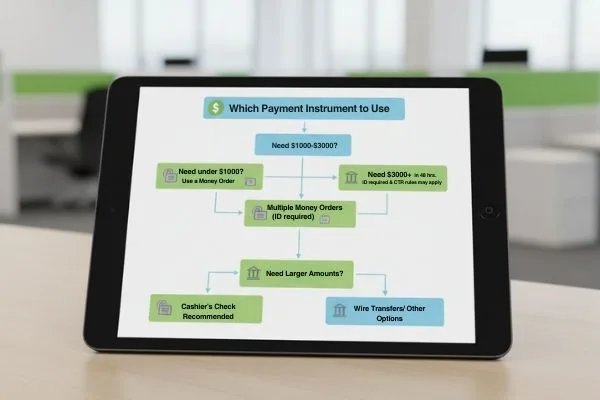
Limits, Rules, and Alternatives
The cost of a money order is only one part of the decision. Purchase limits, identification requirements, and available payment alternatives can also affect which option is best for your needs.
Most providers limit individual money orders to approximately $1,000, so larger payments often require multiple money orders. Before purchasing several money orders, ask about any additional fees or provider-specific requirements.
Some larger purchases may also require customers to present valid identification or provide additional information, depending on the purchase amount, applicable regulations, and provider policies.
Planning ahead can help you avoid delays and ensure you bring everything needed to complete your transaction.
Federal rules: A Currency Transaction Report (CTR) must be filed for cash-only transactions exceeding $10,000 in a single business day, aggregated across locations. The report must be filed within 15 days and retained for 5 years. Non-cash instruments alone, such as checks, do not trigger a CTR.
Order Express policy: Order Express follows the federal CTR requirements and files all CTRs through FinCEN’s BSA E-Filing system.
Purchase Maximums and ID Requirements
Purchase Maximums
Although limits vary slightly by issuer, most money order providers cap individual money orders at around $1,000.
For example:
- $500 payment → one money order
- $950 payment → one money order
- $2,000 payment → usually two money orders
Because each money order carries its own fee, multiple purchases may increase your total cost.
If you regularly make larger payments, compare the total cost of several money orders against other payment methods before making your purchase.
Federal rules: Financial institutions must obtain and record identification for purchases of monetary instruments totaling $3,000 to $10,000 in a single business day. This includes same-day or contemporaneous purchases.
Identification Requirements
Depending on the purchase amount and applicable legal or provider requirements, customers may be asked to provide:
- Government-issued identification
- Name
- Address
- Additional transaction information
These requirements help providers complete transactions safely and comply with applicable obligations.
Always confirm current identification requirements before visiting your preferred provider.
Order Express policy: ID is required when money order purchases total $3,000 within a 48 hour period. Arizona requires ID starting at $900 in 48 hours, and Oklahoma requires ID starting at $1,000 in 24 hours. These rules protect against financial crimes while keeping the service safe for everyday use. Always bring proper identification if you plan to buy several instruments. Review what counts as acceptable IDs before visiting. Larger purchases may also trigger additional reporting requirements under federal law, which providers are obligated to follow.
Providers will ask for valid ID, your address, and other details. These steps are part of Know Your Customer (KYC) regulations, which require financial institutions and their agents to verify identity and maintain accurate records to prevent money laundering and fraud.
Cashier’s Checks for Larger Payments
If you’re making a larger payment, a cashier’s check may be a practical alternative.
Unlike money orders, cashier’s checks are issued directly by financial institutions using the bank’s own funds. Although fees vary, purchasing one cashier’s check may sometimes cost less than buying several individual money orders.
A cashier’s check may be worth considering when paying for:
- vehicles
- real estate transactions
- large purchases
- contractor payments
Quick Tip: If you’re paying several thousand dollars at once, ask whether a cashier’s check would be more practical than purchasing multiple money orders.
Choosing the Right Payment Instrument
The best payment option depends on the amount you need to pay, the available providers, and your preferred level of convenience.
A money order is often a good choice if you:
- need to pay bills
- don’t use personal checks
- prefer a prepaid payment method
- want a widely accepted paper payment
A cashier’s check may be a better option if you:
- need to pay several thousand dollars
- want one payment instead of multiple money orders
- already bank with the issuing institution
Before making your decision, compare:
- total fees
- purchase limits
- convenience
- provider availability
Choosing the right payment method can save both time and money. If sending funds internationally, review remittance transfer rules for consumer protections.
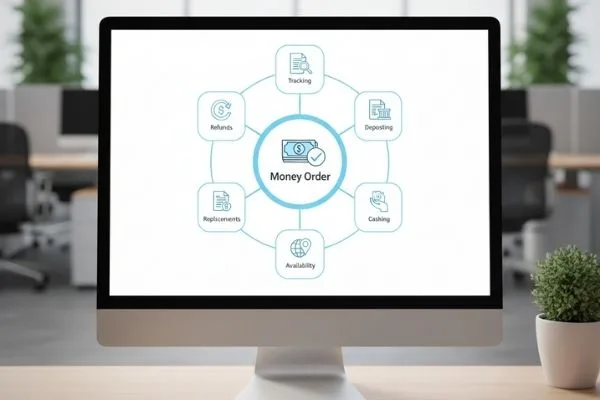
Availability, Extra Services, and Cashing Options
Money orders are widely available, but not all providers offer the same services. Knowing what extra features exist can help you save time and avoid stress. Customers may also explore other services that support day-to-day financial needs.
Refunds, Replacements, and Tracking
After purchasing a money order, you may need additional services from the issuer.
Many providers offer:
- replacement requests
- refunds
- tracking services
- payment verification
Tracking allows customers to determine whether a money order has been cashed. Replacement or refund requests may require proof of purchase and could involve additional fees.
Because policies vary by issuer, ask about these services before completing your purchase. Fraud prevention and reporting options are outlined in FinCEN’s suspicious activity report guidance.
Depositing vs. Cashing
If you receive a money order, you generally have two options.
Deposit It
Depositing a money order into your bank account is often the least expensive option.
Once the funds have cleared, you can use them just like any other deposit.
Cash It
Some providers allow customers to cash money orders immediately.
Fees vary depending on:
- the issuer
- the location
- whether you’re a customer
Check-cashing businesses may also cash money orders, although service fees often apply.
If both options are available, compare any applicable fees before deciding whether to deposit or cash the money order. For more financial literacy tips, review AML Act updates that shape provider practices.
Regional Differences in Pricing
Money order fees are not always identical across every provider or location.
Prices may vary because of:
- local market conditions
- provider pricing
- available services
- optional features such as tracking or replacement
Before visiting a location, consider:
- calling ahead
- checking online
- confirming operating hours
- verifying accepted payment methods
A few minutes of planning can help you avoid unnecessary trips or unexpected fees. Screening requirements may also vary, and issuers must check names against the OFAC sanctions list.
Common Customer Mistakes to Avoid
Money orders are straightforward to use, but a few common mistakes can create unnecessary delays, additional fees, or payment problems. Taking a few extra moments before completing your purchase can help protect both your money and your payment.
Leave No Blank Spaces
Always write the recipient’s name as soon as you purchase the money order. Leaving the payee line blank increases the risk of misuse if the money order is lost or stolen.
Keep Your Receipt
Your receipt contains important information, including:
- Money order number
- Purchase date
- Purchase amount
You’ll typically need this information if you request tracking, a replacement, or a refund.
Use Permanent Ink
Complete your money order using a permanent pen.
Avoid using:
- Pencil
- Erasable ink
Permanent ink helps reduce the risk of alterations and may prevent processing problems.
Double-Check Recipient Information
Before leaving the counter, verify:
- Recipient name
- Payment amount
- Any required reference numbers
Correcting errors after purchase may require additional paperwork or fees.
Plan Ahead
Not every location sells money orders during all business hours, and some providers may have inventory or service limitations.
If you have an important payment deadline, purchase your money order early to avoid unnecessary stress or late fees.
Consider Larger Payment Alternatives
Because most money orders have a maximum purchase amount of approximately $1,000, multiple money orders may be necessary for larger payments.
If you’re making a significant payment, compare the total cost with other available payment methods before purchasing several money orders.
Conclusion
Money orders remain one of the simplest and most affordable ways to make secure payments without relying on personal checks. Whether you purchase one from a retail store, post office, bank, or another authorized provider, comparing fees, understanding purchase limits, and planning ahead can help you make the best choice.
Although prices vary between providers, taking a few minutes to compare costs before buying can help you avoid unnecessary expenses. For larger payments, it may also be worthwhile to compare the total cost of multiple money orders with alternative payment methods such as cashier’s checks.
If you’re ready to purchase a money order, visit your nearest Order Express location to check current availability and fees, or contact Order Express for assistance choosing the payment option that best fits your needs.
Take the next step today, visit your nearest Order Express location and purchase your money order in a secure and affordable manner.
Disclaimer: This article is provided for general informational purposes only. Fees, limits, identification requirements, and service availability may vary by provider, state, and location. Always confirm current requirements before completing a transaction.
Federal rules: ID must be collected for monetary instrument purchases totaling $3,000 to $10,000 in a single business day. CTRs must be filed for cash transactions exceeding $10,000 in a business day. SARs must be filed for suspicious transactions starting at $2,000, or $5,000 when identified through clearance records.
Order Express policy: ID is required when purchases reach $3,000 in 48 hours, with stricter thresholds in Arizona and Oklahoma. Order Express follows all CTR and SAR requirements and maintains a 5 year record retention period.
Always confirm fees and requirements with your local provider.
Frequently Asked Questions
Q1: How much does a typical money order cost?
Many retail stores and post offices charge less than $1 for a money order, while banks commonly charge between $5 and $10. Actual fees vary by provider and location.
Q2: What is the maximum amount for a money order?
Most issuers limit individual money orders to approximately $1,000. Larger payments generally require multiple money orders.
Q3: Do I need an ID to buy a money order?
ID is required if your total purchases reach $3,000 or more within 48 hours under federal rules. In some states such as Arizona and Oklahoma, identification is required for money orders of $1,000 or more within 24 hours. Always confirm state-specific requirements before purchasing.
Q4: Where can I buy a money order?
Money orders are commonly available from:
- Retail stores
- Post offices
- Banks
- Credit unions
- Some check-cashing businesses
Availability varies by provider and location.
Q5: How can I avoid problems with a money order?
To help ensure a smooth transaction:
- Fill it out immediately.
- Keep your receipt.
- Use permanent ink.
- Verify recipient information.
- Confirm provider fees and requirements before purchasing.
Q6: Which Provider Usually Offers The Lowest Money Order Fee?
Retail stores and many post offices often offer lower fees than banks. Comparing providers before purchasing can help you save money.
Q7: Can I Buy Multiple Money Orders?
Yes, If your payment exceeds the provider’s maximum amount, you’ll usually need to purchase multiple money orders. Additional fees may apply for each individual money order.

John is a Content & SEO Specialist who enjoys breaking down complex financial topics, like cross-border payments and money transfers, into content that’s easy to understand. He focuses on creating practical, search-driven content that helps people find answers and make informed decisions.


