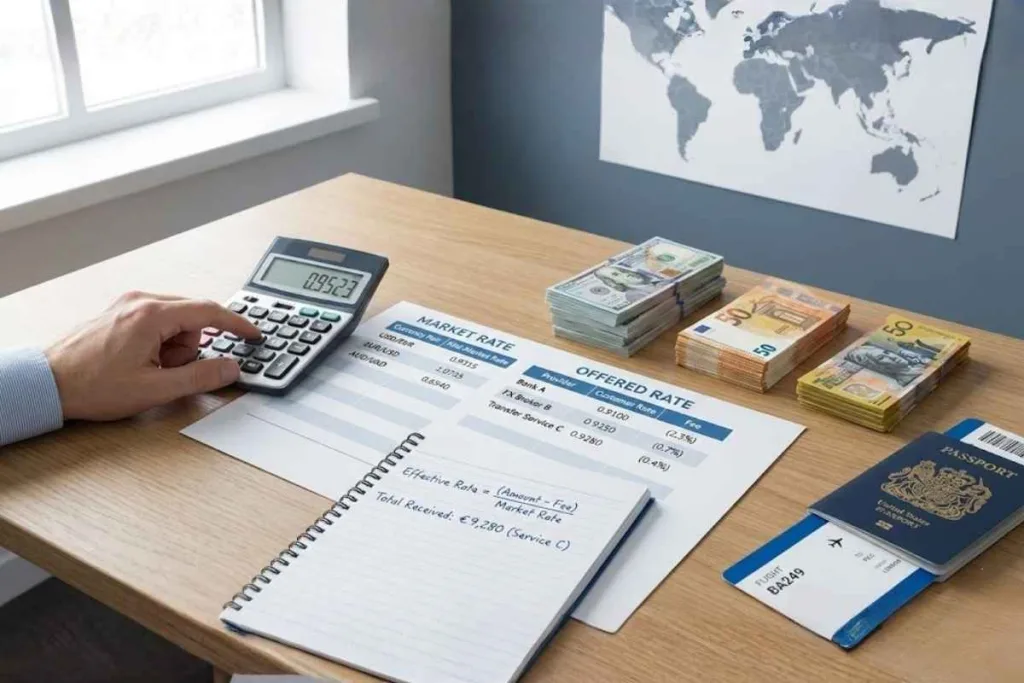
You compare currency exchange rates before buying by separating the real market rate from the offered rate and calculating the total effective cost. These two actions reveal what you truly receive after conversion and prevent hidden losses during everyday transactions.
For remittance transfers, final exchange rates, fees, and applicable taxes are disclosed before payment in accordance with federal regulations. Customers should always review the pre-payment disclosure to confirm the exact amount to be received prior to completing the transaction.
Understanding how to evaluate currency exchange rates helps you make informed decisions when using services such as Order Express currency exchange services.

Analyze The Real Market Rate Versus The Offered Rate
This mechanism focuses on identifying the interbank rate and comparing it with the provider’s quoted customer rate. The difference between these two numbers reveals the embedded margin affecting your transaction value.
Identify The Live Interbank Rate First
The live interbank rate represents the wholesale price banks use when trading currencies between themselves. You can review official benchmarks using Federal Reserve H.10 foreign exchange rate data before initiating your transaction.
The interbank rate acts as your benchmark for evaluating fairness in any quoted exchange rate.
Because providers rarely offer the exact interbank rate, you should treat it as a reference point only. Comparing the benchmark against the quoted rate shows how much margin the provider includes. For broader context on exchange rate oversight, you can review U.S. Treasury exchange rate policy guidance.
Compare The Provider’s Customer Rate Directly
The customer rate is the actual rate applied when you exchange money or complete payment. Providers adjust this rate by adding a spread above or below the interbank level.
To compare effectively, follow these steps:
- Record the current interbank rate from a reliable financial source.
- Note the exact customer rate displayed before confirming your transaction.
- Calculate the percentage difference between the two rates.
This percentage difference represents the provider’s margin built into the currency exchange rate. A smaller gap generally means you receive more foreign currency for the same base amount, which matters when arranging a money transfer service abroad.
Evaluate Timing Before Locking The Rate
Exchange rates fluctuate throughout the day based on market supply and demand. Even minor movements can change your final received amount.
Check rates at least twice within a short window before committing funds. If the rate improves meaningfully, you can choose to complete the transaction at that time, especially when preparing funds through services such as check cashing options.
Comparing rates over a short timeframe helps distinguish temporary volatility from consistent pricing differences.
By analyzing the real market rate against the offered rate, you uncover the first core driver of exchange value. This comparison helps you determine whether the quoted currency exchange rate remains competitive at that moment. You can review Consumer Financial Protection Bureau guidance on sending money abroad.
For a broader overview of how exchange rates function in daily life, review our guide to currency exchange fundamentals for everyday transactions for additional educational context.

Calculate The Total Effective Cost Of The Transaction
This mechanism focuses on determining the actual amount received after all adjustments and conversions occur. The effective rate reflects the true cost of exchanging one currency for another.
Convert The Final Received Amount Back Into A Rate
The most accurate comparison method involves reverse calculating the effective exchange rate from your final payout. This approach accounts for all pricing elements embedded in the transaction and aligns with consumer education principles from the FDIC Money Smart financial education program.
Use this simple process:
- Confirm the exact amount of foreign currency you will receive.
- Divide that amount by the total base currency you are paying.
- Compare the resulting figure with the quoted exchange rate.
If the calculated rate differs from the quoted rate shown before payment, review the disclosed fees and delivery amounts to understand the difference.
The effective rate equals the real outcome of your exchange, not the promotional number displayed.
Assess Percentage Impact On Your Transaction Size
Small rate differences create larger monetary effects as transaction amounts increase. A one percent variance on a higher-value exchange significantly changes the final payout.
Before completing your exchange, estimate the monetary impact of any rate difference. Multiply the percentage gap by your total transaction size to understand potential loss and reinforce consumer awareness supported by the FDIC Consumer Resource Center.
This step transforms abstract rate differences into concrete financial outcomes you can evaluate immediately. Seeing the actual amount at risk strengthens your decision-making confidence before moving forward.
Compare Multiple Providers Side By Side
Comparing at least two providers improves transparency and highlights pricing consistency. Place their quoted rates and calculated effective rates next to each other.
Focus only on the final exchange outcome rather than promotional messaging or interface design. If you need assistance or clarification before transacting, you can reach out through the Order Express contact page for direct support.
Side-by-side comparison clarifies which currency exchange rate produces the highest return after full calculation.
By calculating the total effective cost, you address the second core driver of exchange comparison. Together with market benchmarking, this approach gives you full visibility before purchasing foreign currency.
Key Takeaways
- Compare the live interbank rate with the provider’s customer rate to reveal embedded exchange margins clearly.
- Calculate the effective rate from your final received amount to uncover the true transaction cost.
- Use both benchmarking and effective rate calculations to secure the strongest currency exchange rate available.
Frequently Asked Questions
Q: How Often Should I Check Exchange Rates Before Buying?
A: Check rates at least twice within a short period before transacting. This helps you confirm competitiveness and avoid locking in during temporary unfavorable fluctuations.
Q: Is The Advertised Exchange Rate Always The Rate I Receive?
A: Not always. The effective rate depends on the final amount you receive after conversion. Reverse calculating the payout confirms the true applied rate.
Q: What Is The Fastest Way To Compare Two Exchange Rates?
A: Calculate the effective rate from the final payout for each provider. Then compare those figures directly to identify which offers better value.
Conclusion
Comparing currency exchange rates before you buy requires analyzing both the quoted rate and the total transaction cost. Start by benchmarking the provider’s rate against the mid-market reference to measure pricing spread accurately. Then calculate the effective exchange rate after including every applicable fee or charge. Always compare quotes using the same transaction amount and within the same time window for precision. This structured approach ensures you protect your purchasing power during everyday transactions. When you are ready to exchange, review your numbers one final time and proceed confidently after reviewing pricing transparency and overall value.
Review today’s available rate and confirm all applicable terms before completing your currency exchange transaction.
Order Express is a licensed Money Services Business operating in accordance with applicable federal and state regulations.
Disclaimer: Exchange rates fluctuate and may change between quote and payment confirmation. For remittance transfers, final exchange rates, fees, taxes, and delivery amounts are disclosed prior to payment in accordance with federal law.

John is a Content & SEO Specialist who enjoys breaking down complex financial topics, like cross-border payments and money transfers, into content that’s easy to understand. He focuses on creating practical, search-driven content that helps people find answers and make informed decisions.