


Bitcoin has dominated financial headlines for years. Some call it the future of money, while others see it as a high-risk gamble. Today, bitcoin ATMs are popping up in gas stations, retail shops, and convenience stores, giving more people access to cryptocurrency. This growing visibility brings new questions for everyday users.
Before you consider investing or using Bitcoin, it’s important to understand what it actually is, how it works, and whether it fits into your financial decisions. This breakdown separates hype from reality and gives you a clear view of where Bitcoin stands, how bitcoin ATMs fit into the picture, and what it all means for your money.
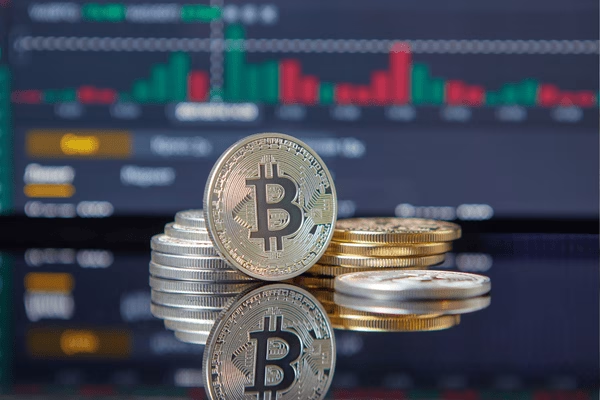
Is Bitcoin Or A Bitcoin ATM Worth Trusting With Your Money?
Bitcoin has grown far beyond its original purpose as a digital currency for peer-to-peer payments. It’s now treated as a financial asset, a tech experiment, and for many, a curiosity found at local kiosks and Bitcoin ATMs. But headlines alone won’t help you understand how it truly functions. What began as a decentralized solution to traditional banking has become something far more complex. Questions about price stability, everyday use, and environmental impact still surround it. If you’re considering investing or using Bitcoin, it’s important to separate practical facts from popular hype. Here’s what you need to know about how Bitcoin works, where it struggles, and what that means for your financial decisions.
Compliance Reminder: Order Express complies with all Bank Secrecy Act (BSA) and Anti-Money Laundering (AML) requirements. When using a Bitcoin ATM, customers may be asked to provide personal identification for certain transactions. All Bitcoin ATM activity is subject to AML monitoring and may be reported to regulatory authorities under federal law.
Start with the Original Purpose of Bitcoin
Bitcoin was introduced in 2009 as a peer-to-peer digital payment system designed to cut out banks and financial intermediaries. It arrived during the global financial crisis, a time when trust in traditional institutions was low and people were open to alternative ways of managing money. The concept was built on giving users more control over their funds through secure and decentralized technology.
The system operates on blockchain, a digital ledger that records every transaction in a transparent and tamper-resistant way. This appealed to users looking for privacy, lower fees, and direct transfers. Key features of Bitcoin included:
- No reliance on banks or centralized payment systems
- Secure and fast peer-to-peer transactions
- Transparent records powered by blockchain
- Greater financial control during uncertain times
Over time, Bitcoin shifted from being used primarily for payments to becoming a speculative asset. Its rise in value attracted investors more than everyday users. While tools like the bitcoin ATM have made access easier, most activity today is driven by investment rather than spending. If you’re considering using or investing in Bitcoin, understanding this shift is essential to making informed decisions.
Understand Why Price Volatility Creates Risk
Bitcoin’s value moves fast and without warning. It went from below $10,000 to over $60,000 in a short span, then fell back to nearly half that amount. Other cryptocurrencies like Dogecoin have moved just as wildly, driven by online buzz rather than economic fundamentals.
Some compare Bitcoin to gold, pointing to its limited supply. Only 21 million coins can ever exist. But unlike gold, Bitcoin has no physical use, no intrinsic value, and no backing from institutions. Its worth is based entirely on market sentiment. If fewer people believe in it tomorrow, its price could drop without warning.
Before you invest, ask yourself whether you’re buying into a system or just hoping to sell at a higher price later.
Know Why Bitcoin Is Not Practical for Payments
Using Bitcoin to pay for everyday things is inefficient and costly. On average, it takes 10 minutes to process a transaction. During busy times, the fees can exceed $20. That makes it inconvenient for common purchases or bills.
The real issue is value instability. A $10 payment could be worth $7 or $15 the next day. This makes budgeting difficult and spending unpredictable. And while many believe Bitcoin is anonymous, that is not always true. Authorities were able to track and recover Bitcoin used in the Colonial Pipeline cyberattack. That case showed that transactions can be traced more easily than most users realize.
Be Aware of Bitcoin’s Environmental Impact
Bitcoin mining is the backbone of how Bitcoin transactions are verified and recorded, but the process comes with serious environmental costs. Each transaction is powered by vast networks of computers racing to solve complex mathematical problems. This requires a significant amount of electricity, placing the system’s total energy consumption on par with entire nations like Argentina or Norway.
The environmental impact goes beyond just electricity. Mining also creates large volumes of electronic waste due to the constant need to upgrade and replace hardware. Here are some key facts that highlight the scale of this issue:
- Mining rigs often become obsolete in under two years
- Electronic waste from Bitcoin mining exceeds that of some small countries
- Most machines cannot be reused and end up in landfills
As the use of cryptocurrency spreads, including through public tools like a bitcoin ATM, it’s important to weigh convenience against long-term sustainability. Mining operations contribute to rising power demand and generate hardware waste that has few recycling options. For those entering the crypto space, understanding the hidden resource costs helps guide smarter, more responsible choices. Anyone considering crypto should look beyond the screen and recognize the physical impact tied to every digital coin.
What Blockchain Innovation Really Means For Everyday Users
Bitcoin may no longer serve its original role as everyday digital money, but it has opened the door to more powerful innovation. At the center of that shift is blockchain, a secure and decentralized system designed to record and verify transactions. This technology is already changing how financial institutions, businesses, and governments approach payments, data tracking, and digital currencies.
Access to cryptocurrency has also expanded through new tools that bring it closer to the public. One example is the bitcoin ATM, which makes buying and selling crypto more convenient in places like retail stores and gas stations. However, convenience alone is not enough. To use these tools wisely, it’s important to understand how blockchain works and where the real risks and opportunities lie.
Focus on the Real Innovation: Blockchain
Bitcoin may not work well as a currency, but the technology behind it is already changing how financial systems operate. Blockchain, the secure ledger that records every transaction, has potential to reduce costs, improve speed, and create more transparency.
People sending money across borders often face high fees and delays. Blockchain could fix that. Businesses could use it to track payments and contracts more efficiently. Central banks are taking notice too. Countries like China, Sweden, and Japan are testing government-backed digital currencies built on similar technology. Even the U.S. is exploring its own version.
This is where the real shift is happening.
What to Do If You’re Watching the Crypto Space
Bitcoin is not a shortcut to wealth or a stable replacement for money. It is expensive to use, slow to process, and risky to hold. But it started a financial shift that is leading to better tools, smarter systems, and lower barriers to access.
If you’re interested in cryptocurrency or digital payments, focus less on the coin and more on the changes happening around it. The smartest move is to stay informed, watch the trends, and explore the practical tools that are already improving how money works.
Consider the Risks Before Using a Bitcoin ATM
Bitcoin ATMs offer fast access to cryptocurrency, but speed should not replace strategy. These machines allow you to buy or sell Bitcoin using cash or cards, often in public spaces like gas stations or grocery stores. While convenient, many users overlook transaction fees, identity verification, and limited support.
Before using a bitcoin ATM, it’s important to compare the fees with other platforms and understand the terms. Some machines charge significantly higher rates than online exchanges. Make sure you know how the process works and whether the machine is run by a reputable operator.
Identification Requirements: To comply with federal regulations, Bitcoin ATM transactions may require you to verify your identity with an acceptable government-issued ID (e.g., U.S. driver’s license, passport, consular card). This requirement typically applies to transactions of $3,000 or more within a 24-48 hour period, depending on the state.
Important Notice: Attempting to break a large transaction into smaller amounts to avoid identification or reporting requirements is called “structuring” and is a federal crime under the Bank Secrecy Act. All transactions are monitored for compliance, and suspicious activity will be reported.
Recognize the Lack of Consumer Protections in Bitcoin Use
Bitcoin operates outside traditional banking rules, which limits the protections you might expect. If you lose access to your digital wallet or send funds to the wrong address, there may be no way to recover them. This creates a higher risk environment, especially for new users.
Unlike credit cards or bank transfers, bitcoin transactions are final and irreversible. There is no central support team or fraud protection built into the system. This makes it essential to double-check every step before completing a transaction.
Finality of Transactions: Bitcoin transactions are final and cannot be reversed. Unlike credit cards or bank transfers, there is no dispute process or fraud protection. Always verify the recipient address and transaction amount before proceeding.
Conclusion
Bitcoin and Bitcoin ATMs continue to gain visibility, but convenience alone should not guide your decisions. While blockchain has introduced valuable innovation in finance, Bitcoin itself carries risks that should not be overlooked. Price swings, environmental concerns, and the lack of consumer protections require careful evaluation.
Using a bitcoin ATM might seem like a simple way to enter the crypto space. However, fees, security measures, and machine operators differ from one location to another. Make sure you understand what you are using and how it affects your money. Cryptocurrency is not a guaranteed path to wealth. It is a financial tool that demands informed and responsible use. If you are thinking about investing, sending crypto, or just learning more, take time to compare options and focus on facts. A clear understanding today can help you avoid mistakes tomorrow.
FAQs
What is a bitcoin ATM and how does it work?
A bitcoin ATM allows you to buy or sell cryptocurrency using cash or a debit card.
Are bitcoin ATMs safe to use for beginners?
They are safe when operated by trusted providers. Always check fees and machine security before starting a transaction.
Why is Bitcoin considered a risky investment?
Bitcoin prices change quickly. It is not backed by assets and is not protected by traditional financial regulations.
Can Bitcoin be used for everyday purchases?
Yes, but slow transaction speeds and high fees make it inconvenient for most daily spending needs.
What should I check before using a bitcoin ATM?
Check the transaction fees, the operator’s reputation, identity requirements, and whether it allows both buying and selling.
Legal & Compliance Notice: This content is for informational purposes only and does not constitute financial or legal advice. Order Express complies with the Bank Secrecy Act (BSA), Anti-Money Laundering (AML) laws, and related state and federal regulations governing money services businesses (MSBs).

Alvin is a Content and SEO Specialist who creates clear and helpful content about money transfers and payment systems. He focuses on making complex topics easy to understand so readers can learn how these services work in everyday situations.


