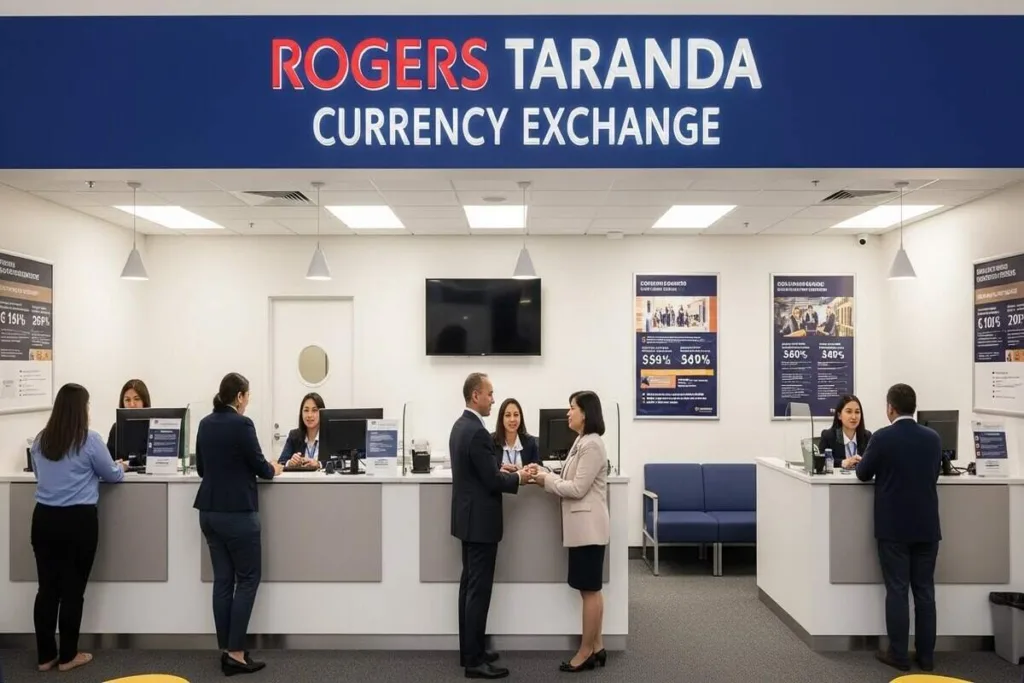
Understanding what happens during a standard currency exchange process helps customers approach transactions with clarity and confidence. Each step, from verification to final delivery, follows structured procedures designed to ensure accuracy, transparency and regulatory compliance. Trusted providers like Order Express follow these structured steps to ensure secure and efficient currency exchange transactions for customers.
Knowing these stages beforehand allows first-time users to avoid confusion, confirm details properly and complete exchanges smoothly. Customers who understand the process can better evaluate exchange rates, fees and required documentation before proceeding with any transaction.
This guide explains the process so you understand exactly what occurs when exchanging currency at a service provider. By learning each step, customers can make informed decisions and experience a smoother, more reliable currency exchange process overall.
For a complete overview, review the Currency Exchange Process And Practical Use For Customers.
How does a currency exchange transaction begin and get verified?
A currency exchange transaction begins with essential checks that confirm identity and ensure compliance with financial regulations. These initial steps protect both the customer and the provider by preventing fraud and verifying transaction legitimacy. Financial institutions follow strict regulatory frameworks as outlined by the Financial Crimes Enforcement Network (FinCEN).
Understanding how verification and rate confirmation work helps customers prepare required documents, ask the right questions and proceed confidently with the exchange process.
Note: Order Express monitors transactions for unusual activity and files Suspicious Activity Reports (SARs) with FinCEN when required, ensuring secure and compliant currency exchange services. Find a licensed Order Express location near you and exchange with confidence.
Identification and compliance checks start the exchange process
A standard currency exchange process begins when a customer presents identification and states the transaction purpose clearly. Service staff verify identity documents to comply with regulations and prevent fraud during financial transactions at exchange counters.
They may request additional information depending on local compliance requirements, especially for higher-value or cross-border currency exchanges. Regulatory expectations for recordkeeping and monitoring are defined under federal recordkeeping requirements for financial institutions under 31 CFR 1010.415.
Key verification steps typically include:
- Checking government-issued identification documents for validity and expiration dates before proceeding with any transaction
- Confirming the customer’s intended transaction amount and source of funds for compliance reporting requirements
- Screening transactions against regulatory thresholds that trigger additional reporting or monitoring obligations during processing
Rate confirmation and fee disclosure are clearly communicated
After verification, staff present the current exchange rate along with clearly itemized service fees or commissions. These rates reflect live market conditions and may fluctuate frequently depending on currency demand and global financial movements.
Exchange rates are influenced by macroeconomic factors and are tracked through Federal Reserve foreign exchange rate data.
Customers are encouraged to review the quoted rate carefully, ensuring they understand how fees impact the final converted amount. Staff typically explain whether fees are included within the rate or applied separately to maintain full transparency.
Once reviewed, customers must confirm acceptance before proceeding, as the agreed rate determines the exact currency outcome. This confirmation step ensures both parties align on expectations, reducing misunderstandings and supporting a smooth transaction process.
Note: The quoted rate includes both the market exchange rate and the provider’s margin, affecting final received amounts.
What steps occur while the currency is being exchanged?
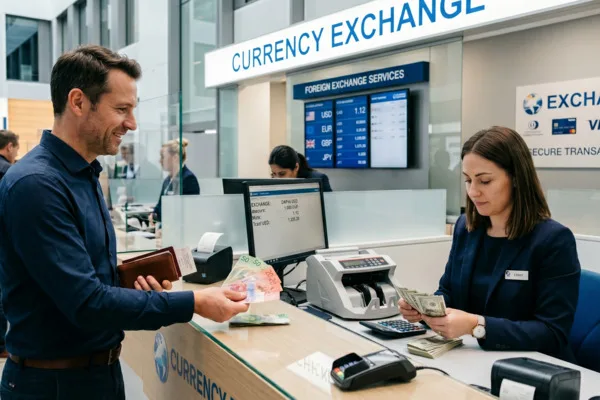
During the exchange itself, several precise actions ensure the correct conversion of funds based on the agreed rate. This stage involves counting, validating and calculating the exact foreign currency amount the customer will receive.
Understanding how money transfers and conversions work can also help customers better prepare for international transactions through available money transfer services. Knowing what happens here helps customers follow the process closely, verify accuracy and understand how rates and fees affect outcomes.
Note: Exchange rates are subject to change and may vary at the time of transaction. Customers should review final transaction details before completing any exchange. As rates and availability are not guaranteed until the transaction is confirmed.
Funds are counted, validated and converted accurately
Once the rate is accepted, the customer provides funds, which staff count and verify for authenticity carefully. The system calculates the equivalent foreign currency amount using the agreed exchange rate and applied service fees.
Staff confirm totals with the customer before proceeding to finalize the transaction and prepare the exchanged currency.
Conversion process overview:
- Input transaction amount into the exchange system using verified customer details and selected currency pair
- Apply the agreed exchange rate including any markup or commission structure relevant to the provider
- Generate the exact converted amount ensuring accuracy before physical or digital currency delivery
Transaction records and receipts are generated immediately
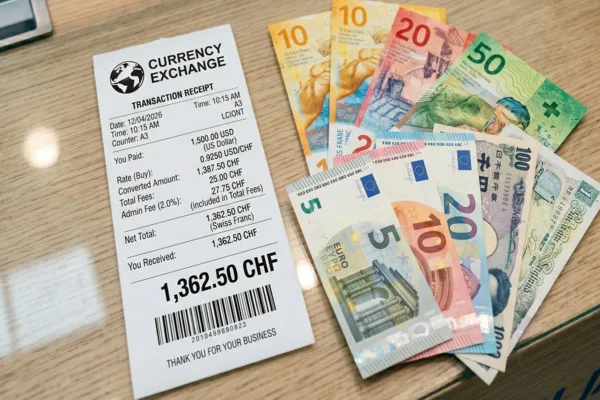
After conversion, the system generates a detailed transaction record capturing exchange rates, applied fees, total amounts and verified customer details. This record ensures that every aspect of the transaction is documented accurately for compliance, operational tracking and future verification needs.
Customers receive a printed or digital receipt immediately, serving as official proof of the completed currency exchange transaction. Consumer protection agencies explain the importance of keeping transaction records through the Consumer Financial Protection Bureau guidance on sending money.
These records support traceability and provide essential documentation for future reference, especially in case of discrepancies or inquiries. Maintaining accurate records also helps exchange providers meet regulatory requirements while ensuring transparency and accountability throughout the transaction process.
Note: Receipts typically include exchange rate, total fees, original amount and final converted amount for full transparency.
Currency is delivered and verified by the customer
Once processed, staff provide the exchanged currency, allowing the customer to count and verify the received amount. Customers should confirm denominations and totals immediately before leaving the counter to avoid later discrepancies or disputes.
If you need assistance or have concerns after receiving your funds, you can reach support through official customer contact channels.
This step ensures accuracy and builds trust between the service provider and the customer completing the exchange.
Best practices after receiving currency:
- Count the money in front of the staff to confirm the exact amount matches the transaction receipt details
- Check denominations to ensure they meet your needs for travel, payments or other intended use cases
- Store the receipt securely in case future verification or support is needed regarding the completed transaction
Records are stored and compliance obligations are fulfilled
Exchange providers securely store transaction data to meet legal recordkeeping standards and anti-money laundering compliance requirements. These records include customer identification, transaction amounts, exchange rates and timestamps for accurate audit and monitoring purposes.
Financial literacy programs highlight how recordkeeping protects consumers, including the FDIC Money Smart consumer education program.
Certain transactions may be reported to regulatory authorities when they meet specific thresholds or trigger compliance review conditions. These obligations are part of financial regulations designed to detect suspicious activity and maintain integrity within the financial system.
Customers typically do not need to take further action after completion unless additional verification or clarification is requested. This structured recordkeeping process ensures accountability while supporting regulatory compliance and long-term transaction traceability.
To better understand company operations and compliance practices, you can review Order Express company background and operations.
Note: Recordkeeping ensures regulatory compliance and enables audit trails for all completed currency exchange transactions.
Key takeaways
- A standard currency exchange process follows a structured sequence designed for accuracy, compliance and customer clarity
- The process includes identity verification, rate confirmation, fund conversion, receipt issuance and final currency delivery to customers
- Customers should actively review rates, confirm amounts and retain receipts to ensure a smooth and transparent transaction experience
- Understanding these steps helps first-time users approach exchanges confidently and avoid confusion during real-time financial interactions
Conclusion
A standard currency exchange process follows a clear, structured path that ensures every transaction remains accurate, compliant and transparent for customers. From identity verification to final currency delivery, each step plays an essential role in protecting both parties involved. Understanding these stages allows customers to approach exchanges with confidence, minimize errors and make informed financial decisions.
Choosing a reliable provider like Order Express helps simplify the experience through clear rate disclosures and efficient service execution. If you are looking for a nearby service location, you can explore available branch locations.
If you are ready to exchange currency, consider using Order Express for a smooth, secure and well-guided transaction experience.
Disclaimer: This article is for educational purposes only and does not constitute financial, legal or regulatory advice for transactions. Customers should consult qualified professionals or local providers for specific guidance based on their transaction needs and location.
Order Express is registered with the Financial Crimes Enforcement Network (FinCEN) as a Money Services Business (MSB) under the Bank Secrecy Act (BSA). We strictly follow Know Your Customer (KYC), Anti-Money Laundering (AML), and record retention requirements. These practices ensure that all financial transactions are secure, transparent, and compliant with federal and state regulations.
FAQs
What documents should I bring for currency exchange?
Bring a valid government-issued identification document that matches the name used for the transaction.
How long does a standard currency exchange process take?
Most transactions are completed within minutes, depending on verification requirements and transaction complexity.
Can I cancel a currency exchange after confirming the rate?
Once confirmed, most providers do not allow cancellations because rates are locked and processed immediately.
Is it necessary to count the money before leaving?
Yes, always count and verify the currency at the counter to ensure accuracy before completing the transaction.
Do I need to keep my exchange receipt after the transaction?
Yes, keep your receipt for reference, especially if you need support or verification later.

Alvin is a Content and SEO Specialist who creates clear and helpful content about money transfers and payment systems. He focuses on making complex topics easy to understand so readers can learn how these services work in everyday situations.