


To pay the IRS by money order, make the payment payable to U.S. Treasury and include the identifying information required for your tax payment, such as your name and address, daytime phone number, tax year, related tax form or notice number, and applicable Social Security number (SSN), employer identification number (EIN), or individual taxpayer identification number (ITIN).
Follow the mailing address and payment instructions shown on your IRS notice or applicable tax-form instructions. Do not staple or paper-clip the money order to your voucher or return, and keep your money-order receipt and copies of your payment documents for your records.
When purchasing a money order, follow the identification and transaction requirements provided by the issuer. For the tax payment itself, follow the instructions provided by the IRS for your specific form, notice, or payment type.
Before purchasing your next money order, it’s helpful to understand how it works from start to finish. Money Orders: How To Buy, Fill Out, Cash And Track Them Safely walks through the essentials, including safe purchasing, accurate completion, tracking, and cashing options.

What Information Should You Put On An IRS Money Order?
For a mailed tax payment, current IRS guidance says to make your money order payable to U.S. Treasury. The payment should also include the information needed to identify you and apply the payment correctly, including:
- Your name and address
- Your daytime phone number
- The tax year the payment is for
- The related tax form, such as Form 1040, or the applicable notice number
- The SSN, EIN, or ITIN of the person who should receive credit for the payment
Additional instructions can apply to particular tax forms, notices, or account situations, so check the IRS instructions associated with your specific payment before mailing it.
If you need general instructions for completing a money order before preparing your tax payment, see our guide on how to fill out a money order.
When To Use A Money Order
Money orders are commonly used for official payments, including certain IRS tax payments that require mailing. Always follow the payment instructions provided with your IRS notice or official IRS guidance to help ensure your payment is applied correctly.
How to Fill Out a Money Order for an IRS Payment
Step 1: Make the Money Order Payable to U.S. Treasury
For a mailed IRS tax payment, make the money order payable to U.S. Treasury. Fill in the payee field clearly and avoid leaving it blank.
Step 2: Add Your Name and Address
Make sure your name and address appear on the money order. Write clearly so the IRS can associate the payment with the correct taxpayer.
Step 3: Add Your Tax Payment Details
Include the daytime phone number, tax year, related tax form or notice number, and applicable SSN, EIN, or ITIN requested for the payment. Follow any additional instructions on your IRS notice, payment voucher, or tax-form instructions.
Step 4: Sign Where Required by the Money Order Issuer
Complete the purchaser signature field according to the instructions on your money order. Do not endorse the back unless the issuer or recipient specifically instructs you to do so.
Step 5: Keep Your Receipt
Detach and keep the receipt provided with the money order. Store it with copies of your tax-payment documents until you can confirm that the IRS has applied the payment to the correct account.
Step Six: Avoid Alterations
Once you fill out the money order, avoid making changes or crossing out information. Alterations may void the instrument and cause it to be rejected. If you make an error, return to the issuing location and ask about replacement options.
Common Mistakes When Paying the IRS With a Money Order
Before mailing your payment, check for these common problems:
- Making the payment payable to the wrong recipient instead of U.S. Treasury
- Omitting your name, address, or taxpayer identification information
- Forgetting the applicable tax year, tax form, or notice number
- Using an address that does not match your form, notice, or payment instructions
- Stapling or paper-clipping the payment to a voucher or return
- Discarding the money-order receipt before the payment has been processed
- Using mailing instructions that do not apply to your specific IRS payment
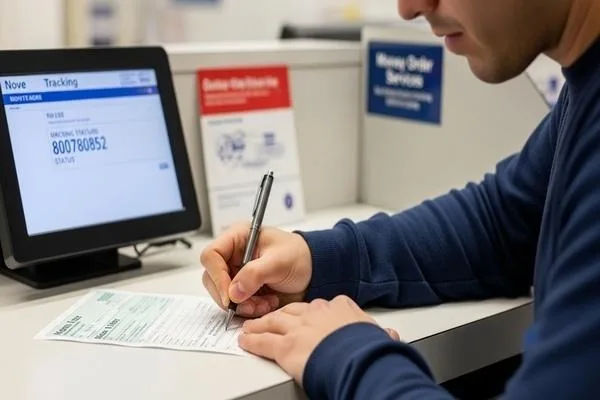
How To Mail Your IRS Money Order
Once your money order is completed, the next step is ensuring it reaches the recipient securely. Mailing or delivering a financial instrument requires care, especially when dealing with government or large business payments.
Verify the Correct IRS Mailing Address
The IRS uses different mailing addresses depending on the tax form, notice, payment situation, and other factors. Follow the address shown on your IRS notice or applicable form instructions, or verify the current instructions on IRS.gov.
Do not assume that an address used for a previous tax payment is still correct for your current payment.
Follow the Mailing Instructions for Your Form or Notice
Use the mailing instructions associated with your specific IRS notice, tax form, or payment situation. Do not assume that the same address or delivery method applies to every IRS payment.
For example, the IRS currently instructs taxpayers mailing a payment with Form 1040-V to use regular mail and notes that using a private delivery service may delay payment processing. Check IRS.gov or the instructions accompanying your payment before choosing how and where to send it.
Do Not Staple or Paper-Clip the Payment
The IRS instructs taxpayers not to use staples or paper clips to attach a check or money order to a voucher or return. Place the payment and any required voucher or documents in the envelope according to the applicable IRS instructions.
Track And Verify Payment
Most issuers allow you to track your money order using the serial number on your receipt. Tracking can confirm when it has been cashed or deposited. If the payment does not arrive within a reasonable time, contact the issuer for assistance. Some issuers may charge a fee to replace or refund a lost or stolen instrument.
Delivery confirmation only verifies that your envelope reached its destination. Continue keeping your money order receipt and supporting documentation until your IRS payment has been processed and reflected in your records.
Keep Your Payment Records
Keep your money-order receipt and copies of any applicable IRS notice, payment voucher, return, and mailing documentation together for your records.
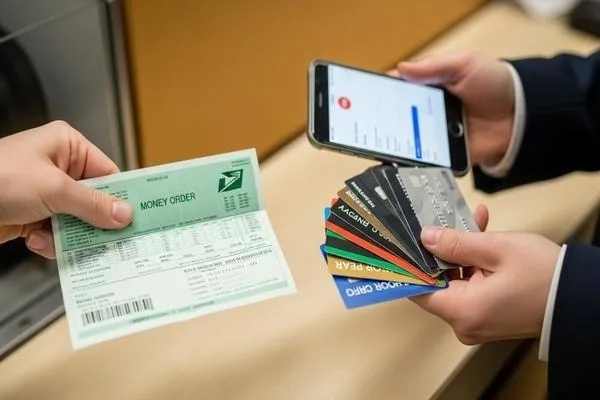
Money Orders and Other IRS Payment Options
The IRS offers multiple ways to pay federal taxes, including electronic options and mailed payments. A money order may be useful when you prefer or need a paper payment, but the appropriate option depends on your tax-payment situation.
The IRS recommends electronic payment whenever possible. If you choose a money order, follow the instructions for your specific form, notice, or payment type.
How to Verify the Correct IRS Payment Address
Before mailing your money order:
- Verify the mailing address on IRS.gov.
- Confirm the address matches your payment type.
- Include any required payment voucher.
- Double-check the address before mailing because payment locations may change.
What Happens After the IRS Receives Your Money Order
Keep your money-order receipt and copies of the documents you mailed until you can confirm that the payment has been applied to the correct tax account.
If you have evidence that your mailing was delivered, remember that delivery and payment processing are not the same thing. If the payment does not appear as expected, use official IRS contact information for your payment or account situation.
Conclusion
Paying the IRS with a money order requires more than completing the standard payee and purchaser fields. Make the payment payable to U.S. Treasury, include the identifying information required for your tax payment, and follow the mailing instructions for your specific IRS form, notice, or payment situation.
Before sending the payment, check your information carefully, do not staple or paper-clip it to your voucher or return, and keep your money-order receipt and supporting records until the payment has been applied to your account.
Disclaimer: This article is provided for educational purposes only and does not constitute financial, legal, or tax advice. IRS payment requirements and mailing instructions can vary by tax form, notice, and payment situation. Always follow the current instructions provided by the IRS for your specific payment.
For information about Order Express money orders and other available services, visit your nearest authorized Order Express location or contact Customer Service.
Frequently Asked Questions
Who Should I Make an IRS Money Order Payable To?
Make it payable to U.S. Treasury for a mailed federal tax payment.
What Information Should I Put on a Money Order to the IRS?
Include your name and address, daytime phone number, tax year, related tax form or notice number, and applicable SSN, EIN, or ITIN.
Should I Staple My Payment Voucher to the Money Order?
No. Do not staple or paper-clip the money order to your voucher or return. Follow the IRS instructions for placing the payment and documents in the envelope.
Where Do I Mail an IRS Money Order?
Use the mailing address listed in the IRS instructions or notice for your specific tax form and payment situation. Verify the current address on IRS.gov before mailing.
How Do I Know Whether the IRS Processed My Money Order?
Keep your money-order receipt and payment records until the payment appears on the correct tax account. Delivery confirmation does not mean the IRS has processed the payment.
What Should I Do If I Make a Mistake on the Money Order?
Do not erase or overwrite the mistake. Contact the money-order issuer for correction, cancellation, or replacement instructions before mailing it.
Can I Use More Than One Money Order to Pay the IRS?
Yes, when permitted by the applicable IRS payment instructions. Follow the instructions for your specific tax payment and include the required identifying information with each payment.
Order Express Compliance Information
Order Express, Inc. is a registered Money Services Business (MSB) with the Financial Crimes Enforcement Network (FinCEN) and follows applicable federal and state regulatory requirements. The company maintains Anti-Money Laundering (AML) and Know Your Customer (KYC) procedures and may request identification when required by law or company policy.
Note: If you suspect fraud, unauthorized use, or have concerns about a money order transaction, please contact the Order Express Compliance Department at 1-888-666-1602 or email cumplimiento-usa@orderexpress.com. You may also report suspected suspicious activity directly through our secure channels listed at orderexpress.com.

John is a Content & SEO Specialist who enjoys breaking down complex financial topics, like cross-border payments and money transfers, into content that’s easy to understand. He focuses on creating practical, search-driven content that helps people find answers and make informed decisions.


