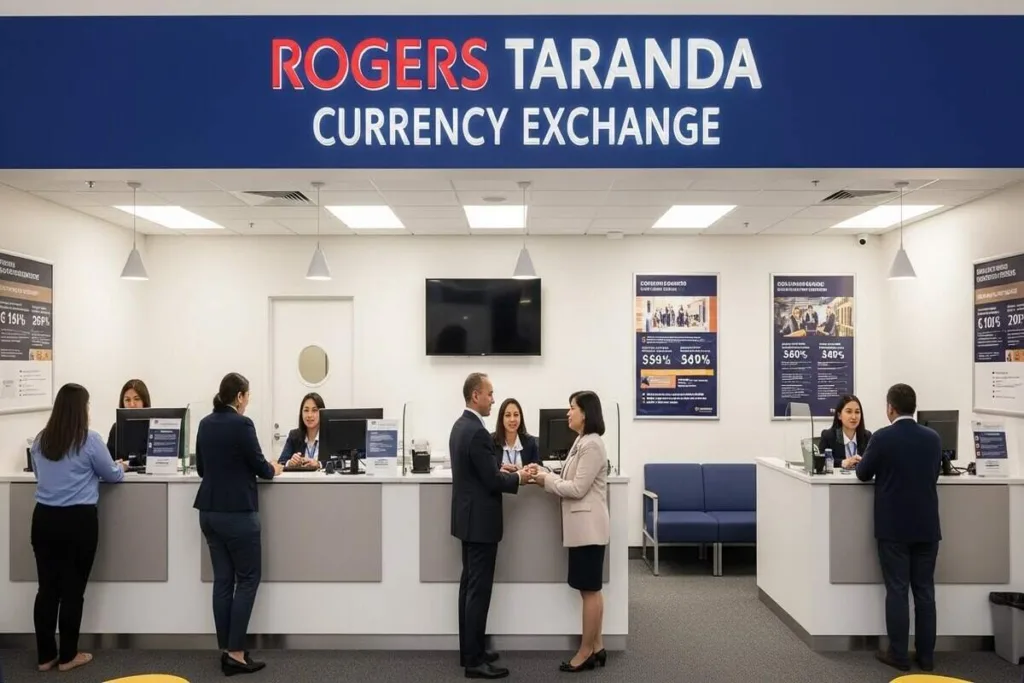
Currency exchange providers prevent fraud through identity verification, transaction monitoring, and compliance with Anti-Money Laundering (AML) regulations. Using Know Your Customer (KYC) procedures, providers confirm customer identities and detect suspicious activity, ensuring transactions are completed securely while supporting financial crime prevention and protecting both customers and the financial system.
When you prepare to exchange currency, understanding these safeguards helps you bring the right documentation and avoid unexpected delays. These protections apply across retail financial services including currency exchange, money transfer and money orders. Currency exchange providers prevent fraud primarily through three mechanisms: identity verification (KYC), transaction monitoring, and regulatory compliance under AML frameworks. These controls work together to detect suspicious activity, protect consumers, and maintain the integrity of the financial system.
These procedures reflect industry-standard compliance practices used by regulated financial service providers across the United States. Learn more about foundational transaction mechanics in our broader currency exchange fundamentals for everyday transactions.
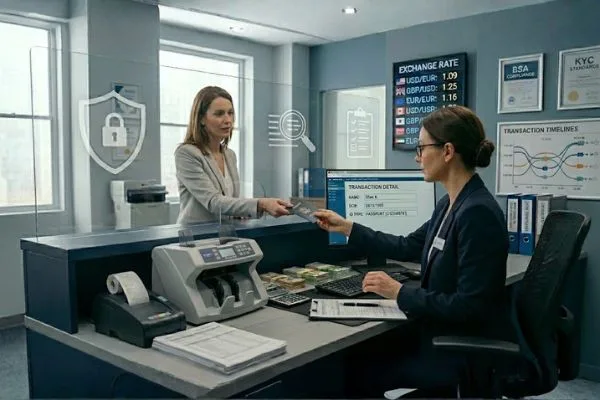
Identity Verification And Transaction-Level Controls
Identity verification forms the first line of defense against fraud in currency exchange transactions. Providers confirm customer identity before completing transactions that meet specific reporting or documentation thresholds.
Customer Identification Requirements
Currency exchange providers require valid government-issued identification for transactions above certain dollar amounts. These requirements support high-level obligations under the Bank Secrecy Act and oversight from the Financial Crimes Enforcement Network.
You may need to present identification when your transaction reaches documentation thresholds within a single business period. In many cases, providers verify your name, date of birth and identification number before proceeding.
Bring one acceptable government-issued photo identification such as a passport or driver license. Ensure the identification is current, unexpired and matches the information you provide during the transaction.
For example, currency exchange transactions that meet applicable regulatory or internal thresholds may trigger documentation requirements. Requirements may vary by state and transaction type, and regulated financial institutions operate within broader federal reporting frameworks described under the Bank Secrecy Act and AML requirements. Preparation helps reduce processing delays.
Verification Of Source And Transaction Purpose
Providers may ask reasonable questions about the purpose of your exchange transaction. These questions help identify activity that may indicate structuring or other suspicious behavior.
Structuring occurs when someone attempts to divide a larger transaction into smaller amounts to avoid reporting thresholds. Providers monitor for this behavior across services including currency exchange, Order Express money transfer services and money orders.
If your exchange transaction appears inconsistent with typical customer behavior, additional clarification may be requested. Responding clearly and providing consistent information supports smoother transaction processing.
When larger amounts are involved, providers may request general information about the source of funds. This review is designed to support anti-money laundering controls without creating unnecessary friction for legitimate customers.
Order Express follows procedures designed to collect and verify required information before completing qualifying transactions. These procedures help support regulatory compliance while allowing customers to complete everyday retail financial services.

Ongoing Monitoring And Fraud Detection Systems
Transaction monitoring systems form the second major fraud prevention mechanism in currency exchange operations. Providers use system alerts and review processes to identify unusual patterns before risks escalate.
Aggregation Monitoring Across Services
Fraud risk often involves multiple related transactions conducted within short timeframes. Providers aggregate activity across services to determine whether thresholds are met collectively.
For example, multiple currency exchanges completed within a 48-hour period may be reviewed together. The same applies when customers combine services such as money transfer and money orders.
Aggregation monitoring helps identify attempts to remain below individual transaction thresholds. It also supports compliance with high-level reporting obligations under federal anti-money laundering frameworks administered by appropriate federal agencies.
You may notice that staff review prior activity when completing a transaction. This review is routine and designed to maintain transaction integrity across the provider’s network.
Automated Alerts And Compliance Review
Modern currency exchange providers rely on automated alert systems to flag unusual behavior patterns. Alerts may trigger when activity approaches reporting thresholds or matches predefined risk indicators.
Compliance teams review flagged transactions before determining whether additional documentation is required. In some cases, transactions may be temporarily held pending clarification. When suspicious activity is identified, it may be reported to regulatory authorities as required by law.
Common review triggers may include:
- Repeated exchanges just below documentation thresholds
- Multiple transactions across different locations within short timeframes
- Inconsistent identification information across transactions
- Rapid cash-in and cash-out patterns without clear purpose
These reviews help detect fraud schemes including identity misuse or structured activity. They also protect legitimate customers from potential financial harm and support consumer protection principles promoted by the Consumer Financial Protection Bureau, designed to protect both customers and the financial system.
Order Express follows monitoring procedures that include transaction review and documentation retention standards. Records supporting reportable activity are retained in accordance with applicable requirements. Customers seeking additional background on company oversight and operational history may review the Order Express company background.
From a customer perspective, this means transactions may involve short verification steps when thresholds are met. Preparing documentation in advance helps reduce friction and improves processing efficiency.
Customers who rely on in-person retail financial access, including currency exchange and Order Express check cashing services, benefit from consistent identity and monitoring safeguards across service types.
Key Takeaways
- Currency exchange providers prevent fraud through identity verification and transaction monitoring systems working together.
- Identification requirements may apply when exchange amounts meet specific documentation thresholds.
- Aggregation monitoring reviews related transactions across currency exchange, money transfer and money orders.
- Automated alerts help detect structuring or unusual transaction patterns before completion.
- Preparation with valid identification and clear transaction purpose helps reduce delays.
Frequently Asked Questions
Q: Why Does Currency Exchange Require Identification For Certain Amounts?
A: Providers verify identity when transactions meet documentation thresholds to support anti-money laundering controls and reduce fraud risk.
Q: What Is Structuring In Currency Exchange?
A: Structuring involves breaking a larger transaction into smaller amounts to avoid reporting requirements, which providers monitor and report when appropriate.
Q: Can Multiple Small Exchanges Trigger Review?
A: Yes. Providers aggregate related transactions within defined timeframes to determine whether combined amounts require documentation or review.
Q: Will My Transaction Be Delayed During A Review?
A: Some transactions may require brief clarification or documentation before completion, especially when thresholds or alerts are triggered.
Q: Does Fraud Prevention Apply To Money Transfers And Money Orders Too?
A: Yes. Monitoring and verification controls typically apply across retail financial services including currency exchange, money transfer and money orders.
Conclusion
Currency exchange providers prevent fraud risks by combining identity verification requirements with ongoing transaction monitoring systems. Verification procedures confirm customer identity and help identify structured or inconsistent activity before funds are released. Monitoring systems review aggregated transactions across currency exchange, money transfer and money orders to detect unusual patterns. These mechanisms support high-level Bank Secrecy Act and FinCEN obligations while maintaining accessible retail financial services. When you prepare with valid identification and clear transaction details, you reduce the likelihood of delays. Order Express operates as a licensed Money Services Business and follows applicable requirements designed to support compliant financial transactions. Providers operate under formal Anti-Money Laundering (AML) programs that include customer identification, transaction monitoring, reporting, and recordkeeping.
Review current rates or visit a nearby Order Express location to prepare your transaction with greater clarity and confidence.
Note: Reviewed by Compliance Team for regulatory accuracy.
Disclaimer: This content is for informational purposes only and does not constitute financial advice. Exchange rates, fees, availability and verification requirements may vary by provider, transaction type and location.

John is a Content & SEO Specialist who enjoys breaking down complex financial topics, like cross-border payments and money transfers, into content that’s easy to understand. He focuses on creating practical, search-driven content that helps people find answers and make informed decisions.