


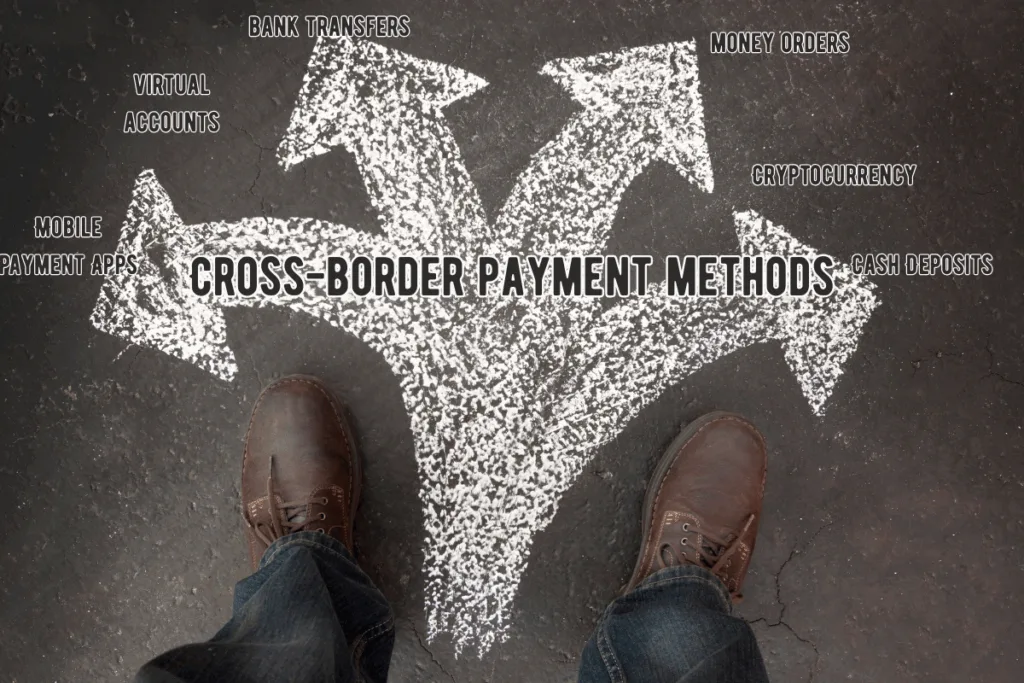
The most affordable cross-border payment methods today are mobile money apps and virtual accounts. These digital tools typically charge lower fees, offer faster transfer times, and use mid-market exchange rates with minimal markups. Services like Wise, Remitly, and WorldRemit often charge between 0.5% and 2% per transaction, making them ideal for users who prefer digital platforms and want to save money.
However, not everyone is comfortable with online tools or has consistent access to internet banking. For those users, cash-based services such as Order Express provide a secure and accessible alternative. With in-person support, bilingual service, and fixed pricing, Order Express makes cross-border payments easier for people who rely on traditional financial methods.
Regardless of which method you choose, all international money transfers must comply with regulations such as the Bank Secrecy Act, FATCA, and anti-money laundering requirements. Selecting the right provider depends on your priorities, whether you value low costs, fast delivery, personal service, or regulatory transparency.
Understanding Cross-Border Payments
Cross-border payments involve sending money between individuals or businesses in different countries. These transactions are common in global commerce, personal remittances, and service-based payments.
Several factors influence the total cost of sending money across borders. One of the biggest is the exchange rate margin. Many providers add hidden markups to currency conversions, reducing the amount received. NerdWallet outlines how such fees impact your transfer.
Transfer fees also matter—they may be fixed or based on a percentage of the total, depending on Order Express and payment method.
In some cases, intermediary banks or services help move funds along. These middle layers often apply their own fees, increasing overall costs. The delivery method also affects pricing. Options include money transfers, direct bank deposit, or credit to a mobile wallet. Each comes with different fees, speed, and convenience levels.
Another important factor is compliance. Financial services handling cross-border payments must follow strict rules like Know Your Customer (KYC), the Bank Secrecy Act, and FATCA. These steps help prevent fraud and ensure legal use of funds. However, they can sometimes add delays or require extra verification.
Understanding these cost and process factors helps you choose the most efficient and secure payment option. Whether you’re paying an international vendor or sending money to loved ones, a trusted provider ensures compliance, transparency, and ease of service.

Lowest-Cost Options for Making a Cross-Border Payment
Finding affordable ways to send money across borders is essential for individuals and businesses alike. With several methods available, knowing which option offers the best value helps you save on fees, avoid hidden costs, and ensure fast, secure delivery. Below are the most cost-effective ways to complete cross-border payments today.
1. Mobile Payment Apps (Ideal for Fast, Low-Fee Transfers)
Mobile apps have transformed how people send cross-border payments. They combine low fees with fast delivery times. Services like Wise, Remitly, Xe, and WorldRemit offer mid-market exchange rates with minimal markups. Most charge fees between 0.5% and 2%, depending on the destination and amount.
These apps are designed for convenience. They include features such as:
- Easy access from smartphones or web browsers
- Simple onboarding and identity verification
- Real-time transaction tracking
- Transfers completed within minutes or a few hours
Users benefit from full visibility into fees and delivery times before confirming each transaction.
From a regulatory standpoint, licensed providers follow strict compliance rules. They are required to:
- Verify sender identities when transfers equal or exceed $3,000; note that some states require ID at lower amounts, for example $900 in Arizona and $1,000 in Oklahoma
- Monitor transactions for suspicious or illegal activity
- File Currency Transaction Reports (CTRs) for cash transactions over $10,000 and Suspicious Activity Reports (SARs) for activity over $2,000 or any transaction involving suspicious patterns
- Submit CTRs within 15 days of the transaction date
- Store transaction records for at least five years
These rules follow U.S. and international regulations, including those from the Bank Secrecy Act, FATCA, and the Consumer Financial Protection Bureau (CFPB).
Mobile transfer apps are best for people who make regular, low-to-mid value international payments. They’re ideal if you’re comfortable using digital platforms and need quick delivery with lower costs.
2. Virtual Accounts (Useful for Freelancers and Global Sellers)
Virtual accounts are ideal for anyone managing cross-border payments in multiple currencies. They let users receive, hold, and convert funds easily. These accounts work like local banking solutions across different countries, providing flexible access without needing a physical branch.
Freelancers, online sellers, and global businesses benefit from local collection accounts. These accounts reduce foreign exchange markups and avoid intermediary banking fees. This setup makes it easier to manage international payments without high costs or delays.
Funds held in virtual accounts can be converted at better rates than many traditional banks offer. This helps users avoid excessive fees when moving money across borders. These accounts also support better cash flow by allowing you to hold money in different currencies until rates are favorable.
Virtual account providers must follow strict regulatory standards. This includes compliance with the Bank Secrecy Act (BSA) and anti-money laundering (AML) requirements. Providers must:
- Verify customer identity before processing payments
- Confirm the purpose of each transaction
- Monitor all transfers for compliance risks
Services provided by financial institutions and payment providers implement transaction monitoring and customer due diligence to meet all legal obligations. They ensure every cross-border payment is secure and compliant.
If you earn in U.S. dollars but live elsewhere, a virtual account helps you avoid costly international bank fees. It gives you more control over how and when you use your money.
Note: Certain state statutes impose lower thresholds or extra documentation. For example, money-order or bill-payment transfers of 1,000 dollars or more in Arizona and Oklahoma require the same ID collection and record-retention steps as larger transfers.
3. Bank Transfers (Reliable but Costly for Everyday Use)
Bank transfers are a trusted way to send large cross-border payments. They provide secure delivery and clear transaction records. Most financial institutions worldwide accept wire transfers for formal payments and business transactions.
Despite their reliability, bank transfers come with high costs. Fees typically range from $25 to $50 per transaction. On top of that, currency conversion rates often include a markup of 3% or more. These added costs make bank transfers expensive for routine international payments.
Transfers may also take several business days to complete. This delay happens due to interbank processing, especially if intermediary banks are involved. These steps can slow down delivery and increase total fees.
Banks must comply with strict regulations to process international transfers. Compliance requirements include:
- Reporting all transactions over $10,000 through CTRs
- Filing SARs for unusual or flagged activity
- Applying enhanced due diligence for high-risk customers
- Keeping complete transaction records for regulatory review
These requirements follow U.S. laws like the Bank Secrecy Act and FATCA, along with oversight from the CFPB.
Bank transfers are best suited for large business-to-business payments where documentation matters. They support detailed audit trails and secure delivery of funds. However, for smaller cross-border transfers, they are usually not the most cost-effective or time-efficient option.
4. Money Orders and Bank Drafts (Best for Non-Digital Senders)
Money orders and bank drafts are traditional tools for cross-border payments. They work well for people who prefer paper-based methods. These instruments are widely available at banks, post offices, and authorized agents, including locally operated financial service providers.
They are ideal for individuals without reliable internet or those who feel more secure using offline options. A physical receipt is provided for each transaction, offering a sense of control and recordkeeping. This makes them useful for those uncomfortable with apps or online banking.
However, these methods are slower than digital tools. Mail-based delivery can take up to 10 business days, depending on the country. Tracking is often limited, so real-time updates are not guaranteed. Still, many users choose them for their familiarity and straightforward process.
From a legal standpoint, cross-border payments made with money orders or drafts are subject to federal regulations. For example:
- A valid government-issued ID is required for transactions over $3,000
- Service providers must monitor for suspicious activity or structured payments
- Structuring (intentionally splitting transactions to stay below reporting limits) is a federal crime punishable by fines and imprisonment. It is strictly prohibited.
- Louisiana: when a check of 1,000 dollars or more is cashed, a front-and-back image of the check and a copy of the customer’s photo ID must be kept on file.
All providers, including Order Express, must follow these regulations. They support compliance with AML and BSA requirements.
This method remains popular among people seeking non-digital options for secure cross-border payments with clear documentation.
5. Cryptocurrency (Low Fees, High Risk, Limited Regulation)
Cryptocurrency has become a low-cost option for cross-border payments. Assets like Bitcoin and USDT can be sent quickly and cheaply. Most crypto transfers cost less than a dollar and take just minutes to complete.
This method is especially helpful in countries with limited access to banks or where financial systems are unstable. It allows users to bypass traditional infrastructure entirely.
Advantages include:
- Very low fees per transfer
- Fast delivery, often in under 10 minutes
- Useful in areas with poor banking access
But there are real trade-offs:
- Prices can change rapidly due to market volatility
- No buyer protection or refund mechanisms
- Not widely accepted in formal financial systems
- Regulatory rules remain unclear in many regions
From a compliance perspective, crypto-linked cross-border transfers raise additional concerns. To remain compliant, users and providers must:
- Disclose the source of funds when converting crypto to fiat
- Provide wallet addresses and transaction IDs for audits
- Be prepared for monitoring if wallets show unusual activity
Such activity may require filing SARs under U.S. financial laws. Chainalysis offers insight into crypto monitoring trends. Crypto service providers treat crypto-related payments carefully. They require documentation to verify funds and ensure full compliance with AML and BSA regulations.
While cryptocurrency offers speed and low cost, it comes with serious regulatory, legal, and financial risks. It’s best suited for advanced users who understand the risks and requirements.
6. Cash Deposits (High Risk and Closely Monitored)
Depositing cash into someone else’s foreign bank account may seem easy, but it’s rarely a good option. Cash deposits are difficult to trace, making them vulnerable to misuse and financial crime. This method is under heavy regulatory scrutiny worldwide.
Key risks include:
- Difficult to verify the source of funds
- Increased chance of fraud or money laundering
- Often restricted or blocked by financial institutions
Cash deposits bypass typical electronic verification processes. As a result, banks and regulators treat them with extra caution.
Compliance requirements for cash transactions include:
- Mandatory reporting for cash-in or cash-out transactions that exceed $10,000 in a single day, including aggregation
- Filing of CTRs through the BSA E-Filing System within 15 days
- Customer identification checks, valid proof of funds, and supporting documentation before release of funds
- Filing of SARs if suspicious behavior, structuring, or unverified source of funds is detected. Nevada also requires a signed Check-Cashing Form to be completed and stored for every check-cashing service.
Financial institutions are required to follow strict AML and BSA rules. These rules help reduce financial crimes and ensure that all cross-border payments are transparent and lawful. The Office of Foreign Assets Control (OFAC) provides sanctions guidance.
Due to these risks and enforcement actions, cash deposits are considered one of the least recommended methods for sending money internationally. Safer, trackable options are available for those who need to transfer funds across borders securely.
Why Choose Order Express for Cross-Border Payments
Order Express balances in-person service with secure processing for customers across the United States and Latin America. Unlike online-only platforms, it provides face-to-face support at agent locations, making payments accessible to the unbanked and underbanked. Fees are fixed and transparent; what you send is what the recipient receives.
Compliance is built in. Agents collect ID for transfers of 3,000 dollars or more, with lower triggers of 900 dollars in Arizona and 1,000 dollars in Oklahoma. Oklahoma law also adds a state fee of 5 dollars on transfers up to 500 dollars plus one percent of any amount above that, which Order Express remits. Structuring (splitting transactions to avoid reporting) is strictly forbidden.
Order Express files Currency Transaction Reports for cash transfers over 10,000 dollars and Suspicious Activity Reports for any flagged behavior, fully meeting BSA, FATCA, FinCEN, and CFPB requirements. If you need a secure, compliant, and human-centered way to send money, visit an Order Express location or contact us today.
Conclusion
Money transfer apps and virtual accounts are often the cheapest way to send cross-border payments. They offer quick processing, minimal fees, and are great for people comfortable with digital platforms. However, they aren’t right for everyone.
For those who prefer physical service, language support, and regulatory transparency, courier-based payment services are the perfect alternative. Its fixed pricing, compliance procedures, and personal touch make it one of the most reliable providers for traditional users. Whether you’re sending funds to Latin America, helping family members abroad, or avoiding high bank fees, you have options.
Choose what fits you best: Use digital apps for fast and cheap transfers or rely on Order Express for compliant, in-person service you can trust.
With the right provider, you can save money, meet all regulatory requirements, and feel confident every time you send cross-border payments.
Frequently Asked Questions
What is the cheapest method for cross-border payments?
Apps like Wise and Remitly usually offer the lowest fees and exchange markups. Most charge 0.5% to 2% per transaction. Transfers often complete within minutes. These apps are best for digital users with internet access. Identity verification is also required before sending funds.
Are cash deposits into foreign accounts a good option?
Cash deposits are not ideal for international use due to high fraud risk and traceability issues. Most banks restrict them. These transactions are monitored closely for suspicious activity. Safer, traceable methods are strongly recommended instead.
How do virtual accounts help freelancers and sellers?
Virtual accounts let users receive, hold, and convert funds across currencies. They help avoid bank fees and FX markups. These accounts provide more control over when and how to use the money.
What regulations apply to cross-border transfers?
Transfers must comply with the Bank Secrecy Act, FATCA, and AML rules. This includes ID verification for transactions equal to or greater than $3,000, filing CTRs for cash transactions over $10,000, and filing SARs for suspicious activity over $2,000 or any pattern that indicates unlawful behavior. All records are securely stored for a minimum of five years for audit purposes. Individual states may impose lower ID-verification thresholds (for example $900 in Arizona and $1,000 in Oklahoma), so be sure to follow the stricter local rule when applicable.
Why choose Order Express for cross-border payments?
Order Express offers face-to-face help, fixed fees, and bilingual support. It’s great for users without access to digital platforms. The service ensures full compliance and transparency at every step.

John is a Content & SEO Specialist who enjoys breaking down complex financial topics, like cross-border payments and money transfers, into content that’s easy to understand. He focuses on creating practical, search-driven content that helps people find answers and make informed decisions.


