


A money transfer for a house purchase must be secure, fast, and fully compliant with regulations. Large property payments involve strict rules under the Bank Secrecy Act, OFAC screening, and reporting requirements. Buyers should compare banks, brokers, and money service businesses to evaluate fees, exchange rates, limits, and transfer speed. Choosing the right financial service provider ensures funds arrive safely, deadlines are met, and the transaction remains legally protected. This guide explains how to transfer money for property, what compliance steps apply, the costs involved, and how to protect against fraud.

What to Consider When Choosing a Money Transfer Provider?
When selecting a provider for a large property payment, several important factors matter. Each influences how much money arrives, how fast it moves, and whether the transfer is legally compliant.
Regulations
Large money transfers are subject to strict regulations. In the United States, providers must comply with the Bank Secrecy Act (BSA). This means every large transfer must be reviewed and documented. Transactions greater than $10,000 require the filing of a Currency Transaction Report (CTR), which must be submitted to FinCEN through the BSA E-Filing System within 15 days of the transaction. Suspicious activity, even at lower amounts, may trigger a Suspicious Activity Report (SAR).
Providers must also check all transfers against the Office of Foreign Assets Control sanctions list. This prevents money from being sent to restricted individuals or prohibited destinations. Compliance may feel like an extra step, but it protects both the buyer and the financial institution. These safeguards ensure that the property transaction remains legitimate and secure. For buyers unsure of compliance steps, Order Express money transmission services follow strict regulations that protect customer transactions.
Exchange Rate
Exchange rates directly affect the final cost of buying property abroad. Even a small difference can add or remove thousands of dollars in value. The most accurate measure is the mid-market rate, which is the same rate used between banks. Some providers may add hidden markups to this rate. Buyers should always ask for the rate being applied and compare it to the mid-market rate before confirming.
Many brokers offer forward contracts, which allow buyers to lock in exchange rates months before settlement. This reduces the impact of sudden market shifts. Others use hedging strategies to spread the risk of fluctuations. Transparency in exchange rates helps ensure the recipient receives the correct amount. For ongoing needs, buyers can also explore money transfer options that provide clarity on rates and fees.
Transfer Limits
Every provider sets limits on how much money can be transferred in a single transaction. Destination countries may also enforce restrictions on incoming funds. For large transfers, such as property purchases, additional verification is often required. This can include employment records, contracts, or bank statements proving the source of funds.
Some countries impose daily, weekly, or annual caps on international payments. Others demand extra licenses or approvals for large incoming transactions. Preparing documents in advance avoids delays and ensures that transfers proceed without interruption. Guidance on money transfer reporting rules helps buyers remain compliant with both U.S. and international obligations.
Transfer Speed
Timing matters during a property transaction. In many cases, contracts specify strict deadlines for deposits or final settlement. Traditional bank wires processed through the SWIFT network may take several days. Some providers use faster systems that shorten delivery times.
For transfers within Europe, the SEPA system often delivers funds within one business day. In the U.K., the Faster Payments system moves funds almost instantly. In Asia, local clearing houses may accelerate delivery compared to global wire systems. Regardless of the method, transfers cannot bypass compliance checks. Delays may occur if documents are incomplete or identity verification is pending. Buyers should always confirm delivery times before scheduling transfers.
Recurring Payments
Owning property often means managing ongoing payments. These may include mortgages, taxes, or maintenance fees. A provider that allows recurring transfers can simplify the process. Automated payments ensure bills are settled on time, while compliance documents remain up to date.
For buyers living abroad, recurring transfers also reduce the risk of missed deadlines and potential penalties. Planning recurring payments through secure providers ensures property expenses remain predictable and manageable.

Pick the Best Transfer Option for Large Transactions
Different providers can handle large transfers in different ways. Each has advantages and drawbacks depending on speed, compliance, and cost.
Using a Money Service Business
Money service businesses (MSBs) specialize in moving money across borders. They are licensed and regulated under strict compliance rules. MSBs are required to verify identity, confirm the source of funds, and screen transfers against OFAC sanctions. They also file CTRs and SARs when necessary.
Because they focus exclusively on money movement, MSBs often provide faster processing than traditional banks. Their services are designed for efficiency, transparency, and recordkeeping. For large property transfers, MSBs can be a reliable option when documentation is complete and compliance checks are met. Buyers can learn more about their rights in remittance and money transfers before choosing a provider.
Using an International Broker
Foreign exchange brokers specialize in large-value transfers. They often provide contracts to lock in favorable rates. This feature protects buyers from market fluctuations before closing on a property. However, brokers also require strict compliance. Customers must provide identification and documents confirming the legitimacy of the funds.
While brokers can offer strong currency services, the quality of service varies widely. Some may offer personalized assistance, while others may focus only on rate advantages. Careful research is essential before choosing a broker. Reputable brokers often share market shifts and currency trends.
Using Your Bank
Banks remain a familiar option for property buyers. They can directly transfer funds to international financial institutions. However, banks typically charge higher fees. They may also add markups to exchange rates, reducing the total received by the seller.
Bank transfers often rely on the SWIFT network, which can take several days. While banks provide institutional trust, they may be slower and more costly. Buyers should weigh these factors when deciding whether to rely on their bank for large transfers.
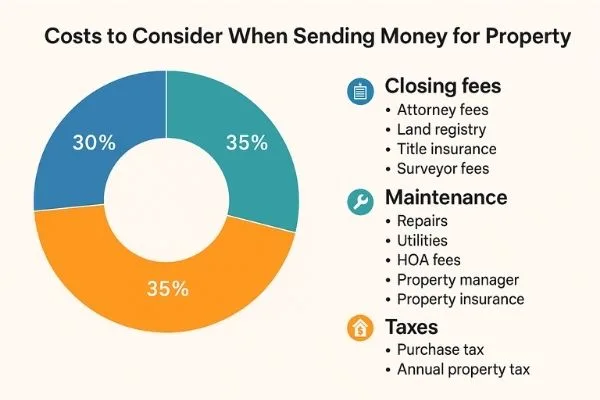
Costs to Consider When Sending Money for Property
Sending money for a property purchase involves more than the sale price. Buyers must account for closing fees, ongoing maintenance, and local or international tax obligations. Understanding these costs upfront helps prevent financial surprises and ensures the transfer covers every requirement.
Planning the Purchase
Every country applies property-related fees differently. Some charge high closing costs, while others split fees between the buyer and seller. Buyers should research local requirements in advance to avoid last-minute surprises. Professional advice from local attorneys or real estate specialists can help navigate regulations.
Official resources like the U.S. Department of State travel guidance also provide information for Americans purchasing property abroad. Buyers may also consider local title insurance, land registry charges, and surveyor fees when budgeting. Planning these costs ensures a smoother transfer and prevents underfunding at closing.
Maintaining the Property
Ownership includes ongoing financial responsibilities. Buyers may face expenses for repairs, utilities, and seasonal services. If living abroad, many choose to hire a property manager. Having a reliable transfer system in place ensures these costs are covered. Recurring transfers allow property expenses to be paid on schedule, with compliance documentation maintained for each transaction.
In addition, owners often manage property insurance, homeowner association (HOA) dues, and local utility fluctuations. Services beyond property transfers, such as vehicle services, are also accessible for ongoing needs.
Taxes
Tax obligations vary across countries. Some impose one-time purchase taxes, while others require annual or local levies. Missing tax deadlines can result in penalties or even jeopardize property ownership. Buyers should seek guidance from licensed professionals in the property’s location.
U.S. citizens purchasing property abroad should also consider double taxation treaties, which may reduce overall liabilities. Selling a property could trigger capital gains tax both domestically and abroad. Using regulated channels for tax payments ensures compliance and avoids financial risks. U.S. owners should also understand obligations around virtual currencies and real estate, especially when using alternative assets for payment.
Comparison of Transfer Options
When evaluating transfer methods, consider costs, convenience, and compliance requirements. Each has strengths and weaknesses depending on the property purchase. Buyers should compare providers carefully before committing large sums.
Money Service Business
Pros:
- Licensed and fully regulated under anti-money laundering (AML) rules.
- Transparent fee structures and detailed compliance reporting.
- Typically faster than traditional banks for international transactions.
- Familiar with remittance regulations.
Cons:
- Requires strict identity verification and proof of funds.
- Transfer limits may vary by provider and receiving country.
- Some MSBs may exclude certain destinations or currencies.
Broker
Pros:
- Ability to lock in favorable exchange rates using forward contracts.
- Protection against sudden market fluctuations during closing.
- Personalized support for high-value clients.
Cons:
- Verification can delay transactions if documentation is incomplete.
- Fees and services differ widely between providers.
- Some smaller brokers may lack robust fraud protection systems.
Bank
Pros:
- Familiar and widely trusted by international buyers.
- Direct connections with global financial institutions.
- Strong customer protection standards in most countries.
Cons:
- Higher fees and possible hidden charges in exchange rates.
- Slower transfer times due to reliance on the SWIFT network.
- Less competitive rates compared to MSBs or brokers.

Tips for Safe and Compliant Property Transfers
Large property payments carry compliance requirements and fraud risks. To transfer money safely, buyers must verify providers, prepare documentation, avoid structuring, monitor exchange rates, and use fraud-prevention safeguards. Following these best practices ensures that transfers meet legal standards and funds arrive securely.
Verify Your Provider
Only use licensed, regulated providers. Confirm that they comply with AML and OFAC rules. Ask if they file CTRs and SARs. Avoid unregulated services, which can expose you to fraud or penalties. Helpful references include the Consumer Financial Protection Bureau’s remittance transfer rule, which outlines protections for consumers.
Prepare Documentation in Advance
Be ready to provide identification and proof of funds. This may include contracts, bank statements, or tax records. Providers cannot release funds until verification is complete. Under compliance rules, identification is required for transfers of $3,000 or more in most states, $900 or more in Arizona, and $1,000 or more in Oklahoma. Travelers should confirm acceptable government-issued identification such as a passport, driver’s license, or consular ID when preparing documents.
Watch for Structuring Risks
Do not attempt to split transfers into smaller amounts to avoid reporting. This illegal practice, called structuring, can trigger investigations. Always send funds through legal and transparent channels. Compliance protects both your money and your reputation.
Monitor Exchange Rates
Track exchange rates before scheduling large transfers. Even minor shifts can change property costs significantly. If possible, consider locking in a rate to reduce uncertainty. Monitoring exchange rates gives better control over your final expenses. Educational resources on financial literacy can also help explain currency market trends.
Protect Against Fraud
Fraud is a risk in property transactions. Criminals may issue fake payment requests or intercept transfer details. Always confirm account information directly with legal advisors. Use providers with fraud detection systems that safeguard against suspicious activity. To compare secure transfer options, consumers should review independent financial guidance from trusted sources.
Expats should also use secure Wi-Fi when sending payment instructions and avoid sharing sensitive details by email. Identity theft remains a major risk in global transfers, making secure channels essential.
Conclusion
Transferring a large amount of money for a house purchase requires more than simply sending funds. Every step must meet compliance rules, follow secure practices, and avoid costly errors. Choosing the right provider can reduce fees, ensure faster settlement, and protect against fraud. Buyers should prepare documents in advance, monitor exchange rates, and schedule transfers with enough time to meet strict deadlines.
Working only with regulated institutions reduces risks and builds confidence that funds arrive safely. Whether using a bank, MSB, or broker, understanding strengths and limitations is essential. A property transaction is a major milestone, and the right transfer strategy ensures the investment is protected, transparent, and completed without unnecessary delays. For more details on compliance requirements and safe transfer practices, buyers should consult their chosen regulated money transfer provider directly.
Frequently Asked Questions
1. What documents are required to transfer money for a house purchase?
Most providers require government-issued identification, proof of funds, and the purchase contract. Additional paperwork may include bank statements, tax returns, or employment records. Preparing these documents before initiating a transfer helps avoid costly delays and compliance issues.
2. How long does it take to transfer a large amount of money internationally?
Bank wires may take several days, especially through SWIFT networks. Money service businesses often provide faster options depending on compliance checks. Timing also depends on the receiving country and whether additional documentation is required before release. Always confirm delivery times before scheduling a transfer.
3. What fees should I expect when sending money for property?
Fees vary by provider and include transfer charges, exchange rate markups, and possible receiving bank deductions. Some providers offer transparent mid-market rates, while others add hidden costs. Always request a complete fee breakdown in advance to calculate the total cost of the transfer.
4. How can I protect myself from fraud during property transfers?
Fraud prevention starts with verifying recipient account details through trusted sources like lawyers or escrow agents. Avoid sending money based only on emailed instructions, as these can be intercepted. Use providers with fraud detection systems and keep all records of communication and receipts for reference.
5. Why is compliance important when transferring large amounts for property purchases?
Compliance ensures transactions meet legal requirements such as AML, KYC, and OFAC rules. Non-compliance can trigger investigations, fines, or failed transfers. Providers must verify identity, screen recipients, and file necessary reports like CTRs or SARs. Following regulations protects both the buyer and the financial system.

John is a Content & SEO Specialist who enjoys breaking down complex financial topics, like cross-border payments and money transfers, into content that’s easy to understand. He focuses on creating practical, search-driven content that helps people find answers and make informed decisions.


