


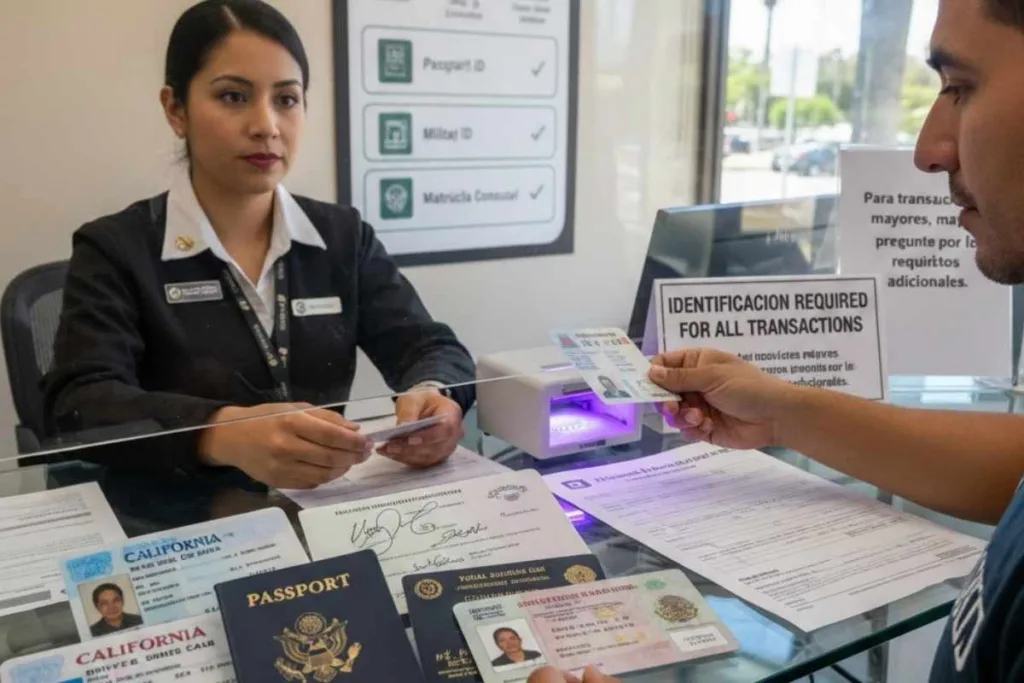
Presenting a valid, government-issued photo ID is the first requirement for releasing or sending regulated funds through licensed transfer providers such as Order Express. Licensed money transfer providers collect identification to comply with federal verification requirements under the Bank Secrecy Act and related regulations. Individual companies may also apply internal procedures to support fraud prevention and transaction accuracy.
This article details which identification documents qualify, explains their role in a compliant money transfer, and offers practical steps for a smooth transaction in the Ontario area. Identification requirements may vary depending on the provider, transaction amount, destination, and risk-based compliance procedures.
Understanding Mandatory Identification Documents
All licensed money services businesses must follow federal identification requirements under the Bank Secrecy Act. State regulators may also examine how identification procedures are applied within their jurisdiction.
However, knowing subtle field-level preferences in the Ontario area prevents frustrating counter visits and avoids last-minute document searches.
Below are the ID categories that meet verification standards under the Bank Secrecy Act and California statutes while aligning with everyday money transfer services best practices. Licensed money services businesses must maintain a Customer Identification Program (CIP) under the Bank Secrecy Act to verify the identity of customers conducting financial transactions.
Government-Issued Photo ID Sets The Standard
Most senders in Ontario present a current California driver’s license, which satisfies photo, signature, and residency verification elements. Under federal rules, acceptable identification must be current, government issued, and include a photograph. The full list of accepted documents may vary by provider based on its internal compliance program.
If your address recently changed, ensure the printed information matches your written transaction form to avoid secondary questioning.
A state identification card offers non-drivers an equally recognized credential throughout area transfer locations and mirrors the checklist on the Order Express money transfer page.
Both documents share the same embedded security features, allowing clerks to validate holograms under ultraviolet countertop scanners quickly.
Expired IDs are generally not accepted, as identification must be valid at the time of the transaction, because regulations demand the document demonstrate current validity the moment it is presented; obtain an interim paper extension if renewal is pending.
When A Foreign Passport Works For Local Transfers
Travelers passing through LA, Ontario International Airport often rely on foreign passports to send urgent funds after landing.
A valid foreign passport is commonly accepted when it meets federal identification standards under the Bank Secrecy Act and the provider’s compliance program to sending money abroad, provided the booklet is machine-readable and includes a legible signature on the identity page.
Agents must record country of issuance, passport number, and expiration date into their compliance system before approving your transfer.
For certain transactions, staff may request additional information to complete required records. This request is based on transaction details rather than residency alone.
Passports lacking readable Latin characters may require supplementary documents because tellers must transliterate names exactly into system fields; an international driver’s permit with matching spelling can streamline the process.
Special Considerations For Consular Identification Cards
Mexican nationals frequently present the matrícula consular because many households maintain cross-border family obligations requiring affordable remittances.
Consular identification cards may be accepted by certain licensed money services businesses depending on their internal compliance program, applicable state law, and federal identification requirements. Staff verify visible security features and expiration dates before completing a transaction.
Your name on the matrícula must precisely match the sender information entered, including diacritical marks, to support name screening against Office of Foreign Assets Control (OFAC) sanctions lists.
For certain transactions, additional information may be requested to complete required records, depending on transaction details. Consular cards issued more than five years ago sometimes trigger alerts because updated anti-fraud features were not yet implemented; renew through your consulate beforehand or keep an alternate government ID available.
Using Military Or Tribal IDs With Confidence
Certain clientele hold identification issued by tribal or military authorities, which agents accept once authenticity and unexpired status are confirmed.
- Federal guidance permits certain military and tribal identification documents when they meet verification standards. Individual providers apply internal procedures to confirm authenticity and record required information.
- California tribal enrollment cards qualify because they are issued by sovereign governments, provided they display photograph and expiration dates.
- Present paperwork calmly; some clerks consult laminated guidance charts before proceeding, which occasionally lengthens transactions during peak moments inside.
Having a secondary state ID ready shortens any pause, ensuring your money reaches loved ones across borders without interruption.

Practical Steps To Smooth Your Transaction
Beyond carrying the right document, preparation routines make the difference between a quick visit and an unexpected return trip. The suggestions below reflect questions Ontario tellers commonly raise when documentation appears incomplete or customer data seems inconsistent.
Follow them proactively and you will likely leave the counter sooner, with funds en route to their intended recipient.
Match ID Details To Sender Information Exactly
Exact ID-to-form alignment helps satisfy federal verification requirements and reduces processing delays. Always write your legal name as printed, including accents, middle names, and suffixes, to send money securely. Before authorizing, cross-check passport numbers and dates, ensuring zeros and letters match exactly on screen entries. Mistakes trigger manual reviews that waste valuable counter time.
Keep a clear photocopy handy so staff can verify data if barcodes misread or systems freeze unexpectedly. When bilingual clerks question uncommon diacritics, calmly spell names aloud, reinforcing the record and avoiding override requests. Setting this meticulous template now means every future visit auto-populates correctly across neighborhood counters throughout Ontario.
Prepare Secondary Proof When Primary Documents Look Worn
Worn or damaged IDs can stall a money transfer because scanners reject barcodes and security laminates easily. Bring a recent utility bill or bank statement showing your Ontario address, giving clerks immediate authority to transfer funds locally. This proactive habit signals compliance awareness and speeds transactions even during the Friday evening rush.
If printed proof is missing, open your banking app and show a full-screen statement that clearly lists name and address. Any supplemental documentation must meet the provider’s recordkeeping standards under federal regulations. Similar identity standards apply when accessing our check cashing service, so organized backups safeguard every transaction.
Anticipate Additional Checks For Larger Sums
Federal law requires money services businesses to file a Currency Transaction Report (CTR) for cash transactions exceeding $10,000 in a single business day, including transactions that may be aggregated for reporting purposes. When transactions approach that threshold, staff may collect additional required information.
- When cash transactions exceed federal reporting thresholds, additional customer information may be required to complete regulatory filings.
- Have beneficiary relationship details ready; regulators expect clear purpose explanations for significant remittances leaving the United States rapidly today.
- If funds originate from a recent asset sale, carry supporting contracts or settlement statements to satisfy source-of-wealth questions; the FDIC Consumer Resource Center outlines why such documentation matters.
- If additional clarification is needed, contact your chosen licensed provider before visiting the counter to confirm documentation requirements before arriving, reducing the chance of on-site delays.
Preparation shortens the otherwise lengthy manual forms and helps local counters meet filing deadlines without delaying your payout.
Keep Digital Copies For Future Visits
Bringing clear and undamaged identification can help avoid delays during busy periods. Bringing clear and undamaged identification helps avoid delays during busy periods. If your ID is worn or difficult to read, consider renewing it before initiating important transactions. California privacy rules let you decline email transfer, instead presenting images directly on-screen for immediate validation.
Delete stored copies after verification, because retaining unnecessary personal data heightens risk if your smartphone is lost. Frequent business senders should enroll with trusted transfer providers that vault credentials on secure servers behind multifactor gateways.
Conclusion
Accurate identification, organized backups, and advance documentation remain the pillars of trouble-free transfers. These practices streamline every transaction across the Ontario area, protecting senders and recipients alike. Double-checking names, dates, and card validity avoids costly delays and ensures compliance with federal verification standards. With preparation mastered, you can confidently move funds while meeting every Know Your Customer requirement. Smart preparation supports tellers, reducing queue times and improving overall service quality.
Review transfer limits, documentation checklists, and filing thresholds before visiting the counter. Customers may consult a licensed money services business for clarification about identification requirements and transaction limits. A brief discussion confirms current ID requirements and any additional forms needed for larger transactions. Armed with this insight, you’ll navigate the counter smoothly and complete your transfer without delays. Move forward confidently, knowing each step aligns with best practices and regulatory obligations.
Disclaimer: This content is for general informational purposes only and does not constitute legal, financial, or regulatory advice.
Use a licensed provider when sending funds in the local Ontario community to ensure accurate, compliant processing.
FAQs
Which IDs meet verification rules at Ontario counters?
Commonly accepted documents include valid state driver’s licenses, state identification cards, unexpired passports, and certain military or tribal identification cards. Final acceptance depends on the provider’s compliance program and applicable regulations.
Do I need extra documents if my ID is worn?
Bring a recent bill or bank statement showing your name and local address to verify details manually.
Can digital ID images replace physical cards at transfer desks around town?
Screenshots alone rarely pass inspection; clerks still require the original document for hologram and micro-text verification.
What information should I prepare for transfers exceeding regulatory thresholds?
Expect to provide occupation, transaction purpose, beneficiary relationship, and source-of-funds evidence such as sale contracts or paystubs.
How fast can neighborhood branches release cash after ID approval?
Processing times vary by provider and transaction details. Additional review may be required when federal reporting thresholds or internal compliance alerts are triggered.

Alvin is a Content and SEO Specialist who creates clear and helpful content about money transfers and payment systems. He focuses on making complex topics easy to understand so readers can learn how these services work in everyday situations.


