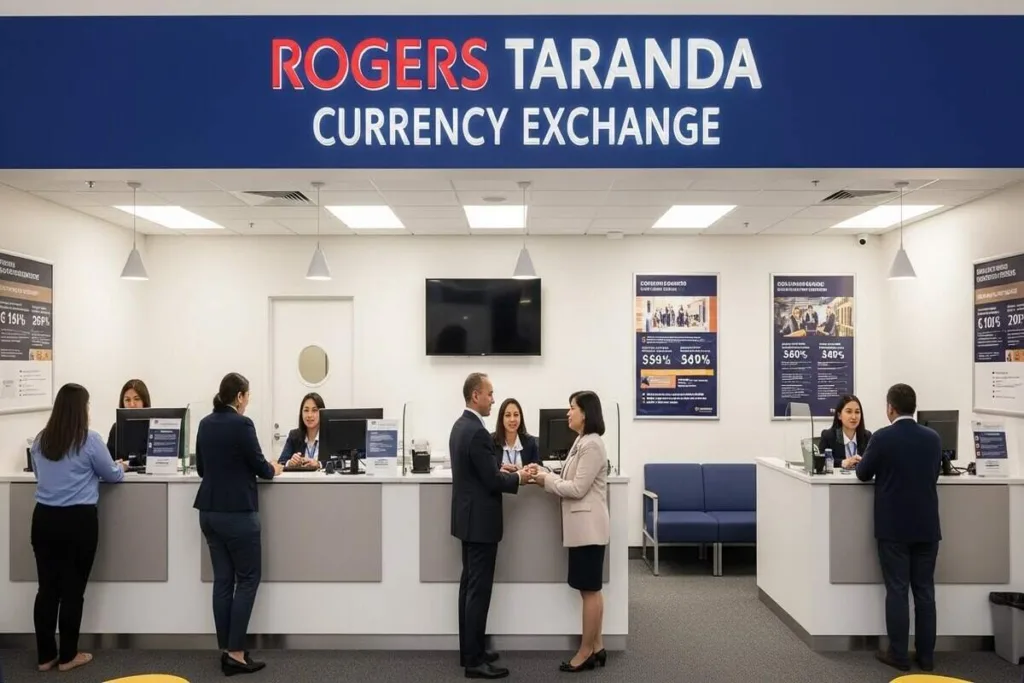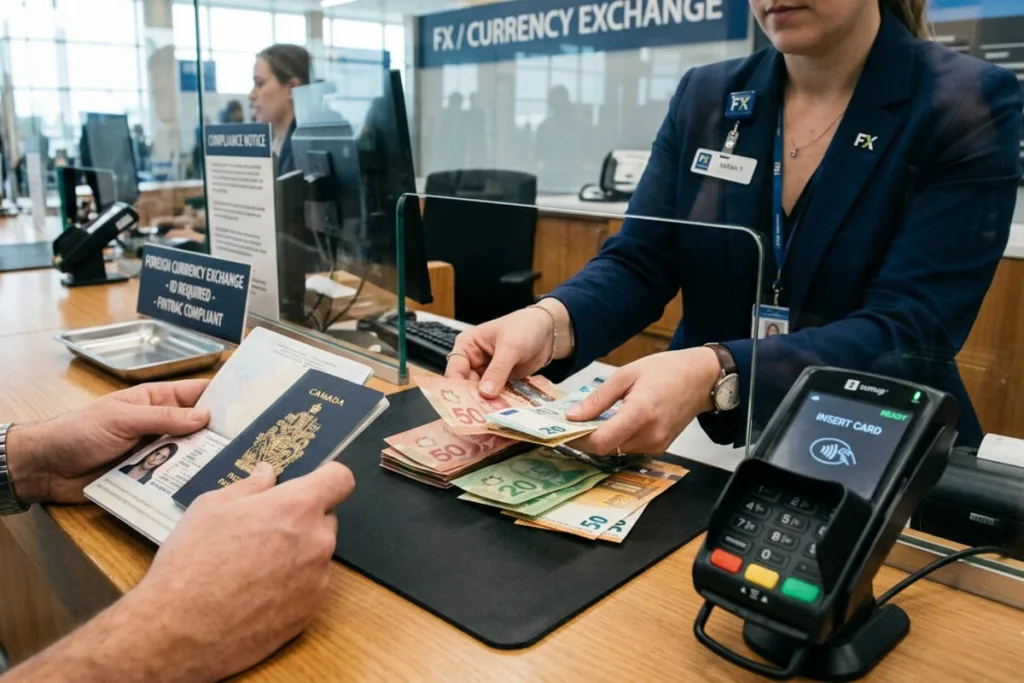
Currency exchange providers maintain safety for customers by combining identity verification, secure transaction systems and regulatory oversight protections. Order Express applies these layered safeguards to help ensure every transaction meets established compliance and security standards. If you are preparing to exchange money, understanding these measures helps you reduce risk and transact with greater confidence.
These protections include verifying identification, documenting required transaction details and monitoring for suspicious activity. Providers also use secure payment processing systems that protect sensitive financial information during electronic transactions. Physical security measures further support safe, accurate and controlled in person exchanges.
This focused guide outlines the specific safeguards you encounter before completing a transaction. For a broader explanation of operational processes, visit our pillar page on how everyday currency exchange services work.
How do currency exchange providers verify identity and prevent fraud?
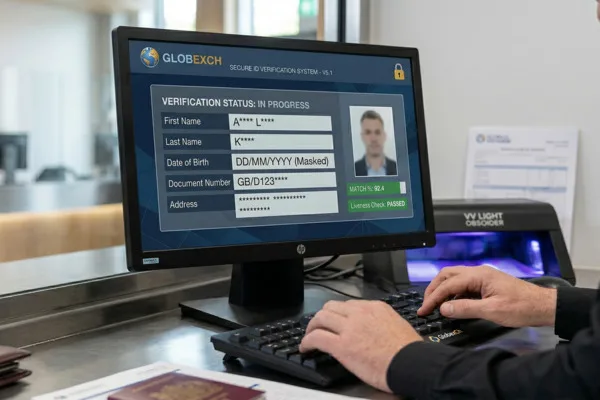
Currency exchange providers protect customers first through strict identity verification procedures required by financial compliance regulations. These procedures reduce fraud, prevent identity misuse and ensure funds move through traceable, authorized channels during currency exchange or money transfer transactions.
Note: When required, providers file Suspicious Activity Reports (SARs) in accordance with federal regulations. Transactions are screened against government sanctions lists (such as OFAC) to prevent prohibited transactions. Transactions are screened against government sanctions lists (such as OFAC) to prevent prohibited transactions.
Identity verification protects both the customer and the transaction
Identity verification confirms that you are the legitimate account holder or cash owner completing the exchange transaction. Staff members request government issued identification and verify signatures or compare stored transaction records before approval. These verification steps prevent impersonation attempts and protect customers from unauthorized currency conversions conducted in their name. Employees follow documented procedures to ensure identification details match the individual presenting the transaction request.
When required by regulation, staff also document transaction details to meet anti money laundering compliance standards. These recordkeeping duties align with federal reporting requirements outlined in 31 CFR 1010.311 currency transaction reporting rules. By maintaining accurate documentation, providers strengthen transaction transparency while protecting legitimate customers from fraud related risks.
Note: Currency exchange locations verify identification to confirm ownership of funds and prevent fraudulent transactions before processing any exchange.
Anti money laundering procedures add an additional protection layer
Currency exchange businesses operate under anti money laundering rules requiring active monitoring and reporting of suspicious activity. These regulations require providers to track transaction patterns and document activity that exceeds defined reporting thresholds. Employees complete compliance training to recognize red flags including structured exchanges or inconsistent identification details. Ongoing internal reviews help ensure monitoring systems function properly and remain aligned with regulatory expectations described in the FFIEC BSA AML examination manual guidance.
Common monitoring safeguards include:
- Reviewing large cash transactions exceeding regulatory reporting thresholds
- Flagging repeated exchanges that appear intentionally structured
- Verifying source of funds when legally required
These procedures protect customers by reducing exposure to criminal activity within legitimate financial environments. When you transact at a regulated location, you benefit from structured oversight designed to detect and deter financial misuse.
How are physical locations and cash handling secured?
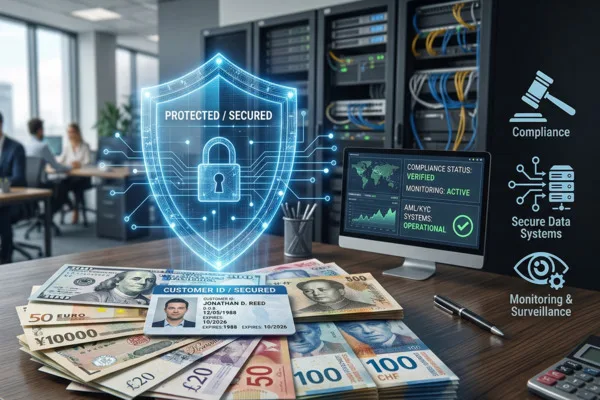
Physical security measures protect customers and staff inside currency exchange locations during in person transactions. Providers combine controlled cash handling, surveillance systems and operational protocols to reduce theft and human error risks. Broader consumer financial education resources, such as the FDIC Money Smart financial education program, explain how structured financial controls support safe transactions.
Controlled cash management reduces handling errors and theft risk
Currency exchange counters follow structured cash handling procedures that minimize mistakes and prevent financial loss. Staff count currency multiple times and use automated counting machines to ensure transaction accuracy before completion. Supervisors may review high value exchanges to confirm totals and verify documentation matches physical cash amounts. Clear internal protocols guide employees through each transaction step to reduce inconsistency and prevent avoidable errors.
Standard safeguards include:
- Dual verification of large cash transactions by two trained employees
- Immediate placement of excess cash into secured vault compartments
- End of day reconciliation processes that match recorded transactions
These steps protect customers from miscounts while reducing opportunities for internal or external theft attempts. You can locate a secure service point near you by visiting our currency exchange branch locations.
Note: Cash handling procedures involve multiple verification steps to ensure accurate exchange amounts before customers leave the counter.
Surveillance and secure infrastructure protect in person transactions
Most currency exchange locations use visible and recorded surveillance systems to deter criminal behavior. Cameras monitor transaction counters, entry points and cash storage areas to create documented security coverage. Recorded footage supports investigations and reinforces accountability if suspicious activity occurs within the facility. Clear visibility of surveillance equipment also discourages misconduct before it escalates into security incidents.
Additional environmental safeguards often include:
- Bullet resistant glass barriers at transaction windows
- Controlled entry access to employee only areas
- Silent alarm systems connected to local authorities
These protections create a secure environment where customers can complete transactions without unnecessary exposure to risk. For questions about service standards and company practices, visit our About Us page to review our compliance commitment.
Encrypted systems protect customer information during processing
When currency exchange locations process debit card payments or electronic transfers, they use encrypted transaction systems. Encryption converts sensitive information into protected code during transmission across secure financial networks. This process ensures that intercepted data remains unreadable and unusable to unauthorized third parties. Encryption protocols follow industry security standards designed to protect financial transactions across connected systems, consistent with consumer protection guidance provided by the Consumer Financial Protection Bureau on sending money safely.
Security controls typically include:
- Secure payment terminals that meet industry compliance standards
- Firewall protected internal networks
- Restricted employee access to customer data records
These safeguards limit exposure of personal information and reduce the risk of unauthorized system access. Together, these digital protections create a controlled processing environment that prioritizes customer data security.
Note: Encryption protects customer information by converting transaction data into secure code during electronic processing.
Regulatory oversight ensures accountability and operational transparency
Currency exchange providers operate under state and federal licensing requirements that mandate ongoing compliance reviews. Regulators conduct audits, examine reporting practices and verify adherence to established financial protection laws. These reviews support broader exchange rate transparency policies discussed by theU.S. Treasury exchange rate policy overview. Licensing authorities may suspend or revoke permissions if businesses fail to meet regulatory expectations.
Oversight mechanisms commonly include:
- Periodic compliance inspections by regulatory authorities
- Mandatory record retention for transaction documentation
- Required reporting of qualifying transactions above set thresholds
These requirements ensure providers maintain consistent safety standards rather than relying solely on internal policies. Customers benefit because licensed operators must follow established rules to continue operating legally and transparently.
Key takeaways
- Currency exchange providers maintain safety through identity verification, structured cash handling procedures and regulated digital transaction systems.
- These protections work together to reduce fraud, prevent theft and safeguard personal information during exchanges.
- When you choose a licensed provider, you rely on layered controls designed to protect each transaction stage.
Conclusion
Currency exchange safety depends on layered protections that work together to secure every stage of your transaction. From identity verification to encrypted systems and regulatory oversight, each safeguard reduces fraud, theft and data exposure risks. When you understand these protections, you can make informed decisions and transact with greater confidence. Choosing a licensed and compliance focused provider ensures your money moves through monitored and traceable channels. Order Express follows strict verification procedures, secure cash handling protocols and regulated processing standards to protect every customer interaction. If you are planning your next exchange, take action by selecting a trusted location that prioritizes transparency and accountability. Visit Order Express today to complete your transaction in a secure, professionally managed environment designed around your safety.
Before completing your next transaction, confirm that your chosen currency exchange location follows verified security and compliance standards. Choosing a licensed provider ensures your exchange occurs within a regulated and protected financial environment.
Disclaimer: This article provides general educational information about currency exchange safety practices and does not constitute legal or financial advice. Regulations and procedures may vary by jurisdiction and individual service provider policies.
Order Express is registered with the Financial Crimes Enforcement Network (FinCEN) as a Money Services Business (MSB) under the Bank Secrecy Act (BSA). We strictly follow Know Your Customer (KYC), Anti-Money Laundering (AML), and record retention requirements. These practices ensure that all financial transactions are secure, transparent, and compliant with federal and state regulations..
FAQs
Why do currency exchange locations ask for identification?
Currency exchange providers request identification to verify ownership and comply with anti money laundering regulations.
Are large cash transactions monitored?
Yes, large transactions may require documentation and reporting under federal and state compliance rules.
How is my personal information protected during electronic payments?
Providers use encrypted systems and secure networks to protect sensitive customer data during processing.
What security measures protect customers inside exchange locations?
Locations use surveillance systems, controlled cash handling procedures and secured transaction counters.
How can I confirm a currency exchange provider is licensed?
You can check displayed licenses, regulatory postings or verify registration through appropriate state authorities.

Alvin is a Content and SEO Specialist who creates clear and helpful content about money transfers and payment systems. He focuses on making complex topics easy to understand so readers can learn how these services work in everyday situations.