


Check cashing business, also known as the money service business, offers a simple and efficient solution for turning a paycheck or other types of checks into cash without the need for a bank account. These businesses operate around the clock, making it easy for customers to access cash quickly and conveniently when needed. Check cashing services aim to provide fast access to funds, allowing individuals to receive their money without the typical delays associated with traditional banking methods.
Key Takeaways
Check cashing fees are crucial for the business’s profitability and smooth operation. These fees vary based on the check’s value, legitimacy, and transaction risk. By verifying each check, whether a paycheck or government-issued, businesses reduce losses and ensure authenticity. This process enables them to continue offering fast, reliable cash access to customers.
Note: Order Express, Inc. is a registered Money Services Business (MSB) and complies with all federal and state regulations, including the Bank Secrecy Act (BSA), USA PATRIOT Act, and FinCEN guidelines. We maintain anti-money laundering (AML) programs, verify customer identity for applicable transactions, and monitor all activity.
- Transactions over $10,000 in cash are reported via Currency Transaction Reports (CTRs).
- Suspicious activity may be reported through Suspicious Activity Reports (SARs).
- Customer ID is required for transactions of $3,000 or more, or as low as $1,000 in some states like Arizona and Oklahoma.
Understanding how check cashing businesses operate becomes even more useful when you know how check cashing works, including verification procedures, service fees, customer requirements, and the safeguards behind every transaction.

Internal Operations and Security Measures in Check Cashing Services
In a check cashing business, minimizing risk and ensuring secure transactions are top priorities. By training employees to detect fraud and implementing detailed verification processes, businesses safeguard both their operations and customers.
Note: Depending on the transaction amount and the customer’s location, specific documentation and identification may be required. For example, in states like Arizona and Oklahoma, thresholds for mandatory ID and recordkeeping begin at $1,000.
Why Choose Order Express for Your Check Cashing Needs?
If you’re looking for a reliable and secure check cashing service, Order Express provides excellent options for customers. At all of our retail locations and through our affiliate, JP Financial Services, we offer check cashing services for payroll checks, government-issued checks, unemployment checks, and more. Our service experts are dedicated to providing fast and secure services. For your convenience, please remember to endorse/sign your check in front of the teller’s window. Visit an Order Express location or contact us today to learn more about the qualified options available to you.
Note: Only company-owned locations of Order Express offer check cashing services. Agents that independently offer check cashing are responsible for their own registration with FinCEN and must comply with applicable AML laws independently.
All employees and agents must complete AML training annually, and the business must retain records for check cashing transactions for a minimum of five years.
Key Steps check cashing Businesses Take to Ensure Safety and Security
The core operations of a check cashing business focus on minimizing risks while offering fast and reliable services to customers. To prevent fraud, businesses provide thorough training to employees on identifying fraudulent transactions and recognizing red flags. This training covers skills like spotting counterfeit checks and understanding various financial documents, which help reduce fraud and maintain business integrity.
Customer security is prioritized through several verification steps:
- Verifying personal identification
- Requesting additional contact information for further validation
- Taking photographs of customers to create a transaction record
These practices ensure a secure environment and build customer trust, allowing individuals to access their funds quickly and safely. This proactive approach prevents fraud while ensuring smooth, legitimate transactions.
Risks and Security Measures in check cashing Services
check cashing businesses face significant risks, including the potential for money laundering. To address this, the Financial Crimes Enforcement Network (FinCEN) requires that each check cashing service implement a strong anti-money laundering (AML) program. This program aims to prevent the business from engaging in or facilitating any illegal financial activities, including those that might support terrorism.
The business must also remain vigilant for suspicious activity. If there are any signs of potentially suspicious transactions, the business is required to file a report with FinCEN. These measures are vital to maintaining the security and integrity of check cashing services while ensuring compliance with regulatory standards that help protect both the business and its customers.
Note: The law prohibits businesses from assisting in “structuring,” which involves splitting one large transaction into smaller ones to avoid reporting thresholds. Federal law considers such actions crimes.
How Technology Enhances Security in Check Cashing Services
Technology plays a crucial role in maintaining security within check cashing operations. Many businesses now use digital verification tools and real-time check authorization systems. These tools help detect irregularities instantly and reduce the risk of fraudulent transactions.
Advanced systems also store customer data securely and automate ID verification. This not only speeds up service but also adds an extra layer of protection. By investing in modern tools, check cashing services increase efficiency and build trust with their customers.
Note: These systems also support compliance by automatically triggering alerts for transactions approaching or exceeding reporting thresholds (e.g., $3,000, $5,000, $10,000), in accordance with internal policies and federal law.
Revenue Generation and Regulatory Compliance
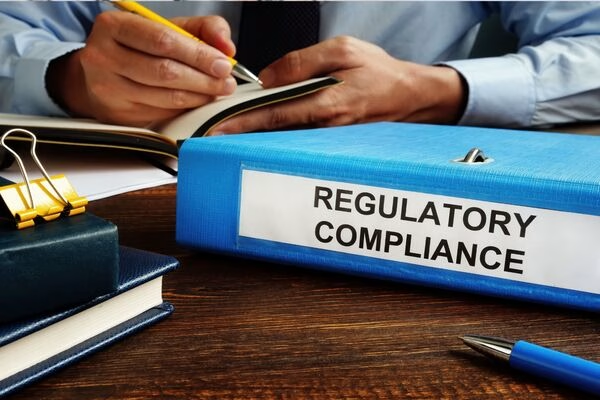
check cashing businesses must adhere to strict regulatory standards and employ strategies for generating revenue. These financial regulations are crucial for maintaining transparency and protecting the business from illegal activities. Understanding how fees are structured and the compliance requirements can help owners manage their operations efficiently.
How check cashing Services Generate Revenue
check cashing businesses earn revenue by charging fees for their services, which are essential to keeping the business operational and profitable.Factors such as the amount of the check, the risk associated with the transaction, and the likelihood of the check being genuine determine the fees.Many check cashing services do not honor personal checks, and even smaller checks are subject to fees that can be a substantial percentage of the check’s value.
These fees cover the costs of verifying checks and managing the associated risk.Local and state regulations, along with the type and value of the check being cashed, can cause these fees to vary. This fee structure helps check cashing businesses maintain a sustainable operation while providing quick and accessible cash services to customers.
Note: In compliance with FinCEN guidelines, check cashing services must verify customer identity and may file Currency Transaction Reports (CTRs) for transactions exceeding $10,000 in cash or Suspicious Activity Reports (SARs) for any unusual behavior or structured transactions.
Check cashing transactions of $3,000 or more in most states require collection of a valid photo ID, transaction purpose, and, in some cases, source of funds documentation.
Regulations Governing check cashing Businesses
check cashing services handle large sums of money, which is why they are subject to strict regulations from the U.S. Department of the Treasury. Under the Bank Secrecy Act (BSA), these businesses must maintain detailed records of all transactions and file information reports for certain types of financial activities.This ensures transparency and helps prevent illegal activities such as money laundering.
To comply with regulations, the business owner must register with the Department of the Treasury and provide necessary information to the Financial Crimes Enforcement Network (FinCEN). Additionally, businesses must renew their registration every two years to avoid potential civil and criminal penalties. These regulations play a vital role in ensuring that check cashing services operate within the law while maintaining the integrity and security of financial transactions.
How Compliance and Revenue Generation Drive the Success of Check Cashing Businesses
Check cashing businesses operate under strict regulatory guidelines that ensure transparency and protect against illegal activities. By adhering to financial regulations, they can offer services that meet both customer needs and legal standards. Understanding these regulations, along with the structure of fees, helps owners run efficient and secure operations.
Revenue generation in check cashing businesses is heavily reliant on fees tied to:
- The check’s value
- The type of transaction
- Associated risks
The fees are structured to cover operational costs, including the verification of checks and mitigating potential losses. As regulations vary by state, these businesses must remain agile to ensure continued profitability and compliance.
Conclusion
Check cashing businesses are essential for providing quick, secure, and reliable financial services to individuals who may not have access to traditional banking methods. By offering a streamlined process for converting checks into cash, these businesses meet a critical need in the market.
They ensure safety and security through rigorous verification and fraud prevention methods while maintaining compliance with regulatory standards. With their round-the-clock availability and efficient service, check cashing businesses continue to be a trusted resource for millions. Whether for managing day-to-day expenses or emergencies, they provide vital financial solutions to diverse communities.
Disclaimer: For any questions about identification requirements, reporting thresholds, or suspicious transaction procedures, please consult with your Order Express location or review our compliance policies at orderexpress.com.
FAQs
What is a check cashing business?
A check cashing business converts checks into cash without requiring a bank account.
How do check cashing businesses generate revenue?
They earn revenue by charging fees for cashing checks based on check value and transaction risk.
Are check cashing services secure?
Yes, businesses implement verification processes and employee training to ensure secure transactions and minimize fraud.
What types of checks can be cashed?
Payroll checks, government-issued checks, and unemployment checks are commonly cashed at these businesses.
What are the regulatory requirements for check cashing services?
These businesses must comply with regulations, including maintaining transaction records and preventing money laundering.

Alvin is a Content and SEO Specialist who creates clear and helpful content about money transfers and payment systems. He focuses on making complex topics easy to understand so readers can learn how these services work in everyday situations.


