


FinTech is transforming cross‑border payments by slashing fees, accelerating settlement from days to minutes, and automating compliance, giving small businesses faster cash flow, stronger global reach, and lower risk. By blending tokenized ledgers, real‑time FX, and embedded KYC/AML checks, modern platforms turn international transfers from a cost burden into a growth engine, aligning with the G20’s 2027 targets for cheaper, one‑hour settlements. Learn how financial service providers support this transformation with secure and accessible payment solutions.
FinTech Innovation Helps Small Businesses Overcome Cross-Border Barriers
Global trade shifts quickly, yet payment systems lag. Small businesses face higher fees, lengthy settlements, and complex compliance checks. These burdens freeze working capital and block growth. FinTech innovation offers relief. Modern platforms merge swift technology with strict regulatory safeguards. They lower costs, accelerate settlement, and embed automated BSA/AML controls. Entrepreneurs can now pay suppliers abroad in minutes rather than days. They also receive funds with transparent fees and real-time tracking.
Businesses can now send money abroad using leading FinTech platforms (for example, regional payout networks). Order Express is evaluating similar functionality but has not yet launched tokenized settlement rails.
Cost and Speed Improvements
Legacy correspondent chains involve many intermediaries. Each takes a fee and adds delay. FinTech rails compress those chains. They often use tokenized balances held in safeguarded accounts. Funds move on distributed ledgers while actual money sits in regulated trusts. Settlement becomes near instant, and FX spreads shrink. Lower costs raise profit margins for exporters and freelancers. Tokenized assets also reduce FX unpredictability. Faster settlements improve cash flow and reduce credit risk.
Compliance-First Design
Regulators expect robust customer due diligence. Modern platforms embed identity verification at onboarding. They screen names against sanctions and politically exposed person lists. They collect beneficial-owner data and verify documents with biometrics. After onboarding, transaction-monitoring engines watch for anomalies. Machine learning flags structuring, layering, and geographic risks. Alerts escalate to human analysts, who may determine that a suspicious activity report (SAR) is required. When warranted, the SAR is filed within the 30-day regulatory window, and its existence is not disclosed to the customer. Currency reports auto-generate when a customer’s aggregated cash in or cash out exceeds USD 10 000 in a single business day, in line with federal CTR rules. Comprehensive OFAC screening and remittance compliance rules are also integrated.
Even domestic services like check cashing increasingly use ID verification and compliance automation to protect consumers.
Comparative Cost Illustration
Traditional bank wires can cost thirty dollars on a two-hundred-dollar remittance. That is fifteen percent lost. FinTech apps often charge under three dollars for the same transfer. As seen in this Nerdwallet comparison, the difference is substantial. Savings accumulate over hundreds of transactions. Lower entry costs allow artisans to test new export markets with minimal risk.
Liquidity and Working-Capital Benefits
Slow settlement forces merchants to hold buffer cash. Rapid receipts let them reinvest profits quickly. This agility supports inventory rotation and market responsiveness. Improved liquidity also enhances credit scores, unlocking further financing. For industries like auto repair, vehicle-related services benefit from accelerated sourcing and delivery of parts.
Tax and Reporting Automation
Cross-border taxes can confuse small firms. Modern platforms integrate tax calculators and auto-populated customs forms. They record transaction metadata required for VAT, GST, or sales-tax declarations. Exporters then meet fiscal obligations without hiring specialists. In the crypto realm, businesses must also understand IRS virtual currency reporting to remain compliant.
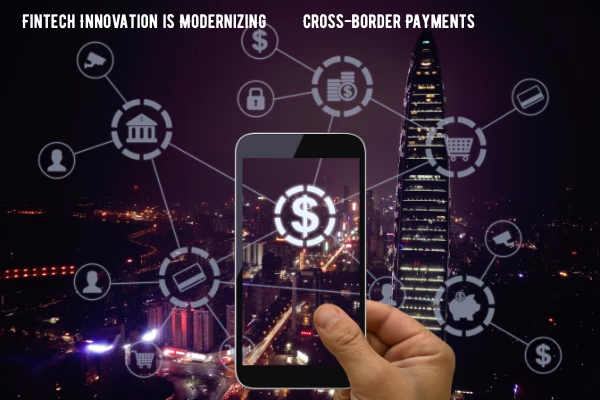
The Urgency to Modernize Cross-Border Payments
International bodies see cross-border efficiency as economic infrastructure. Payment fragmentation hinders trade and financial inclusion. Volatile geopolitics and supply shocks magnify that harm. In line with the G20’s measurable targets for 2027, They want average retail fees under three percent and settlement times under one hour. Meeting these goals demands technology and coordinated supervision.
G20 Targets and Policy Goals
Central banks and finance ministries craft roadmaps with industry input. They press providers to publish transparent pricing, FX spreads, and service levels. They encourage risk-based KYC so compliance remains strong yet proportionate. Also explore CBDC pilot programs for wholesale settlement. These pilots test atomic exchange of different currencies with full regulatory visibility.
Impact on MSMEs
Micro enterprises drive job creation in developing markets. Yet they lack bargaining power with banks. FinTech solutions narrow that gap. Lower fees raise competitiveness in global marketplaces. Real-time receipts let merchants restock faster and avoid stockouts. Transparent compliance support reduces fear of rejected payments or frozen funds. This confidence fuels cross-border expansion and local employment. For example, logistics providers rely on courier services to ensure timely deliveries.
Digital-Identity and Inclusion
Some users lack traditional identification papers. Partnerships with mobile network operators enable e-KYC using SIM-registration data. Biometric verification through selfies confirms liveness and prevents impersonation. Digital-identity wallets then store verifiable credentials for reuse across services. These innovations extend to services such as booking plane tickets and managing cross-border travel needs.
Order Express does not yet offer digital-identity wallets or CBDC settlement. These capabilities are highlighted as broader market trends.
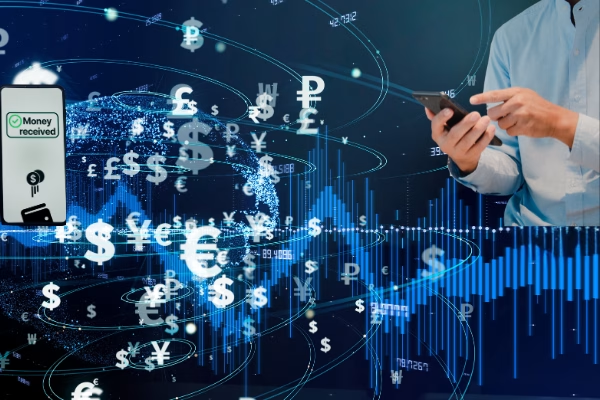
Simple Interfaces Built on Complex Technology Drive Inclusion
Technology can be daunting, so leading platforms hide complexity. They offer intuitive dashboards, chat widgets, or point-of-sale plugins. Underneath, sophisticated engines manage routing, liquidity, and compliance.
Blockchain and Tokenization
Permissioned blockchains provide immutable ledgers under agreed governance. Smart contracts execute transfers once compliance checks pass. Tokenized deposits represent claims on regulated accounts, not volatile cryptocurrencies. This design delivers speed without losing oversight. Auditors can trace each hop, yet customer data stays encrypted. These elements are explored in depth in Chainalysis tokenization reports.
User-Friendly Experiences
Many small merchants rely on mobile phones, not desktops. FinTech apps therefore support low-bandwidth modes and local languages. QR codes enable instant invoices. Push notifications confirm receipt in seconds. Refunds process through the same channel, preserving audit trails. Customer-support chatbots answer policy questions and escalate complex issues. A commitment to usability is outlined in the financial services company.
Offline and Low-Connectivity Modes
Rural regions suffer unstable networks. Certain wallets allow offline signing of payment instructions. When connectivity returns, transactions broadcast and settle. This feature ensures commerce continues during outages, supporting resilience. Order Express does not currently support offline-signed transactions; the feature is described here only as an industry example. Offline capabilities benefit underserved communities and boost financial inclusion.
Data Analytics Strengthen Risk Management
Real-time dashboards show regulators anonymized flow patterns. All customer data are encrypted in transit and at rest, and access is restricted to authorised personnel in accordance with GLBA requirements. Predictive models anticipate fraud spikes linked to events like flash sales. Providers adjust risk thresholds dynamically, avoiding blunt blanket holds. Aggregated insights also inform policy, revealing where high fees persist and which corridors need competition.
Strategic Alliances Drive Inclusive Global Payments
Fragmented cross‑border payments still drain SMEs, but alliances now blend bank licences, FinTech speed, and public‑sector oversight. Together they lower fees, widen access, and anchor innovation to clear governance, building a network nobody could create alone.
Bank–FinTech Collaborations
Regional banks white‑label FinTech rails, pairing sleek mobile UX with trusted branch support. Shared dashboards merge on‑us and off‑us data, spotting anomalies early and converting hidden FX spreads into transparent fee revenue.
Public‑Private Payment Networks
Multilateral lenders bankroll instant‑payment hubs while regulators watch events in real time. Local FinTechs connect via open APIs, clearing domestic‑currency transfers in under a minute without suspense accounts.
Alliance Case Studies & Results
A Kenyan artisan selling to Germany now receives shillings instantly, losing only two percent. Automated checks run silently, shrinking her working‑capital cycle and funding faster inventory turns. She relies on services listed through tools to cash out safely.
Alliance Governance & Dispute Resolution
Arbitration councils staffed by banks, FinTechs, and supervisors set evidence standards and strict timelines. Immutable ledgers reduce errors, and transparent rules give merchants confidence in fair outcomes.
Transparency Builds Payment‑System Trust
Platforms publish delivery times, ESG metrics, and audited reserve reports. Clear fee tables and data‑privacy guarantees replace cash couriers, cutting robbery risk and boosting user adoption.
Regional Corridor Alliances & FX Pools
High‑volume lanes such as US–Mexico aggregate liquidity and hedge with forwards, slicing spreads for migrants and freelancers. QR‑code interoperability trials extend reach to low‑bandwidth wallets. Custom business services from providers like Order Express help meet regional corridor needs.
Insurance & Guarantees in Alliances
Consortium underwriters refund users if transfers exceed promised windows. Guarantees ease first‑time adoption and satisfy new consumer‑protection rules across multiple jurisdictions.
Ongoing Regulatory–Industry Engagement
Quarterly roundtables share anonymized typology data, refine travel‑rule tooling, and co‑create training for MSMEs on onboarding, tax basics, and fraud avoidance, keeping compliance proportional yet robust. Forums such as Travel.State.Gov help align international protocols.
International Standards & CBDC Alliances
FATF, ISO, and BIS align messaging, identity, and travel rules. Wholesale CBDC pilots test atomic PvP settlement, trimming pre‑funding needs; FinTech wallets will follow once policy stabilises.
Key challenges alliances must still solve
- Regulatory fragmentation stalls multi‑party rails: Licensing, tax and AML rules diverge by country, confusing providers and drowning MSMEs in paperwork.
- Governance conflicts in public instant‑pay hubs: Some regulators operate their own rails, blurring referee‑player lines and deterring private‑sector upgrades.
- Security gaps in crypto‑enabled channels: Encryption standards, reversibility rules and identity checks vary across networks, leaving exploitable cracks and eroding user trust.
- Tax and data barriers drive informality: High VAT, withholding taxes or data‑localization laws push merchants to cash, cutting them off from credit and scale.
Conclusion
Cross‑border payments no longer need to drain resources or delay growth. FinTech platforms now deliver near‑instant settlement, transparent pricing, and built‑in compliance, freeing working capital and confidence. By merging tokenized ledgers, automated KYC, and partner bank liquidity, they transform international transfers from a cost center into a competitive edge. Small and micro businesses can quote globally, pay suppliers in minutes, and reinvest proceeds the same day. They also stay resilient against currency swings and supply‑chain shocks through data‑driven insights. Policymakers and providers that collaborate on open standards and proportionate regulation will accelerate this momentum, hitting the G20’s 2027 speed and cost targets early. Entrepreneurs who adopt modern rails today will unlock new markets, stronger customer trust, and sustainable expansion tomorrow.
Frequently Asked Questions
Why choose FinTech for cross-border payments?
FinTech compresses intermediaries, uses tokenised ledgers, and real-time FX, cutting fees dramatically. Near-instant settlement improves liquidity and reduces credit risk. Transparent pricing supports budgeting and regulatory compliance.
How do platforms meet BSA / AML obligations?
They embed KYC at onboarding, verifying identity and beneficial owners. And screen names against sanctions and politically exposed person lists. They monitor transactions, flag anomalies, and file SARs within 30 days. They auto-generate CTRs when cash activity exceeds USD ten thousand daily.
Are tokenised ledgers safe and regulated?
Tokenised ledgers represent claims on safeguarded trust accounts, not volatile crypto. Transfers occur on permissioned chains with defined governance. Auditors can trace every hop without exposing customer data. Regulated custodians hold underlying funds under state supervision.
Does Order Express already use blockchain settlement?
Order Express still tests tokenised settlement and has not launched it yet. Current transfers run on traditional permitted money-service rails. Any future launch will follow licensing and regulatory approvals.
What protections guard customer data and privacy?
Platforms encrypt data in transit and at rest using industry standards. Access is limited to authorised staff with role-based controls. GLBA policies mandate periodic audits and written safeguards. Anonymous dashboards share only aggregated information with regulators.

John is a Content & SEO Specialist who enjoys breaking down complex financial topics, like cross-border payments and money transfers, into content that’s easy to understand. He focuses on creating practical, search-driven content that helps people find answers and make informed decisions.


