


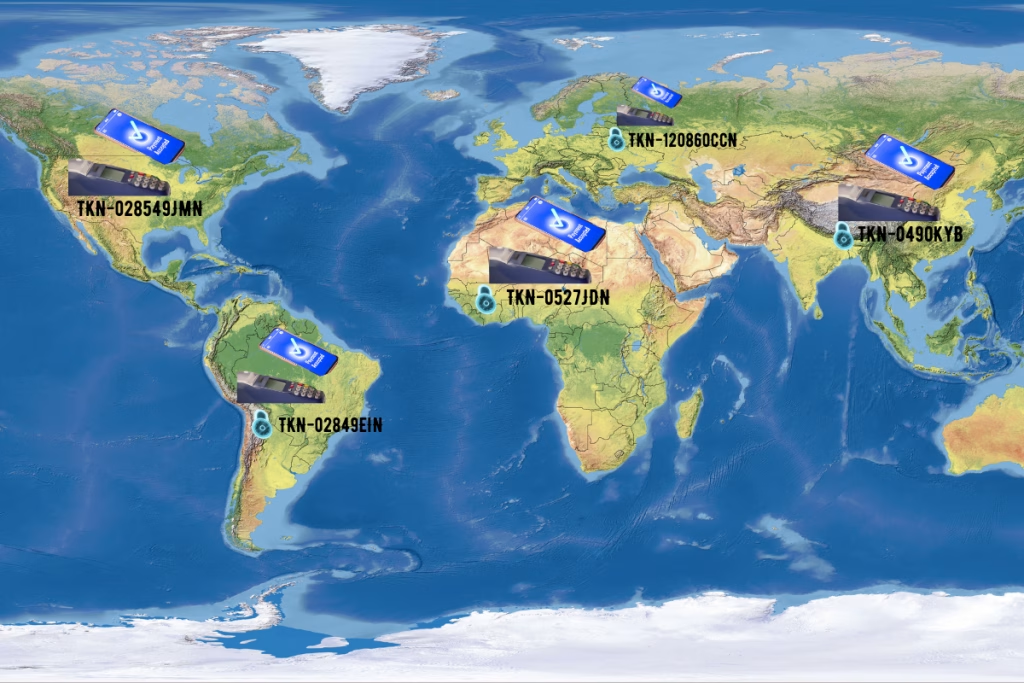
Tokenization in cross-border payments is a security method that replaces sensitive banking or card details with unique digital tokens. These tokens travel through international payment networks without exposing real financial data, reducing fraud and helping businesses comply with global privacy laws like GDPR and CCPA. Widely adopted by FinTech’s and financial service institutions, tokenization enables faster settlement, lower transaction costs, and safer cross-border transfers, making it a cornerstone for modern global commerce.
This guide explains tokenization, its potential role in future Order Express solutions, and how you can apply it in your business.
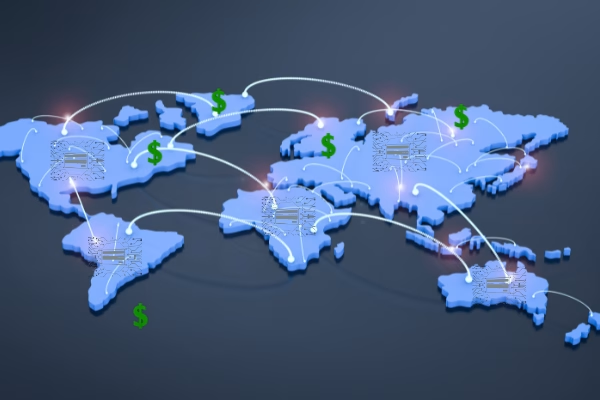
What Is Tokenization and Why It Matters
- Tokenization replaces sensitive data, such as card numbers, bank details or passport IDs, with a randomly generated, unique token.
- The token is used for processing, while the real data stays hidden inside a secure vault. If intercepted, the token has no value without the vault’s internal mapping table, making it useless to attackers, provided that vault access controls such as multi-factor authentication and hardware security modules are in place.
A Quick History Lesson
- 2001 – E-commerce merchants begin using tokenization to avoid storing cardholder data subject to PCI-DSS audits.
- 2014 – Apple Pay introduces device-based tokens, making tap-and-go payments both easier and more secure.
- 2020–2024 – Visa, Mastercard, and fintech APIs expand tokenization to 200+ markets, enabling global payment scenarios.
- 2025 – U.S. to Mexico pilots show tokenized payouts clear in minutes. Digital money transfer services are now evaluating token use for faster corridor settlement.
Key Benefits of Tokenization in Cross-Border Payments
Tokenization offers multiple advantages that directly improve security, speed, compliance, customer satisfaction, and operational costs in international transactions.
Stronger Security, Lower Fraud
Removing real account numbers reduces the attack surface and limits exposure in cross-border payment flows. For high-risk corridors, single-use tokens that expire after one transaction are now possible. This stops replay attacks before they even start. Tokenization feeds sender and beneficiary identifiers into our existing BSA/AML rules engine, allowing all current dollar based alert thresholds and sanctions screening to run before funds leave the United States.
Faster, Cheaper Settlement
Traditional wires pass through multiple banks, each adding time and fees. Tokenized credentials allow funds to move over local, instant-payment rails. This bypasses SWIFT, reducing delays and operational costs. Real time FX locks have lowered foreign exchange mark ups for SMEs in our check cashing operations, based on aggregated internal observations.
Regulatory & Compliance Ease
While tokens can narrow PCI DSS audit scope when the underlying identifier cannot be reversed outside a secure vault, they are still treated as non-public personal information under GLBA and as personal data under GDPR and CCPA because the vault can reconnect the data to an individual. Separating tokenised data from core systems lowers PCI overhead, but record-keeping, suspicious activity reporting and currency transaction reporting obligations remain unchanged. Tokenised transaction logs and mapping tables should therefore be retained for at least five years in line with Bank Secrecy Act requirements.
Better Customer Experience
Tokens allow one-click repeat purchases without re-entering payment details. Baymard Institute reports that 18% of shoppers abandon due to long checkouts. Stored tokens reduce this friction and help increase conversion rates. Features like auto-updating expired cards support recurring payments and ongoing billing cycles seamlessly.
Know Your Customer and source-of-funds checks continue to apply automatically when cumulative transaction values reach program thresholds.
Hard-Dollar Savings You Can Bank
Deloitte estimates handling a single piece of sensitive payment data costs $2.70. Our anonymised, aggregated operations study indicates that tokenisation can cut these costs by as much as 80 percent. Detailed methodology is available on request.
Challenges and Risks You Need to Know
Tokenization improves payments but comes with operational and technical challenges that businesses must proactively manage for reliable implementation.
- Fragmented Standards: Tokens issued by one network may not be readable by another provider, making reconciliation more complex. To avoid this, choose partners that support EMVCo and ISO 20022 mappings for maximum interoperability.
- Legacy Tech Debt: Older ERP or POS systems may not accept token fields, leading to errors or failed payments. Use middleware or custom API solutions to translate tokens into readable formats during real-time processing.
- Vault Security: The token vault is a single point of failure if not properly secured. Vault keys are now protected using HSM clusters with full geo-redundancy and 24/7 monitoring.
- Regulatory Patchwork & Data Residency: Some regions, like India or Nigeria, require sensitive data to remain on-shore. Multi-region token vaults ensure local storage that aligns with legal mandates.
- Performance Trade-Offs: Events like Singles’ Day or El Buen Fin can overload vaults. Poor scaling causes transaction delays. Edge caching helps sustain over 1,500 token exchanges per second with under 50 ms latency.

Industry Applications and Real‑World Case Studies
Tokenization is actively transforming cross-border payments across industries by enhancing speed, security, and compliance in real-world use cases.
Financial Services
Banks and money transfer networks use network tokens for card-to-account payouts. This reduces settlement time from D+2 to just seconds. Small business clients are already paying overseas contractors via tokenized PANs.
E‑Commerce & Marketplaces
A Miami-based fashion marketplace sells to LATAM shoppers and stores cards as tokens. This meets PCI standards and enables one-click checkout in 17 currencies. Chargeback fraud dropped 22% quarter-over-quarter after adopting 3-D Secure tokens.
Supply‑Chain Payouts
A U.S. wholesaler pays 600 Brazilian micro-suppliers. Old process: 48-hour wires at $40 per payment. Now, tokenized bank details feed into PIX via API. This cut costs by 85%, improved cash flow by two days, and boosted supplier NPS by 27 points.
Travel & Hospitality
Hotel kiosks and booking tools now let guests tokenize a card upfront, making contactless check-ins easier and faster.
Gaming & Digital Content
Massively multiplayer games pay creators in many countries using tokenized wallets. Tokens block bots from draining balances and preserve in-game economic value.
Emerging Tech: IoT & Blockchain
Smart vending machines use device-bound tokens to block QR code theft. Stablecoin ecosystems explore asset-backed tokens for T+0 settlement. Limited-corridor blockchain pilots are expected to go live by 2026.
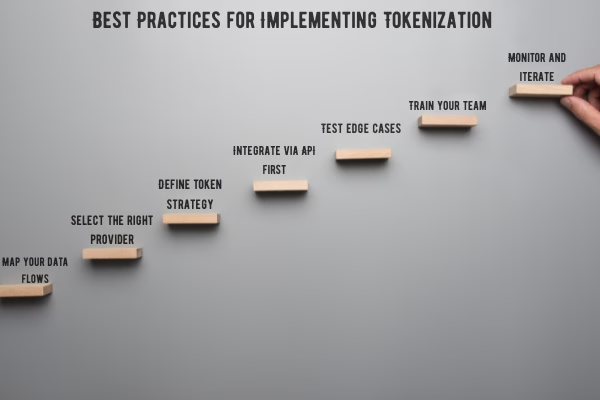
Best Practices for Implementing Tokenization
Seven-Step Integration Plan
- Map your data flows: Identify every location where sensitive data is captured, stored, or transmitted.
- Select the right provider: Choose one with PCI-DSS Level 1, SOC 2 Type II, and international remittance coverage.
- Define token strategy: Use static tokens for recurring billing and dynamic ones for single-use or high-risk transactions.
- Integrate via API first: REST/JSON endpoints tokenize at the source, keeping your servers unaware of raw PANs.
- Test edge cases: Simulate refunds, partial captures, failed payments, and large-value cross-border payouts in staging.
- Train your team: Ensure fraud, operations, and customer support teams understand tokenized workflows clearly.
- Monitor and iterate: Use a secure merchant dashboard to catch anomalies and rotate tokens when risk scores rise.
Compliance Fast‑Track Checklist
- Map tokens to GDPR Article 4 as “pseudonymised data” for legal clarity.
- Document data-flow diagrams to reduce PCI self-assessment from SAQ D to SAQ A.
- Feed token events into your SIEM to log activity under SOC 2 Control CC7.
- Run a yearly vault penetration test using a CREST-accredited third-party vendor.
Governance Matters
Create a Token Council of leads from security, product, legal, and finance who meet quarterly to review metrics, incidents, and strategy. This ensures tokenization supports business growth goals and not just compliance or IT operations.
Future Trends: Looking Toward 2030
- AI-Generated Dynamic Tokens: Machine-learning models will soon set token lifespans in real time. Seconds for high-risk areas, days for trusted partners. This balances low-friction user experience with strong, adaptable security for global transactions across variable risk environments.
- Quantum-Resistant Token Vaults: Quantum computing is coming. Token vault encryption will evolve using lattice-based and hash-based algorithms to resist brute-force decryption. This shift will ensure vaults remain secure even as computing power grows exponentially over the next decade.
- Tokenization Meets CBDCs: Cross-border CBDC programs will require added privacy to prevent deanonymization of users. Tokenization offers a pseudonymization layer aligned with BIS Project Agorá.
- DeFi and Programmable Money: In decentralized finance, smart contracts may control escrow and compliance before releasing tokenized funds automatically. Conditions like verified shipping data or milestones could trigger payouts across global digital supply chains and creator platforms.
- Industry Forecast: IDC projects the global tokenization market will reach USD 5.6 billion by 2027. That’s a 19% compound annual growth rate. Growth is driven mainly by demand for cross-border e-commerce, real-time payouts, and increasing digital compliance needs worldwide.
Do’s & Don’ts Checklist
Do’s
- Choose a PCI‑Level 1 provider
- Document data flows end‑to‑end
- Rotate encryption keys regularly
- Monitor vault access with SIEM tooling
- Educate customers on security perks
Don’ts
- Rely on outdated legacy gateways
- Assume tokenization solves all compliance duties
- Ignore staff training
- Store tokens in plain text
- Neglect customer consent for data use
Future Trends in Cross‑Border Payments
- Instant settlement: Modern rails using ISO 20022 clear funds in under 60 seconds, shrinking FX float and freeing working capital.
- Tokenization: Vaulted PII/PAN data cuts PCI‑DSS and GDPR scope while preserving full BSA/OFAC audit trails.
- API‑first access: Self‑service sandboxes issue keys in minutes, letting developers test mock payouts and flip to production without batch files.
- Embedded compliance: Pre‑configured KYC/KYB, sanctions screening and corridor risk rules auto‑monitor every transaction and escalate anomalies.
- Parallel onboarding: Technical, commercial and regulatory tracks run simultaneously, so many firms send their first live payment within two weeks, subject to final compliance approval.
- Success monitoring: Dedicated managers track straight‑through‑processing, FX spread and chargebacks, fine‑tuning routes as volumes grow.
Disclaimer: Tokenization and instant‑settlement technologies do not modify or waive statutory obligations under the Bank Secrecy Act, USA PATRIOT Act, OFAC sanctions regulations, GLBA, PCI DSS, GDPR or CCPA. All requirements for customer identification, due diligence, sanctions screening, record retention (minimum five years) and suspicious activity reporting remain in full force for tokenized or real‑time transactions.
Conclusion
In 2025, tokenization isn’t just a security upgrade, it’s a strategic enabler for faster, cheaper, and more compliant cross-border payments. From freelancers in LATAM to multinational finance teams, businesses using tokenization are already seeing real-world benefits: reduced fraud, smoother compliance, and major operational savings. By partnering with providers who specialize in vehicle registration, bill pay, and more, organizations can leap ahead with tokenized payment flows built for the modern global economy. Whether you’re aiming to streamline payout operations, safeguard sensitive data, or unlock new market corridors, the time to act is now. Tokenization isn’t the future, It’s the new standard. Ready to start turning sensitive data into secure, scalable growth? The rails are already here. You just need to get on board.
Frequently Asked Questions
How does tokenization actually work in payment systems?
Tokenization replaces payment data with a unique, non-sensitive token. The real data remains securely stored in a vault. If stolen, the token is useless outside the system that created it. Tokens can be static or dynamic for one-time or repeat use. They move across payment systems without exposing actual card or account details. This minimizes fraud risk in global transactions.
Why is tokenization important for international payments in 2025?
Cross-border payments still face fraud, delays, and high fees. Tokenization helps fix these problems effectively. It speeds up settlement through local instant-payment rails. It ensures easier compliance with privacy laws like GDPR and CCPA. Tokenization reduces costs and improves the checkout experience for global users.
Is tokenization compliant with global financial regulations?
Yes, tokenization aligns with PCI-DSS, GDPR, CCPA, and AML rules by minimizing exposure to sensitive data. Tokens aren’t personally identifiable, which simplifies audits and reduces breach risk. Using trusted providers ensures local data compliance. Maintaining clear documentation keeps systems audit-ready.
What are the technical challenges of implementing tokenization?
Older systems may not support tokens, causing disruptions. Inconsistent token formats affect integrations. Vault security must be strong. Peak traffic may slow performance. An API-first provider like Order Express solves these issues.
How can tokenization improve customer experience and retention?
Tokenization speeds repeat payments without re-entry. It reduces checkout friction, supports subscriptions, and keeps services running even with expired cards.

John is a Content & SEO Specialist who enjoys breaking down complex financial topics, like cross-border payments and money transfers, into content that’s easy to understand. He focuses on creating practical, search-driven content that helps people find answers and make informed decisions.


