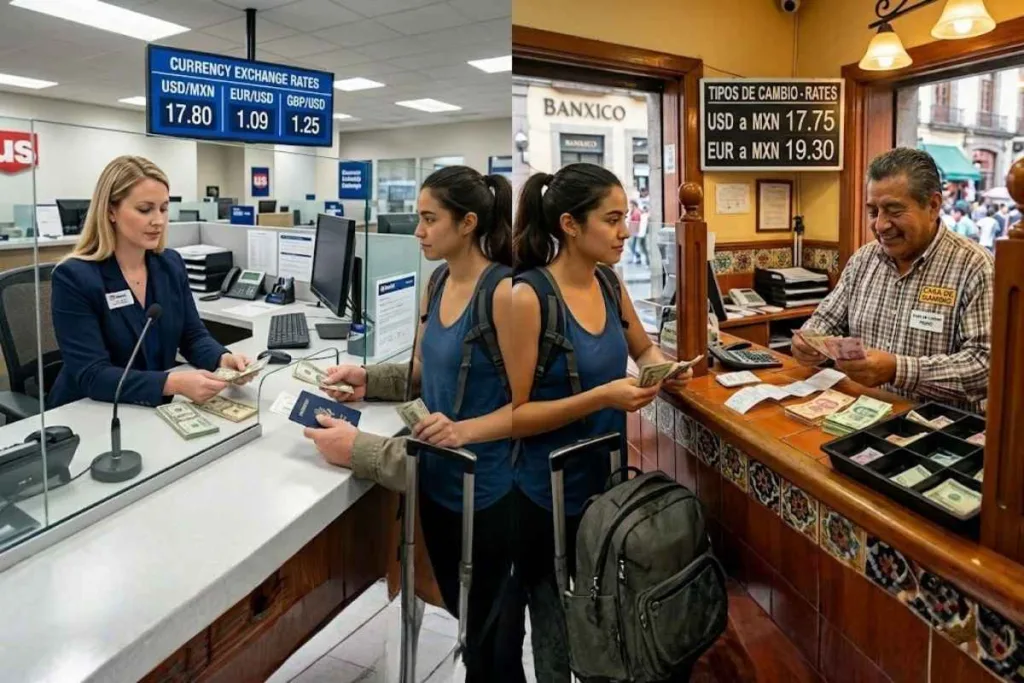
It is usually more practical to exchange currency in the United States before traveling to Mexico. Your final outcome depends on exchange rate spreads, fees and where you complete the transaction.
Many travelers prefer exchanging currency in the United States because rate transparency and identification requirements are clearer before departure. However, local Mexican exchange houses may sometimes offer competitive rates depending on market conditions and transaction size.
Travelers frequently ask:
- Where to exchange USD to pesos before a trip
- What is the best place to exchange money for a Mexico trip
- Which USD to MXN exchange tips can help maximize value
The answer depends on exchange rate transparency, fees, convenience, and when the exchange occurs.
If you are comparing options, you can also review our guide on how currency exchange rates and fees work to better understand how providers structure pricing and what influences your final exchange amount.
Exchange Rate Transparency And Pricing Structure
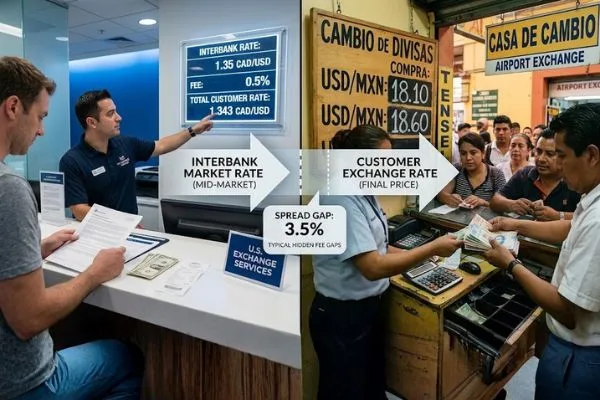
The first key factor involves how exchange rates and pricing spreads are disclosed. Rate visibility directly affects how much Mexican pesos you receive for your dollars.
How Exchange Rate Spreads Affect Your Final Amount
Currency providers build a spread or markup into the exchange rate they quote customers. This spread represents the difference between the wholesale interbank rate and the customer rate, which you can compare against publicly available benchmarks such as the Federal Reserve H.10 exchange rate data.
Even a small percentage difference in spread can noticeably impact larger exchange amounts. Travelers exchanging several hundred dollars may see meaningful variation depending on pricing transparency.
When exchanging in the United States, you can often compare displayed rates before committing. That visibility may help you evaluate whether the offered rate aligns with your expectations.
In some Mexican tourist areas, posted rates may vary by location and demand. Airport kiosks in either country may reflect wider spreads due to convenience pricing.
Before completing a transaction, consider asking these practical questions:
- What exchange rate is being applied to my transaction today?
- Are any additional service fees included in this quote?
- What total pesos will I receive after all pricing adjustments?
Understanding how exchange rates are influenced at a policy level can also provide context, as outlined in U.S. Treasury exchange rate policy guidance.
Comparing Convenience Locations Versus Local Providers
| Factor | United States | Mexico |
| Rate Transparency | Generally higher | Varies by provider |
| Convenience Before Travel | High | Not applicable until arrival |
| Price Variability | Typically more predictable | May vary by tourist area |
| Documentation Requirements | Usually clear before travel | May vary by provider |
| Airport Pricing Risk | Higher spreads possible | Higher spreads possible |
Where you exchange currency matters as much as the country where you exchange. Airports, hotels and high-traffic areas typically price for convenience rather than rate efficiency.
In the United States, regulated retail financial services providers often display rates clearly. This allows you to review your dollar-to-peso conversion before committing funds.
In Mexico, independent exchange houses known as casas de cambio may offer competitive pricing. However, rate variability can increase depending on tourist demand and regional competition.
If you are already sending money internationally or purchasing money orders, consolidating services may simplify preparation. Some customers prefer handling currency exchange at the same time as a transaction through money transfer services.
Order Express provides currency exchange services at company-owned locations and operates as a registered Money Services Business in accordance with applicable requirements. As a regulated Money Services Business (MSB), providers may be subject to anti-money laundering (AML) requirements that can include customer verification, transaction monitoring, recordkeeping, and suspicious activity reporting obligations.
You can review the company’s background and general information about its services on the Order Express company background page.
Transaction Timing And Regulatory Considerations
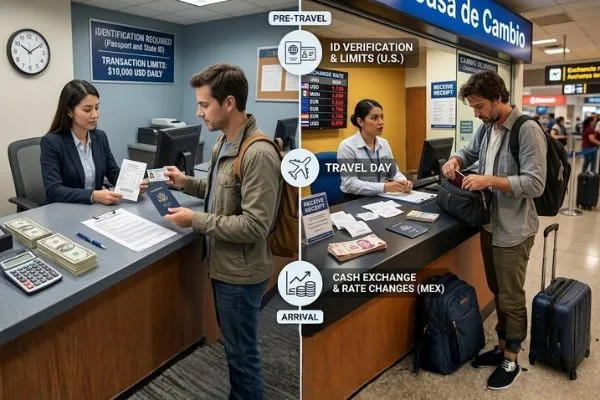
The second major factor involves timing, identification and transaction thresholds. These practical requirements can influence whether exchanging in the United States or Mexico feels more efficient.
Identity Verification And Transaction Thresholds
Currency exchange transactions may require identification depending on the amount exchanged. Under the Bank Secrecy Act framework administered by the Financial Crimes Enforcement Network, financial institutions are subject to identification and recordkeeping standards at defined thresholds.
For example, transactions involving certain dollar amounts can trigger recordkeeping obligations for financial institutions. Customers may be asked to present valid government-issued identification depending on the transaction amount and provider requirements.
Completing your exchange in the United States before travel may allow you to gather documents comfortably. Waiting until arrival could require searching for acceptable identification after a flight.
Order Express operates as a licensed Money Services Business and applies internal controls consistent with applicable regulatory requirements.
Market Timing And Travel Planning Practicalities
Exchange rates fluctuate daily based on foreign currency markets and demand. The rate available one week before travel may differ from the rate on arrival, and general consumer guidance on cross-border transactions is available through the Consumer Financial Protection Bureau’s sending money resources.
Exchanging before departure can help you budget your travel spending more precisely. You know your peso amount before leaving and avoid immediate airport exchanges.
Exchanging in Mexico may expose you to rate variability influenced by tourism patterns. Requirements may also differ in Mexico depending on local financial regulations, provider policies, and operational procedures. Border cities and resort areas may reflect pricing differences compared to non-tourist regions.
If you also plan to send funds or purchase money orders during your trip, separating those needs may help. Currency exchange serves immediate cash needs, while larger financial planning decisions may involve broader retail support options such as other financial services.
For many travelers, a balanced approach works well:
- Exchange a moderate amount in the United States before departure.
- Monitor posted rates in Mexico for any additional needs.
- Avoid high-pressure airport exchanges when possible.
Exchanging larger amounts without comparing exchange rates, spreads, and fees may significantly reduce the total number of pesos received. Taking time to compare available options can improve overall value.
Key Takeaways
- Exchanging in the United States often provides clearer rate visibility before travel decisions are finalized.
- Exchange rate spreads and markup differences directly affect how many pesos you receive.
- Identification requirements may apply depending on transaction amount and provider compliance policies.
- Airport and tourist locations in either country may reflect wider pricing spreads.
- Preparing before departure can simplify budgeting and reduce last-minute exchange pressure.
Conclusion
For most travelers, exchanging currency in the United States may provide clearer pricing visibility and more predictable transaction preparation. Exchange rate spreads and fee transparency represent the first major factor influencing your final peso amount. Identification requirements and regulatory thresholds form the second key consideration affecting convenience and timing. Completing your exchange before departure may support budgeting clarity and smoother arrival logistics. However, competitive rates can sometimes appear in Mexican exchange houses depending on location and market conditions. Review posted rates carefully, understand applied spreads and prepare valid identification when needed. Thoughtful comparison allows you to approach your transaction with confidence and realistic expectations.
Order Express has served customers since 1993 as a registered Money Services Business, providing currency exchange and other financial services through company-owned and authorized service locations.
Check today’s exchange rates or visit a nearby Order Express location to prepare your transaction before travel. Rates are subject to change and may vary by location and transaction size.
Disclaimer: This content is for informational purposes only and does not constitute financial advice. Exchange rates, fees, availability and verification requirements may vary by provider, transaction type and location.
Frequently Asked Questions
Q: Should I Exchange All My Money Before Traveling To Mexico?
A: Many travelers exchange a portion before departure and monitor rates locally. This approach balances preparedness with flexibility.
Q: Do Exchange Rates Differ Significantly Between The U.S. And Mexico?
A: Rates may vary based on provider spreads, location type and market demand. Comparing posted rates helps clarify differences.
Q: Will I Need Identification To Exchange Currency?
A: Identification may be required depending on the transaction amount and provider policies. Bring a valid government-issued ID.
Q: Are Airport Exchange Locations More Expensive?
A: Airport locations in either country may apply wider spreads due to convenience pricing. Checking alternatives may help.
Q: Can I Combine Currency Exchange With A Money Transfer Transaction?
A: Some retail financial services providers allow multiple services during one visit. Confirm available services at your chosen location.

John is a Content & SEO Specialist who enjoys breaking down complex financial topics, like cross-border payments and money transfers, into content that’s easy to understand. He focuses on creating practical, search-driven content that helps people find answers and make informed decisions.