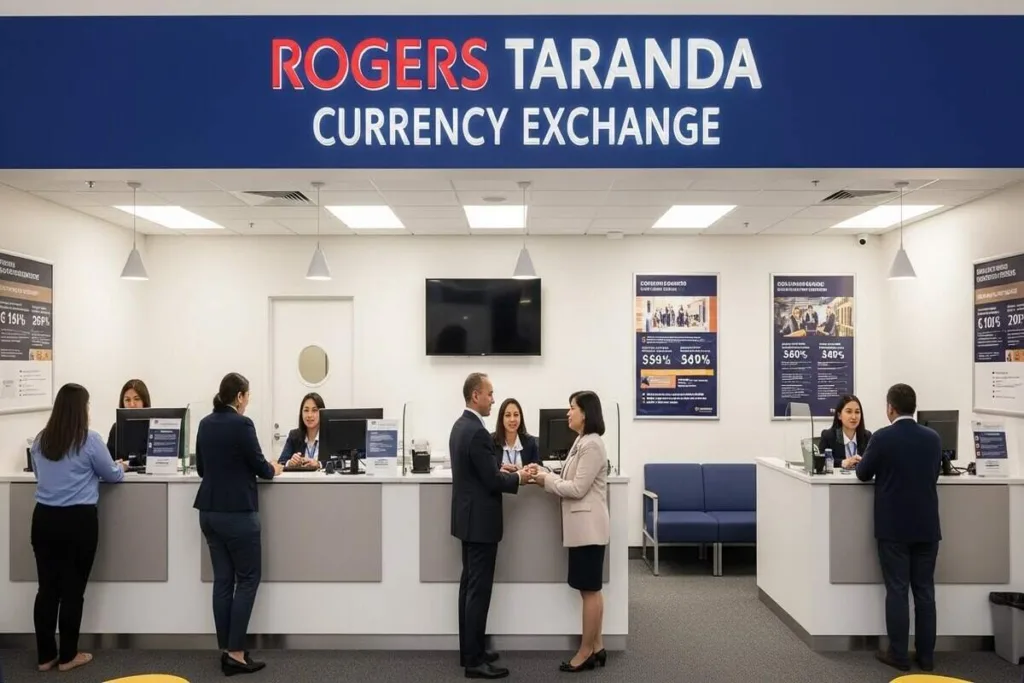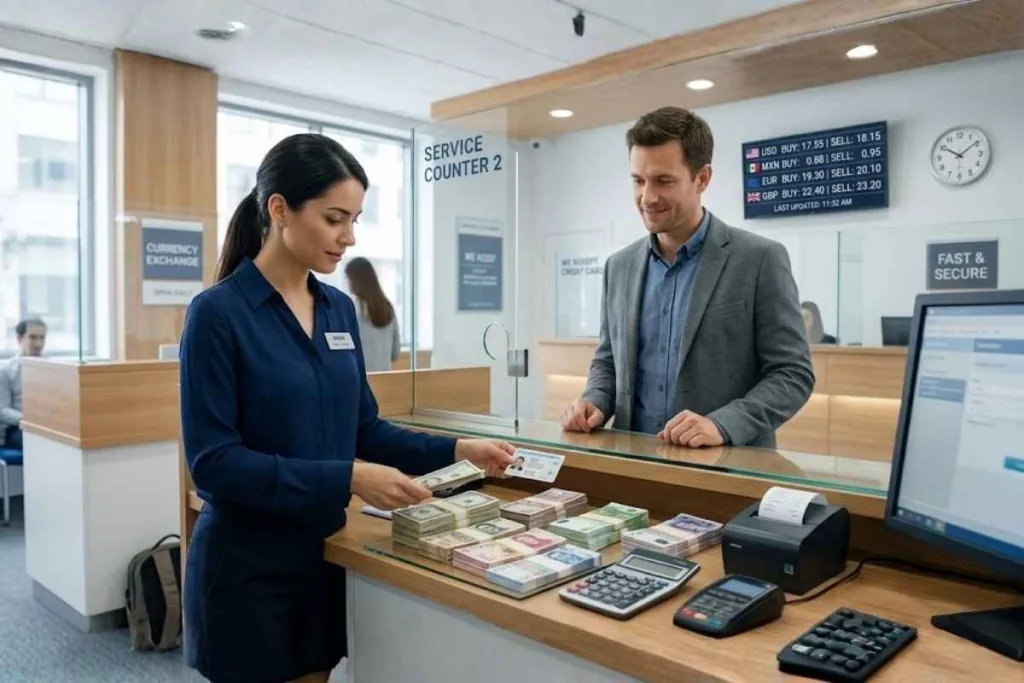
Cash currency exchange transactions usually take only a few minutes at most physical exchange locations. The exact processing time depends primarily on two operational factors: the service workflow at the counter and required identity verification procedures.
Understanding these two drivers helps customers anticipate how quickly they can complete an exchange and continue their day. This guide explains the main factors that determine processing time and how they affect everyday transactions.
For a broader overview of exchange mechanics, see the pillar guide on Currency Exchange Fundamentals For Everyday Transactions.
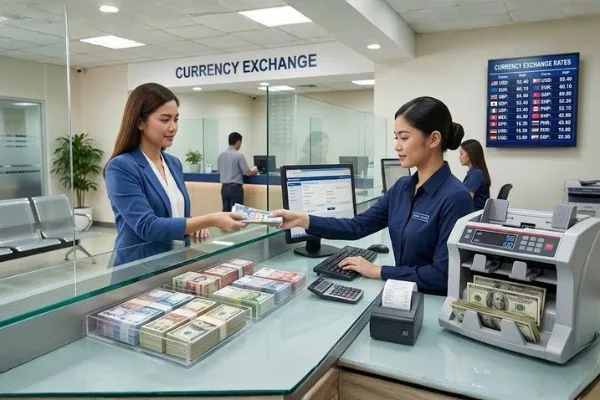
Transaction Processing Workflow Determines Immediate Service Speed
The first driver affecting exchange speed is the operational workflow used by the currency exchange provider. Most walk-in transactions move quickly because the process follows a standardized service sequence designed for fast cash handling.
Counter Processing Steps For Cash Exchange Transactions
Most physical exchange counters process transactions through a short operational sequence designed to minimize waiting time. When documentation is ready and the transaction amount is straightforward, the exchange normally completes within several minutes.
Typical counter processing includes the following steps:
- Customer presents the currency they want to exchange.
- The agent confirms the exchange rate and calculates the converted amount.
- The agent counts and verifies the provided banknotes.
- The system records the transaction and prints the receipt.
- The agent provides the exchanged currency and final documentation.
When these steps occur without additional review, the entire exchange often finishes within three to seven minutes.
The exchange rate applied during the transaction typically follows current foreign currency values published by financial authorities, including Federal Reserve foreign exchange rate data used by financial markets to track global currency movements.
System Recording And Transaction Documentation
Every exchange transaction must be recorded through the provider’s transaction system before the service agent releases converted funds. This system recording ensures that the exchange location maintains accurate financial records and transaction history.
At many exchange providers, the internal system automatically captures transaction details such as currency type, exchange rate and customer information. Recording transactions through internal systems helps providers track financial activity and maintain consistent operational records across services.
Financial service businesses that perform currency exchange must maintain transaction documentation and operational records to support regulatory oversight and internal monitoring. Government oversight of international currency valuation and exchange rate policy is outlined in U.S. Treasury exchange rate policy guidance.
Customers often complete currency exchange while also managing related services such as international remittances through providers that offer money transfer services within the same financial service location.
Cash Counting And Verification Procedures
Cash verification also affects how long the exchange process takes at the counter. The agent must count the provided banknotes carefully to ensure the correct amount is processed.
For larger amounts, the counting process may include both manual verification and automated counting machines. This additional verification protects both the customer and the service provider from potential discrepancies.
Even with these safeguards, counting typically adds only a short amount of time to the exchange process.
For most walk-in customers exchanging standard amounts, the counter workflow completes in under ten minutes from start to finish.
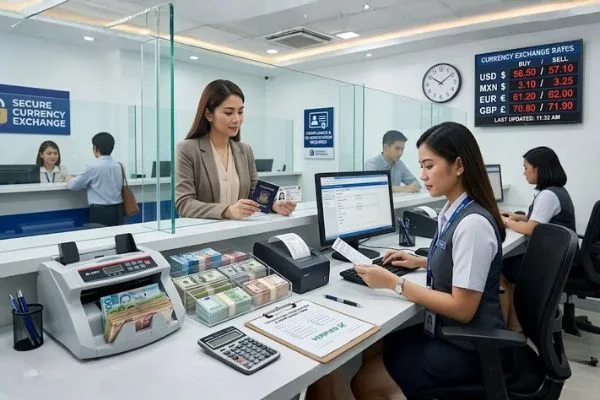
Identity Verification And Compliance Checks Can Extend Processing Time
The second factor influencing transaction time is customer identity verification and regulatory compliance procedures. Financial service providers must verify certain customer information before completing some exchange transactions.
These requirements exist to monitor financial activity and prevent misuse of money service businesses.
Identification Requirements For Certain Exchange Amounts
Currency exchange providers may request identification when transactions reach certain reporting or monitoring thresholds. For example, some exchanges require identity verification when a transaction equals or exceeds specific cash thresholds within a defined time period.
Currency exchange providers may document customer identification when transactions reach one thousand dollars or more within a forty-eight hour period.
When identification is required, customers may present documents such as:
- Passport
- United States driver’s license
- United States identification card
- Permanent resident card
- Other approved government identification
Providing identification usually adds only a few minutes to the exchange process when documents are ready.
Consumers who want to better understand financial transaction safety and identity verification practices can review educational materials provided through the FDIC Money Smart consumer education program.
Customer Information Recording And Verification
After identification is presented, the agent records key details in the transaction system before completing the exchange. The system typically captures the customer’s name, identification number and issuing authority for the document presented.
The provider may also record additional transaction information including:
- Date of birth
- Nationality when applicable
- Identification issue and expiration dates
- Transaction amount and currency types
Capturing this information ensures the transaction complies with financial monitoring procedures used by money service businesses.
Many financial service locations also provide additional offerings such as bill payments or financial products through other financial services available to customers completing everyday transactions.
Additional Review For Larger Cash Transactions
Transactions involving higher cash amounts may require additional verification steps before completion. These reviews help providers confirm that transactions comply with monitoring standards designed to detect unusual financial activity.
Additional review steps may include:
- Confirming transaction purpose
- Verifying identification details
- Reviewing aggregated transactions completed during the same business day
These checks typically occur quickly but may extend the transaction time slightly depending on the situation.
Consumer protection agencies provide guidance on financial safety and international money transactions, including resources from the Consumer Financial Protection Bureau on sending money abroad.
When identification and verification requirements apply, the total exchange process may extend to roughly ten to fifteen minutes.
Key Takeaways
- Cash currency exchange transactions usually take between three and fifteen minutes depending on counter workflow and verification requirements.
- Counter processing steps such as rate confirmation, banknote counting and system recording determine the baseline transaction speed.
- Identification requirements may apply when exchange amounts reach certain monitoring thresholds within defined transaction periods.
- Customer verification procedures add a few minutes because agents must record identification details before releasing exchanged funds.
- Most everyday exchange transactions complete quickly when customers arrive prepared with valid identification and organized cash.
Frequently Asked Questions
Q: How Long Does A Typical Walk-In Currency Exchange Take?
A: A typical walk-in cash currency exchange usually takes three to seven minutes when identification is not required.
Q: Why Do Some Currency Exchanges Take Longer Than Others?
A: Transactions may take longer when identification verification or additional compliance checks apply to the exchange amount.
Q: Does The Amount Of Cash Affect Exchange Time?
A: Yes. Larger amounts may require extra counting and verification, which can add several minutes to the transaction.
Q: Can I Speed Up My Currency Exchange Transaction?
A: Yes. Bringing organized cash and valid identification helps agents complete verification quickly and finish the exchange faster.
Q: Do Currency Exchange Counters Process Transactions Immediately?
A: Most physical currency exchange counters process transactions immediately once the customer reaches the service counter.
Conclusion
Cash currency exchange transactions are designed to be quick and convenient for everyday customers. In most situations, the process takes only a few minutes because exchange counters follow a standardized service workflow.
Two factors primarily determine how long the exchange takes: the counter processing steps and the identity verification procedures required for certain transaction amounts. When customers arrive with organized cash and valid identification, the exchange typically finishes in under fifteen minutes.
Understanding these factors helps customers prepare properly and complete their exchange without unnecessary delays.
Ready to convert your cash quickly and securely? Visit your nearest currency exchange location today and complete your transaction in just minutes. If you need assistance locating a nearby branch or preparing your transaction, you can also reach the team through the Order Express contact page.
Disclaimer: Currency exchange procedures and verification requirements may vary depending on the service provider, transaction amount and applicable financial regulations. Always confirm identification requirements with your exchange provider before completing a transaction.

John is a Content & SEO Specialist who enjoys breaking down complex financial topics, like cross-border payments and money transfers, into content that’s easy to understand. He focuses on creating practical, search-driven content that helps people find answers and make informed decisions.