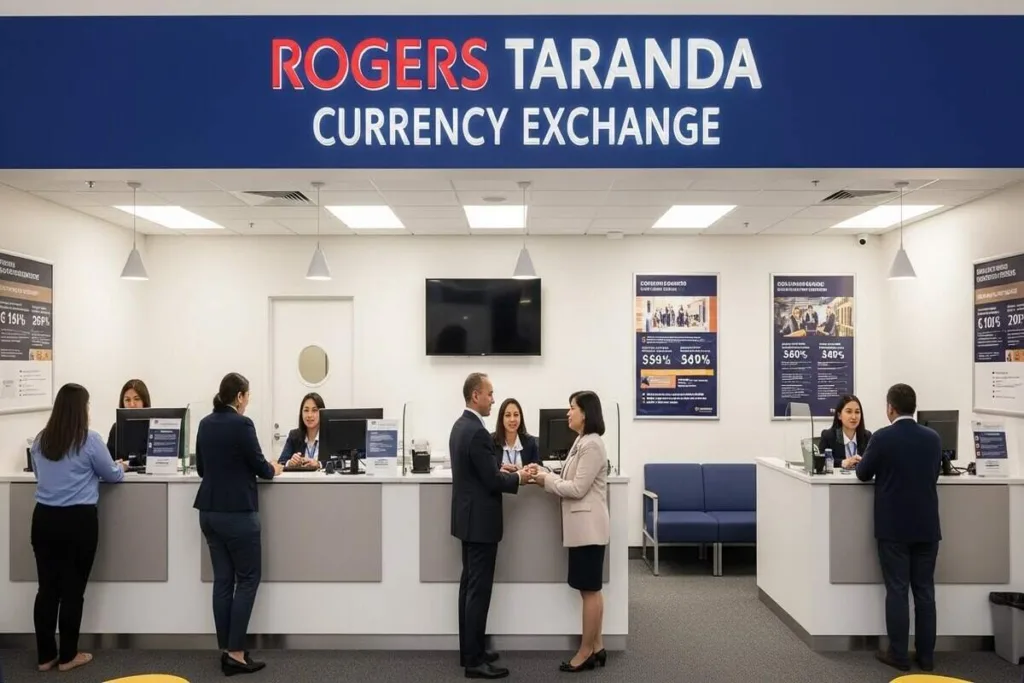
Currency exchange rates are set by global supply and demand, central bank policy, and economic conditions. These rates change constantly as markets react to data, politics, and investor behavior. Understanding how exchange rates work helps consumers and businesses make safer, more cost-effective international transactions. It also helps support compliance efforts, fraud prevention, and secure cross-border payments when working with licensed and regulated money services businesses (MSBs). Order Express offers currency exchange services through its company-owned branches.
Licensed money transfer providers use regulated foreign exchange markets to determine rates. These providers follow strict verification, compliance, and anti-fraud controls set by financial regulators.
This guide explains:
- How currency exchange rates are set
- Why rates fluctuate daily
- What steps to take to manage exchange risk
Knowing these fundamentals helps you verify providers, protect funds, and complete secure transfers with confidence.
Licensed providers follow anti-money laundering (AML), Know Your Customer (KYC), and transaction monitoring requirements established by federal and state authorities.
How Are Currency Exchange Rates Set?
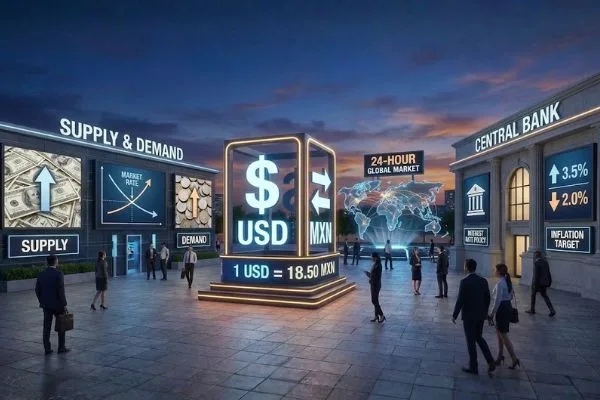
Currency exchange rates reflect how much one currency is worth compared to another and are influenced by a combination of market activity, economic conditions, and financial policy decisions. Understanding how these rates are determined helps explain why currency values fluctuate and how global events, institutions, and trading behavior shape the cost of exchanging money.
1. Market Forces And Supply-Demand Dynamics
Currency exchange rates are largely determined by the forces of supply and demand in the global market. When the demand for a particular currency increases, its value tends to rise relative to other currencies. Conversely, if the demand drops, its value decreases. Central banks, investors, and traders all influence this demand, affecting how currencies are exchanged at any given time.
Daily benchmark movements are published in official data, including foreign exchange reference rates released by the Federal Reserve, which provide transparency into how major currency pairs move over time according to Federal Reserve foreign exchange rate data.
2. Central Bank Policies And Interventions
Central banks play a significant role in setting exchange rates by adjusting interest rates and using monetary policy tools. When a central bank raises interest rates, the value of its currency typically strengthens because higher rates attract foreign investment. On the other hand, central banks can intervene directly in currency markets, buying or selling their own currency to stabilize exchange rates and manage inflation.
In the United States, these actions align with exchange rate policy oversight issued by the U.S. Department of the Treasury, which outlines how currency valuation interacts with international trade and financial stability under U.S. Treasury exchange rate policy guidance.
3. Foreign Exchange Markets And Their Impact
The foreign exchange market, or forex, is the global network where currencies are traded. Forex trading occurs 24 hours a day, with prices constantly changing based on market sentiment, geopolitical events, and economic data. The forex market operates on a decentralized basis, meaning no single institution can control exchange rates, making the market susceptible to rapid changes.
To understand how these mechanics affect consumers, fees, and real-world transactions, review our guide on currency exchange fundamentals, rates, and fee structures in Currency Exchange: Rates, Fees, and How It Works.

Why Do Currency Exchange Rates Change?
Currency exchange rates are constantly shifting in response to economic conditions, political developments, and investor behavior. These changes reflect how markets perceive risk, stability, and future growth, making exchange rates sensitive to both long-term trends and sudden global events.
1. Economic Indicators And Global Economic Health
Currency values fluctuate based on economic indicators such as inflation, employment rates, and GDP growth. A country with a healthy economy tends to have a stronger currency, as investors see it as a safer place to invest. Conversely, if economic conditions are poor, investors may pull their money out, leading to a weaker currency.
These indicators are also used in consumer-focused financial education programs developed by the FDIC, which explain how macroeconomic data influences everyday financial decisions through resources like the FDIC Money Smart consumer education program.
2. Political Stability And Geopolitical Events
Political factors, including elections, government policies, and geopolitical tensions, can influence currency exchange rates. For example, uncertainty surrounding an election outcome or political instability can lead to a decline in a country’s currency value as investors seek safer alternatives. Similarly, global crises like wars or trade disputes can cause sudden changes in exchange rates as markets react to risk.
Government oversight bodies monitor these impacts to protect consumers and financial systems, including federal agencies responsible for international monetary stability, as outlined by the U.S. Treasury’s international exchange rate analysis.
3. Market Speculation And Investor Sentiment
Market speculation plays a critical role in currency exchange rate fluctuations. Investors buy and sell currencies based on expectations of future economic or political events. If traders expect a currency to appreciate, they may buy it in large quantities, pushing up its value. Speculation can cause rapid and sometimes unpredictable changes in exchange rates, particularly when markets respond to breaking news or economic reports.
For consumers sending funds internationally, the Consumer Financial Protection Bureau explains how market volatility can affect cross-border transfers, disclosures, and timing in its guidance on sending money abroad.
How Can You Manage Currency Exchange Rate Fluctuations?
Managing currency exchange rate fluctuations requires proactive planning and the right financial tools. By understanding market movements and using strategies that reduce exposure to volatility, individuals and businesses can better control costs and protect the value of their transactions.
1. Plan Ahead For Exchange Rates
To avoid unexpected losses due to fluctuating rates, it’s important to plan your currency exchange transactions in advance. Keep an eye on market trends and monitor the political and economic landscape of the country whose currency you are exchanging. By staying informed, you can better anticipate rate movements before initiating a money transfer through a licensed provider.
2. Use Tools To Lock In Favorable Rates
Some currency exchange providers offer the option to lock in exchange rates ahead of time. This can be particularly useful if you anticipate that the rate will become less favorable in the future. By locking in a rate, you can reduce uncertainty in your transaction amount, whether you are exchanging cash or coordinating related services such as Check Cashing offered by licensed providers.
3. Consider Using Multi-Currency Accounts
Another option for managing currency exchange rate fluctuations is to use a multi-currency account. These accounts allow you to hold different currencies simultaneously, enabling you to convert funds when rates are more favorable. This approach is often paired with broader financial solutions, including international payments. Additional services are available through Order Express for customers who need them.
Conclusion
Understanding how currency exchange rates are set and why they change, puts you in control of your international finances. Exchange rates move based on supply and demand, central bank actions, economic indicators, and global events, all of which can directly affect the cost of your transactions. By staying informed, planning exchanges ahead of time, and using tools like rate locks or multi-currency accounts, you can reduce risk and avoid unnecessary losses. Whether you’re traveling, sending money abroad, or managing cross-border payments, smart timing and the right provider matter.
Ready to exchange currency? Visit your nearest Order Express company-owned branch for secure, reliable currency exchange services.
Disclaimer: This article provides general information about currency exchange rates and does not constitute financial advice. Rates and fees may vary based on transaction details and location.
Frequently Asked Questions
Q: How Are Currency Exchange Rates Determined?
A: Exchange rates are set by:
- Supply and demand in global markets
- Central bank interest rate policies
- Economic data and market sentiment
No single institution controls rates.
Q: Why Do Exchange Rates Change Every Day?
A: Rates fluctuate due to:
- Economic reports (inflation, jobs, GDP)
- Political or geopolitical events
- Investor speculation and market news
Q: How Can I Reduce Risk From Exchange Rate Fluctuations?
A: You can:
- Plan exchanges in advance
- Lock in rates when available
- Use multi-currency accounts to time conversions
Q: Do Exchange Rates Affect Cross-Border Payments?
A: Yes. Exchange rates impact:
- Total transfer cost
- Fees and converted amounts
- Timing of payments
Small rate changes can significantly affect large transfers.
Q: Is It Safer To Exchange Currency At A Regulated Provider?
A: Yes. Licensed and regulated money services businesses (MSBs) offer:
- Transparent pricing
- Compliance with financial regulations
- Strong fraud prevention and consumer protections

John is a Content & SEO Specialist who enjoys breaking down complex financial topics, like cross-border payments and money transfers, into content that’s easy to understand. He focuses on creating practical, search-driven content that helps people find answers and make informed decisions.