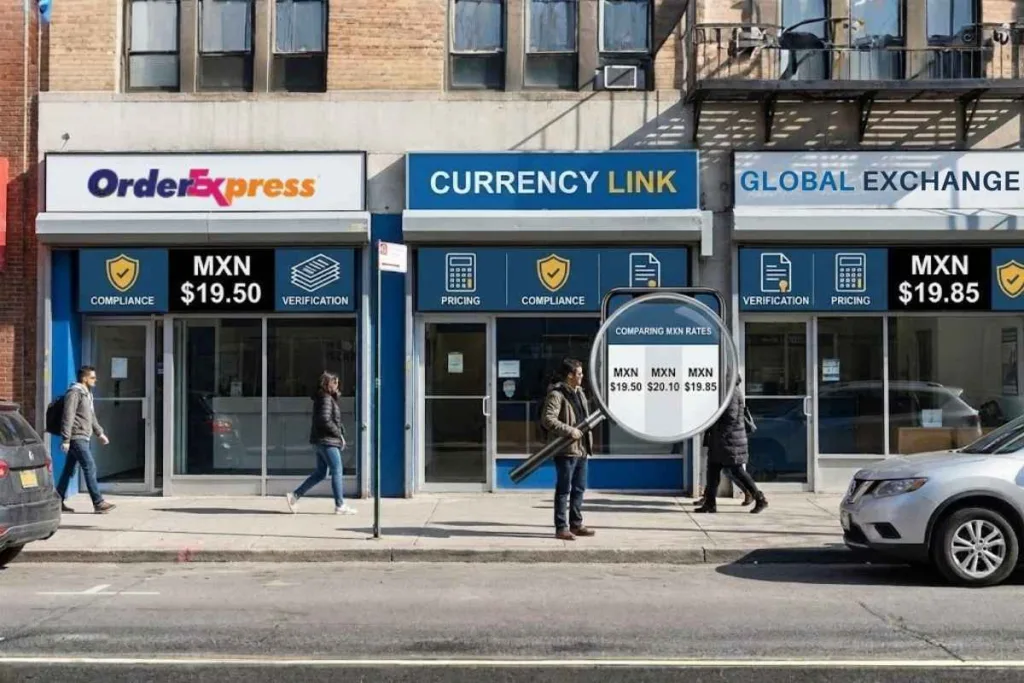
Currency exchange rates differ between providers because each licensed money transfer provider applies unique pricing, risk controls and compliance costs. These differences affect how much money you receive when completing a currency exchange transaction through Order Express services.
Understanding how providers set rates helps you verify pricing, avoid hidden costs and prevent fraud. Exchange rates reflect operating expenses, verification practices and compliance requirements established by financial regulators. When preparing to transact, knowing why rates vary allows you to compare providers confidently and choose compliant, transparent services.
This guide explains how to verify exchange rates, why differences matter and what steps to take before completing a currency exchange.
How Provider Cost Structures Affect Exchange Rates
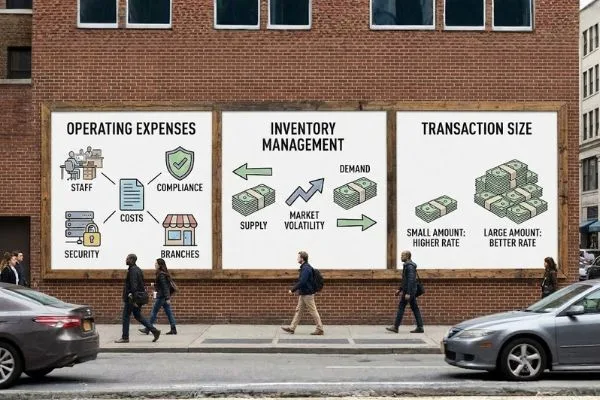
Provider cost structures directly influence currency exchange rates because providers price services to cover expenses and manage operational risk. Licensed money transfer providers account for staffing, compliance, security and infrastructure costs when setting exchange rates for currency exchange transactions. Differences in location, transaction volume and regulatory requirements create pricing variation between providers. Understanding cost structures helps users verify rates, compare providers accurately and avoid misleading pricing during secure currency exchanges.
1. Providers Build Rates Around Operating Expenses
Currency exchange providers include operating costs within their rates to cover staffing, compliance, security systems and physical branch expenses.
Each provider’s overhead varies by location, transaction volume and regulatory environment, which directly influences the exchange rate offered.
A provider with higher fixed costs must adjust pricing to remain sustainable while delivering reliable currency exchange services.
2. Inventory Management Changes Quoted Rates
Exchange providers hold physical or digital currency inventory that fluctuates based on customer demand and replenishment timing.
Rates adjust when providers manage excess inventory or shortages to balance exposure and ensure available currency during peak transaction periods.
This inventory approach explains why rates can differ even within the same city on the same day, reflecting short-term currency movement tracked through sources such as Federal Reserve foreign exchange rate data.
3. Transaction Size Influences Provider Pricing
Providers often adjust exchange rates based on transaction size to manage risk and operational efficiency.
Smaller transactions may carry wider margins, while larger exchanges can receive more competitive pricing due to processing efficiency and liquidity management, including exchanges completed alongside Order Express check cashing services.
This pricing behavior reflects processing costs and liquidity considerations rather than customer-specific negotiation tactics.
How Risk And Timing Influence Provider Rates
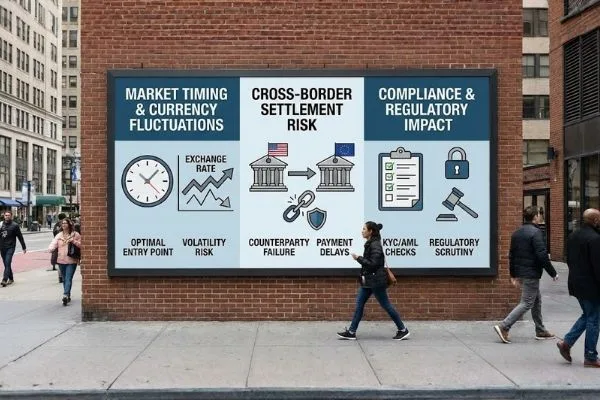
Risk and timing influence exchange rates because providers must protect against market movement, settlement delays and regulatory exposure. Licensed money transfer providers adjust rates based on currency volatility, transaction timing and cross-border settlement risk. Regulatory compliance requirements also influence how exchange rates are calculated across the industry. Understanding these factors helps users verify quoted rates, recognize compliant pricing and complete secure transfers with fewer surprises.
1. Market Timing Affects Provider Exposure
Currency values move constantly, and providers manage timing risk when quoting rates to customers preparing immediate transactions.
Some providers refresh rates frequently, while others buffer against volatility using conservative pricing models.
These timing strategies create visible differences between quoted rates across providers at the same moment, consistent with foreign currency valuation principles outlined in U.S. Treasury exchange rate policy guidance.
2. Settlement Risk Shapes Exchange Margins
Providers face settlement risk when finalizing currency exchanges across borders or financial systems.
To manage this risk, providers incorporate protective margins that vary depending on settlement speed and counterparty reliability.
These safeguards contribute to rate differences even when exchanging the same currency pair.
3. Compliance Requirements Affect Rate Calculations
Regulatory and compliance obligations require providers to maintain monitoring systems and reporting controls for currency exchanges.
The cost of meeting these obligations differs by provider structure and jurisdictional footprint.
Providers reflect these compliance costs within their exchange rates to support lawful operations, consistent with federal anti-money laundering oversight described by the Financial Crimes Enforcement Network.
How Transparency And Service Models Change Rates
Transparency and service models affect exchange rates because providers price services based on how transactions are delivered and disclosed. Licensed money transfer providers use different models, including kiosks, retail locations and digital platforms, which influence pricing flexibility. Disclosure practices determine whether rates include fees upfront or separate service charges. Customer experience investments also affect final rates by adding support and verification costs. Understanding these factors helps users verify true exchange value, compare compliant providers and complete secure transfers confidently.
1. Service Models Determine Pricing Flexibility
Exchange providers operate under different service models, including kiosks, retail counters and digital-first platforms.
Each model carries unique cost and service expectations that influence how aggressively rates can be priced.
Understanding the service model helps explain why convenience-focused providers may offer different rates than volume-driven operators.
2. Disclosure Practices Affect Perceived Rates
Some providers display all-in rates, while others separate exchange margins from service fees.
This difference can make rates appear better or worse depending on how information is presented at transaction time.
Clear disclosure allows you to compare true exchange value without confusion or unexpected adjustments, aligning with consumer guidance from the Consumer Financial Protection Bureau on sending money abroad.
3. Customer Experience Investments Influence Pricing
Providers that invest heavily in customer support, multilingual staff and transaction guidance absorb additional service-related costs.
These investments improve transaction confidence but also influence the final exchange rate offered.
Rate differences often reflect service quality priorities rather than unfavorable pricing practices, a concept reinforced through consumer education resources such as the FDIC Money Smart.
Practical Comparison Tips Before Exchanging Currency
Before choosing a provider, review these practical considerations to understand rate differences more clearly during your transaction.
Confirm whether the quoted rate includes all fees, commissions and service charges before completing your currency exchange transaction.
Ask how long the quoted rate remains valid, especially if market conditions shift during busy transaction periods.
Compare rates for your exact transaction amount rather than assuming smaller or larger exchanges receive identical pricing.
You can explore broader context by reviewing currency exchange fundamentals for everyday transactions.
Understanding provider pricing logic helps you select an exchange service aligned with your transaction needs and timing preferences, including access to other financial services when appropriate.
When you are ready to exchange, choose a provider that balances transparent pricing, dependable availability and service quality.
Conclusion
Currency exchange rates vary because providers balance operating costs, market risk and service commitments differently during each transaction. Knowing this puts you in control before you exchange. Instead of chasing the best headline rate, focus on total value, timing and transparency. Always confirm whether fees are included, how long a quoted rate is valid and how your transaction size affects pricing. Comparing providers using these factors helps you avoid surprises and choose confidently. If you exchange regularly or across borders, consistency and regulatory compliance matter as much as price.
Take a moment before your next transaction to compare clearly disclosed rates, ask informed questions and select a provider aligned with your needs. Smart preparation leads to smoother exchanges and predictable outcomes every time.
Ready to exchange with confidence? Choose a currency exchange service that prioritizes transparency, fair pricing and reliable support for your everyday transaction needs.
Disclaimer: This article provides general informational guidance and does not constitute financial, legal or investment advice for currency transactions.
For personalized guidance, consult directly with a licensed currency exchange provider or financial professional before completing transactions.
Frequently Asked Questions
Q: Why Do Currency Exchange Rates Differ Between Providers?
A: Rates differ because providers factor in:
- Operating and compliance costs
- Inventory availability
- Risk and settlement timing
- Service model and transparency practices
Q: Are Higher Exchange Rates A Sign Of Hidden Fees?
A: Not always. Higher rates may reflect:
- All-in pricing with fees included
- Higher service or compliance costs
- Short-term market risk protection
Always ask for the total exchange cost.
Q: How Can I Compare Exchange Rates Accurately?
A: Follow these steps:
- Compare rates for the same amount
- Confirm fees and commissions
- Check rate validity timing
- Review provider disclosures
Q: Do Compliance Requirements Affect Exchange Rates?
A: Yes. Providers price in costs for:
- Transaction monitoring
- Reporting obligations
- Regulatory oversight
These requirements help ensure lawful and secure exchanges.
Q: Does Transaction Size Change The Exchange Rate I Receive?
A: Often, yes.
- Smaller transactions may have wider margins
Larger exchanges can receive better rates
This reflects processing costs and liquidity management.

John is a Content & SEO Specialist who enjoys breaking down complex financial topics, like cross-border payments and money transfers, into content that’s easy to understand. He focuses on creating practical, search-driven content that helps people find answers and make informed decisions.