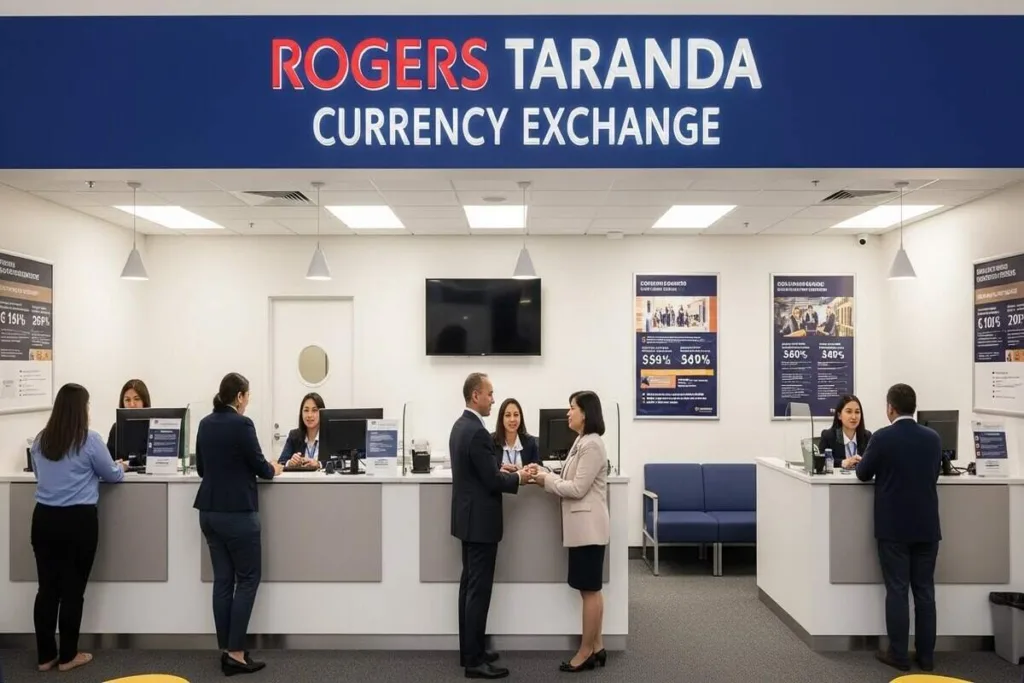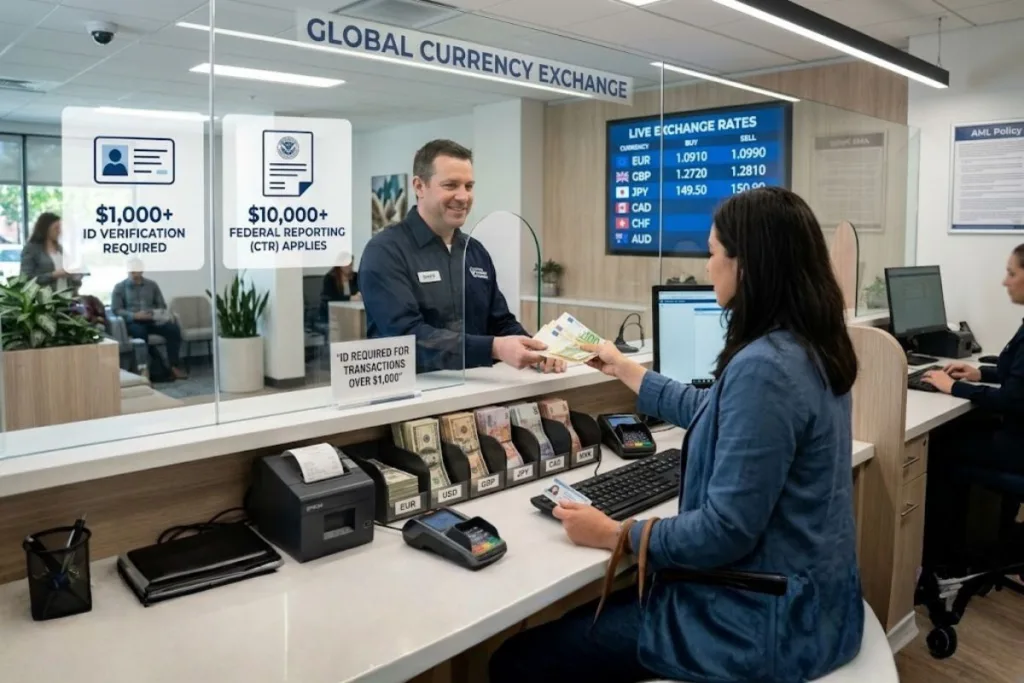
Currency exchange limits at physical locations depend on transaction size thresholds and compliance requirements. Limits typically reflect identity verification rules and reporting obligations tied to anti-money laundering standards.
Direct Answer: Most physical currency exchange locations establish transaction limits based on a combination of federal anti-money laundering (AML) requirements, state regulations where applicable, and their own compliance policies. Many Money Services Businesses (MSBs), including Order Express, require government-issued identification for certain currency exchange transactions beginning at $1,000 or more, although requirements may vary by provider and jurisdiction. Cash transactions involving more than $10,000 in currency during one business day, including certain aggregated transactions, may require the financial institution to file a Currency Transaction Report (CTR) under federal law.
If you are preparing to exchange currency, understanding these thresholds can help you plan documentation and transaction timing. For a broader overview of locations and service comparisons, visit our pillar guide on Currency Exchange Near Me: Find Locations And Compare Rates.
Transaction Amount Thresholds And Identity Verification Requirements
Physical currency exchange limits often begin with identification thresholds established under federal anti-money laundering rules. These thresholds influence how much you can exchange before additional documentation becomes necessary.
Identification Requirements For Larger Exchanges
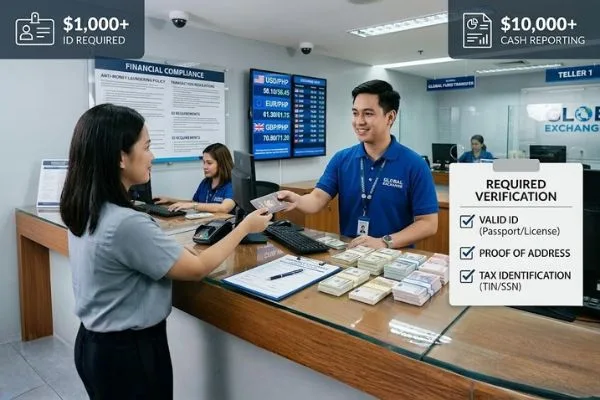
Many retail financial service providers require valid identification when a currency exchange transaction reaches certain dollar amounts. For example, many Money Services Businesses, including Order Express, require government-issued identification for currency exchange transactions of $1,000 or more as part of their Bank Secrecy Act/Anti-Money Laundering (BSA/AML) compliance programs. Identification requirements may also vary based on applicable state regulations, transaction characteristics, and each provider’s internal compliance policies.
These identification practices support Bank Secrecy Act (BSA) and Anti-Money Laundering (AML) compliance programs. Regulated financial institutions, including Money Services Businesses (MSBs), are required to maintain risk-based customer identification, recordkeeping, and reporting procedures designed to help detect and prevent money laundering and other illicit financial activity. Specific identification thresholds and verification practices may vary based on applicable regulations and each institution’s compliance program.
When preparing for a larger exchange, you should bring:
- A valid government-issued photo identification
- Your current address information
- Any requested tax identification details, when applicable
Providing complete and accurate information can help reduce delays during transaction review. Identification requirements apply regardless of whether you exchange U.S. dollars for foreign currency or convert foreign currency to U.S. dollars.
Cash Reporting Thresholds For High-Value Transactions
Currency exchange limits also relate to federal cash reporting rules under the Bank Secrecy Act. If a customer conducts cash transactions involving more than $10,000 in currency during a single business day, including certain aggregated transactions involving the same person, the financial institution is generally required to file a Currency Transaction Report (CTR) under the Bank Secrecy Act.
Federal reporting requirements may apply when multiple currency transactions conducted by or on behalf of the same person during one business day must be aggregated under applicable Bank Secrecy Act requirements. Breaking transactions into smaller amounts to avoid reporting is prohibited under federal law and may require financial institutions to review related activity under applicable reporting standards.
For customers, this means:
- Exchanges totaling more than $10,000 in cash may require additional documentation.
- Depending on the transaction, providers may perform additional compliance reviews or request supporting documentation as part of their risk-based compliance programs.
- Aggregated activity across services may be considered when determining reporting requirements.
These requirements do not prevent legitimate exchanges but may influence timing and documentation needs. If you anticipate exchanging a significant amount, contacting the location in advance may help you prepare appropriately. You can review official currency reporting expectations through the Financial Crimes Enforcement Network (FinCEN) guidance.
Operational And Liquidity Limits At Physical Locations
Beyond regulatory thresholds, physical currency exchange locations may apply operational limits based on available inventory. These limits reflect branch-level liquidity management rather than federal law.
On-Hand Currency Availability
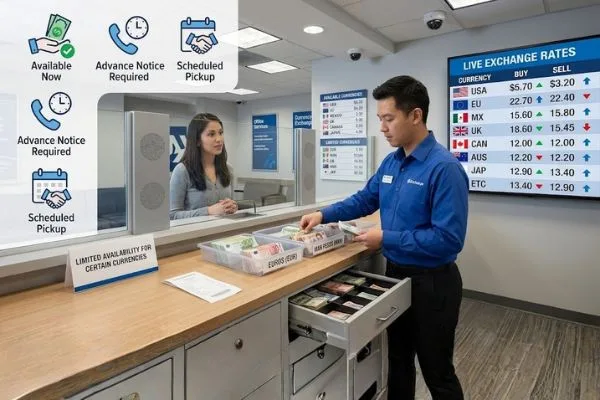
Physical branches maintain specific amounts of each foreign currency based on expected customer demand. Less commonly requested currencies may have lower daily availability than major currencies such as euros or Mexican pesos.
Because exchange services occur in person, on-hand supply affects transaction size. A location may:
- Complete small to moderate exchanges immediately
- Request advance notice for larger transactions
- Schedule a follow-up visit for substantial foreign currency orders
Calling ahead can help confirm availability and reduce unnecessary travel. This is particularly helpful if you need a specific denomination mix or are preparing for international travel.
Exchange rate variability also influences planning decisions. According to the Federal Reserve H.10 exchange rate data, foreign currency values fluctuate regularly, which can affect the timing and cost of your transaction.
Internal Risk And Monitoring Controls
Currency exchange limits may also reflect internal monitoring policies tied to risk management. Licensed Money Services Businesses implement anti-money laundering controls to monitor transaction patterns and unusual activity as required under applicable federal regulations.
Order Express operates within established compliance frameworks as a registered Money Services Business. You can learn more about our licensing, operational history and regulatory alignment on our Order Express company background.
As part of their risk-based compliance programs, Money Services Businesses may conduct additional reviews when transaction activity meets internal monitoring criteria or appears inconsistent with a customer’s expected activity. These internal monitoring practices are separate from specific federal reporting thresholds.
- Certain transactions may require additional identity verification or supporting documentation based on the provider’s compliance program and applicable regulations.
- Repeat exchanges within short periods may be reviewed collectively
- High aggregate activity over time may prompt additional questions
These controls support regulatory compliance and financial system integrity without restricting legitimate customer needs. Customers who provide accurate information typically experience straightforward processing even when reviews occur.
Preparing For A Currency Exchange Transaction
Understanding exchange rate variability and transaction-dependent outcomes also supports better preparation. Exchange rates fluctuate throughout the day and may include a spread or markup reflected in the quoted rate.
Before visiting a location, consider the following steps:
- Confirm current exchange rates and any disclosed service fees.
- Verify identification requirements based on your intended exchange amount.
- Contact the location in advance if you expect to complete a larger currency exchange or require uncommon foreign currencies so you can confirm identification requirements, availability and any applicable procedures.
- Ask about available denominations if you need specific travel cash breakdowns.
For broader consumer education on handling financial transactions safely, the FDIC Consumer Resource Center offers guidance on financial literacy and transaction awareness.
Transparent pricing and clear documentation can help reduce surprises at the counter. Physical currency exchange services operate differently from digital remittance transactions, which are governed by separate consumer protection frameworks explained by the Consumer Financial Protection Bureau sending money abroad resources.
Order Express provides currency exchange alongside related retail financial services. If you need assistance before visiting a location, you can use our Order Express contact information to confirm documentation requirements or availability.
Why Trust Order Express
Order Express is a registered Money Services Business that provides currency exchange and other financial services through retail locations. Our educational resources are reviewed to promote accuracy using publicly available guidance from FinCEN, the FDIC, the Consumer Financial Protection Bureau (CFPB), and other authoritative government sources where applicable.
Key Takeaways
- Currency exchange limits at physical locations typically depend on identification and cash reporting thresholds.
- Transactions of $1,000 or more often require government-issued identification under compliance standards.
- Cash exchanges exceeding $10,000 in one business day may trigger federal reporting requirements.
- Physical branches may apply operational limits based on available foreign currency inventory.
- Advance preparation can help reduce delays and support smoother in-person transactions.
Frequently Asked Questions
Q: How Much Currency Can I Exchange Without Showing Identification?
A: Many Money Services Businesses, including Order Express, require government-issued identification beginning at certain transaction amounts, often around $1,000, although requirements vary by provider, state regulations and internal compliance policies.
Q: What Happens If I Exchange More Than $10,000 In Cash?
A: Financial institutions generally must file a Currency Transaction Report (CTR) when cash transactions involving more than $10,000 in currency during one business day meet applicable Bank Secrecy Act reporting requirements. Filing the report does not prevent the transaction from proceeding.
Q: Can I Split My Exchange Into Smaller Transactions To Avoid Reporting?
A: No. Structuring transactions to avoid reporting requirements is prohibited under federal law and may trigger additional review.
Q: Do All Physical Locations Carry Unlimited Foreign Currency?
A: No. Inventory depends on branch demand and liquidity planning. Larger exchanges may require advance notice.
Q: Are Exchange Rates The Same At Every Location?
A: No. Exchange rates vary by provider and include spreads or markups. Rates may fluctuate throughout the business day.
Conclusion
Currency exchange limits at physical locations primarily reflect identification thresholds and federal cash reporting requirements. Many Money Services Businesses, including Order Express, require government-issued identification for currency exchange transactions beginning around $1,000 as part of their compliance programs, although requirements may vary based on provider policies, applicable regulations and transaction characteristics.
In addition, branch-level inventory and internal monitoring controls can influence how much currency a location can process immediately. Understanding these two core mechanisms helps you prepare documentation, confirm availability and anticipate potential review steps. When customers plan ahead, provide accurate information and confirm current rates, in-person exchanges typically proceed efficiently. Licensed Money Services Businesses like Order Express operate within compliance frameworks that reflect applicable regulatory requirements.
Find your nearest Order Express location, confirm today’s exchange rates, and contact our team before your visit to verify documentation requirements and foreign currency availability.
Disclaimer: This content is for informational purposes only and does not constitute financial advice. Exchange rates, fees, availability, identification requirements and transaction procedures may vary based on the provider’s policies, applicable federal regulations, state requirements and the specific transaction. Contact your selected provider for current requirements before completing a currency exchange.

John is a Content & SEO Specialist who enjoys breaking down complex financial topics, like cross-border payments and money transfers, into content that’s easy to understand. He focuses on creating practical, search-driven content that helps people find answers and make informed decisions.