Currency exchange providers handle old banknotes by verifying authenticity, checking legal tender status, and determining whether the currency can still be exchanged or must be redeemed through a central bank.
For a broader understanding of retail currency exchange guidance, visit our guide on Understanding Currency Exchange Services For Consumers.
Please note: Policy does not explicitly address CTRs, SARs, the $10,000 reporting threshold, or AML/KYC requirements, including when ID verification is required. It also lacks a defined risk-based approach and a non-guarantee statement, which may create liability if customers assume transaction acceptance is guaranteed.

How Currency Exchange Providers Verify And Accept Old Banknotes
Currency exchange providers follow a structured verification process to determine whether old banknotes qualify for exchange or require alternative handling. This evaluation focuses on authenticity, physical condition and legal tender status to ensure the notes meet operational and financial standards. By applying these checks, providers can protect against fraud while guiding customers toward the most appropriate transaction outcome.
Currency exchange transactions may be subject to federal reporting requirements, including Currency Transaction Reports (CTR) for transactions exceeding applicable thresholds and Suspicious Activity Reports (SAR) where required. All services are conducted in accordance with FinCEN regulations and a risk-based AML compliance program.
Authenticity And Physical Condition Checks
Providers examine each banknote carefully to confirm authenticity using security features such as watermarks, threads and embedded identifiers. They also assess physical condition, ensuring the note remains sufficiently intact for processing within standard currency exchange services workflows.
If notes pass verification and remain structurally complete, providers typically proceed with standard valuation and exchange procedures. However, heavily damaged notes or those missing critical sections may require additional validation before any transaction can proceed. In some cases, providers may also request customer identification to meet regulatory requirements tied to financial transactions.
Circulation Status And Legal Tender Validation
Providers determine whether the old banknote still holds legal tender status within its issuing country’s financial system. If the note remains valid, they usually accept it, applying current exchange rates based on recognized market values, often referencing data such as the Federal Reserve H.10 exchange rate reports.
If the note is withdrawn from circulation, providers evaluate whether redemption options still exist through central banking systems. This determination directly influences whether the provider can process the exchange or must redirect the customer elsewhere.
Internal Acceptance Criteria And Service Limitations
Each provider follows internal policies that define acceptable note age, condition and issuing authority eligibility for exchange services. These criteria ensure operational efficiency while maintaining compliance with financial handling standards and risk management protocols.
These internal criteria operate alongside mandatory federal regulations that govern currency exchange activities. While internal policies determine service eligibility, regulatory requirements focus on customer identification, transaction monitoring and reporting obligations aligned with the Anti-Money Laundering Act overview.
Common acceptance factors include:
- Notes must retain more than half of their original surface area and identifiable security features intact
- Issuing country must still recognize the currency for redemption or limited exchange scenarios
- Notes must not show signs of deliberate tampering or fraudulent alteration attempts
Customers benefit from understanding these criteria before visiting nearby branch locations, reducing transaction delays and unexpected refusals during processing.
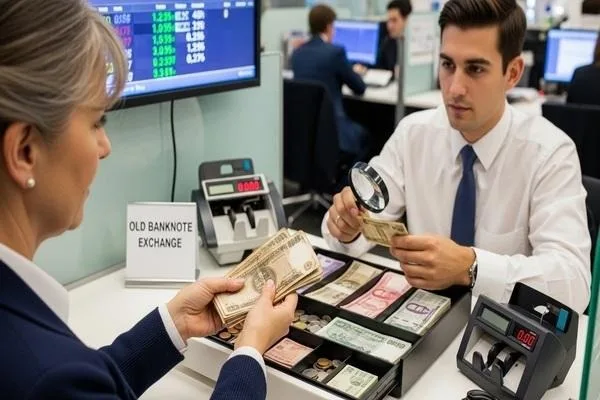
How Providers Manage Old Banknotes Beyond Standard Exchange
When old banknotes no longer qualify for direct currency exchange, providers shift toward structured alternatives that help customers recover value efficiently. These solutions focus on redirecting transactions through trusted financial channels, including central banks and authorized institutions, while also offering practical guidance for cases where formal exchange is no longer possible. Understanding these pathways helps customers avoid unnecessary delays and ensures they can still take meaningful action with outdated currency.
Even when alternative handling methods are used, financial service providers must continue to follow applicable regulatory requirements, including identity verification and transaction recordkeeping aligned with standards outlined by the FDIC consumer financial education resources.
Central Bank Referral And Redemption Processes
Providers often direct customers to the issuing country’s central bank when old banknotes fall outside standard exchange eligibility criteria. Central banks typically retain authority to redeem withdrawn or outdated notes under specific conditions and documentation requirements.
Customers may need to submit identification, proof of ownership and complete application forms depending on the issuing country’s policies. Processing times vary, but central bank redemption remains the most reliable route for recovering value from obsolete currency.
Intermediary Collection And Batch Processing Services
Some providers offer intermediary services by collecting old banknotes and submitting them in bulk to authorized financial institutions. This approach simplifies the process for customers who prefer not to handle direct communication with foreign central banks.
The process usually follows these steps:
- Customer submits old banknotes for preliminary verification and eligibility screening
- Provider aggregates qualifying notes and prepares them for institutional submission
- Authorized institutions process redemption and return equivalent value through the provider
This method reduces complexity for individual customers while maintaining structured handling aligned with international financial practices.
Customer Guidance And Transaction Alternatives
When neither direct exchange nor intermediary processing applies, providers offer guidance on practical alternatives for handling old banknotes. These recommendations help customers make informed decisions before attempting further transactions involving outdated currency.
Common alternatives include:
- Using remaining valid notes during travel within the issuing country before complete withdrawal deadlines
- Depositing eligible notes into bank accounts that maintain international currency handling capabilities
- Monitoring official announcements for extended redemption windows or policy updates from issuing authorities
If you need assistance understanding your options, you can contact customer support for guidance before proceeding with any transaction.
Key Takeaways
- Currency exchange providers verify authenticity and legal tender status before accepting old banknotes for standard exchange transactions
- Providers apply internal criteria based on condition, issuing authority recognition and operational policies to determine acceptance eligibility
- When direct exchange is not possible, providers redirect customers toward central bank redemption or intermediary processing solutions
- Alternative handling ensures customers still access value recovery pathways even when notes fall outside standard exchange conditions
- Understanding provider requirements helps customers prepare effectively and avoid delays when exchanging outdated or withdrawn banknotes
Conclusion
Currency exchange providers handle old banknotes through structured verification and alternative processing pathways that prioritize authenticity and legal tender status. Customers benefit from understanding these mechanisms before visiting a provider, ensuring smoother transactions and realistic expectations regarding acceptance outcomes. When notes qualify, providers complete exchanges efficiently using current market valuations tied to recognized financial systems. When they do not qualify, providers guide customers toward central banks or intermediary services that support value recovery. This dual approach ensures that even outdated currency maintains potential usability within established financial frameworks. Preparing your documents and checking note conditions in advance significantly improves your chances of completing a successful transaction. In some situations, you may also be asked to provide identification or additional information to comply with financial regulations designed to promote transparency and security in currency exchange services.
Ready to exchange your currency with confidence today? Visit a trusted provider now and complete your transaction quickly and securely.
Disclaimer: Policies regarding old banknotes vary by country and provider. In addition to service-specific requirements, currency exchange transactions may be subject to financial regulations that include identity verification, recordkeeping, and transaction monitoring. Always confirm both service policies and regulatory requirements before initiating any exchange transaction.
FAQs
Can I exchange old banknotes at any currency exchange provider?
No, providers only accept notes that meet internal criteria and remain recognized within issuing country systems.
What happens if my banknote is no longer legal tender?
Providers usually redirect you to the issuing country’s central bank for possible redemption under specific conditions.
Do damaged old banknotes still qualify for exchange?
Possibly, if more than half the note remains intact and identifiable security features are still clearly visible.
How long do central banks accept old banknotes?
Acceptance periods vary by country, with some offering indefinite redemption and others setting strict deadlines.
Can providers help submit old banknotes for redemption?
Some providers offer intermediary services that collect and submit notes to authorized institutions on your behalf.

John is a Content & SEO Specialist who enjoys breaking down complex financial topics, like cross-border payments and money transfers, into content that’s easy to understand. He focuses on creating practical, search-driven content that helps people find answers and make informed decisions.