


Cross-border payments require accurate recipient data to ensure compliance, prevent fraud, and avoid costly delays.
Before sending money internationally, financial institutions and individuals should verify SWIFT codes, IBANs, bank names, and recipient identification. This process reduces transfer errors, supports global regulations like AML, KYC, FATCA, and OFAC, and helps funds reach the correct account securely. OrderExpress uses automated tools, real-time sanctions screening, and enhanced due diligence to keep cross-border payments fast, compliant, and safe for both personal and business transactions.
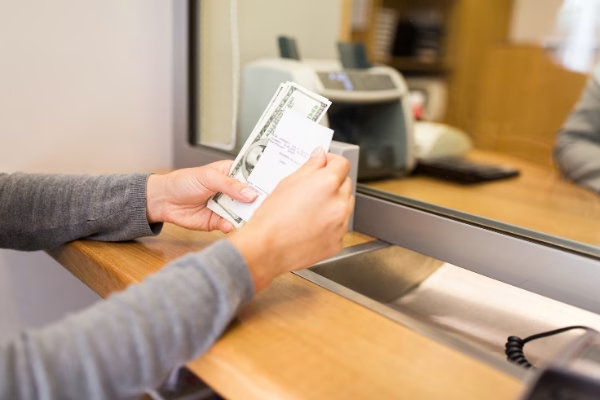
Cross-Border Payments: Why It’s Crucial To Check Bank Details Before Sending Money
Avoid Transfer Errors That Waste Time and Money
Mistakes in bank details are a top reason cross-border payments fail. These errors lead to delays, added costs, and unhappy customers. Verifying the information before sending money helps avoid these problems.
When a customer enters the wrong bank code such as an incorrect SWIFT number, the payment may be misrouted or rejected. This slows down the transfer and can even result in returned funds or fees from intermediary banks.
By checking the recipient’s bank information in advance, Order Express can reduce failed payments and protect customer confidence. The right data ensures the funds go to the correct account without issues.
Verifying details also helps meet compliance obligations under global financial standards. Institutions handling cross-border transactions must show they’ve taken steps to avoid errors and follow international guidelines, including FATCA and IRS rules.
A simple double-check can prevent a frustrating experience for both the sender and the recipient. It also keeps transactions efficient and secure.
Following the Rules That Govern Cross-Border Payments
Order Express must comply with U.S. financial laws when handling cross-border payments. These include the Bank Secrecy Act (BSA) and anti-money laundering (AML) rules. These laws require us to know who sends and receives funds.
Verifying bank information is a core part of staying compliant. It helps confirm that the people involved in the transaction are legitimate and that their data is accurate.
When a cross-border payment is over $3,000, federal rules apply. The sender must show valid identification. OrderExpress must log the transaction and keep detailed records. In some cases, we must also report the transaction to regulators.
These checks help meet legal obligations under the BSA, the IRS, and international standards like FATCA. They also support global transparency in financial networks.
Preventing Fraud and Criminal Activity
Cross-border payments can be targets for fraud and financial crime. Criminals may try to move funds using fake names or incorrect bank details. Verifying this data helps stop those attempts early.
When bank information is checked carefully, it’s easier to spot suspicious activity. For example, if the recipient’s name doesn’t match the account holder’s name, that’s a red flag. If the payment is routed to a high-risk jurisdiction, extra review is required.
These steps protect OrderExpress and its customers. They also support global efforts to fight money laundering and terrorism financing.
Strong verification helps detect fraud and ensures the payment system stays secure and trusted.

How Order Express Stays Compliant With Cross-Border Rules
Verifying Sender and Recipient Identity
OrderExpress follows strict compliance steps when processing cross-border payments. One key requirement is Know Your Customer (KYC), which helps prevent fraud and meet legal obligations.
For every international transaction, OrderExpress verifies the full name, valid ID, and address of both the sender and the recipient. This applies to all payment types and is especially important for transfers over $3,000, except where state law sets a lower threshold (for example, $900 in Arizona and $1,000 in Oklahoma).
Accepted forms of ID include government-issued documents like passports, national ID cards, or driver’s licenses. These documents help confirm that the people involved are who they say they are.
Each branch or authorized agent must securely store copies of these IDs. This ensures OrderExpress has documented proof of due diligence. It also supports compliance with regulations from the IRS, FATCA, and international financial authorities.
Proper recordkeeping also helps during audits, legal reviews, or requests from law enforcement. It keeps the company aligned with global standards and builds customer confidence in secure transactions.
Note: For Spectrum partner corridors, OrderExpress collects government-issued identification starting at $1,000, even if the state threshold is higher.
Learn more about our money transfer services and how we ensure safety at every step.
Screening Against Sanctions Lists
OrderExpress must follow U.S. government rules that ban payments to specific people and countries. These rules are enforced by the Office of Foreign Assets Control (OFAC).
Every cross-border transaction must be checked against OFAC’s sanctions lists. If a recipient appears on one of these lists, OrderExpress must stop the payment and report it right away. Skipping this step could lead to serious penalties. Some institutions have paid millions for failing to follow OFAC screening rules.
To avoid such risks, OrderExpress screens all transactions before they are processed. This protects both the company and its customers.
We also offer services such as courier deliveries and vehicle processing, each compliant with strict verification procedures.
Keeping Accurate and Secure Records
OrderExpress must keep clear records of all customer verifications and compliance checks. These records help show that the business followed legal steps for each cross-border payment.
All documents must be stored for at least five years. Records can be saved as digital files or in paper format. They must be easy to access in case of audits, reviews, or law enforcement inquiries.
It’s also important to store backup copies securely. This ensures that data is not lost during system failures or emergencies.
Reporting to FinCEN When Required
Some transactions must be reported to the Financial Crimes Enforcement Network (FinCEN). This helps detect illegal activity and keep the financial system secure.
OrderExpress uses the BSA E-Filing System to submit these reports. Two key types are Currency Transaction Reports (CTR) and Suspicious Activity Reports (SAR).
A CTR is required if a customer makes cash payments of over $10,000 in a single day, and it must be filed within 15 calendar days through the BSA E-Filing System.
A SAR must be filed for any suspicious activity that totals $2,000 or more, and it must be submitted within 30 calendar days of detecting the suspicious facts. Employees must not inform customers that a SAR has been or will be filed.
These reports are vital for financial transparency. They support federal efforts to combat money laundering and other financial crimes.
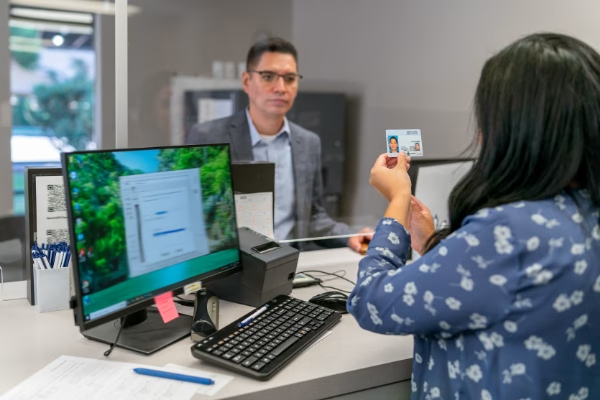
Why It’s Crucial To Check Bank Details In Cross-Border Payments
Confirming Bank Codes Before Processing
Before sending a cross-border payment, it’s essential to validate the recipient’s banking information. This includes checking codes like SWIFT and IBAN. These identifiers help direct the funds to the right financial institution and account.
Always use official validation tools or government-approved databases. NerdWallet recommends using platforms that ensure secure data. Confirm the bank’s full name, country, and operational status. Some banks may appear legitimate but may not be licensed to operate.
Verifying bank details reduces errors and ensures the payment reaches the right place the first time.
Checking the Recipient’s Identification
Staff must confirm the identity of the person receiving the money. Accepted ID documents include:
- U.S. or foreign passport
- U.S. driver’s license or state ID card
- U.S. military ID or permanent resident card
- Voter ID (from eligible countries)
- Consular ID (not valid for Florida-based transactions)
Check that the ID is current and shows no signs of damage or alteration. Make a photocopy and attach it to the payment record for compliance and future reference.
Verifying IDs supports Know Your Customer (KYC) and Anti-Money Laundering (AML) obligations.
Our check cashing services also follow similar ID verification processes.
Using Extra Checks for High-Risk Transactions
If a cross-border transfer is large or appears unusual, take additional steps before releasing the funds. OrderExpress uses dual approval for high-risk cases. Two authorized team members must review and approve the payment.
Extra checks may include calling the sender, reviewing the recipient’s payment history, or confirming past alerts tied to their name. These steps fall under Enhanced Due Diligence (EDD), which applies to higher-risk transfers.
These measures help detect suspicious activity and protect both customers and the business from compliance breaches.
Smart Tools That Help Check Cross-Border Payments Faster
APIs That Confirm Banking Details Automatically
Application Programming Interfaces (APIs) help validate bank codes, account numbers, and recipient names. These tools connect directly with OrderExpress systems to streamline verification. APIs reduce delays by checking data instantly. They run in real time and help lower the risk of manual errors. Instead of reviewing one transaction at a time, APIs can process thousands quickly. This helps teams work faster while staying accurate. It also supports compliance by ensuring every detail is correct before funds are sent.
Explore our other services that benefit from similar automation and accuracy.
Checking Sanctions Lists in Real Time
Automated systems can screen names against global sanctions lists as soon as the transaction is entered. This helps stop payments to blocked individuals or countries. If a match is found, the system alerts staff immediately. A team member can then review the alert and choose to approve, pause, or reject the transaction.
Real-time screening prevents delays and strengthens compliance with rules from agencies like OFAC.
It also helps avoid fines and reputational damage.
Finding Suspicious Patterns Using Machine Learning
Machine learning tools help detect unusual payment activity. These systems analyze past transactions to learn what looks normal and what doesn’t. They flag transfers that show risky behavior, such as repeated payments just below the $10,000 reporting limit or large amounts sent often to the same recipient.
Staff can then review these cases more closely. This helps spot fraud early and keeps cross-border payments secure and legal.
Resources like Blockchain.com’s learning portal offer deeper insights into how blockchain analytics assist in monitoring.

Best Practices to Keep Cross-Border Payments Safe and Compliant
Adjusting Reviews Based on Risk Level
Not all cross-border payments carry the same risk. Some customers, countries, or transaction types require extra checks. For these situations, OrderExpress applies Enhanced Due Diligence (EDD).
EDD involves collecting more detailed documents and asking specific questions. This might include verifying the source of the funds, reviewing job or income records, or confirming the purpose of the payment.
The goal is to better understand higher-risk transactions and ensure they meet legal and security standards.
Training Staff to Spot and Handle Risks
All employees must complete yearly training on compliance rules and procedures. This training teaches staff how to:
- Identify suspicious customer behavior
- Follow Bank Secrecy Act (BSA) and Anti-Money Laundering (AML) rules
- Respond properly if something goes wrong
After the training, employees must pass a test to confirm they understand the material. If they fail three times, corrective steps are taken.
Training content is reviewed and updated regularly. This ensures staff stay informed about changes in laws and reporting requirements. Teams are also encouraged to ask questions and report any concerns without hesitation.
We offer plane ticket services that also require trained staff to handle secure and compliant international travel documentation.
Conducting Regular Compliance Audits
OrderExpress must conduct an independent compliance review every year. This audit checks whether internal policies are being followed correctly and identifies areas that need improvement.
Audit findings are reported to the Board of Directors. This ensures that leadership is fully informed and accountable for compliance decisions.
Regular audits help detect small issues early, before they grow into major risks. They also demonstrate to regulators that OrderExpress takes its legal responsibilities seriously in handling cross-border payments.
Keeping the Compliance Manual Updated
The compliance manual is a key resource for all employees. It must always reflect the latest financial laws, international regulations, and internal procedures.
Whenever a regulation changes or a new rule is introduced such as updates from the IRS, FATCA, or global AML standards, the manual must be revised. Employees should always know how to access the latest version.
An accurate manual helps ensure consistent decisions and actions across every team and transaction.
Fostering a Compliance-First Culture in Cross-Border Payments
Everyone at OrderExpress plays a role in compliance. It’s important that staff understand not just the rules, but why they matter.
When employees follow procedures every day, the business avoids legal penalties and maintains customer trust. It also creates a safer environment for sending and receiving international payments.
A strong compliance culture encourages questions, promotes transparency, and improves service quality. Doing things the right way protects the company and its customers.
If you have questions or need support, contact us here or explore our about page to learn how we help communities thrive.
Conclusion
Verifying recipient data in cross-border payments is not optional, it’s essential. From SWIFT code checks to real-time sanctions screenings, every step supports compliance and safeguards transactions. OrderExpress uses automated tools and enhanced due diligence to reduce fraud, improve accuracy, and build customer trust. By training staff regularly, auditing procedures, and updating compliance manuals, financial institutions stay prepared for evolving regulations. Following these practices protects the business, ensures smoother international transfers, and reinforces confidence in every transaction. Whether you’re handling personal remittances or high-value business transfers, strong verification methods keep payments compliant, fast, and secure. Make every cross-border payment count by starting with the right recipient data and following through with disciplined compliance habits.
Frequently Asked Questions
Why is verifying recipient data important in cross-border payments?
Verifying recipient data prevents errors and stops funds from going to the wrong account. It also supports anti-fraud measures. Compliance with global regulations, like FATCA and OFAC, starts with accurate recipient details.
What banking details should be checked before sending a cross-border payment?
Always check the recipient’s SWIFT code and IBAN for accuracy. Confirm the bank name, country, and operational status. Use trusted verification tools to avoid routing problems and failed transfers.
How does OrderExpress stay compliant with financial laws?
OrderExpress follows Know Your Customer (KYC) and Anti-Money Laundering (AML) rules. It verifies ID and tracks transactions. Reports are filed with FinCEN as needed, including CTRs and SARs.
What happens if a recipient is on a sanctions list?
The transaction is stopped immediately and flagged for review. Staff will report the match and follow OFAC requirements. Skipping this step may result in serious fines and penalties.
What is Enhanced Due Diligence (EDD) and when is it used?
EDD applies to high-risk payments or jurisdictions. It includes extra document checks and approvals. EDD helps detect fraud and strengthens legal compliance in risky cross-border transfers.

John is a Content & SEO Specialist who enjoys breaking down complex financial topics, like cross-border payments and money transfers, into content that’s easy to understand. He focuses on creating practical, search-driven content that helps people find answers and make informed decisions.


