 Skip to content


Check cashing for a child works differently than for adults and requires parents or guardians to take specific steps. Since minors cannot legally endorse checks, the adult must sign on the child’s behalf, provide valid identification, and follow the financial provider’s rules. Some banks or money service businesses allow the funds to be deposited into the parent’s account, while others may require a custodial account in the child’s name. Because policies vary, parents should always confirm requirements before attempting to cash or deposit a minor’s check. By completing endorsements correctly and bringing proper ID, families can avoid delays, ensure compliance with financial regulations, and use the process to teach children financial responsibility. Learn more about available services directly at Order Express.
When a check is issued to a minor, understanding checks payable to children helps explain how these payments differ from other check types and what endorsement requirements may apply.
Disclaimer: This article is for informational purposes only and does not constitute financial, legal, or professional advice. Check cashing policies for minors vary by bank, credit union, and money service business. Always consult your financial provider for specific requirements before attempting to cash or deposit a check made out to a child.
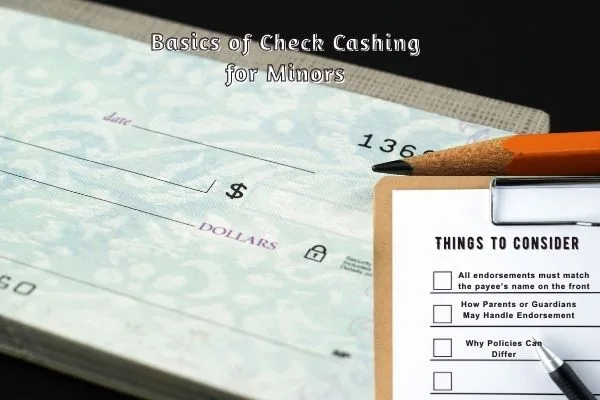
Understanding the Basics of Check Cashing for Minors
Handling a check made out to a child can feel confusing. While the process is similar to regular check cashing, there are extra steps and rules to follow. Knowing the basics helps parents or guardians complete the endorsement correctly and avoid delays.
What Is Check Endorsement?
A check endorsement happens when the payee signs the back of a check. This allows the check to be deposited or cashed. In general, adults provide identification and endorse checks for themselves. However, when a check is made payable to a minor, additional steps may be needed. The key rule is that all endorsements must match the payee’s name on the front.
How Parents or Guardians May Handle Endorsement
If a check is made payable to a child, most providers require the parent or guardian to endorse it. Parents often search for how to endorse a check for my child, and the process usually involves writing the child’s name, indicating the parent’s role as guardian, and then signing their own name. Some providers may also request account details. These steps help direct the funds to the correct account or ensure a smooth check cashing process.
Why Policies Can Differ
Not all financial service providers handle minor checks the same way. Banks, credit unions, and money transfer providers each have their own rules. In every case, compliance with identification and recordkeeping laws is required. Parents should always ask their provider about their check cashing rules before attempting a deposit or cashing transaction. For broader insight, parents should consult their financial provider directly. Order Express follows federal requirements under the Bank Secrecy Act, FinCEN reporting obligations, and OFAC compliance rules.
State-Level Variations
While federal law sets the baseline for compliance, state laws may also regulate how check cashing and money service businesses operate. Many U.S. states impose additional requirements on check cashing for minors, identification standards, and custodial account rules. These minor check cashing rules in the U.S. can differ from state to state. Even if Order Express complies with federal standards such as the Bank Secrecy Act, families should be aware that state-specific rules may also apply. Confirming both state and provider requirements helps avoid compliance issues.

The Process of Endorsing and Depositing a Minor’s Check
Endorsing a check for a minor involves more than just a signature. Parents or guardians must follow specific steps to ensure the funds are processed correctly and in compliance with financial regulations. Each stage, from review to final deposit, plays an important role in a smooth check cashing experience.
Step One: Reviewing the Check
Start by verifying that the child is the listed payee. Errors in the name can delay processing. Check cashing providers must ensure the check belongs to the intended recipient. This protects both the customer and the institution. For example, providers must comply with BSA/AML reporting requirements to prevent misuse.
Step Two: Completing the Endorsement
Parents may write the child’s name on the back of the check. Then they may add a note such as “minor.” Below that, the parent writes their own full name and their role, such as “parent” or “guardian.” Finally, the parent signs the check. These steps help providers understand the relationship and authorize the deposit or check cashing process.
Step Three: Providing Identification
Identification is central to compliance. Most providers require a valid government-issued ID for the parent. In some cases, they may request documents for the child as well. This ensures the check cashing transaction follows strict Know Your Customer (KYC) rules. Without identification, the check may not be accepted. Federal guidelines also require reporting through systems such as FinCEN SAR electronic filing.
Step Four: Depositing or Cashing
Once the endorsement and ID are confirmed, the provider decides if the check can be accepted. Some providers allow parents to deposit checks payable to minors into their own accounts. Others may require the opening of a custodial account. In all cases, the transaction must comply with anti-money laundering regulations. At Order Express, transactions of $3,000 or more require additional verification and documentation under federal and company policy. This ensures safe and legal check cashing.

Teaching Financial Literacy Through Check Cashing
Opening Custodial Accounts
One option for parents is opening a custodial account for the child. These accounts allow funds from minor checks to be deposited directly under parental control. They also give parents a chance to teach children about saving. Some banks may require custodial accounts. Order Express does not offer custodial accounts, so parents should confirm with their financial institution. Families should consult their financial institution about approved financial products when teaching children about budgeting and responsibilities.
Important Limitation: Order Express does not provide custodial accounts. Parents who require this option must use a bank or credit union instead.
Involving Children in the Process
Parents can bring their children along when handling a check transaction. Showing how check cashing works can build awareness. Children can learn about endorsement, signatures, and the value of proper identification. Even if they cannot legally cash checks themselves, involvement builds financial responsibility. Families should ask their provider about approved methods and compliance requirements when discussing safe practices.
Using Real-Life Examples
Parents may use everyday events to teach children money lessons. An endorsed check for a birthday gift can start a conversation about savings. A custodial account deposit can introduce compound interest. The act of check cashing itself becomes an educational opportunity. These lessons help prepare children for future banking needs. For example, reviewing official FinCEN consumer advisories shows how important compliance is in protecting those savings.
Key Points to Remember
Compliance Requirements
Every provider, including money service businesses, follows regulations for financial transactions. Check cashing over certain amounts requires customer identification. Suspicious transactions must be reported. For minors, this means providers will verify both the child’s and parent’s details when needed. Compliance ensures protection from fraud and supports financial safety. Providers are also obligated to review OFAC sanctions lists before completing transactions.
Recordkeeping Obligations
Providers must keep copies of checks, endorsements, and identification records. These documents may be retained for years under federal rules. Parents should understand that every check cashing transaction creates a permanent record. This protects both the provider and the customer. Federal rules such as the remittance transfer rule further highlight the importance of documentation.
Varying Policies
Not all providers treat minor checks the same way. Some allow deposits into parent accounts, others prefer custodial accounts. Parents should always ask about specific check cashing policies. Clear communication avoids confusion and ensures smooth transactions. Guidance from federal regulators such as FinCEN and OFAC shows how compliance rules adapt to different financial products, not just checks.

Tips for Parents Managing a Child’s Check
Parents play an active role in ensuring a child’s check is handled correctly. By following simple guidelines, they can avoid delays, meet compliance requirements, and turn each check cashing experience into a learning moment. These tips help streamline the process while building financial awareness for children.
Ask About Provider Rules
Before visiting a branch or service location, ask about endorsement requirements. Confirm what identification is needed for check cashing. This avoids delays and wasted trips. When in doubt, families can also reach out via Order Express contact support.
Endorse Correctly
Write the child’s name exactly as shown on the check. Then add your own name and role. Finish with your signature. This sequence helps ensure the check cashing process goes smoothly.
Provide Identification
Always bring a valid government-issued ID. If available, bring the child’s identification too. This makes it easier to satisfy compliance requirements during the check cashing transaction. For official document requirements, see identification requirements under BSA/AML policies.
Deposit Promptly
Checks often expire after six months. Delaying increases the risk of losing or invalidating the payment. For smooth check cashing, endorse and deposit quickly.
Educate Along the Way
Use the opportunity to teach children how financial services work. Even a small check can spark important lessons. Parents can turn a simple check cashing moment into a lasting financial education. Compliance resources from Order Express and federal regulators such as FinCEN and OFAC can help expand those conversations into safe financial practices.
For convenient service, visit your nearest Order Express location or explore our online tools to learn more about check cashing options for your family.
Conclusion
Cashing a check made out to a child involves careful steps to ensure accuracy and compliance. Parents or guardians must endorse correctly, provide identification, and follow the specific policies of their chosen provider. While requirements may vary between banks, credit unions, and other financial service providers, clear communication always prevents delays. Beyond compliance, this process can also be an opportunity to teach children about money management and banking practices. By involving them early, parents can foster financial awareness and responsibility. Whether through a custodial account or guided deposit, each transaction offers valuable lessons. With the right approach, check cashing for minors becomes more than a financial task, it becomes a stepping stone toward lifelong financial literacy.
Important Limitation: Order Express does not provide custodial accounts. Families needing custodial options should confirm with their bank or credit union.
Disclaimer: This article is for informational purposes only and does not constitute financial, legal, or professional advice. Check cashing policies for minors vary by bank, credit union, and money service business. Always consult your financial provider for specific requirements before attempting to cash or deposit a check made out to a child.
Frequently Asked Questions
Q1: Can a child cash a check in their own name?
No, minors cannot usually cash checks themselves. A parent or guardian must endorse and provide identification.
Q2: How should I endorse a check payable to my child?
- Write the child’s name as listed on the check
- Add your role (e.g., “parent” or “guardian”)
- Sign your own name
Q3: Do I need an ID to cash my child’s check?
Yes. A valid government-issued ID for the parent or guardian is required. Some providers may also request the child’s documents. This requirement applies at all amounts, with enhanced verification required at $3,000 or more.
Q4: Can I deposit my child’s check into my own account?
Some providers allow this, but others require a custodial account. Always confirm rules with your financial institution before depositing.
Q5: What happens if I delay cashing my child’s check?
Most checks expire in six months. Delaying can cause the payment to become invalid, so endorse and deposit promptly.

John is a Content & SEO Specialist who enjoys breaking down complex financial topics, like cross-border payments and money transfers, into content that’s easy to understand. He focuses on creating practical, search-driven content that helps people find answers and make informed decisions.


