Understanding the difference between buying and selling foreign currency helps explain how exchange transactions work for travelers and senders. The distinction comes from the exchange direction and the pricing method providers use when converting one currency into another through currency exchange providers such as Order Express.
Exchange services are offered by licensed money service businesses such as Order Express.
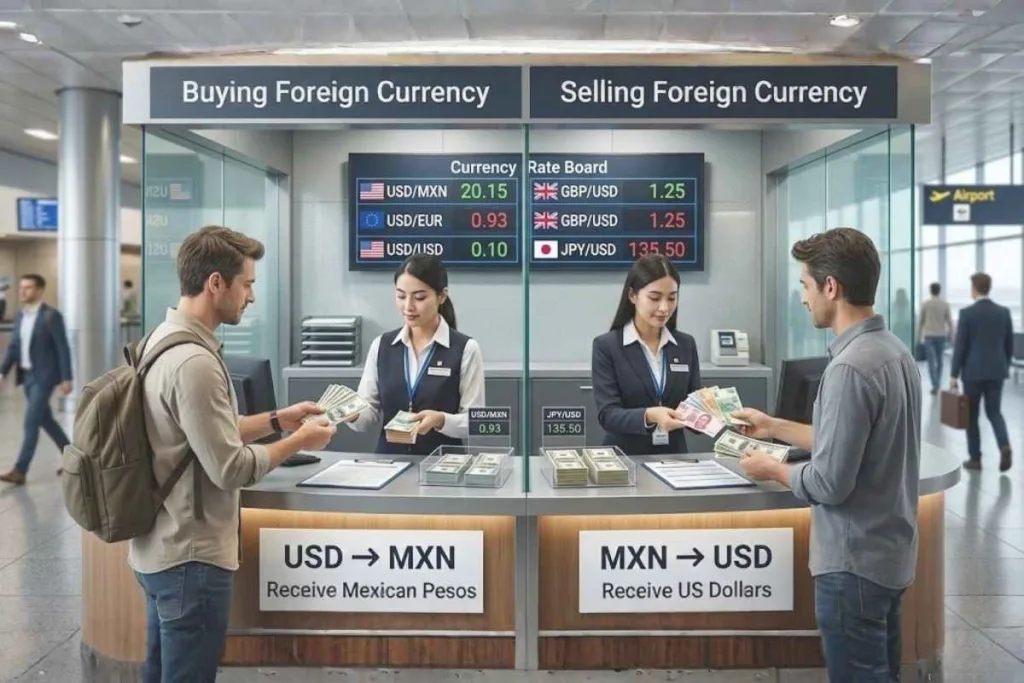
When you buy foreign currency, you receive another country’s money using your local currency at a quoted rate. When you sell foreign currency, the provider converts your foreign cash back into local currency using a different rate.
For everyday users preparing to exchange money, the difference mostly depends on transaction direction and provider pricing structure. Both actions occur during normal currency exchange services, but each uses distinct rates and operational steps.
For additional guidance about how currency exchange services work, read our: currency exchange fundamentals and everyday transaction guide.
Transaction Direction Determines Whether You Are Buying Or Selling Currency
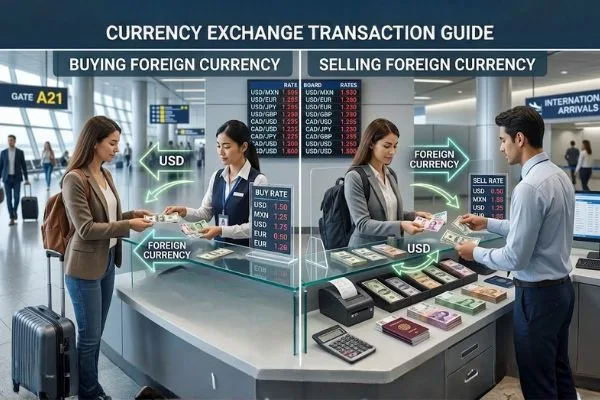
Transaction direction determines whether a customer is buying foreign currency or selling it back to a provider. This mechanism explains how the same exchange counter handles two opposite financial movements during everyday currency conversions.
Buying Foreign Currency Means Receiving Another Country’s Money
Buying foreign currency occurs when a customer exchanges their local currency in order to obtain money used abroad. Travelers commonly perform this transaction before international trips or before sending funds through services like money transfer services to another country.
During a buying transaction, the exchange provider sells foreign banknotes from their available inventory to the customer. The customer pays using domestic currency, which the provider receives and holds within its operational currency reserves.
Typical situations where customers buy foreign currency include the following practical transaction scenarios:
- Preparing spending cash before traveling internationally for business, tourism or family visits abroad.
- Obtaining foreign cash before arriving at airports or international destinations where exchange rates may differ.
- Purchasing foreign currency for immediate travel expenses such as transportation, meals or local payments.
In simple terms, buying currency means you receive foreign money while the exchange provider receives your domestic currency.
Selling Foreign Currency Means Converting It Back Into Local Money
Selling foreign currency occurs when a customer returns unused foreign cash and converts it back into local currency. This transaction usually happens after travel when a person no longer needs physical foreign banknotes.
During a selling transaction, the provider purchases foreign currency from the customer using domestic currency funds. The exchange service then adds those foreign banknotes back into inventory for future customer demand.
Common examples of selling foreign currency during everyday transactions include situations such as the following:
- Returning from international travel with leftover banknotes from restaurants, taxis or retail purchases.
- Exchanging foreign cash received as a gift or payment into local currency for easier domestic spending.
- Converting remaining travel money before depositing funds into a domestic bank account.
In summary, selling currency means the provider receives foreign money while the customer receives domestic currency.
Direction Creates Two Opposite Exchange Roles
The same exchange service acts as seller during buying transactions and buyer during selling transactions. Customers therefore switch roles depending entirely on whether they want foreign currency or local currency returned.
Buying foreign currency means the customer receives foreign money and pays domestic currency.
Selling foreign currency means the customer provides foreign money and receives domestic currency instead.
Buying vs Selling Foreign Currency
| Transaction Type | Customer Gives | Customer Receives | Exchange Rate Used |
| Buying Currency | Domestic currency | Foreign banknotes | Buying rate |
| Selling Currency | Foreign banknotes | Domestic currency | Selling rate |
Understanding this directional difference helps customers immediately recognize which side of the exchange they are performing.
Exchange Rates Differ Between Buying And Selling Transactions
Exchange rate structure forms the second major difference between buying and selling foreign currency transactions. Currency providers apply separate rates because they must manage inventory risk, operational costs and market fluctuations.
Buying Rates Reflect The Price Of Obtaining Foreign Currency
The buying rate represents the price customers pay when purchasing foreign currency using their domestic funds. This rate reflects the provider’s cost of sourcing that currency within international financial markets.
When customers buy foreign currency, the provider typically applies a slightly higher exchange rate. That price difference allows the provider to maintain inventory and continue offering foreign currency services.
Several factors influence buying rates used during customer transactions at exchange counters:
- Global currency market prices between international financial institutions and liquidity providers, which follow benchmarks tracked in Federal Reserve foreign exchange rate data.
- Inventory availability of physical banknotes within the exchange provider’s operational currency supply.
- Local demand from travelers sending remittances or preparing international travel expenses.
Because of these factors, buying rates typically cost slightly more than the market midpoint currency value.
Selling Rates Reflect The Value Of Currency Returned By Customers
The selling rate applies when customers provide foreign currency and request domestic currency in return. This rate is usually slightly lower than the buying rate for the same currency pair.
Providers offer a lower selling rate because they must manage risk before reselling those banknotes later. Foreign cash received from customers becomes part of the provider’s operational inventory.
Key reasons selling rates differ from buying rates include the following operational realities:
- Exchange providers must maintain price stability while holding physical foreign banknotes in storage.
- Market currency values fluctuate constantly, which introduces pricing risk for held inventory.
- Providers must cover operational costs associated with handling, verifying and storing physical banknotes.
Consumer education resources such as the FDIC Money Smart financial education program help individuals understand how financial services like currency exchange operate.
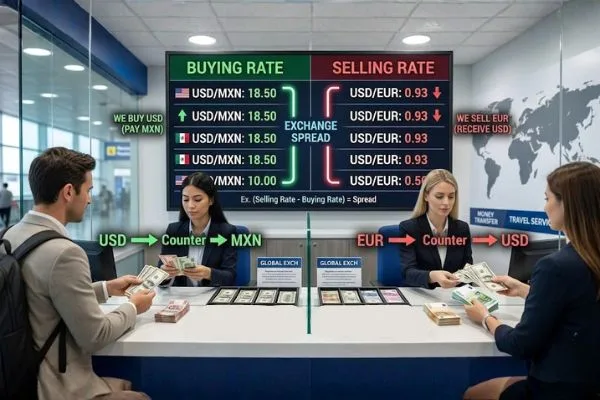
The difference between buying and selling rates forms what financial services call the exchange spread.
The Exchange Spread Explains The Price Difference
The exchange spread represents the gap between the buying rate and selling rate offered by a currency provider. This spread allows providers to operate exchange services while managing currency inventory and operational expenses.
Customers notice the spread most clearly when comparing the rate used to buy a currency versus selling it. Although both rates follow market trends, they rarely match exactly during normal exchange operations.
Currency markets and policy oversight that influence exchange rate behavior are analyzed through frameworks such as the U.S. Treasury exchange rate policy guidance.
Buying rate applies when customers purchase foreign currency using domestic money.
Selling rate applies when customers return foreign currency and receive domestic money.
Understanding the spread helps customers recognize why buying and selling currency rarely produce identical conversion values.
Customers who regularly handle international payments or cash transactions may also combine services such as check cashing services when managing funds after travel.
Additional financial education about handling international payments safely can also be found through the Consumer Financial Protection Bureau resources for sending money abroad.
Customers seeking assistance with transaction questions or exchange service availability can also reach the Order Express contact team for support.
Key Takeaways
- Buying foreign currency means exchanging domestic money to receive banknotes from another country for travel or payments abroad.
- Selling foreign currency means converting leftover foreign cash back into domestic money after travel or international transactions.
- Transaction direction determines the role of the exchange provider as either seller or buyer of currency.
- Exchange providers apply different rates for buying and selling transactions due to inventory costs and market risk.
- The difference between those two rates forms the exchange spread used during everyday currency exchange services.
Note: Order Express is a licensed money services business providing currency exchange and international payment services.
Frequently Asked Questions
Q: What does buying foreign currency mean?
A: Buying foreign currency means exchanging your local money in order to receive banknotes from another country.
Q: What does selling foreign currency mean?
A: Selling foreign currency means giving foreign banknotes to a provider and receiving domestic currency in return.
Q: Why are buying and selling exchange rates different?
A: Providers use different rates to cover operational costs, inventory management and market risk within currency exchange services.
Q: Do all currency exchanges use buying and selling rates?
A: Yes. Most currency exchange providers apply separate buying and selling rates when converting currencies.
Q: Can I sell foreign currency at the same place I bought it?
A: Yes. Most exchange providers allow customers to both buy foreign currency and sell unused banknotes.
Conclusion
The difference between buying and selling foreign currency comes down to transaction direction and exchange rate structure. Buying currency means receiving foreign banknotes while paying with domestic money at the provider’s buying rate. Selling currency means returning foreign banknotes and receiving domestic currency using the provider’s selling rate. Because providers must manage currency inventory and market fluctuations, the two rates always differ slightly. Understanding these mechanisms helps customers approach exchange counters with clear expectations before completing a transaction. With this knowledge, travelers and senders can confidently prepare their money before international payments or travel expenses.
To complete a currency exchange transaction, customers may visit a company-owned Order Express branch or contact the team for service availability.
Disclaimer: Exchange rates, service availability and currency acceptance may vary depending on location and provider policies. Certain transactions may require identity verification in accordance with federal and state regulations.

John is a Content & SEO Specialist who enjoys breaking down complex financial topics, like cross-border payments and money transfers, into content that’s easy to understand. He focuses on creating practical, search-driven content that helps people find answers and make informed decisions.