


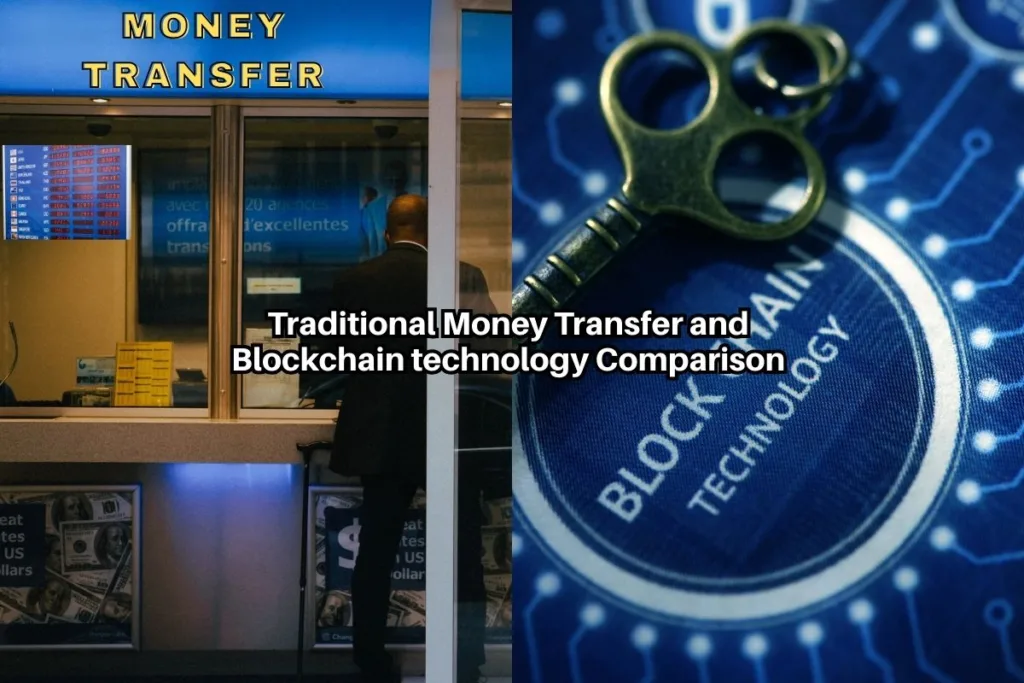
Blockchain and traditional money transfers differ in speed, cost, security, and accessibility. Blockchain payments use decentralized networks to send funds directly between parties, often settling in minutes with lower fees. Traditional money transfers rely on regulated banks or licensed providers, offering strong consumer protection, currency stability, and wide accessibility, even without internet access. This guide compares both methods, outlining their advantages, challenges, and ideal use cases so you can choose the right payment option.

Understanding Blockchain Payments
Blockchain technology has introduced a new way to process payments without relying on traditional banking infrastructure. It changes how transactions are recorded, verified, and secured, offering potential benefits alongside unique challenges.
What Are Blockchain Payments?
Blockchain payments use a decentralized network of computers to record and verify transactions. There is no central authority. This removes intermediaries like banks, which can lower fees and speed up processing.
Funds can be transferred in cryptocurrencies or in certain stable digital tokens tied to fiat currencies. Each transaction is secured by cryptographic methods that make tampering very difficult, a process explained in detail by Blockchain’s learning portal.
The promise of blockchain is faster, cheaper, and more transparent transactions. But it requires customers to understand wallets, private keys, and how blockchain networks work.
How Blockchain Payment Systems Work
When a blockchain payment starts, the transaction is sent to the network. Many computers, called nodes, verify it against the network’s rules.
After verification, the transaction joins others in a block. This block is added to the permanent chain of previous blocks.
The blockchain is public and can be viewed by anyone. This offers transparency, but also means transactions cannot be changed or reversed.
Some networks use smart contracts: self-executing agreements that release funds only when certain conditions are met. They reduce human error and automate repetitive tasks.
While blockchain can handle international transfers quickly, performance depends on the network’s speed and capacity. High traffic can slow it down.

Overview of Payment Methods
Money transfers today can be carried out using either traditional systems or blockchain technology. Each method has its own structure, strengths, and limitations. Understanding how they work makes it easier to compare their value for different situations.
Traditional Money Transfers
Traditional transfers include bank wires, ACH payments, cash pickup services, and money orders. They work through licensed institutions that are regulated by governments and often support services like money transfer for both domestic and cross-border needs.
Features include reliable systems, customer support, and strong fraud protection measures. Cross-border transfers may involve several intermediaries, which can increase costs and processing times.
Most traditional systems can reverse a transaction if a mistake is found quickly. This safety net is not available in blockchain transactions.
Blockchain Payments
Blockchain payments allow peer-to-peer transfers without banks. They can offer near-instant settlement and reduced fees.
Security is maintained through encryption and distributed verification. Every transaction is recorded on a public ledger, similar to how compliance bodies like FinCEN track suspicious activity through reporting frameworks.
However, blockchain payments require technical skills to manage wallets and protect private keys. There is no central support if funds are sent to the wrong address.
Blockchain Payments vs. Traditional Transfers
| Metric | Blockchain Payment Systems | Traditional Payment Methods | Advantage |
| Transaction Speed | Most networks process payments within minutes, even for international transfers. Faster than some bank wires. | Many domestic transfers are instant or same-day. Cross-border transfers may take one to three days. | Blockchain can be faster for cross-border payments. Traditional methods match blockchain speed for many local transfers. |
| Transaction Fees | Generally low, but can rise sharply when network demand is high. | Fees may include service charges, exchange rate margins, and intermediary costs. Cross-border fees can be higher. | Blockchain offers lower costs in many cases. Traditional services provide added value with customer support and fraud protection. |
Global Accessibility
- Blockchain: Anyone with internet access and a digital wallet can use it. Users must still follow local laws and any sanctions screening requirements.
- Traditional: Widely available through physical agents, banks, and mobile apps. Many allow cash deposits and pickups.
- Advantage: Traditional transfers serve customers without internet access or with limited digital skills.
Security and Fraud Prevention
- Blockchain: Secured through advanced cryptography and consensus mechanisms. Users are fully responsible for safeguarding their keys.
- Traditional: Strong centralized security systems. Customers benefit from fraud monitoring and dispute resolution processes, sometimes guided by remittance transfer rules.
- Advantage: Blockchain is secure by design. Traditional transfers offer easier recovery in case of errors or fraud.
Transparency
- Blockchain: Public ledgers provide full traceability of all transactions.
- Traditional: Transaction records are private, held by financial institutions.
Advantage: Blockchain is more transparent. Traditional systems prioritize customer privacy.
h3-Comparing Use Cases
Cross-Border Transactions
- Blockchain: Can provide fast, low-cost transfers without currency conversion fees.
- Traditional: May involve higher costs but ensures compliance with all regulations, such as CTR filing for cash transactions over 10,000 USD and SAR filing for suspicious amounts of 2,000 USD or more. Customer service is available to resolve issues.
Recurring Payments
- Blockchain: Smart contracts can automate regular transfers without manual action.
- Traditional: Bank systems handle payroll, subscriptions, and bill payments reliably and with detailed statements.
Retail Transactions
- Blockchain: Merchant adoption is growing but remains limited in many areas.
- Traditional: Fully integrated with point-of-sale systems worldwide. Customers can pay with cards, cash, or check cashing services.
Large Business Transfers
- Blockchain: Transparent and efficient for large transactions. Legal frameworks are still developing.
- Traditional: Widely accepted for large amounts with established accounting and compliance systems.
Challenges in Each System
Blockchain Payments
- Uncertain regulations in many countries.
- Network congestion during high activity.
- Need for user knowledge of digital wallets.
- Cryptocurrency value volatility as noted by IRS guidelines on virtual currencies.
Traditional Transfers
- Higher fees for some services.
- Slower settlement in certain corridors.
- Limited availability in some rural areas.
- Exchange rate margins are not always visible.

Opportunities for Traditional Transfers
While blockchain technology offers innovation, traditional money transfers continue to stand out where it matters most to customers. These services combine regulatory strength, global reach, and proven reliability, often alongside other solutions like vehicle services.
Currency Exchange and Stability
Traditional money transfer providers handle currency exchange as part of the service. Customers know the exact amount the recipient will get. This rate is locked at the time of sending, giving confidence and clarity.
Exchange rates in traditional systems are set by licensed institutions. They follow market conditions but remain stable during the transaction process. This stability protects customers from sudden losses.
Blockchain payments often rely on cryptocurrencies or tokens. Their value can change in minutes due to market volatility. A transfer worth $200 when sent might be worth $180 by the time it is received.
For customers sending money to support family or pay bills, stability is crucial. Traditional transfers deliver predictable results, while blockchain can carry financial risk in volatile markets.
Fraud Prevention and Consumer Protection
Traditional providers have strong fraud prevention systems. They use transaction monitoring tools to detect unusual activity. Suspicious transactions can be flagged or stopped before they are completed, much like the alerts promoted by Travel.State.gov for financial safety abroad.
Many traditional services also send alerts to customers for confirmation. This step helps prevent unauthorized transfers. Some services even allow reversals if a problem is reported quickly.
Blockchain transactions are final once confirmed on the network. There is no central authority to reverse mistakes or stop fraud after the fact. If money is sent to the wrong address, it is likely lost forever.
For customers who value safety nets, traditional systems offer peace of mind. The combination of monitoring, alerts, and dispute resolution makes them more secure for everyday use.
Familiarity and Ease of Use
Traditional transfers are simple for most customers. They can visit a local agent, use a bank, or open a mobile app. Cash payments and pickups are available in many locations.
These methods are familiar and require little technical skill. Customers know how to fill out forms, show ID (as required by identification guidelines), and send money securely.
Blockchain requires more technical knowledge. Users must set up a digital wallet, secure private keys, and understand transaction fees. Mistakes in these steps can result in lost funds.
For customers without strong digital skills, traditional transfers are far easier. They provide personal assistance and a straightforward process that works for all levels of technology experience.
Governance and Regulation
Both payment types require clear rules to ensure safety and trust. Traditional transfers have long operated under established frameworks, similar to those explained in Order Express’ consumer rights guide.
These rules include customer identification, transaction monitoring, and reporting of suspicious activity. Providers must also follow sanctions lists and record-keeping requirements.
Blockchain payment providers must adopt similar compliance systems to gain broad acceptance. This includes AML and KYC procedures, sanctions screening, and transaction analysis tools.
Future Prospects
- Traditional Methods: Continued upgrades to digital platforms will improve speed and convenience. Partnerships with fintech firms (covered in FinTech Futures) could reduce costs and expand reach.
- Blockchain Payments: Growth depends on solving scalability, volatility, and regulation challenges. Hybrid solutions combining blockchain speed with traditional compliance are possible.
A blended approach could offer the best of both worlds, providing fast settlement with strong consumer protection.
Conclusion
Choosing between blockchain and traditional money transfers depends on your priorities. Blockchain offers speed, transparency, and potential cost savings, making it ideal for tech-savvy users and fast cross-border transactions. However, it carries volatility risks, requires technical know-how, and lacks built-in consumer protection. Traditional transfers remain the safer, more stable choice for most people, offering regulated oversight, strong fraud prevention, and wide accessibility, even without internet access. For high-value, recurring, or urgent payments where reliability is critical, traditional services excel. As technology evolves, both systems may merge strengths, offering faster transactions with robust compliance. Until then, understanding the advantages and limits of each method ensures you select the most secure and efficient option for your specific transfer needs.
Disclaimer: This guide provides general information only and does not constitute legal, compliance, or financial advice. Readers should consult qualified professionals and their own institutional policies for specific requirements.
Frequently Asked Questions
1. What is the main difference between blockchain and traditional money transfers?
Blockchain transfers use decentralized networks that bypass banks, often reducing costs and speeding up settlement. Traditional transfers rely on licensed providers under strict regulations. They offer strong consumer protection, currency stability, and support for users without internet access. Blockchain is more transparent, but traditional methods offer easier recovery from errors and fraud.
2. Are blockchain money transfers always faster than traditional methods?
Blockchain payments often settle in minutes, especially across borders. However, speed depends on network traffic and capacity. Traditional transfers can match or exceed blockchain speed for many domestic transactions. Cross-border bank wires may take days, but some regulated providers now offer same-day international delivery.
3. Which is more secure, blockchain or traditional money transfers?
Blockchain uses cryptography and distributed verification, making tampering extremely difficult. However, users are responsible for protecting their private keys. Traditional transfers have centralized security, fraud monitoring, and the ability to reverse certain transactions. For most users, the added support and recovery options in traditional systems feel safer.
4. Do blockchain money transfers cost less than traditional methods?
Blockchain fees are usually low but can rise during high network demand. Traditional transfer costs vary and may include service fees, exchange rate margins, and intermediary charges. While blockchain can be cheaper for some transfers, traditional methods often justify higher costs with strong service and fraud protection.
5. Which method is better for cross-border money transfers?
Blockchain offers quick, low-cost cross-border payments without currency conversion fees. However, it may face legal restrictions in some countries. Traditional transfers ensure regulatory compliance, currency stability, and access to customer service. For predictable results, traditional methods remain the preferred choice for many senders and recipients.

John is a Content & SEO Specialist who enjoys breaking down complex financial topics, like cross-border payments and money transfers, into content that’s easy to understand. He focuses on creating practical, search-driven content that helps people find answers and make informed decisions.


