


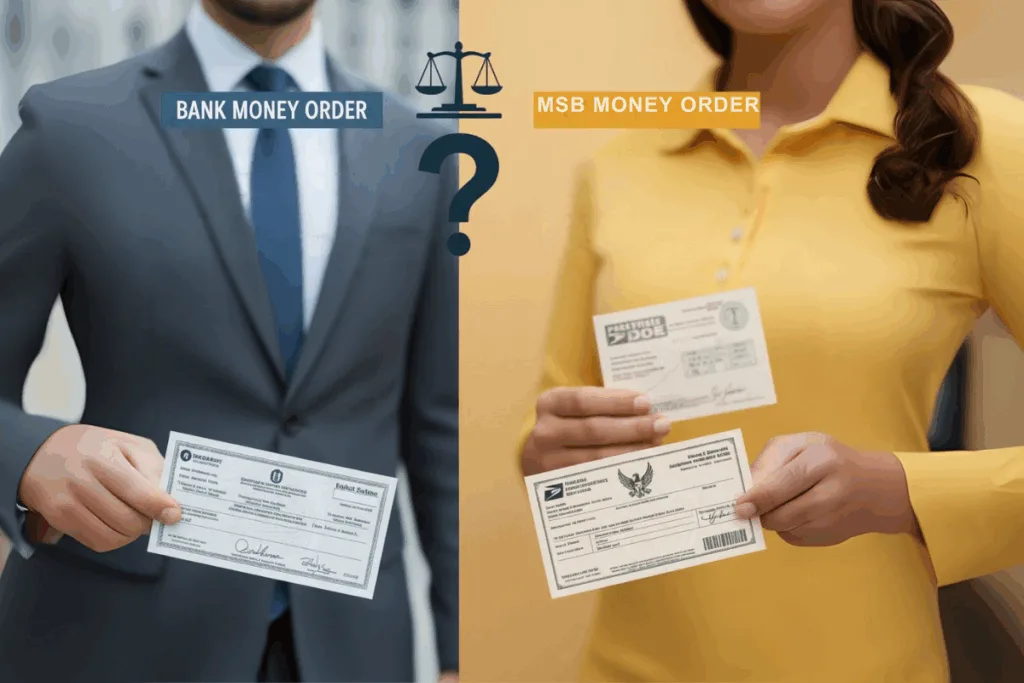
The main difference is that bank money orders are issued by financial institutions, while retail money orders are issued by licensed money transfer providers like Order Express. Both options are secure, but they follow different compliance and verification rules. Knowing these differences helps customers understand how to use money orders safely.
This article explains what each type offers, why compliance matters, and how to choose the right option for your needs.
Whether you choose a bank or retail provider, safe money transfer practices help protect your funds through recipient verification, trusted services, and careful handling before every payment is sent.

Understanding Money Orders
Understanding money orders starts with knowing how they work, why people use them, and how providers ensure safety. This section explains what a money order is, the benefits for everyday transactions, and the compliance steps that make them a secure option for customers.
h3-What Is A Money Order?
A money order is a prepaid financial instrument that customers use to send money securely. Unlike checks, it does not bounce because the funds are prepaid. Order Express makes money orders widely available, giving customers easy access to a trusted form of payment.
Money orders are often used by people without a bank account. They can also be used by customers who want a guaranteed payment option. For many, a money order provides a reliable alternative to cash or personal checks.
Why People Use Money Orders
People use money orders for many reasons. Rent payments, utility bills, and personal transactions often require a secure method. Landlords and service providers appreciate them because they clear quickly and do not depend on the payer’s account balance. Families also rely on money orders to send funds safely to relatives.
Money orders offer privacy because customers do not have to share bank details. They also serve as proof of payment, since every money order includes a stub or receipt. This makes them practical for tracking payments and resolving disputes. Order Express helps customers access these benefits conveniently.
For more consumer guidance on safe payment choices, visit the FDIC Consumer Resource Center.
Safety Of Money Orders
A money order from a regulated provider is one of the safest financial tools. Customers receive a receipt that allows them to trace the payment. If a money order is lost or stolen, the receipt helps request a replacement.
Order Express complies with all applicable federal and state laws to protect every transaction. Trained staff and systems verify customer identity when thresholds apply and maintain required records under company policy. The company’s procedures align with the Bank Secrecy Act and FinCEN regulations without mixing federal rules and internal standards. Customers can feel confident that their money orders are processed securely and efficiently.
You can also learn about your rights in payments through CFPB consumer resources.

Bank-Issued Vs Retail Money Orders
Bank-issued and retail money orders serve the same purpose but differ in who issues them, how they are regulated, and the customer experience they provide. This section explains those differences so customers can make informed choices about cost, convenience, and compliance.
Bank-Issued Money Orders
Banks and credit unions issue bank money orders. They fall under banking laws and are not classified as Money Services Businesses. However, banks must still follow the Bank Secrecy Act, including Currency Transaction Reports (CTR) for cash transactions totaling more than $10,000 per business day. Customers typically must hold an account at the bank to purchase one. Fees at banks are usually higher, often ranging from five to ten dollars. Availability is limited to normal banking hours.
Bank money orders are useful for customers who already manage all of their finances at one institution. They may also appeal to people who want the security of working with their established bank. However, for many people, the limited access and higher fees create barriers.
Retail Money Orders
Retailers, convenience stores, and Money Services Businesses like Order Express issue retail money orders. Unlike banks, these businesses must register with the Financial Crimes Enforcement Network (FinCEN), which administers Bank Secrecy Act compliance. They follow specific anti-money laundering rules, identity verification procedures, and recordkeeping obligations.
Customers value retail money orders for their accessibility. Order Express locations operate during extended hours and often weekends. Fees are usually lower compared to banks. Retailers also allow customers to purchase money orders without holding a bank account, which increases financial inclusion.
Order Express offers thousands of locations where customers can buy a money order quickly. This makes the service more convenient for everyday needs, from paying bills to sending money across the country.
Safety And Compliance
Both bank-issued and retail money orders are secure options. The main difference is in regulatory oversight. Banks comply with federal banking regulations, including BSA and CTR requirements. Retailers and Money Services Businesses such as Order Express comply with FinCEN-administered rules under the Bank Secrecy Act, which include recordkeeping, identity verification, and suspicious activity reporting.
Order Express maintains its own compliance program that meets or exceeds federal and state standards. Staff receive training to recognize and report suspicious activity, ensure identity verification when thresholds apply, and maintain proper records. Customers benefit from both safety and convenience by choosing a licensed and compliant provider like Order Express.
Monetary Thresholds and Reporting Requirements
Federal and state laws require MSBs to verify customer identity and maintain records when transactions meet or exceed certain limits. The following table summarizes Order Express policy, which meets or exceeds state standards but remains separate from federal CTR rules.
Thresholds by state:
- Arizona: $900 within 48 hours – ID verification and recordkeeping
- Oklahoma: $1,000 within 24 hours – ID verification and recordkeeping
- All other states: $3,000 within 48 hours – ID verification and recordkeeping
In addition:
- Cash transactions over $10,000 in one business day require a Currency Transaction Report (CTR) under FinCEN rules.
- Splitting transactions to avoid these thresholds is illegal and may trigger a Suspicious Activity Report (SAR).
- Order Express staff verify identity and record qualifying transactions to maintain compliance with internal and federal standards.
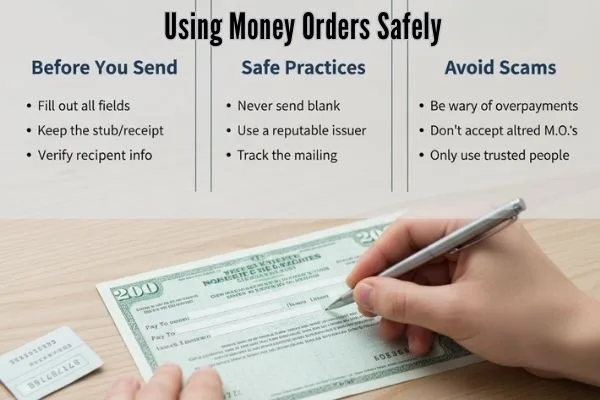
Using Money Orders Safely: What You Should Know
How to fill out a money order correctly
Customers should complete money orders carefully to ensure they are valid and secure. Follow these steps:
- Write the recipient’s full legal name in the “Pay to the Order of” field to avoid delays or rejections.
- Add your own name and address in the purchaser or buyer section for identification.
- Sign the money order where indicated; unsigned instruments may be refused.
- Use permanent ink and avoid pencil to reduce the risk of alterations.
- Always keep the receipt or stub attached to the money order.
This document is proof of purchase and necessary for tracking or requesting a replacement if the money order is lost or stolen. Never leave any fields blank, as empty spaces create opportunities for fraud. Following these steps ensures your money order reaches the right person without issues.
Learn more about safe use of financial products through CFPB consumer protection guidance.
Costs, convenience, and availability
Customers often compare bank and retail options when deciding how to use money orders effectively. Banks may charge higher fees, sometimes up to ten dollars per instrument, and usually limit purchases to banking hours. Retailers and providers like Order Express usually charge lower fees, often under two dollars depending on location.
Limits also vary. Many issuers cap money orders at one thousand dollars per transaction, requiring customers sending larger amounts to buy multiple money orders. Retailer locations generally provide more flexibility and extended service hours compared to banks, including evenings and weekends.
Convenience is also an important factor. Banks provide security but limited access, while retailers combine compliance with greater flexibility. Customers can walk into a nearby location, purchase a money order, and complete their transaction quickly. Extended hours and affordable fees create added value. For those focused on convenience, retail money orders clearly stand out by offering peace of mind without requiring a banking relationship. Order Express strengthens this advantage by providing reliable service and knowledgeable support.
When To Choose A Money Order
Money orders are a smart choice for many everyday situations. Customers often use them to pay rent, because landlords prefer guaranteed funds. Bills such as utilities or insurance can also be paid with money orders. Sending money to relatives or friends without using bank transfers is another common use.
Customers without bank accounts benefit most from money orders. They can send payments without opening an account. Even those with accounts may choose money orders when they want extra security or do not want to disclose personal bank information. Order Express check cashing services provide an accessible option for every customer.
Common mistakes to avoid
Customers should be aware of frequent errors when filling out or handling money orders:
- Leaving the payee line blank: This makes the money order vulnerable to fraud. Always complete it immediately.
- Misplacing the receipt: Without it, tracking or refunding becomes difficult. Keep it safe until the order is cashed.
- Using pencil instead of ink: Pencil can be erased or altered. Permanent ink keeps your information secure.
Order Express staff can answer questions during the purchase to help customers avoid these mistakes. Guidance at the point of sale ensures every transaction is handled correctly.
For broader consumer education on protecting personal finances, visit the FDIC Consumer Resource Center.
Money orders vs other payment methods
Money orders provide unique advantages compared to other payment tools:
- Compared to checks: Checks can bounce if funds are insufficient, but money orders are prepaid and guaranteed.
- Compared to electronic transfers: Transfers require accounts or apps, which not everyone has. Money orders are widely accessible.
- Compared to cash: Carrying cash can be unsafe, while money orders provide a traceable, secure alternative.
For additional regulatory details, see 31 CFR 1022.320 Suspicious Activity Reporting, which applies to MSBs.
For many customers, money orders act as a bridge between cash and banking. They enable participation in financial systems without requiring a full bank account. Order Express vehicle services and other offerings deliver added convenience alongside secure transactions.
Customer Tips For Using Money Orders
- Always keep the receipt until the money order is cashed
- Confirm the spelling of the recipient’s name
- Fill out the form immediately after purchase
- Ask the clerk if you have questions
- Do not sign the back; the recipient signs upon cashing
Order Express encourages customers to follow these steps to ensure smooth transactions. A little attention at the start avoids problems later.
Conclusion
Bank and retail money orders both provide safe ways to transfer funds, but they differ in cost, compliance, and convenience. Bank money orders work well for account holders who prefer services tied to their financial institution. Retail money orders, offered by licensed money transfer providers like Order Express, deliver extended hours, lower fees, and broader access without requiring a bank account. Customers should verify details carefully, complete forms correctly, and keep receipts for added security. Order Express ensures compliance with all applicable federal AML rules under the Bank Secrecy Act and maintains state-level procedures that align with but do not replace federal reporting obligations. The company verifies identity when required, maintains records, and reports suspicious or large cash transactions according to FinCEN guidance. This separation of policy ensures compliance without mixing company and federal rules.
Choose the option that best meets your needs today. Visit Order Express to purchase a money order and complete your secure transfer with confidence.
Disclaimer: This article is for informational purposes only. It summarizes Order Express internal policy alongside federal BSA and FinCEN requirements but does not replace legal or compliance guidance. Customers should verify requirements with their provider or financial institution.
Frequently Asked Questions
Q: What is the difference between bank and retail money orders?
A: Bank money orders are issued by financial institutions. Retail money orders come from licensed money transfer providers like Order Express, which are required to follow FinCEN compliance rules.
Q: How do I fill out a money order correctly?
A:
- Write the recipient’s full name
- Add your name and address
- Sign where required
- Use permanent ink
- Keep the receipt
Q: What should I do if my money order is lost?
A: Keep your receipt and contact the provider. Most licensed providers allow you to request a replacement or refund after verification.
Q: When should I use a money order instead of a check?
A: Use a money order when you need guaranteed funds, extra privacy, or when you don’t have a bank account.
Q: How do providers keep money orders secure?
A: Licensed providers are required by law to follow compliance rules, verify identity, maintain transaction records, and monitor for fraud under federal and state regulations.

John is a Content & SEO Specialist who enjoys breaking down complex financial topics, like cross-border payments and money transfers, into content that’s easy to understand. He focuses on creating practical, search-driven content that helps people find answers and make informed decisions.


