



Safe and secure money transfers require informed decisions, trusted providers and clear understanding of risks. Customers rely on money transfers, check cashing, money orders and currency exchange for daily financial needs. Each service moves value differently, but all require attention to identity verification, fraud prevention and transaction transparency.
Regulated money services businesses and other financial institutions operate within structured compliance frameworks designed to promote transparency and reduce misuse across financial transactions.
This article introduces the core principles that protect your funds before, during and after transactions. It organizes the most important safety concepts so you can confidently choose services that fit your needs.

Understanding The Foundations Of Secure Money Movement
Secure money movement depends on identity verification, transaction monitoring and transparent service standards. Retail financial services operate within structured compliance frameworks designed to prevent misuse and fraud.
Why Identity Verification Protects Your Transactions
Identity verification protects both customers and financial service providers from fraud and criminal misuse. Federal regulations such as 31 CFR 1022.210 require money services businesses to maintain anti money laundering programs that include customer verification procedures. require money services businesses to maintain anti money laundering programs that include customer verification procedures. When you present valid identification, you reduce the risk of impersonation, account takeover or unauthorized transfers.
For example, customers sending money domestically or internationally may be asked to provide government issued identification. Federal law, including the Anti Money Laundering Act of 2020, establishes recordkeeping and transaction monitoring requirements for regulated financial institutions. This process confirms the sender’s identity and ensures transactions meet established regulatory reporting standards.
Strong identity procedures also protect recipients from fraudulent pickups or altered beneficiary information. Customers benefit because verified transactions create documented records that support dispute resolution if needed.
How Transaction Monitoring Reduces Risk
Transaction monitoring identifies unusual activity that may signal fraud, structuring or financial exploitation. Monitoring systems review transaction amounts, frequency, geographic patterns and behavioral changes over time.
For example, multiple transfers just below reporting thresholds may trigger additional review. Under 31 CFR 1022.320, money services businesses must file suspicious activity reports when transactions meet reporting criteria.
This protects customers from unknowingly participating in suspicious activity or becoming victims of manipulation. Retail financial services use monitoring tools to detect patterns across money transfers, money orders and check cashing. These systems strengthen the overall safety of the financial ecosystem without delaying legitimate transactions unnecessarily.
The Role Of Regulated Retail Financial Services
Money services businesses operate under federal and state oversight frameworks that establish baseline compliance standards. Under 31 CFR 1022.210, money services businesses must maintain anti money laundering programs that include internal controls, independent testing and designated compliance officers.
These federal and state frameworks establish recordkeeping, reporting and consumer protection standards for regulated entities. High level regulations such as the Bank Secrecy Act and USA PATRIOT Act establish anti money laundering standards. Consumer protection rules require clear disclosures, fee transparency and defined error resolution processes.
For example, the CFPB Remittance Transfer Rule requires certain providers to disclose exchange rates, fees and delivery timing before completing qualifying remittance transfers. These standards ensure customers understand the full cost and expected outcome of each transaction.
Separately, Order Express maintains internal policies and procedures designed to support applicable federal and state regulatory requirements.
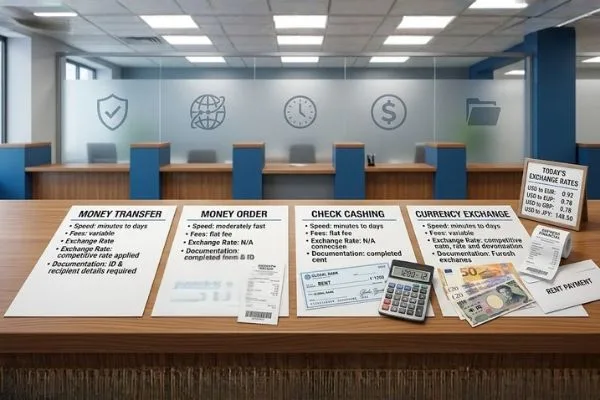
Choosing The Right Transfer Method For Your Situation
Choosing the right method depends on speed, destination, amount and risk tolerance. Different financial services solve different problems and offer varying levels of documentation and traceability.
Comparing Money Transfer Options
Money transfer services allow customers to send funds domestically or internationally with speed and tracking. They are commonly used for family support, emergency funds, business payments and bill obligations.
Key considerations when evaluating transfer methods include:
- Transfer speed and delivery method
- Exchange rate transparency
- Total fees and service charges
- Destination country requirements
- Pickup or deposit availability
Customers sending money immediately may prioritize speed and payout accessibility. Others may focus on cost efficiency or exchange rate stability. A separate cluster article explores safest transfer methods in tactical detail. This section introduces evaluation criteria without replacing those deeper guides.
When Money Orders Or Check Cashing Make Sense
Money orders provide a prepaid payment instrument useful for rent, utilities or secure mail payments. They reduce risk compared with mailing cash and create a documented payment record.
Check cashing services provide immediate liquidity without traditional bank accounts. Customers should confirm endorsement requirements, identification thresholds and transaction limits before cashing checks. When using check cashing, verify that the check issuer is legitimate and funds are available.
Always retain transaction receipts to support documentation if disputes arise later.
Evaluating International Transfers And Currency Exchange
International transfers involve currency conversion, cross border compliance and correspondent networks. Under 31 CFR 1010.415 regulated entities must report certain cross border currency transactions when reporting criteria are met. Customers should review exchange rates, payout partners and delivery timelines before initiating transactions.
Currency exchange services allow conversion of physical currency for travel or remittance purposes. Exchange rates fluctuate based on market conditions and published benchmarks such as the Federal Reserve H.10 foreign exchange rates.
Before exchanging currency, confirm:
- The quoted exchange rate
- Any service or processing fees
- Identification requirements
- Cash availability at the location

Recognizing And Preventing Common Money Transfer Risks
Fraud prevention begins with awareness of common scams targeting retail financial service customers. Criminals exploit urgency, emotional pressure and unfamiliarity with transaction rules.
Common Scam Patterns To Watch For
Customers frequently encounter fraud scenarios involving romance scams, lottery claims and impersonation schemes. These scams often demand immediate transfers and discourage independent verification.
Warning signs may include:
- Requests to send money to someone you never met
- Pressure to act immediately without documentation
- Instructions to misrepresent the transaction purpose
- Requests to split transfers into smaller amounts
- Third parties coaching you during the transaction
If a request feels unusual or secretive, pause the transaction and verify independently. Legitimate institutions do not demand payment through urgent money transfers to unknown individuals.
How Structuring And Threshold Evasion Works
Structuring involves breaking large transactions into smaller amounts to avoid reporting requirements. This practice is illegal and may expose customers to investigation or account restrictions.
For example, patterns involving multiple related transactions may trigger additional review under established monitoring standards. Under 31 CFR 1010.311, regulated entities must file currency transaction reports when reporting criteria are met. Staff are trained to recognize patterns that appear inconsistent with normal activity.
Customers should never attempt to bypass identification requests or reporting obligations. Providing accurate information protects both you and the financial institution.
Protecting Yourself From Wire Fraud And Payment Manipulation
Wire fraud often begins with compromised email accounts or impersonated business communications. Fraudsters alter payment instructions and redirect funds to unauthorized recipients.
To reduce risk:
- Confirm payment instructions using a verified phone number
- Avoid sharing identification details through unsecured email
- Review recipient information carefully before final confirmation
- Retain transaction receipts and confirmation numbers
If you suspect fraud, contact the service provider immediately. Rapid reporting increases the likelihood of freezing or recovering transferred funds.
Building Long Term Financial Safety With Retail Services
Financial safety extends beyond individual transactions into ongoing customer awareness and service selection. Consistent safe habits reduce exposure to fraud, identity theft and financial exploitation.
Maintaining Accurate Records And Receipts
Always keep receipts, confirmation numbers and transaction documentation for at least several months. These records support error resolution, cancellations and dispute investigations if issues arise.
For remittance transfers, review disclosures carefully before final payment. Confirm delivery timing, exchange rate and total fees match your expectations. Federal regulations such as the CFPB Remittance Transfer Rule establish investigation and response standards for financial institutions.
Understanding Consumer Protection Frameworks
Retail financial services are subject to consumer protection regulations at federal and state levels. These frameworks require clear fee disclosure, cancellation rights and structured complaint processes.
For example, remittance rules provide cancellation windows and defined error resolution timelines. Financial education initiatives such as the FDIC Money Smart financial education program support consumer awareness of financial rights and responsibilities. Understanding these protections strengthens your ability to act quickly if concerns arise. Customers who know their rights make more confident financial decisions.
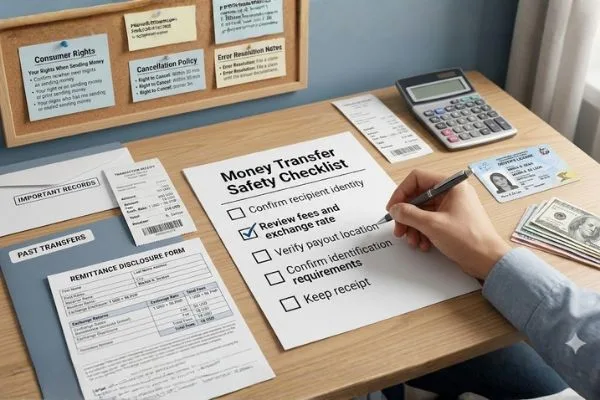
Creating A Personal Money Transfer Safety Checklist
Before completing any transaction, review a consistent safety checklist. A disciplined approach reduces emotional decisions and impulsive transfers.
Your checklist may include:
- Confirm the recipient identity independently
- Review total fees and exchange rates
- Verify payout location accuracy
- Confirm identification requirements
- Assess whether urgency is legitimate
Applying this checklist across money transfers, money orders and currency exchange builds strong habits. Over time, disciplined practices significantly reduce exposure to fraud schemes.
Key Takeaways
- Safe money transfers require identity verification, transaction monitoring and transparent fee disclosures.
- Different retail financial services address different needs and risk profiles.
- Fraud prevention begins with recognizing urgency based scams and structuring tactics.
- International transfers require attention to exchange rates, payout partners and documentation requirements.
- Maintaining transaction records supports dispute resolution and consumer protection rights.
Frequently Asked Questions
Q: What Makes A Money Transfer Secure?
A: A secure transfer includes verified identification, transparent fees, transaction monitoring and documented confirmation records.
Q: Is Sending Cash Ever Safer Than Using A Money Transfer Service?
A: No. Cash lacks tracking, receipts and recovery options, increasing loss and theft risk.
Q: How Can I Reduce The Risk Of International Money Transfer Scams?
A: Verify recipient identity independently, avoid urgent requests and confirm instructions through trusted channels.
Q: Why Do Financial Services Request Identification For Certain Amounts?
A: Federal regulations establish recordkeeping and reporting standards for regulated providers. Identification requests may vary depending on the type of service, transaction profile and applicable regulatory requirements.
Q: What Should I Do If I Suspect Fraud After Sending Money?
A: Contact the service provider immediately with your confirmation number and transaction details.
Conclusion
Safe and secure money transfers begin with informed choices and disciplined financial habits. Understanding identity verification practices, transaction monitoring standards and disclosure requirements referenced in federal regulations empowers confident decisions. Retail financial services such as money transfers, check cashing, money orders and currency exchange provide essential tools. When used responsibly, these services offer speed, documentation and consumer protections that cash cannot match. Fraud risks continue to evolve, but awareness and structured processes significantly reduce exposure. Apply consistent verification steps before every transaction, especially when urgency or secrecy is involved.
Choose regulated providers that operate within established compliance frameworks and consumer protection standards. Review disclosures carefully, maintain records and report concerns promptly if issues arise. Your financial security depends on preparation and vigilance. Take control of your next transaction with confidence and transact safely today.
Ready to send money securely or access retail financial services with confidence? Visit a trusted location today and complete your transaction with safety and clarity.
Disclaimer: This article provides general educational information and does not constitute legal or financial advice.

John is a Content & SEO Specialist who enjoys breaking down complex financial topics, like cross-border payments and money transfers, into content that’s easy to understand. He focuses on creating practical, search-driven content that helps people find answers and make informed decisions.


