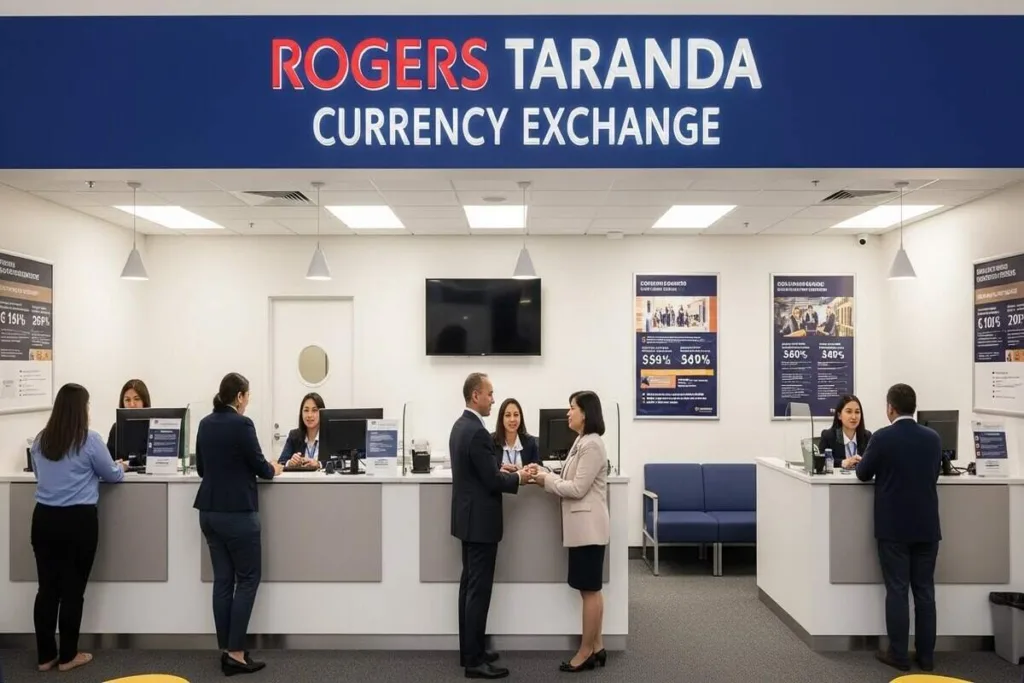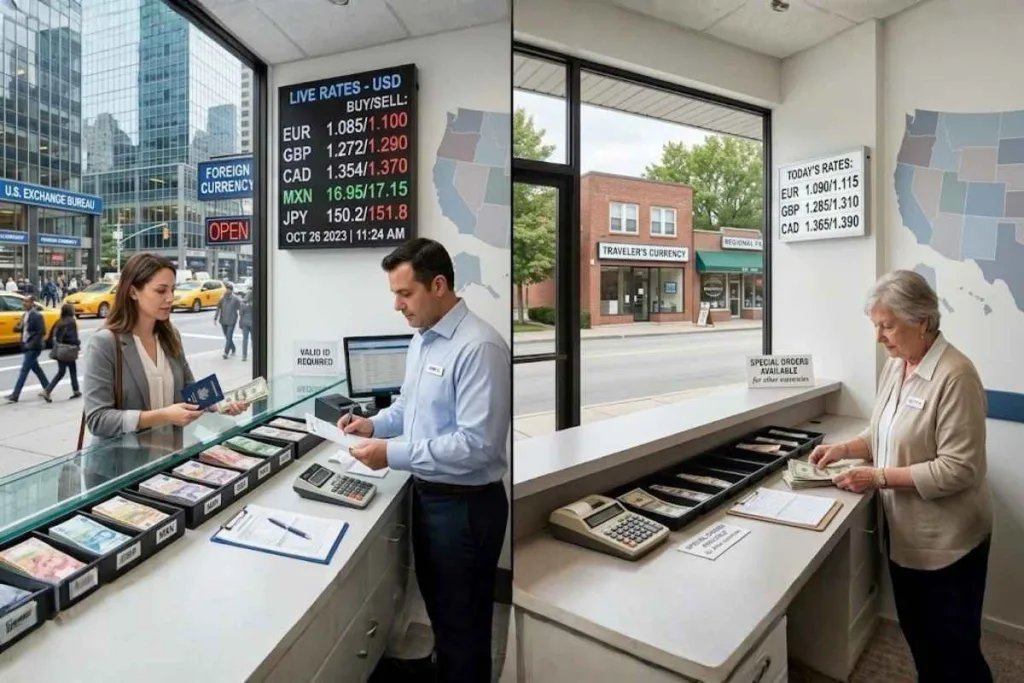
Location affects which foreign currencies are available. It also influences inventory levels and required documentation. Availability depends on local demand and state operational requirements.
Direct Answer: Currency exchange availability varies across the United States. Providers adjust inventory and services based on local demand and regulatory requirements. Urban markets usually offer more foreign currencies. Smaller markets may provide fewer options or require advance ordering.
Customers should understand how geography affects inventory, pricing and identification requirements before exchanging currency. Planning ahead helps avoid unnecessary delays.
If you are comparing services, reviewing options through the broader resource on Currency Exchange Near Me: Find Locations And Compare Rates can help you plan efficiently.
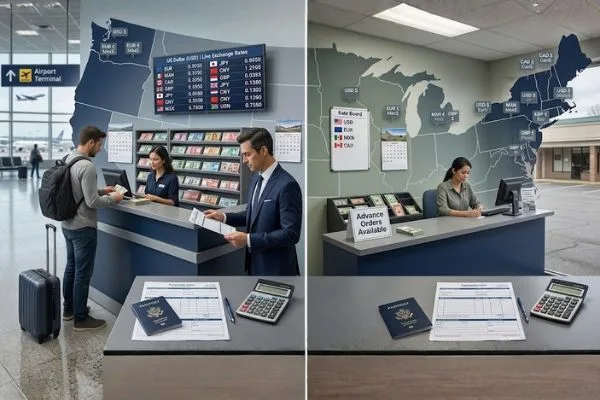
How Local Market Demand Affects Currency Exchange Inventory
Currency exchange providers adjust available currencies based on transaction volume patterns within each community.
Urban Centers Typically Support Broader Currency Selection
High-traffic metropolitan areas serve international travelers, immigrant communities and business customers. Providers usually stock more major foreign currencies because demand remains consistently higher.
Common examples may include:
- Euros
- Mexican pesos
- Canadian dollars
- British pounds
- Select Asian or Caribbean currencies
Higher demand may support faster processing for related services, including Order Express money transfers and money orders. Exchange rate spreads and pricing still vary by provider and transaction size. Official market trends appear in the Federal Reserve H.10 exchange rate data.
Smaller Markets Often Focus On High-Demand Currencies Only
Suburban and rural locations usually stock only popular foreign currencies. Lower transaction volumes often reduce available inventory for less frequently exchanged currencies.
Customers in these areas may need to:
- Place a special order in advance
- Confirm inventory by phone before visiting
- Visit a larger nearby branch
Planning ahead helps reduce delays during currency exchange. Customers can also explore the FDIC Money Smart program to learn more about financial transactions.
Seasonal And Travel Patterns Influence Short-Term Availability
Local demand changes throughout the year. Areas near international airports or cruise ports may increase foreign currency inventory during busy travel seasons.
Inventory shifts can also affect:
- Exchange rate variability
- Available denominations
- Processing timelines
Customers should verify rates and availability before visiting a location. Pricing and inventory may change with market conditions. The U.S. Treasury provides general information about exchange rate policy.

State-Level Requirements And Operational Models Affect Service Access
Regulatory and operational differences across states also influence how currency exchange services operate.
State Compliance Requirements May Influence Identification Thresholds
Money Services Businesses must comply with applicable federal requirements, including the Bank Secrecy Act and FinCEN registration obligations. Regulated providers may verify customer identity when required by federal or state law. Additional verification may also occur under risk-based compliance procedures.
State licensing rules may also shape operational procedures, including:
- Identification collection requirements
- Recordkeeping standards
- Transaction monitoring processes
Order Express operates as a licensed Money Services Business where required by applicable jurisdictions. Transactions follow applicable federal and state requirements. Verification requirements vary by transaction, service and applicable law. Consumer protections for eligible electronic fund transfers are outlined under Regulation E.
Agent Networks And Branch Models Shape Service Availability
Not all retail financial services are available at every location within a provider’s network. Some branches offer currency exchange directly, while authorized agents may focus primarily on money transfer or money orders.
Availability may depend on:
- Whether the location is company-owned or agent-operated
- Cash handling capacity
- Local compliance infrastructure
Understanding this distinction helps customers confirm whether a specific branch offers currency exchange before visiting, and reviewing the Order Express company background can provide additional clarity on service models and operational structure.
Inventory Risk Management Influences On-Hand Supply
Currency exchange providers balance inventory costs with expected demand. Holding large amounts of foreign currency increases operational costs and market exposure.
As a result, locations may:
- Limit certain currencies to pre-order only
- Cap maximum exchange amounts
- Adjust spreads or pricing based on supply
Customers exchanging larger amounts should confirm availability before visiting. Final exchange rates and spreads may vary by location and transaction details.
Key Takeaways
- Currency exchange availability depends heavily on local demand patterns within each geographic market.
- Urban areas typically maintain broader foreign currency inventories than smaller suburban or rural markets.
- State compliance requirements and licensing structures can influence identification and documentation procedures.
- Operational models such as branch versus agent locations affect whether currency exchange is offered onsite.
- Inventory management and exchange rate variability may impact spreads, limits and transaction timing.
- Customers should confirm currency availability before visiting their preferred location.
Frequently Asked Questions
Q: Do All Currency Exchange Locations Carry The Same Foreign Currencies?
A: No. Inventory depends on local demand, transaction volume and operational capacity at each specific location.
Q: Why Might A Smaller Town Have Fewer Currency Options Available?
A: Lower demand often leads providers to stock only the most frequently requested currencies in that region.
Q: Can I Exchange Large Amounts Of Foreign Currency At Any Branch?
A: Not necessarily. Larger exchanges may require advance confirmation due to inventory limits and risk management practices.
Q: Does State Location Affect Identification Requirements For Currency Exchange?
A: Yes. Federal standards apply nationwide, but state rules may influence documentation and verification procedures.
Q: Are Exchange Rates Different Depending On Where I Exchange Currency?
A: Rates and spreads may vary by provider, transaction size and local operational factors.
Q: Can I Order Foreign Currency Before Visiting?
A: Many providers allow advance currency orders. Availability depends on the location and the requested currency.
Conclusion
Location affects currency exchange availability in two important ways. Local demand determines which currencies providers keep available. State operational requirements also influence service delivery. Urban markets often support broader inventories. Smaller communities may require advance orders for certain currencies. Regulated providers follow applicable federal and state requirements. Customers benefit from confirming availability before visiting. Planning ahead helps create a smoother exchange experience.
Check current exchange options before visiting. Contact your nearest Order Express location to confirm currency availability and available services.
Disclaimer: This content is provided for general informational purposes only. It does not constitute financial, legal or tax advice. Exchange rates, fees, currency availability and verification requirements vary by provider, transaction type, location and applicable law. Contact your provider for current information before completing a transaction.

John is a Content & SEO Specialist who enjoys breaking down complex financial topics, like cross-border payments and money transfers, into content that’s easy to understand. He focuses on creating practical, search-driven content that helps people find answers and make informed decisions.