


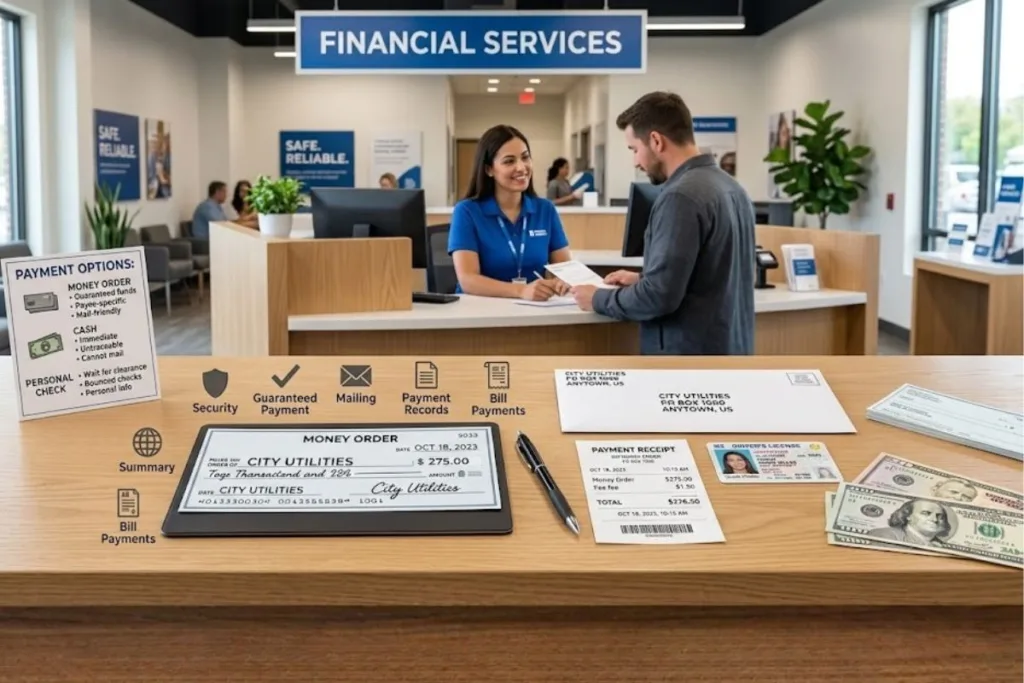
Money orders are prepaid payment instruments used to send guaranteed funds without needing a bank account or personal check. Customers often rely on Order Express retail financial services for accessible in-person transactions and support.
They are commonly used for secure payments, bill obligations and transactions where cash or personal checks may not be accepted.
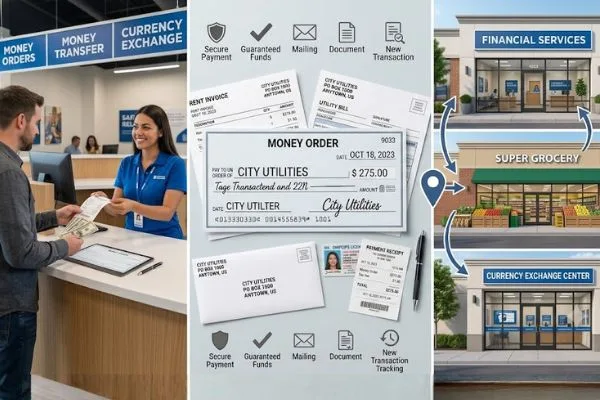
Understanding Money Orders And How They Work
Money orders provide a secure, prepaid way to transfer funds, especially when customers prefer not to use cash or personal checks.
What A Money Order Is And When To Use One
A money order is a fixed-value payment instrument purchased in advance and made payable to a specific recipient. Once issued, it functions similarly to a guaranteed check.
Customers often use money orders when:
- Paying rent or utilities
- Sending funds through mail
- Completing transactions without a bank account
- Making payments that require traceable documentation
Many customers begin by understanding when to use a money order instead of other payment methods, especially when evaluating reliability and acceptance.
How Money Orders Are Purchased And Processed
To purchase a money order, customers typically visit a retail financial service location and pay the full amount upfront plus a service fee.
At locations offering money orders alongside currency exchange and money transfer services, customers can:
- Choose the amount and recipient
- Pay using cash or debit
- Receive a receipt for tracking purposes
Customers often benefit from preparing for a money order transaction before visiting a location, especially when handling larger payments.
Where To Find Money Orders Near You
Money orders are available at:
- Retail financial service providers
- Grocery stores and convenience locations
- Dedicated currency exchange centers
Finding a reliable money order location near you often depends on service availability, operating hours and transaction limits. Many customers start by finding a nearby Order Express location that offers multiple services in one place.
Rules And Compliance Considerations For Money Orders
Money orders operate within a regulated financial framework designed to support transparency and reduce misuse.
Identification And Transaction Requirements
Financial service providers may request identification based on transaction amount and frequency. These requirements help verify customer identity and maintain compliance with applicable regulations.
For example:
- Identification may be required for transactions at or above certain thresholds
- Multiple transactions within a short period may be reviewed collectively
Customers often benefit from understanding money order limits at different providers and locations before completing larger transactions.
Reporting And Monitoring Obligations
Providers monitor transactions to detect unusual patterns or activity that may require reporting.
High-level examples include:
- Cash transactions exceeding reporting thresholds
- Patterns that may indicate structuring or unusual behavior
Under the Bank Secrecy Act, financial institutions must maintain records and report certain transactions to support regulatory oversight, as outlined in FinCEN regulatory guidance.
Customers may also benefit from understanding the compliance guidelines that apply to money order transactions, especially when completing multiple or higher-value payments. Customers should understand that financial institutions monitor transactions to comply with applicable regulations. Deliberately structuring transactions to avoid reporting or recordkeeping requirements is prohibited under U.S. law.
Why Compliance Matters For Customers
Compliance measures are designed to:
- Support secure financial transactions
- Reduce fraud and misuse risks
- Maintain transparency across financial systems
Customers can expect to provide accurate information and valid identification when required. Preparing ahead helps simplify the process at nearby service locations.
Fraud Prevention Tips When Using Money Orders
Money orders are generally considered a secure payment method, but customers should still take precautions to protect themselves from fraud.
Before purchasing or sending a money order:
- Verify the recipient’s name and payment details before completing the purchase.
- Never send a money order to someone you do not know or trust.
- Keep your purchase receipt until the payment has been received and processed.
- Be cautious of requests involving overpayments, unexpected refunds or pressure to send money immediately.
- Contact your financial service provider if you believe a money order has been lost, stolen or used fraudulently.
Taking these simple precautions can help reduce the risk of fraud while making money order transactions more secure.
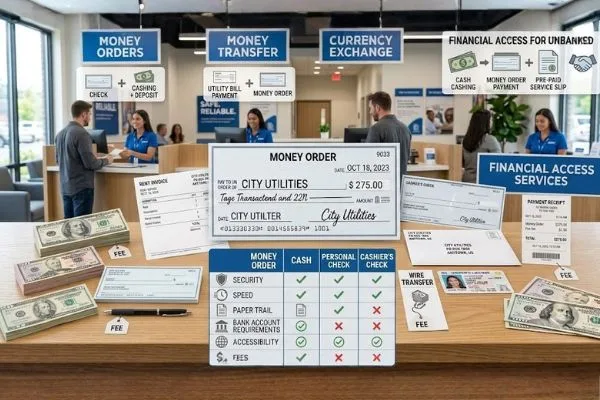
Comparing Money Orders With Other Payment Options
Money orders serve a specific role in the broader financial services landscape, especially for customers who need accessible and controlled payment methods.
Money Orders Versus Wire Transfers And Digital Payments
While both payment methods help customers send funds, they differ in several important ways:
- They are prepaid and physical
- They typically require in-person purchase
- Processing times depend on delivery and deposit
Customers often explore understanding the differences between money orders and wire transfers when deciding between speed and accessibility.
Wire transfers and digital payments often provide faster delivery but may involve higher fees or require bank accounts. For additional consumer guidance, see Consumer Financial Protection Bureau resources on sending money.
Money Orders Versus Cash And Checks
Compared to cash:
- Money orders provide a paper trail
- They reduce risks associated with carrying large amounts
Compared to personal checks:
- Money orders do not depend on bank account balances
- They may be more widely accepted for certain payments
Customers frequently consider comparing money orders and cashier’s checks for different payment situations, especially when choosing between guaranteed payment options.
Cost Considerations And Transaction Fees
Costs associated with money orders may include:
- Service fees at purchase
- Replacement fees if a money order is lost, stolen or damaged, when replacement is available under the provider’s procedures
- Additional handling fees depending on the provider
If a money order is lost or stolen, customers should contact the issuing provider as soon as possible. Providers typically require the original purchase receipt and other transaction information before processing a replacement request. Processing times, eligibility requirements and applicable fees vary by provider.
When comparing options, customers should consider:
- Total transaction cost
- Convenience of nearby service locations
- Availability of bundled services like currency exchange or money transfer
It is helpful to evaluate transaction costs across different financial service providers, especially when combining services. General financial literacy resources from the FDIC Money Smart program can also help customers understand transaction costs and decision-making.
How Money Orders Fit Into Retail Financial Services
Money orders are often part of a broader ecosystem of financial services offered at retail locations.
Combining Money Orders With Currency Exchange Services
Customers frequently use money orders alongside currency exchange when handling international or multi-currency needs.
Exchange rates may fluctuate based on market conditions, timing and provider pricing. Exchange rates offered by providers may include a margin or spread that affects final received amounts. Reference values and trends can be reviewed through Federal Reserve exchange rate data.
Customers planning transactions often consider comparing currency exchange options across locations and providers to better understand total costs.
Using Money Orders With Money Transfer Services
Although both services may be available at the same location, they serve different payment needs.
Money transfers:
- Send funds electronically
- Typically arrive faster
- May involve exchange rate considerations for international transactions
Money orders:
- Provide physical payment instruments
- Are commonly used for domestic payments
Customers often benefit from understanding the difference between money orders and money transfer services, and may also explore how international and domestic money orders differ based on availability and use cases.
Access For Customers Without Traditional Banking
Money orders remain a practical option for customers who:
- Do not maintain bank accounts
- Prefer cash-based transactions
- Need alternative financial access points
Retail financial service providers like Order Express operate as licensed Money Services Businesses and follow applicable regulatory requirements designed to support secure and transparent transactions. Customers can also explore additional support through Order Express other financial services depending on their needs.
This makes it easier for customers who are evaluating financial service options without a bank account to complete essential transactions.
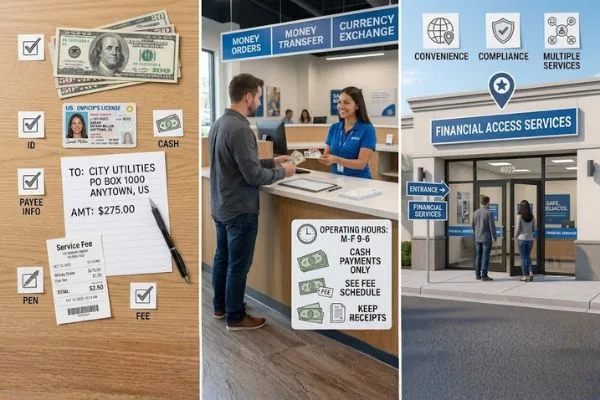
Preparing For A Money Order Transaction Near You
Preparation can help customers complete transactions more efficiently and avoid delays.
What To Bring To A Location
Before visiting a location, customers should prepare:
- Valid government-issued identification
- Exact payment amount plus service fee
- Recipient details, including correct spelling
For larger transactions, it helps to prepare documents required for higher-value money order transactions in advance.
Steps To Complete A Transaction Smoothly
Customers can follow these steps:
- Confirm the service is available at a nearby location
- Verify operating hours and accepted payment methods
- Review any applicable fees or limits
- Complete the transaction and retain the receipt
Many customers who need assistance may choose to contact Order Express customer support before visiting a location, especially for time-sensitive payments.
Finding A Reliable Location Near You
Choosing a provider involves considering:
- Proximity and convenience
- Range of services offered
- Compliance and operational credibility
Order Express provides retail financial services including money orders, currency exchange and money transfer through its network of locations.
Customers often begin by finding a nearby Order Express location that offers the services they need, depending on availability and transaction type.
Key Takeaways
- Money orders provide a prepaid and traceable payment method commonly used for secure domestic transactions without requiring bank accounts.
- Financial service providers may require identification and monitor transactions based on regulatory thresholds and compliance obligations.
- Comparing money orders with other payment methods helps customers evaluate cost, speed and accessibility based on transaction needs.
- Exchange rates and service fees vary by provider and may include margins that affect total transaction outcomes.
- Retail financial service locations often combine money orders with currency exchange and money transfer options for added convenience.
Frequently Asked Questions
Q: What Is A Money Order Used For?
A: A money order is used to send guaranteed funds for payments such as rent, bills or purchases without using cash or checks.
Q: Do I Need Id To Buy A Money Order?
A: Identification may be required depending on the transaction amount or frequency and provider policies.
Q: Are Money Orders Safer Than Cash?
A: Money orders provide a paper trail and can be replaced if lost, which may offer more security than cash.
Q: How Much Does A Money Order Cost?
A: Fees vary by provider and location, and may depend on the amount and additional services involved.
Q: Can I Send Money Internationally With A Money Order?
A: Money orders are typically used for domestic payments, while international transfers are often handled through money transfer services.
Conclusion
Before purchasing a money order, customers should verify the recipient’s information, understand any applicable fees and keep their receipt until the transaction has been completed. Being prepared helps make the payment process smoother and supports a safer transaction experience. They play an important role within retail financial services, especially when combined with currency exchange and money transfer options. Understanding how money orders work, how they compare to other payment methods and what requirements apply can help customers prepare for real-world transactions. By choosing a reliable provider and reviewing fees, availability and compliance requirements, customers can approach each transaction with greater clarity and confidence.
Find a nearby Order Express location or review current exchange rates to plan your transaction with greater confidence.
Disclaimer: This content is for informational purposes only and does not constitute financial advice. Exchange rates, fees and availability may vary by provider, transaction type and location.

John is a Content & SEO Specialist who enjoys breaking down complex financial topics, like cross-border payments and money transfers, into content that’s easy to understand. He focuses on creating practical, search-driven content that helps people find answers and make informed decisions.


