


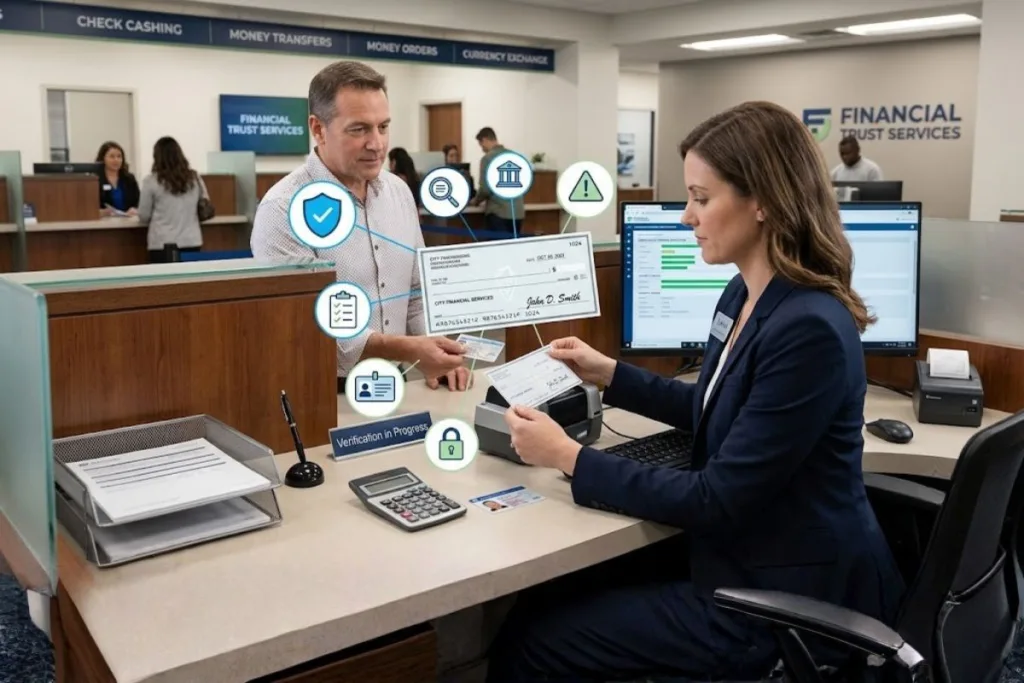
Fraud prevention plays a critical role in every financial transaction, especially when cashing checks or handling money. Learning how to recognize common warning signs, verify check information and choose a trusted financial service provider may help reduce the risk of fraud while making your transaction more secure.
Check cashing safety focuses on verifying that a check appears legitimate before funds are provided while helping customers recognize scams, counterfeit checks and suspicious activity. Working with a reputable financial services provider and understanding the verification process may reduce the risk of financial loss.
Whether you are cashing a payroll check, government check, insurance settlement or personal check, taking a few extra moments to verify important details can make a significant difference. The same attention to security also applies to related services such as money transfers, money orders and currency exchange.
Why Check Cashing Safety Matters
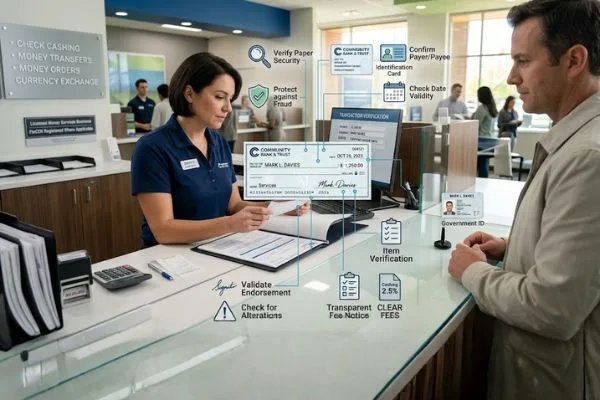
Safe check cashing starts with understanding why fraud exists and how financial service providers identify suspicious transactions. Knowing the basics helps customers protect themselves before visiting a location.
Understanding Modern Check Fraud
Check fraud has become increasingly sophisticated. Criminals may create counterfeit checks, alter legitimate checks or use stolen financial information to deceive recipients.
Common fraud schemes include:
- Counterfeit payroll checks
- Altered government checks
- Fake cashier’s checks
- Stolen personal checks
- Business check fraud
- Identity-related check scams
While technology has improved fraud detection, scammers continue developing new tactics. Staying informed remains one of the most effective ways to recognize potential risks before completing a transaction. The Federal Trade Commission’s consumer fraud guidance provides additional educational resources on recognizing common scams.
If you want to learn more about How to Spot Fake Checks Before Cashing Them, understanding common fraud indicators can help you recognize suspicious documents earlier.
Why Verification Protects Everyone
Check verification helps reduce fraud risks for customers and financial service providers.
During the verification process, providers may review:
- Security features on the check
- Issuing bank information
- Payee details
- Visible alterations
- Date shown on the check
- Signature consistency
- Available verification resources
Some checks may require additional review depending on the transaction type, issuing institution or other risk factors. Verification requirements can vary by provider and applicable regulations.
For customers interested in How Check Cashing Services Verify Legitimate Checks, understanding the general verification process provides valuable preparation without revealing internal fraud prevention procedures.
Choosing A Trusted Financial Service Provider
Not every provider offers the same level of experience or service.
When selecting a check cashing location, consider whether the provider:
- Clearly explains transaction requirements
- Maintains transparent fee disclosures
- Offers multiple retail financial services
- Provides knowledgeable customer support
- Operates within applicable regulatory requirements
Order Express operates as a licensed Money Services Business where applicable and is registered with FinCEN as required for covered Money Services Businesses. It follows applicable regulatory requirements designed to support secure and transparent financial transactions. Registration with FinCEN is a regulatory requirement and does not represent government approval or endorsement. Consumers seeking additional information about Money Services Businesses can review FinCEN guidance.
Customers who are finding a reliable check cashing location near you should also consider service availability, identification requirements and transaction options before visiting an Order Express check cashing location.
How To Verify Checks Before Cashing Them
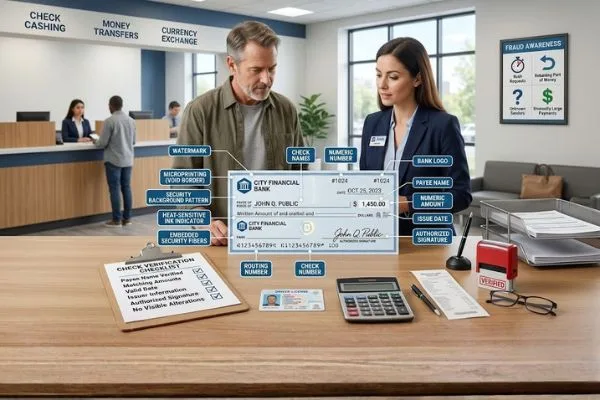
Verifying a check involves reviewing visible security features and transaction details. While customers cannot authenticate every aspect independently, several practical steps may help identify obvious warning signs.
1. Review The Physical Security Features
Many legitimate checks include security elements designed to discourage counterfeiting.
These may include:
- Watermarks
- Microprinting
- Security screens
- Heat-sensitive ink
- Security fibers
- Consistent printing quality
Poor print quality, blurred text, unusual spacing or missing security features may indicate additional verification is appropriate. The U.S. Postal Inspection Service’s guidance on counterfeit checks and mail fraud offers helpful consumer education.
Understanding How Check Cashing Works To Help Detect Counterfeit Checks provides additional context without replacing professional verification performed by financial service providers.
2. Verify Basic Check Information
Before presenting a check for cashing, carefully review the information shown.
Confirm:
- The payee name is correct.
- The written and numeric amounts match.
- The date appears reasonable.
- The issuer information is complete.
- No visible alterations appear.
- Signatures appear consistent.
Even when everything looks accurate, additional verification may still be necessary. Some counterfeit checks may closely resemble legitimate documents, making professional verification important when appropriate.
3. Know When Something Feels Unusual
Many fraud attempts rely on creating urgency.
Be cautious if someone asks you to:
- Cash a check immediately
- Return part of the money
- Send money before the check clears
- Deposit or cash a check from someone you do not know
- Accept unusually large payments for routine work
If a situation seems unusual, pause before completing the transaction. Asking questions may help prevent costly mistakes.
Customers researching What Happens When A Fraudulent Check Is Presented For Cashing can better understand why verification is important before any funds are exchanged.
Common Fraud Risks Beyond Check Cashing
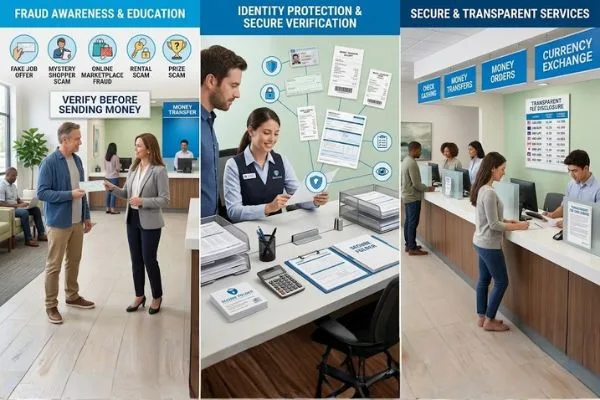
Check fraud often connects with broader financial scams involving money transfers, money orders and identity theft. Recognizing these situations may help customers protect their finances before problems develop.
Understanding How To Avoid Common Check Cashing Scams is one of the most effective ways to reduce financial fraud risks.
Money Transfer Scams Often Begin With Fake Checks
Some fraud schemes involve convincing victims to cash a check and immediately send part of the money through a money transfer service.
Common examples include:
- Job offer scams
- Mystery shopper scams
- Online marketplace fraud
- Rental scams
- Lottery or prize scams
If someone instructs you to cash a check and immediately transfer money elsewhere, take additional time to verify the transaction independently. The Consumer Financial Protection Bureau’s consumer resources provide additional guidance on recognizing financial scams and making informed financial decisions.
Legitimate financial service providers cannot confirm the legitimacy of private business arrangements between customers.
Protect Personal Information During Transactions
Fraud prevention also includes protecting your personal information.
Consider these best practices:
- Keep identification documents secure.
- Verify the business before sharing personal information.
- Avoid sending sensitive information through unsecured channels.
- Review transaction details carefully before completing them.
- Report suspected identity theft promptly.
Financial service providers may request identification depending on the service, transaction details, applicable regulations and their risk-based procedures. Requirements can vary by transaction and jurisdiction.
Currency Exchange And Financial Transaction Awareness
Customers often use multiple financial services during the same visit.
Whether exchanging currency, purchasing a money order or sending money internationally, reviewing transaction details before confirming payment helps reduce misunderstandings.
Exchange rates offered by providers may include a margin or spread that affects the final amount received. Rates, fees and availability may vary based on transaction type, currency pair and location.
Customers comparing check cashing options across different providers should also review available financial services, transparency of disclosures and overall transaction support.
Preparing For A Safe Check Cashing Experience
Being prepared before visiting a financial service provider can help make your transaction smoother while supporting a safer experience. Understanding what to bring and what to expect may also reduce delays.
Bring The Required Documentation
Requirements vary depending on the type of check, the transaction and applicable regulations or company procedures.
Customers may be asked to provide:
- A valid government-issued photo ID
- The original check
- Additional information when required for specific services
- Supporting documentation in certain situations
Identification requirements are not determined by a single federal dollar threshold. Financial service providers may request identification based on applicable laws, risk-based procedures, product requirements or internal policies. Additional consumer education is available through the FDIC Consumer Resource Center.
If you are evaluating how to cash a check for people without bank accounts, checking documentation requirements before visiting a location can help you prepare for your transaction.
Understand Fees Before Completing A Transaction
Responsible financial decisions begin with understanding the costs associated with a service.
Before completing a transaction, consider asking:
- What fees apply?
- How is the total amount calculated?
- Are there any service limitations?
- Are there additional options available?
Transparent fee disclosures help customers make informed decisions.
Different providers may charge different fees based on:
- Check type
- Transaction amount
- Service requested
- Location
- Applicable regulations
Comparing providers should involve more than price alone. Service quality, transparency and customer support also matter.
If you need assistance understanding available services or transaction requirements before your visit, contact Order Express customer support.
Ask Questions If You Are Unsure
Legitimate financial service providers should clearly explain available services, required documentation and applicable fees.
Customers should feel comfortable asking questions such as:
- What identification is required?
- How will my transaction be processed?
- What services are available at this location?
- What documentation should I bring?
Asking questions helps customers better understand the process without revealing internal fraud detection procedures or compliance controls.
Recognizing Evolving Fraud Tactics
Fraud schemes continue to change as criminals develop new methods to target consumers. Staying informed can help reduce the likelihood of becoming a victim.
Be Careful With Unexpected Payments
Unexpected checks should always receive additional scrutiny.
Exercise caution when:
- Receiving payment from someone you have never met
- Accepting payments that seem unusually large
- Being instructed to send money after cashing a check
- Receiving checks connected to online sales or remote employment offers
- Feeling pressured to act immediately
Scammers often create a false sense of urgency to discourage careful review.
Taking time to verify information before acting may help prevent financial loss.
Watch For Identity Theft Warning Signs
Identity theft may occur alongside check fraud.
Possible warning signs include:
- Missing mail containing financial documents
- Unauthorized financial activity
- Unexpected account notifications
- Requests for sensitive personal information from unknown sources
Protecting your identity includes safeguarding personal documents and verifying requests for information before responding.
If you suspect identity theft, contact the appropriate financial institutions and relevant authorities as soon as practical.
Stay Informed About Financial Security
Fraud prevention is an ongoing process rather than a one-time activity.
Helpful habits include:
- Monitoring financial accounts regularly
- Keeping contact information current with financial providers
- Reviewing transaction receipts
- Staying informed about common scams reported by consumer protection agencies
Government agencies such as the Federal Trade Commission and other consumer protection organizations regularly publish educational information about emerging fraud trends.
Order Express And Responsible Financial Services
Financial transactions involve trust, transparency and responsible business practices. Customers benefit from working with providers that clearly explain available services and applicable requirements.
Supporting Secure Financial Transactions
Order Express offers a variety of retail financial services, including check cashing, money transfers, money orders and currency exchange, depending on location and service availability.
The company follows applicable regulatory requirements and maintains compliance programs designed to support financial integrity and customer protection. Certain obligations under the Bank Secrecy Act apply to Money Services Businesses, including customer identification, recordkeeping and reporting requirements where applicable. Those legal obligations apply to regulated financial institutions and should not be interpreted as actions customers must take.
Helping Customers Make Informed Decisions
Education plays an important role in fraud prevention.
Understanding how financial services work allows customers to:
- Recognize common scams
- Prepare required documentation
- Review fees before completing transactions
- Protect personal information
- Choose services that meet their needs
Customers who are choosing between check cashing stores and other alternatives should compare available services, convenience, transparency and the overall customer experience. To locate a nearby office, visit the Order Express branch locator.
Building Confidence Through Transparency
Clear communication helps customers understand what to expect before completing a transaction.
Order Express encourages customers to:
- Review transaction details carefully.
- Ask questions when information is unclear.
- Keep copies of transaction records when appropriate.
- Verify important information before authorizing financial transactions.
While no financial transaction is entirely free from risk, informed customers and responsible financial service providers each play an important role in helping reduce fraud opportunities.
Key Takeaways
- Verifying check details, reviewing security features and choosing a reputable financial service provider may help reduce fraud risks.
- Be cautious of unexpected checks, urgent payment requests and anyone asking you to send money after cashing a check.
- Identification requirements, verification procedures and transaction reviews may vary based on applicable regulations, transaction details and provider policies.
- Understanding fees, exchange rates and available services before completing a transaction supports more informed financial decisions.
- Protecting personal information and staying informed about common scams are important habits for safeguarding your finances year-round.
Frequently Asked Questions
1. How Can I Tell If A Check Might Be Fraudulent?
Only the issuing financial institution or a qualified verification process can confirm a check’s authenticity. Warning signs include poor print quality, visible alterations, inconsistent information, incorrect payee details or pressure to cash the check immediately. If something seems unusual, ask the financial service provider to review the check before completing the transaction.
2. Can A Financial Service Provider Refuse To Cash A Check?
Yes. A provider may decline a check due to authenticity concerns, incomplete documentation, an inability to verify required information or other legal, regulatory or business requirements. Policies vary by provider and applicable laws.
3. Why Might I Need To Present Identification?
Identification may be required based on the transaction, applicable laws, product requirements or a provider’s risk-based procedures. Requirements are not determined solely by the transaction amount and may vary by jurisdiction and service.
4. What Should I Do If Someone Asks Me To Cash A Check And Send Money Back?
Treat the request with caution. Many scams involve counterfeit checks followed by instructions to return part of the money through a money transfer, gift card or another payment method. Verify the situation independently before taking action.
5. How Can I Help Protect Myself From Financial Fraud?
Review checks carefully, protect your personal information, understand applicable fees and use reputable financial service providers. Staying informed about common scams and verifying information before completing a transaction can help reduce fraud risks.
Conclusion
Check cashing is an important financial service for many individuals, but every transaction deserves careful attention. Learning how to recognize common fraud schemes, verify check information and choose a trusted financial services provider can help you make informed decisions and reduce unnecessary risks.
Whether you are cashing a payroll check, purchasing a money order, sending money to family or exchanging foreign currency, understanding the transaction process is an important part of protecting your finances. By staying informed, asking questions and reviewing transaction details before completing a service, you can approach every transaction with greater confidence.
Find Trusted Financial Services Near You
If you need check cashing, money transfers, money orders or currency exchange services, visit your nearest Order Express location to learn about available services and current transaction requirements. You can also review applicable fees and available exchange rates before completing your transaction so you can make informed financial decisions with confidence.
Disclaimer: This content is for informational purposes only and does not constitute financial advice. Exchange rates, fees and availability may vary by provider, transaction type and location.

John is a Content & SEO Specialist who enjoys breaking down complex financial topics, like cross-border payments and money transfers, into content that’s easy to understand. He focuses on creating practical, search-driven content that helps people find answers and make informed decisions.


