


Check cashing services verify a check’s legitimacy by reviewing its security features, validating account details, and confirming identity before releasing funds. They inspect elements like routing numbers, MICR lines, signatures, and watermarks to spot signs of fraud. Suspicious checks may also be confirmed directly with the issuing bank. These steps protect customers from counterfeit checks, reduce financial losses, and ensure compliance with federal and state regulations. Understanding how this process works helps individuals and businesses recognize red flags, avoid scams, and trust that their transactions are secure.
Order Express provides secure financial services that help protect customers from fraud while ensuring compliance with regulations. Check Cashing services play an important role in fraud prevention. They act as a first line of defense by examining checks carefully before approving them. Their goal is to protect customers, comply with regulations, and reduce losses caused by fraud.
Recognizing suspicious checks is only part of staying protected. The Complete Check Cashing Safety Guide: How To Verify Checks And Avoid Fraud brings together expert guidance on verifying checks, avoiding common scams, and building safer check cashing habits with confidence.
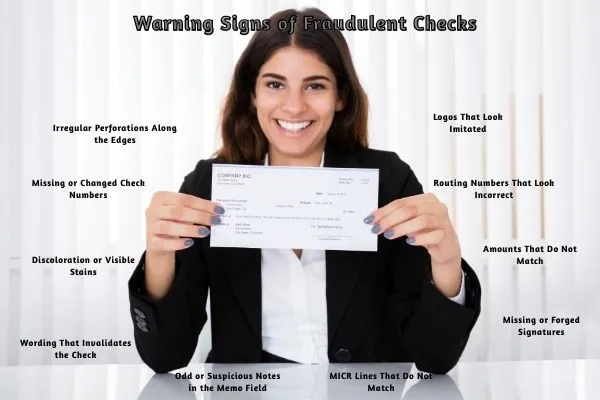
Warning Signs of Fraudulent Checks
Every check must go through a careful review before it is cashed. Financial services rely on this process to prevent fraud, while customers benefit from learning what to look for. By spotting warning signs early, both providers and individuals reduce their risk of loss. The following indicators highlight the most common features of counterfeit checks and why they matter.
Irregular Perforations Along the Edges
Legitimate checks are created using precise cutting machines. These machines produce small, even perforations along the edges. If the perforations look uneven, jagged, or completely missing, this can signal fraud.
A genuine check should feel consistent from edge to edge. Counterfeit checks often use cheaper paper stock and poor printing methods. These materials create rough textures or uneven cuts. Holding the check to the light can sometimes highlight irregularities.
Fraudsters rely on speed and low-cost printing. Because of this, they rarely achieve the clean finish used by financial institutions. Even if the check appears acceptable at first glance, irregular edges deserve close attention.
Missing or Changed Check Numbers
Every check contains a unique number. This number typically sits in the upper right-hand corner. It works as an identifier, much like a fingerprint.
If the number is missing, hard to read, or appears altered, the check is suspicious. In many cases, fraudsters erase or smudge these numbers to prevent easy tracing. A missing number often means the check was never valid in the first place.
Another warning sign is repetition. If several checks display the same number, they may be counterfeit. Real checks are always numbered in sequence.
Routing Numbers That Look Incorrect
The routing number identifies the bank or credit union that issued the check. It is a critical part of check verification. If the digits do not match the listed institution, the check is likely fraudulent.
Some counterfeiters use routing numbers from banks that no longer exist. Others change a single digit, hoping it goes unnoticed. Financial services verify routing numbers against official databases maintained by the Federal Reserve and issuing financial institutions. Even the smallest error often reveals the truth.
Customers should know that valid routing numbers always contain nine digits. Anything longer or shorter is suspicious. When in doubt, verify the routing code with the institution directly.
MICR Lines That Do Not Match
At the bottom of every check lies the MICR line. This line contains three pieces of data: the routing number, the account number, and the check number.
Authentic MICR lines use magnetic ink that can be read by machines. Counterfeiters often use normal ink, which may smudge, blur, or fade. If the line appears uneven or unusually dark, the check deserves more scrutiny.
Financial services rely heavily on MICR technology. If a check fails to scan properly, it often points to fraud. Customers should view suspicious MICR lines as a serious warning sign.
Odd or Suspicious Notes in the Memo Field
The memo field records the purpose of payment. It should contain simple details, such as an invoice number, a service description, or a reminder.
Fraudulent checks sometimes include strange or threatening comments. Others may use symbols, codes, or unrelated language. These details rarely appear on legitimate checks.
When in doubt, remember that the memo should always connect to the transaction. Anything out of place may suggest fraud.
Discoloration or Visible Stains
Fraudsters often alter checks with chemicals. They attempt to erase names, amounts, or other details. These methods usually leave marks, stains, or faded spots.
Any visible alteration is cause for concern. If discoloration covers the account number, signature, or routing information, the check should be rejected.
A genuine check should appear clean and consistent. Variations in color or texture usually signal tampering.
Logos That Look Imitated
Banks and financial institutions protect their logos with strict design standards. Genuine logos are clear, sharp, and consistent in placement.
Fraudulent checks often contain blurry, faded, or distorted logos. Some appear too large, while others look misaligned. Low-quality printing equipment rarely produces a convincing result.
Comparing the logo to an official image from the issuing bank can help confirm authenticity. Any major difference indicates possible fraud.
Wording That Invalidates the Check
Some checks include phrases like “void” or “non-negotiable.” These words mean the check cannot be cashed or deposited.
Legitimate institutions sometimes issue non-negotiable checks for record-keeping purposes only. These documents are not intended for financial use. Attempting to cash them will always fail.
If a check contains such wording, treat it as invalid.
Missing or Forged Signatures
A signature authorizes payment. Without it, a check is not valid. If the signature is missing, inconsistent with previous samples, or clearly traced, the check is fraudulent.
Some counterfeiters attempt to copy signatures. While they may look convincing at first, closer review often reveals shaky lines or mismatched strokes. Financial services compare signatures carefully. Any inconsistency leads to rejection.
Amounts That Do Not Match
Checks display their value in two ways: in numbers and in words. Both must match exactly. Even a small difference creates a serious problem.
Fraudsters sometimes change one of these amounts, hoping the alteration goes unnoticed. A mismatch prevents a check from being cashed.
Financial services always review both amounts. Customers should do the same before accepting any check. If a discrepancy exists, it is safer to decline the payment.
What to Do When You Suspect a Fake Check
If you doubt the authenticity of a check, immediate action is essential. Delays can result in financial loss.
Examine the Check Thoroughly
Start by reviewing the layout, fonts, and overall appearance. Many fraudulent checks reveal themselves through small design errors.
Take time to compare the check with previous legitimate checks you have received. Spotting differences can help you identify fraud.
Confirm With the Issuing Bank
Call the financial institution listed on the check. Use contact information from the official website of the bank, never from the check itself.
Bank representatives can confirm whether the account exists and whether the check is legitimate.
Beware of Overpayment Scams
A common scam involves receiving a check for more than the agreed amount. The sender then pressures you to return the difference.
If the check turns out to be fake, the victim loses both money and goods. Never refund or send money until the check clears fully.
Wait Until the Check Clears
Do not assume funds are secure immediately after deposit. Some counterfeit checks are temporarily credited before being reversed.
Waiting for clearance protects you from losses. Check Cashing services also hold funds until verification is complete.
Suggest Safer Alternatives
If fraud is suspected, encourage secure payment methods such as bank transfers or money transfer services. These options reduce risk and improve transaction safety.
Protecting Yourself From Fraud Through Check Cashing Services
Check Cashing providers combine regulatory obligations with consumer protection practices. Their goal is to detect fraud early and reduce harm to customers.
Confirm the Identity of the Sender
Always verify the payer’s identity. Names and addresses on the check must match the identification presented.
Financial services require valid identification for transactions above reporting thresholds under federal law. Under Order Express policies, identification is required for check cashing transactions of 3,000 dollars or more in all states except Arizona, Oklahoma, and Louisiana. In Arizona and Oklahoma, identification is required for transactions of 1,000 dollars or more within 24 hours. In Louisiana, identification is required for U.S. Treasury checks of 1,000 dollars or more within 24 hours. This ensures accountability and compliance.
In addition to these thresholds, Order Express enforces a corporate policy that prohibits cashing any check greater than 3,000 dollars, regardless of state requirements.
Review Security Features
Authentic checks include features like watermarks, microprinting, or color-shifting ink. These are difficult to copy.
Holding a check to the light often reveals these hidden features. Their absence is cause for concern.
Do Not Release Goods Until Funds Are Secure
Businesses should avoid handing over items until the check clears. Even when money appears available in an account, it can later be withdrawn.
Waiting ensures that the funds are legitimate and final.
Confirm Directly With the Bank
When in doubt, contact the issuing institution directly. This extra step provides peace of mind and confirmation.
Many scams collapse quickly under official verification.
Decline Overpayments Immediately
Do not accept checks written for more than the required amount. These are almost always fraudulent.
Request a replacement check for the correct amount. Refusing overpayments prevents fraud losses.
Reconcile Financial Accounts Regularly
Review your account statements often. Look for unusual activity or unauthorized transactions.
Detecting problems early gives you the best chance of correcting them quickly.
Fraud Prevention Practices in Financial Services
Preventing fraud requires more than individual vigilance. Financial services follow structured compliance programs to reduce risks.
Customer Awareness Programs
Educating customers is one of the most effective strategies. Many scams succeed because victims are unaware of common warning signs.
Awareness campaigns build trust and strengthen community protection against fraud. Consumer protection resources from the CFPB help individuals understand their rights in money transfers.
System Alerts and Monitoring
Verification systems monitor transactions for unusual activity. Alerts may appear for repeated transactions, high amounts, or altered documents.
These alerts give compliance teams a chance to intervene before losses occur. OFAC sanctions screening also helps financial institutions block illegal payments.
Recordkeeping Obligations
Financial services keep copies of all transactions, including checks and identification. Records are stored securely for a minimum of five years. This documentation supports investigations and ensures compliance with BSA/AML requirements.
Cooperation With Regulators and Law Enforcement
Suspicious transactions are reported through official channels. This reporting helps detect larger fraud networks.
Financial services are required to cooperate fully with regulators, strengthening overall fraud prevention. SAR reporting obligations apply to suspicious checks, money transfers, and other activities.
Final Thoughts
Counterfeit checks remain a major concern in financial services. Scammers use them to exploit individuals and businesses, often causing serious losses.
Check Cashing services help protect against these risks. They follow strict procedures to verify authenticity, confirm identification, and report suspicious transactions.
Customers also play a key role in fraud prevention. By recognizing warning signs, refusing overpayments, and waiting for funds to clear, you reduce your vulnerability.
Protecting yourself from fraud requires both knowledge and action. Stay alert, follow safe practices, and trust verification systems. Order Express contact support is available for assistance if you encounter suspicious activity. Together, these measures reduce the impact of fraudulent checks on communities and businesses.
Visit your nearest Order Express location to cash checks safely!
Disclaimer: This article is for educational purposes only and does not replace or modify any official compliance policies of Order Express. Customers should always follow the requirements under federal law and Order Express’ BSA/AML compliance program.
Compliance Notice: Order Express, Inc. complies fully with the Bank Secrecy Act, USA PATRIOT Act, OFAC, and all applicable state and federal regulations. Identification is required for check cashing transactions of 3,000 dollars or more in all states except Arizona, Oklahoma, and Louisiana. In Arizona and Oklahoma, identification is required for transactions of 1,000 dollars or more within 24 hours. In Louisiana, identification is required for U.S. Treasury checks of 1,000 dollars or more within 24 hours. Suspicious transactions are reported to FinCEN as required by law. Order Express prohibits cashing any check greater than 3,000 dollars as part of its corporate compliance policy.
Frequently Asked Questions
Why Do Scammers Use Counterfeit Checks?
Fraudsters use counterfeit checks because they are easy to create and can appear genuine. Victims are tricked into releasing goods or money before the fraud is discovered.
What Happens if I Deposit a Fake Check?
Banks may initially credit your account. Once the fraud is discovered, the deposit is reversed and fees may apply.
You may also face liability if the funds have already been withdrawn.
Can a Fake Check Be Cashed Successfully?
Fraudulent checks may pass initial inspection. However, once discovered, the funds are removed. Attempting to cash them creates legal and financial risk.
Is It Illegal to Deposit a Counterfeit Check?
Depositing a counterfeit check knowingly is illegal. Even if you deposit it by mistake, you may face financial penalties.
Awareness and caution are the best ways to avoid these risks.
Can Fraudulent Checks Lead to Identity Theft?
The check itself may not expose personal data. However, scammers often request additional information.
Sharing details such as account numbers or identification increases your exposure to other frauds.
How Do Check Cashing Services Confirm a Check Is Real?
They use a combination of manual review and automated systems. Staff verify identification, check for security features, and confirm routing details.
Suspicious checks are escalated to compliance teams for further review.
What Should I Do if I Accept a Fake Check by Mistake?
Contact your bank immediately. Report the transaction to minimize your liability.
Provide all information about the payer and the check. Fast action improves your chances of resolution.

John is a Content & SEO Specialist who enjoys breaking down complex financial topics, like cross-border payments and money transfers, into content that’s easy to understand. He focuses on creating practical, search-driven content that helps people find answers and make informed decisions.


