Travelers avoid overpaying on currency exchange by comparing total transaction costs and choosing timing carefully. Rather than focusing only on the posted rate, they consider exchange rate markups, currency exchange fees and overall foreign exchange costs before completing a transaction.
Understanding the full pricing structure helps reduce confusion, especially when preparing for international travel. Exchange rates can fluctuate throughout the day, and pricing may vary depending on transaction size, currency type and service location. Reviewing these factors ahead of time may support clearer expectations at the counter.
Preparing before visiting a currency exchange provider can help minimize unexpected costs. Customers using regulated retail financial services like Order Express often benefit from understanding how rates and fees are structured before arriving. Thoughtful planning supports smoother transactions across currency exchange, money transfers and related financial services.
For a broader overview of how exchange services function in everyday situations, review our guide to currency exchange fundamentals for everyday transactions.
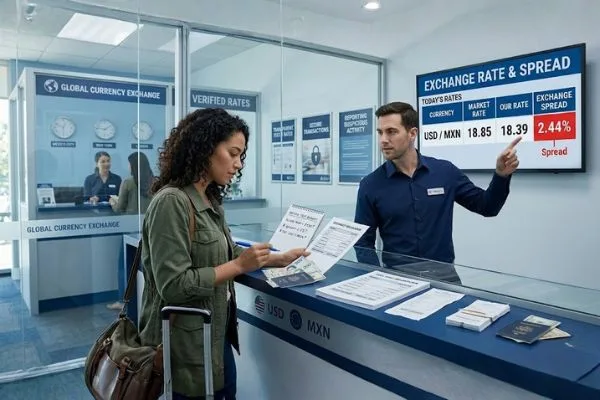
Understand The Total Cost Of Currency Exchange Before Transacting
The primary way travelers avoid overpaying is by evaluating the full cost structure, not just the posted rate. The advertised rate alone does not reflect the complete transaction cost in most retail financial services environments.
In practical terms, this becomes especially relevant in common travel situations.
For example:
- If you’re traveling to Mexico and planning to exchange $1,000 or more for vacation expenses, even small exchange rate markups may noticeably affect how much local currency you receive.
- If you’re exchanging funds shortly before departure, reviewing total foreign exchange costs ahead of time may help reduce last-minute pricing surprises.
These examples illustrate why evaluating the full transaction structure, including currency exchange fees and rate spreads, supports clearer budgeting before travel.
Review The Exchange Rate Spread Or Markup
The exchange rate spread represents the difference between wholesale market rates and consumer exchange rates. Travelers who understand spread or markup awareness can better interpret how providers price transactions.
Exchange rates fluctuate throughout the day based on global currency market activity, as reflected in Federal Reserve H.10 exchange rate data. This exchange rate variability means a rate displayed in the morning may differ later that afternoon.
Before completing a transaction, travelers often consider:
- Asking what exchange rate applies at the time of processing
- Confirming whether the rate includes a built-in spread or exchange rate markup
- Comparing the rate to publicly available market benchmarks
This approach may help customers better understand how foreign exchange costs are structured. Even moderate spreads can increase overall cost when exchanging substantial travel funds.
Confirm All Fees And Service Charges
Fee transparency plays an equally important role in avoiding unnecessary exchange costs. Some providers may incorporate costs entirely within the rate, while others apply separate transaction fees.
Travelers should confirm whether any of the following apply:
- Service fees charged per transaction
- Minimum transaction amounts
- Rate adjustments based on transaction size
Understanding transaction-dependent outcomes helps customers anticipate final totals before completing payment. Retail financial service providers may structure pricing differently depending on currency type and demand. Consumer education resources such as the FDIC Consumer Resource Center can also support stronger financial decision-making before international travel.
Order Express operates as a licensed Money Services Business and follows applicable requirements designed to support compliant financial transactions. Customers benefit from reviewing rate displays and asking clarifying questions before proceeding.
All exchange rates and applicable fees are disclosed prior to transaction completion in accordance with applicable federal and state regulations. Rates, fees and service availability may vary by location, currency type and transaction structure.
When currency exchange is combined with Order Express money transfer services or money order services, each product may carry separate pricing considerations. Confirming each service component individually helps prevent confusion at checkout.
What Fees Are Included In Currency Exchange?
Currency exchange fees may be incorporated into the exchange rate spread or charged separately as a service fee. The total cost of a transaction can depend on currency type, transaction size and service location.
Reviewing the full cost structure, including potential exchange rate markup, provides greater clarity before funds are exchanged.

Choose Timing And Service Location Strategically
The second primary mechanism travelers use to avoid overpaying involves transaction timing and service selection. Exchange rate movement and service environment both influence the final cost.
Exchange Currency Before Departure Or At Regulated Locations
Airport kiosks and last-minute exchange counters may reflect convenience-based pricing structures. Travelers who plan ahead often compare rates at established retail financial service providers before departure.
Licensed Money Services Businesses operate under federal and state compliance frameworks. These include high-level requirements such as Bank Secrecy Act obligations and identity verification standards that apply to financial service providers under oversight from the Financial Crimes Enforcement Network.
While compliance requirements focus on reporting and anti-money laundering controls, they also reinforce structured recordkeeping and documentation practices at the institutional level. Regulated retail financial service environments often provide structured transaction disclosures as part of their standard operating practices.
Order Express maintains MSB registration and operates within applicable regulatory frameworks designed for financial transparency. This positioning supports structured service delivery across currency exchange and related offerings, as outlined in the Order Express company background.
Monitor Currency Movement Before Large Exchanges
Exchange rate variability affects how much foreign currency travelers ultimately receive. Monitoring rate movement over several days may help customers identify more favorable timing for larger exchanges, consistent with broader exchange rate policy context described by the U.S. Treasury exchange rate analysis overview.
Travelers planning extended trips often take these steps:
- Track exchange rates through financial news or rate comparison tools
- Avoid exchanging all funds at once when flexibility exists
- Consider staged exchanges depending on trip duration
This strategy reduces exposure to short-term market fluctuations. Smaller, phased exchanges may allow customers to adapt if currency values shift before departure.
However, no provider can predict future currency movement or lock market direction permanently. Exchange outcomes depend on timing, market conditions and transaction structure at the moment of service. Consumer guidance on sending money abroad from the Consumer Financial Protection Bureau also reinforces reviewing total costs and disclosures before completing international transactions.
Customers preparing to exchange higher amounts may also encounter identity verification procedures. Identification requirements depend on transaction amount and regulatory reporting thresholds established under applicable federal guidelines.
Preparing valid identification in advance may help reduce delays when transactions meet those reporting thresholds, especially when combining services such as currency exchange and money transfers or in-person cash access through Order Express check cashing services.
What Influences Exchange Rates?
Exchange rates are influenced by global market conditions, including international trade activity, monetary policy decisions and macroeconomic trends. These factors are not controlled by individual financial service providers.
Because currency values fluctuate throughout the business day, the rate available at the time of processing may differ from previously displayed estimates. Understanding this variability can help travelers set realistic expectations before exchanging funds.
About Order Express
This content is provided by Order Express, a registered Money Services Business serving customers since 1993. Order Express operates under applicable federal and state regulatory frameworks designed to support financial transparency, consumer disclosures and structured transaction documentation.
Key Takeaways
- Travelers avoid overpaying by reviewing the full exchange rate spread rather than relying solely on posted rates.
- Fee transparency and transaction-dependent outcomes significantly influence the final amount received during currency exchange.
- Monitoring exchange rate variability over several days may help travelers choose more favorable timing.
- Using regulated retail financial service providers supports structured disclosures and clearer transaction documentation.
- Asking direct questions about rates and fees before payment reduces confusion and unexpected costs.
Frequently Asked Questions
Q: Is The Posted Exchange Rate The Final Amount I Will Receive?
A: Not necessarily. The posted rate may include a spread or markup, and fees may apply depending on the provider.
Q: Does Exchanging More Money At Once Reduce Costs?
A: It depends on the provider. Some apply minimum fees or rate adjustments based on transaction size.
Q: Are Airport Exchange Counters More Expensive?
A: Convenience-based locations may reflect different pricing structures compared to established retail financial service providers.
Q: Can Exchange Rates Change During The Same Day?
A: Yes. Exchange rate variability means rates may shift throughout the business day based on market activity.
Q: Will I Need Identification For Currency Exchange?
A: Identification may be required if your transaction meets certain regulatory reporting thresholds.
Conclusion
Travelers avoid overpaying on currency exchange by understanding total transaction costs and timing decisions carefully. They evaluate exchange rate spreads and confirm fee transparency before committing funds at service counters.
These two mechanisms work together to reduce avoidable pricing surprises during travel preparation. Comparing rates, monitoring exchange rate variability and asking direct questions supports clearer transaction expectations.
Using regulated retail financial service providers may help travelers access structured disclosures and documented pricing practices. Preparation also helps customers combine currency exchange with money transfers or money orders more efficiently. Thoughtful planning improves cost awareness and reduces confusion before international travel begins.
Check today’s exchange rates or find a nearby Order Express location to prepare your transaction with greater clarity and confidence.
Disclaimer: This content is for informational purposes only and does not constitute financial advice. Exchange rates, fees, availability and verification requirements may vary by provider, transaction type and location.

John is a Content & SEO Specialist who enjoys breaking down complex financial topics, like cross-border payments and money transfers, into content that’s easy to understand. He focuses on creating practical, search-driven content that helps people find answers and make informed decisions.