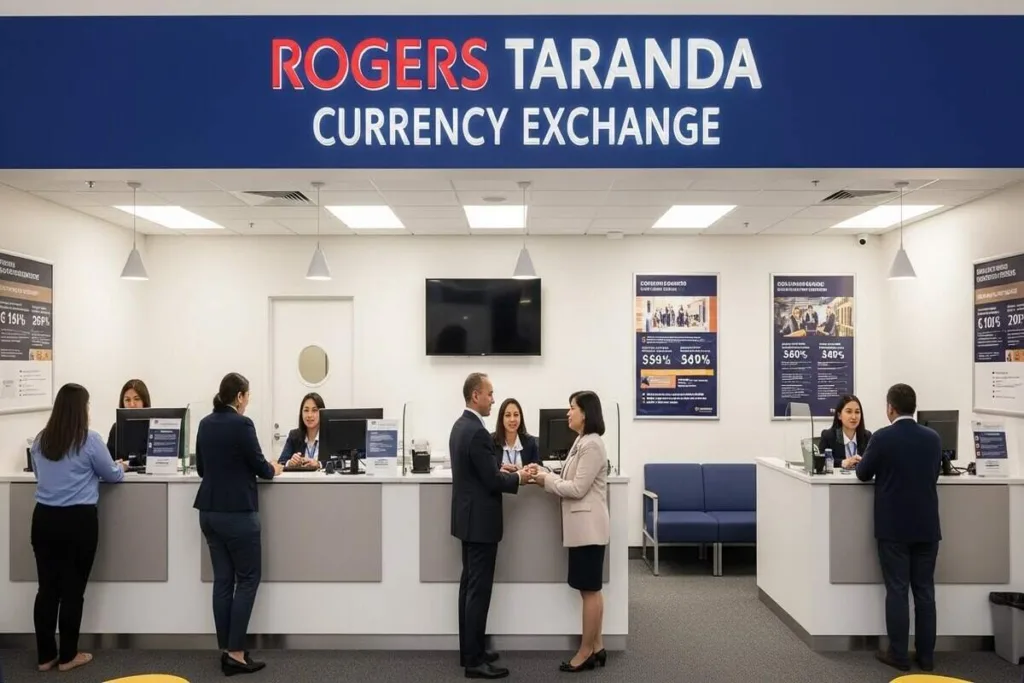
Small businesses use currency exchange to convert local funds into a foreign currency before paying overseas suppliers, settling international invoices or managing cross-border operating expenses.
Before initiating a money transfer or issuing a payment instrument, they typically review exchange rates, evaluate transaction fees and complete identity verification when required.
Small businesses preparing for international transactions often review foundational concepts explained in our broader currency exchange fundamentals guide to understand rate movements and transaction mechanics.

Small Businesses Use Currency Exchange To Convert Funds For International Payments
Currency exchange allows a business to convert operating capital into the currency required by a vendor or service provider. This mechanism directly supports supplier payments, contractor invoices and cross-border operational expenses.
Converting Local Revenue Into Supplier Currency
Small businesses frequently receive revenue in U.S. dollars but owe invoices in foreign currency. They use currency exchange services to convert the required amount before initiating payment to suppliers abroad.
For example, a small importer in Texas purchasing inventory from Mexico may convert U.S. dollars into Mexican pesos before initiating a supplier transfer. By confirming the exchange rate and total transaction cost prior to sending funds, the business can estimate how much currency the supplier will receive and reconcile the invoice more accurately.
Before converting funds, businesses typically prepare by reviewing:
- The current exchange rate and recent variability
- The spread or markup applied to the transaction
- Total transaction costs including service fees
- Delivery method such as money transfer or draft
Exchange rate variability can affect the final amount delivered, especially when payment timing differs from invoice issuance. Businesses may monitor rate movements for several days before completing larger conversions tied to inventory orders, referencing publicly available benchmarks such as Federal Reserve H.10 exchange rate data for general currency comparisons.
Retail financial service providers like Order Express facilitate in-person currency exchange transactions at company-owned locations. Order Express operates as a licensed Money Services Business and follows applicable requirements designed to support compliant financial transactions, and additional background about the company’s experience and operations is available on the Order Express company background page.
Pairing Currency Exchange With Money Transfer Services
After converting funds, businesses often initiate a money transfer to complete the payment. This two-step process allows the sender to confirm the foreign currency amount before transmission, often using structured services such as Order Express money transfer services for cross-border delivery.
In practice, a small business owner may:
- Convert dollars into the required foreign currency amount
- Confirm exchange rate details and total fees
- Provide recipient information for the transfer
- Complete identity verification when required
Money Services Businesses are required to follow Anti-Money Laundering (AML) and Know Your Customer (KYC) regulations, which may include identity verification, customer due diligence and transaction monitoring. For certain transaction thresholds, reporting and verification requirements apply under the Bank Secrecy Act and FinCEN guidance administered by the Financial Crimes Enforcement Network. These compliance frameworks are designed to support financial transparency and help prevent misuse of regulated financial services.
Certain transactions may also be subject to federal reporting and recordkeeping requirements depending on transaction size, structure and applicable regulatory thresholds.
Separating the conversion step from the transfer step can help businesses understand transaction-dependent outcomes more clearly. Clear documentation of the converted amount and fees also supports bookkeeping and reconciliation processes, aligning with consumer protection principles explained by the Consumer Financial Protection Bureau’s sending money resources.

Small Businesses Use Currency Exchange To Manage Payment Timing And Cost Exposure
Beyond simple conversion, currency exchange helps small businesses manage timing and cost considerations. Rate fluctuations and payment deadlines influence when and how businesses complete international payments.
Monitoring Exchange Rate Variability Before Payment
Exchange rates move throughout the day based on market conditions and currency demand. Small businesses preparing for supplier payments often check rates before committing to conversion, sometimes reviewing broader economic context outlined in U.S. Treasury exchange rate policy guidance.
Businesses often review:
- Whether invoice payment deadlines allow short-term rate monitoring
- The potential impact of a one to three percent rate movement
- Whether partial payments may influence exposure to volatility
Because exchange rates include a spread or markup, the effective rate may differ from headline market quotes. Exchange rates offered by retail providers typically include a margin above wholesale or interbank rates, and the final rate applied to a transaction may vary based on location, currency pair and transaction amount.
Reviewing rate transparency before converting funds helps businesses estimate the total foreign currency delivered and supports informed decision-making similar to financial literacy guidance available through the FDIC Money Smart program.
At the point of transaction, customers can review rate information and total costs before finalizing a conversion. Customers can ask questions about applicable fees and confirm amounts before proceeding with payment.
Coordinating Currency Exchange With Cash Flow Planning
Small businesses also use currency exchange strategically to align payments with incoming revenue cycles. Converting too early or too late may affect liquidity and short-term working capital.
For example, a retailer importing goods may wait until customer sales settle before converting funds. This approach reduces pressure on reserves while still meeting supplier deadlines.
Some businesses choose to convert slightly more than the invoice amount to offset minor rate fluctuations. Others convert only the exact invoice value and complete payment immediately to reduce uncertainty.
Retail financial services such as money orders or check-based disbursement tools may also support certain cross-border payment structures, and in some cases businesses access immediate funds through in-person services like Order Express check cashing services. However, most international supplier payments rely on currency exchange paired with money transfer services.
Order Express locations provide customer-facing support designed to assist business owners preparing documentation and payment details. As a registered Money Services Business, Order Express operates within regulatory frameworks applicable to this type of financial service.
Note: Regulatory References Notice- References to external organizations, including FinCEN, the U.S. Treasury, the FDIC and the Consumer Financial Protection Bureau, are provided for informational purposes only and do not imply affiliation, endorsement or sponsorship.
About Order Express
Order Express is a licensed Money Services Business operating retail financial service locations in multiple states. The company provides money transmission, currency exchange and related payment services in accordance with applicable federal and state regulations. Its compliance program includes anti-money laundering controls, transaction monitoring and regulatory reporting procedures designed to support lawful financial activity.
Key Takeaways
- Small businesses use currency exchange to convert local funds before completing international supplier payments.
- Currency exchange often works together with money transfer services to deliver funds abroad.
- Exchange rate variability and transaction fees influence the final amount received by the supplier.
- Businesses prepare by reviewing rates, spreads, fees and identity verification requirements before converting funds.
- Coordinating conversion timing with cash flow planning may help manage short-term cost exposure.
Frequently Asked Questions
Q: Why Do Small Businesses Need Currency Exchange Before Paying Overseas Suppliers?
A: Small businesses must convert local currency into the supplier’s required currency before sending payment through a money transfer or similar method.
Q: Does Currency Exchange Affect The Final Amount My Supplier Receives?
A: Yes. Exchange rate variability, spreads and fees can change the total foreign currency delivered.
Q: Can A Small Business Complete Currency Exchange And Money Transfer In One Visit?
A: Yes. Many retail financial service providers allow customers to convert currency and initiate a transfer during the same transaction session.
Q: Will My Business Need Identification For Currency Exchange Transactions?
A: Identification may be required depending on transaction size and applicable regulatory thresholds.
Q: How Can A Business Prepare For A Currency Exchange Payment?
A: Review current rates, confirm total fees, gather recipient details and ensure required identification is available before visiting a service location.
Conclusion
Small businesses use currency exchange to convert operating funds into the currency required for international payments. They rely on two core mechanisms: converting local revenue into supplier currency and managing timing to reduce cost exposure. By reviewing exchange rate variability, spreads and applicable fees, businesses can better estimate transaction outcomes. Pairing currency exchange with money transfer services allows efficient settlement of overseas invoices. Preparing documentation, confirming rates and understanding compliance thresholds supports smoother transactions. Order Express operates as a licensed Money Services Business and provides retail financial services that support currency exchange and payment processing.
Review current rates and available options before preparing your transaction with greater clarity and confidence. You may also visit an Order Express location if in-person assistance is needed.
Disclaimer: This content is provided for informational purposes only and does not constitute financial, legal or tax advice. Exchange rates, fees, availability, reporting thresholds and verification requirements may vary by provider, transaction type, currency pair and location. Customers should review transaction details directly with their selected service provider before completing any financial transaction.

John is a Content & SEO Specialist who enjoys breaking down complex financial topics, like cross-border payments and money transfers, into content that’s easy to understand. He focuses on creating practical, search-driven content that helps people find answers and make informed decisions.