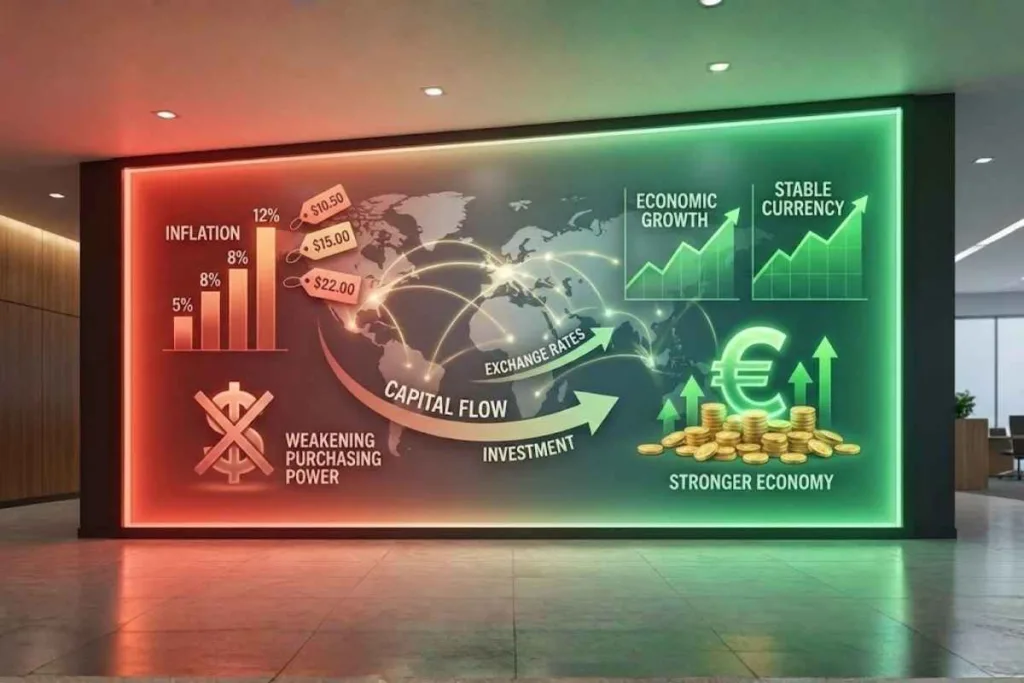
Rising inflation directly influences currency exchange rates by altering purchasing power and shifting international capital flows. When prices increase quickly within one economy, that currency typically weakens against more stable alternatives. For everyday transactions, this movement affects how much money recipients ultimately receive after conversion.
Understanding these drivers helps individuals anticipate rate fluctuations before completing a transfer through providers such as Order Express.
Exchange rates offered by providers may differ from interbank or government reference rates and may include a margin or spread.
Purchasing Power Erosion And Price Competitiveness
Inflation reduces the real value of a currency by weakening its purchasing power domestically and internationally. This erosion changes how global markets perceive that currency’s strength and reliability. As purchasing power falls, exchange rates adjust to reflect reduced economic stability and higher risk expectations.
Exchange values fluctuate continuously, as shown in the Federal Reserve’s official H.10 release on foreign exchange rates, which provides historical exchange rate data used to observe currency movement over time.
1. Higher Domestic Prices Reduce Currency Demand
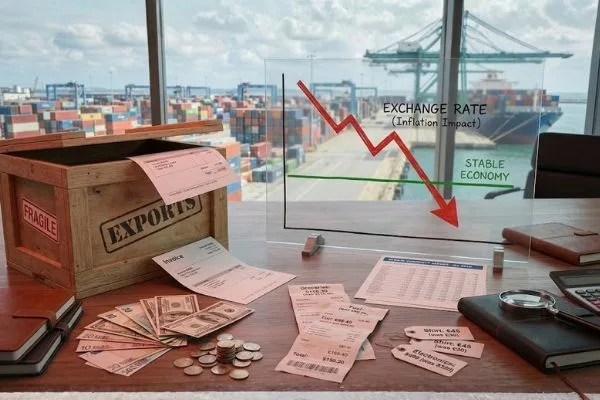
When inflation rises, goods and services cost more within the affected country. International buyers must spend more to purchase the same exports from that economy. As export demand declines, foreign buyers need less of that currency to complete transactions. Lower demand typically leads to currency depreciation in foreign exchange markets.
Currency exchange rates respond quickly because global traders constantly compare relative price levels. Even modest differences in inflation between two countries can trigger rate adjustments. Investors often move funds toward economies with stronger purchasing power stability.
Key transactional effects include:
- Imported goods become more expensive for domestic consumers
- Outbound travelers receive fewer foreign units for each conversion
- International transfers may yield reduced value upon arrival
Each of these outcomes directly impacts individuals sending or receiving cross-border payments using services such as international money transfer solutions.
2. Widening Trade Imbalances Pressure Exchange Rates
Persistent inflation can weaken a country’s export competitiveness compared with lower-inflation trading partners. As exports decline and imports remain steady, trade deficits often widen. A widening deficit increases the supply of domestic currency in global markets.
Greater currency supply without matching demand places downward pressure on exchange rates. Foreign businesses and governments accumulate less of that currency over time. The imbalance creates sustained depreciation rather than short-term volatility.
Inflation weakens exchange rates when rising domestic prices reduce export demand and expand trade deficits. Lower foreign demand increases currency supply in global markets, causing depreciation. This relationship is further outlined in U.S. Treasury exchange rate policy analysis explaining how macroeconomic imbalances influence currency valuation.
For individuals planning transfers, trade-driven depreciation can gradually shift exchange values even without sudden economic news. Monitoring inflation trends helps anticipate whether exchange rates may continue trending lower.

Interest Rate Adjustments And Capital Flow Shifts
Central banks respond to inflation by adjusting interest rates to control price growth. These policy decisions influence international capital movements and directly affect currency exchange rates. Exchange markets react not only to current inflation but also to expected monetary responses.
1. Central Bank Rate Hikes Attract Foreign Capital
When inflation accelerates, central banks often raise interest rates to stabilize prices. Higher rates increase returns on deposits, bonds and other financial instruments. Foreign investors may move funds into that country seeking improved yields.
Increased investment demand requires purchasing that country’s currency. This added demand can strengthen the exchange rate despite elevated inflation. Currency appreciation may occur if rate increases outpace inflation expectations.
As explained by the Consumer Financial Protection Bureau’s guidance on sending money abroad, exchange rate shifts directly affect the final amount recipients receive after international transfers.
This mechanism operates through several steps:
- Inflation rises beyond target levels
- The central bank raises benchmark interest rates
- Foreign investors seek higher returns
- Capital inflows increase currency demand
- The exchange rate appreciates or stabilizes
For everyday transactions, this means inflation does not always cause immediate depreciation. The policy response often determines short-term direction.
2. Inflation Uncertainty Triggers Capital Outflows
If inflation appears uncontrolled or policy responses seem ineffective, investor confidence may weaken. Markets may interpret persistent inflation as a sign of economic instability. Investors often shift funds toward more predictable economies under those conditions.
Capital outflows reduce demand for the domestic currency. Lower demand can accelerate depreciation in foreign exchange markets. Exchange rates may fall more sharply when uncertainty compounds inflation pressure.
Financial literacy initiatives such as the FDIC Money Smart consumer education program emphasize how economic stability influences currency value and household financial planning.
Inflation weakens a currency when investors expect inadequate policy control, prompting capital outflows. Reduced investor confidence decreases currency demand and drives exchange rate depreciation.
For someone preparing to transfer money internationally, these movements affect timing decisions. A rapidly depreciating currency may reduce outgoing transfer value. Conversely, a strengthening currency following decisive rate hikes may improve conversion outcomes.
How These Mechanisms Affect Everyday Transactions
While purchasing power erosion and capital flows operate at macroeconomic levels, their effects reach individual transactions quickly. Currency exchange providers generally reference interbank market movements when setting rates; however, consumer exchange rates may vary and typically include a spread. Inflation data releases, interest rate decisions and investor sentiment often trigger immediate adjustments.
Before completing a money transfer, consider the following practical signals:
- Compare inflation trends between sending and receiving countries
- Monitor recent central bank rate decisions and forward guidance
- Review whether capital appears flowing into or out of the currency
Short-term volatility often follows inflation announcements. Planning transfers around major policy meetings may help manage rate uncertainty.
Exchange rates rarely move in isolation. Markets compare relative inflation rather than viewing one country independently. A currency with five percent inflation may still strengthen if trading partners experience seven percent inflation. Relative stability matters more than isolated data points.
Exchange rates adjust based on relative inflation differences and investor capital flows, not absolute price increases alone.
For first-time senders, understanding these relationships reduces surprises during conversion. Inflation influences both the value of your domestic currency and the strength of the currency you receive. Evaluating both sides of the exchange improves decision-making clarity.
Practical Considerations Before Sending Money
When inflation rises in your home country, you may receive fewer foreign units per transaction over time. Some individuals monitor exchange rate trends before completing a transfer; however, currency movements are unpredictable and can reverse quickly. However, abrupt policy-driven appreciation can temporarily reverse losses.
Balanced preparation includes:
- Checking rate trends over several weeks rather than reacting to one headline
- Confirming transfer fees separately from exchange rate margins
- Considering partial transfers if volatility remains elevated
If your transaction involves converting paper instruments before exchange, reliable check cashing services can be part of the preparation process prior to currency conversion.
Currency exchange markets continuously process inflation data, trade balances and monetary signals. Your transaction value ultimately reflects these interconnected drivers. Even everyday transfers connect to broader economic forces shaping exchange rates globally. For specific service questions, you may contact our support team for assistance.
Key takeaways
- Rising inflation weakens currency exchange rates by reducing purchasing power and lowering foreign demand for exports.
- Expanding trade deficits increase domestic currency supply in global markets, placing sustained depreciation pressure on exchange rates.
- Central bank interest rate hikes can temporarily strengthen a currency by attracting foreign capital inflows.
- Investor confidence determines whether inflation leads to currency stabilization or accelerated capital outflows.
- Exchange rates respond to relative inflation differences between countries, not absolute price increases alone.
If you are reviewing broader exchange principles, our guide on currency exchange fundamentals for everyday transactions provides helpful foundational context.
Conclusion
Rising inflation impacts currency exchange rates through two primary pathways: purchasing power erosion and capital flow adjustments. Higher domestic prices weaken export demand and expand trade deficits, increasing depreciation pressure. Central bank responses then influence whether capital inflows stabilize the currency or investor uncertainty accelerates declines.
For individuals preparing to send or receive funds, monitoring inflation trends and interest rate actions provides actionable insight. Currency exchange rates respond quickly to both actual data and expectations about future policy decisions. Understanding these mechanisms supports better timing and informed transaction planning.
Ready to make your next transfer? Review available exchange rates and complete your transaction with a regulated money services provider that fits your needs.
Disclaimer: This article provides general informational content only and does not constitute financial, investment, or currency trading advice.
Regulatory Disclosure: Order Express is a registered Money Services Business (MSB) with the Financial Crimes Enforcement Network (FinCEN). Licensing and regulatory disclosures are available upon request or on our website.
Frequently Asked Questions
Q: Does Rising Inflation Always Weaken A Currency?
A: No. Rising inflation often pressures a currency downward, but central bank rate hikes can attract foreign capital and temporarily stabilize or strengthen exchange rates if investors remain confident in policy effectiveness.
Q: How Quickly Can Inflation Affect Currency Exchange Rates?
A: Exchange rates can adjust immediately after inflation data releases or policy announcements. Markets react to both actual inflation figures and expectations about future interest rate decisions.
Q: Why Do Interest Rates Influence Currency Strength During Inflation?
A: Higher interest rates increase returns on deposits and bonds, attracting foreign investors. Increased capital inflows raise demand for the currency, which can offset inflation-driven depreciation pressure.

John is a Content & SEO Specialist who enjoys breaking down complex financial topics, like cross-border payments and money transfers, into content that’s easy to understand. He focuses on creating practical, search-driven content that helps people find answers and make informed decisions.