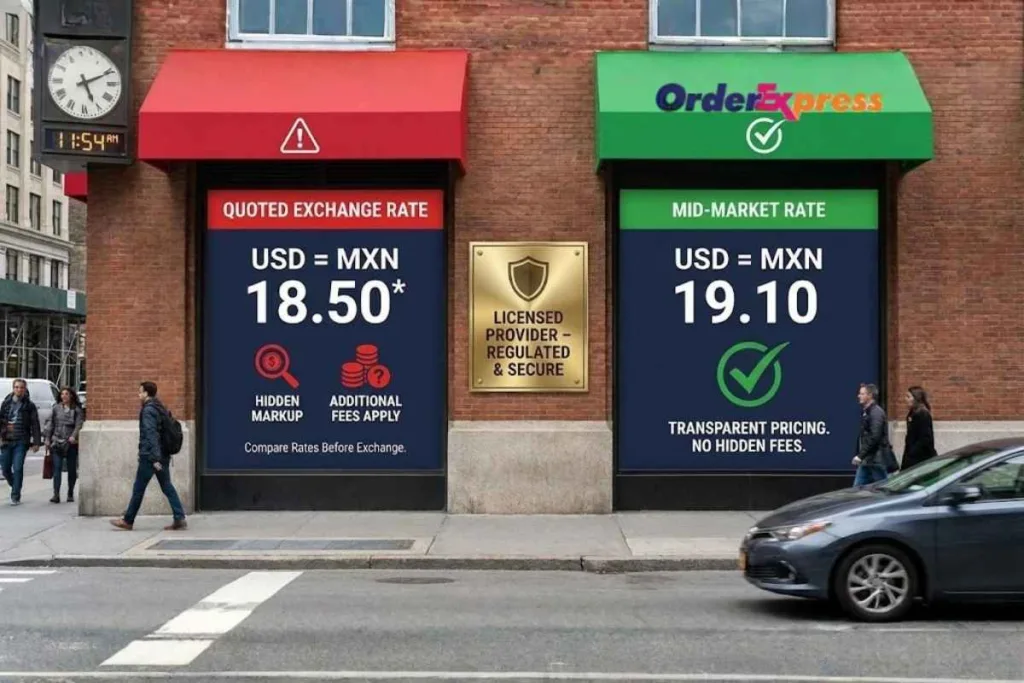
Hidden currency exchange fees shrink travel budgets, but you can detect them in seconds with verified data from Order Express. Start by choosing a licensed money transfer provider listed with national regulators such as FinCEN. Regulatory registration supports compliance checks, promotes pricing transparency, and helps enhance transfer security. Verify the provider’s license number online, compare its quoted rate to the live mid-market benchmark, then request a written fee breakdown. These steps expose margin markups, service charges, and dynamic conversion traps before you hand over cash.
Use this guide to learn why verification matters, what hidden costs appear, and which actions safeguard your exchange.
How Margin Markups Quietly Inflate Advertised Exchange Rates
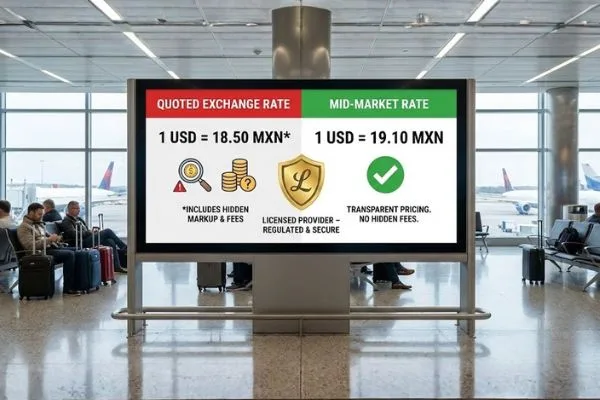
Margin markups represent the silent difference between the mid-market rate you see online and the retail rate you receive. Providers blend their operational costs and profit targets into that spread, masking them behind small decimal variations. Recognizing common patterns helps you estimate these invisible charges even before a teller or app confirms the trade.
Major airports typically include margins between three and eight percent, often attributed to convenience and higher operating costs such as rent and staffing. Downtown bank branches trend lower, averaging margins around two percent, yet weekend or after-hours conversions may quietly add more. Always compare final receive amounts across at least two sources within minutes, because markets move slower than margin differences. This practice aligns with U.S. Treasury exchange rate policy guidance that encourages market-driven transparency. Remember that currency values update every second, yet most retail platforms revise posted rates only intermittently during business hours.
1. Spot Where Mid-Market Data Ends and Retail Pricing Begins
Real-time mid-market rates, according to Federal Reserve foreign exchange rate data, appear on search engines and finance portals, offering neutral baselines for every major currency pair. Before approaching a counter, screenshot that benchmark; later compare the quote margin to quantify exact hidden percentage cost. By keeping screenshots you create verifiable evidence that strengthens complaints if your executed rate deviates excessively from mid-market data.
2. Calculate Total Cost Rather Than Focusing Solely on Zero-Fee Marketing
Zero-fee adverts often exclude margin spread calculations, so only the composite calculation reveals whether the promise benefits you. Multiply the provider rate by your transaction amount, subtract the mid-market equivalent, then express the difference as percentage. The process mirrors guidance from the Consumer Financial Protection Bureau on sending money abroad, which urges consumers to review all charges. Some travel debit cards include calculators within their apps, simplifying this comparison and flagging hidden spreads before you confirm.
3. Negotiate Margins for Larger Transfers Where Policy Allows Flexibility
When sending tuition or property payments abroad, our Money Transfer specialists recommend quoting competitors during booking; many providers lower spreads above high thresholds. Request written confirmation of any bespoke rate to avoid later disputes and maintain a paper trail supporting budget forecasts. Specialist bureaus often publish tiered thresholds online, so studying them beforehand helps you structure one payment large enough to save. However, remain mindful of anti-money-laundering requirements. Larger transactions may be subject to compliance review and source-of-funds documentation when requesting bespoke rates. Refer to the FinCEN Anti-Money Laundering Act requirements for documentation thresholds.
Why Service Charges Vary Between Providers and Locations
Beyond exchange margins, providers levy explicit service charges that differ by channel, jurisdiction, and even individual branch management. Understanding each category helps you anticipate them and decide whether to convert all funds at once or stagger transactions, a skill emphasized by the FDIC Money Smart consumer education program. Typical charges cluster into processing fees, minimum commission structures, and compliance recovery surcharges.
Flat processing charges appear as ticket or handling fees, often around five dollars regardless of the amount exchanged. Percentage commissions apply when the value is high but not yet profitable under flat models, usually between one and three. Locations with higher rental or staffing costs commonly stack multiple types, so reading the fee schedule matters before confirming. Fee transparency regulations differ internationally, so a published schedule in one jurisdiction might remain optional marketing elsewhere entirely. Always request a printed breakdown; reputable desks oblige willingly because documentation protects both parties during potential disputes later.
1. Compare Online Platform Fees With Brick-and-Mortar Counters in Your Destination City
Online platforms usually waive processing fees for balances loaded electronically, then charge modest ATM withdrawal fees once abroad. Conversely, physical counters bundle compliance and premises costs into one upfront charge regardless of later withdrawals.
2. Check Minimum Commissions That Penalize Small Exchanges More Than Larger Sums
A ten-dollar commission equals ten percent on a one-hundred-dollar trade yet only one percent on 1,000 converted at once. Travelers cashing an overseas payroll check can minimize percentage loss by using our Check Cashing counters before departure. Therefore exchanging small increments every few days often erodes the budget faster than performing one consolidated conversion on arrival.
3. Identify Dynamic Pricing Triggers Such as Weekends or Late-Night Airport Operations
Many kiosks increase service charges after banking hours because armored cash deliveries and overtime staffing elevate operational expenditure. Plan conversions during normal business slots where possible, or pre-order online for branch pickup to lock weekend pricing. Some peer-to-peer apps also raise weekend margins, citing interbank settlement closures, although wholesale forex runs continuously online.
When Ancillary Costs Turn a Good Rate Into a Costly Mistake
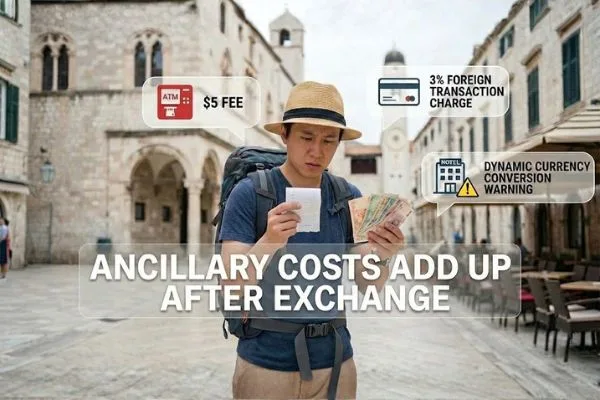
Some expenses emerge only after the exchange itself, reminding travelers that cheapest rates mean little without holistic cost evaluation. These ancillary costs include card foreign transaction fees, ATM network levies, and surcharges imposed by hotels during settlement. Monitoring them protects you against double charging scenarios where currency margin savings disappear once you swipe or withdraw. Border entry tax payments sometimes accept only local cash, forcing last-minute airport exchanges at punitive rates.
1. Watch Out for Foreign Transaction Percentages on Debit or Credit Cards
Even after loading a travel card with local currency, issuers sometimes flag foreign terminals as international, adding unexpected percentage fees. Check your issuer schedule beforehand; many waive these surcharges on premium tiers, justifying annual fees through exchange savings.
2. Calculate Total Withdrawal Cost by Combining Network and Local ATM Charges
An overseas ATM might advertise zero commission while your home bank separately imposes three-dollar network fees per withdrawal. Multiply that figure by anticipated cash withdrawals because small quick visits to terminals can accumulate more than margin spreads. Avoid dynamic bank currency conversions inside foreign ATMs by selecting local currency settlement when prompted on the terminal screen.
3. Confirm Accommodation Exchange Rates Before Choosing Pay-in-Local-Currency Options at Checkout
Hotels sometimes offer dynamic currency conversion, promising home-currency clarity but embedding aggressive rates exceeding mainstream banks by ten percent. Politely request the bill in local currency, use pre-planned funds, and retain receipts to contest any subsequent card statement discrepancies.
Quick Checks Before Every Currency Exchange Session
Verify mid-market benchmarks on two independent sources within fifteen minutes of transacting to spot unfriendly rate deviations early. Calculate the effective cost by combining quoted rate differences, stated fees, and probable ancillary charges connected to your payment method. Retain receipts and screenshots in a single cloud folder, enabling straightforward dispute resolution and improving future budgeting accuracy. If you spot discrepancies, immediately Contact Us with documentation so our team can investigate. Consistency in these steps builds confidence, letting you focus on enjoying the destination rather than worrying about conversion mistakes later.
Explore Currency Exchange Fundamentals For Everyday Transactions to expand foundational concepts that support the techniques described here.
Conclusion
Hidden fees thrive on haste and assumptions, but you now have a checklist that exposes every costly layer. Screenshot mid-market rates, demand printed fee schedules, reject dynamic conversions, and calculate the blended cost before committing cash or card. Consolidate larger transfers to negotiate lower spreads, yet still compare at least two providers within minutes to catch opportunistic markups. For small exchanges, prioritize fee-free cashback or prepaid apps over airport kiosks. Store all receipts and screenshots in one cloud folder, making refunds or disputes painless. Start applying these habits on your next trip and watch savings compound. Need real-time rate alerts or a bespoke quote today? Chat with our Order Express team and lock a transparent rate with full fee disclosure.
Order Express is a registered Money Services Business (MSB) with the U.S. Department of the Treasury’s Financial Crimes Enforcement Network (FinCEN) and complies with applicable federal and state anti-money laundering (AML) and know-your-customer (KYC) regulations. Services may be subject to verification, documentation requirements, and jurisdiction-specific licensing obligations.
Disclaimer: Information provided reflects general practices as of publication date and may change with market or regulatory developments.
Frequently Asked Questions
Q: How Do I Spot Hidden Fees In An Exchange Quote Quickly?
A: Compare the quote to the live mid-market rate, subtract differences, then add listed service fees. If the total cost appears materially higher than comparable providers, consider reviewing alternatives.
Q: How Can I Avoid High Airport Currency Exchange Markups?
A: Pre-order cash online for branch pickup, use fee-free cashback at retail checkouts, or withdraw local currency via travel card at destination ATMs.
Q: Which Fees Should I Calculate Before Converting Money Abroad?
A: Include margin spread, flat or percentage service charges, your bank’s foreign transaction fee, ATM network fee, and any dynamic currency conversion surcharge.
Q: When Is Negotiating An Exchange Rate Worthwhile?
A: If your transfer exceeds about 5,000 dollars, subject to compliance review and documentation requirements, you may request a bespoke rate; competitors’ quotes can sometimes prompt reduced spreads and documented confirmation.
Q: How Do I Stop Dynamic Currency Conversion Charges?
A: At terminals, choose “local currency” not “home currency,” sign the receipt, and note refusal of conversion on merchant copy for dispute protection.

John is a Content & SEO Specialist who enjoys breaking down complex financial topics, like cross-border payments and money transfers, into content that’s easy to understand. He focuses on creating practical, search-driven content that helps people find answers and make informed decisions.