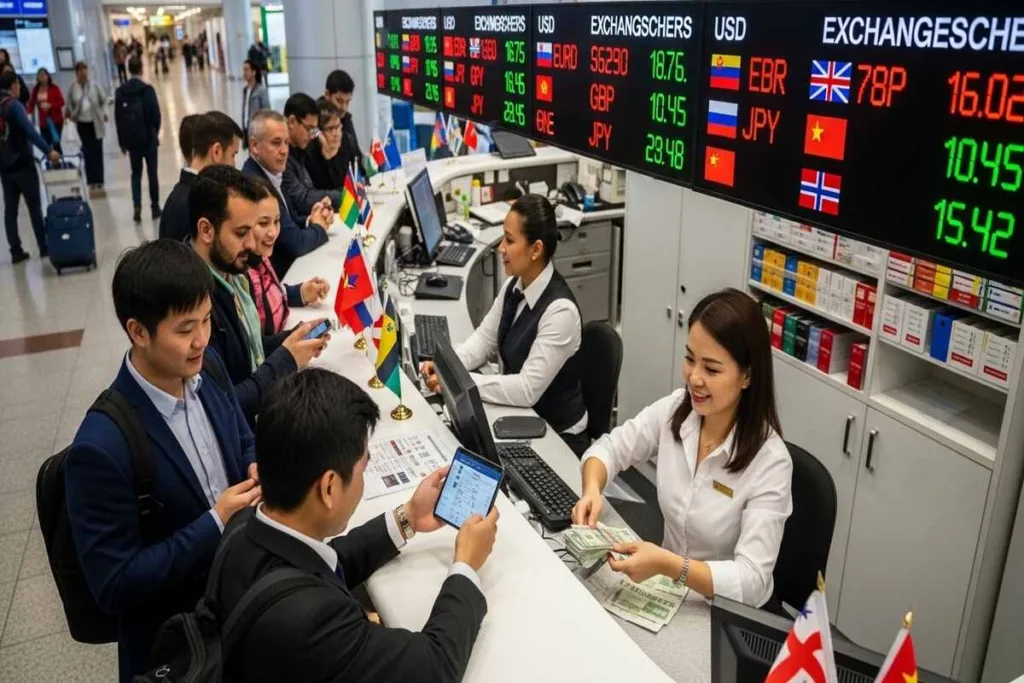
Customers rely on currency exchange services because they need accurate, are designed to complete everyday international transactions confidently. These services provide real-time value clarity and accessible channels that simplify sending, receiving or spending money across borders. Customers seeking retail guidance can explore consumer-focused currency exchange information to better understand how these services support everyday transactions.
Currency exchange services that operate in the United States are generally classified as Money Services Businesses under federal law. As such, they are subject to applicable federal and state regulatory requirements, including transaction monitoring, reporting thresholds and customer identification standards. These regulatory frameworks function separately from the customer experience described in this article.
Note: Money Services Businesses in the U.S. must comply with the Bank Secrecy Act (BSA), including Anti-Money Laundering (AML) programs, customer identification procedures, and transaction reporting requirements such as Currency Transaction Reports (CTR) and Suspicious Activity Reports (SAR).

How Currency Exchange Services Ensure Accurate And Reliable Conversions
Currency exchange services play a critical role in helping customers make confident financial decisions by providing accurate and timely conversion data. These services allow users to clearly understand the value of their money before completing any transaction, reducing uncertainty and improving planning. With real-time rate visibility and consistent pricing structures, customers can evaluate outcomes, compare options and act quickly when needed.
This combination of accuracy and transparency makes currency exchange services essential for anyone managing cross-border payments or conversions. Customers can reference publicly available benchmarks such as Federal Reserve exchange rate data to understand how currency values fluctuate in broader financial markets. While customers experience these services through pricing tools and transaction platforms, regulated providers must also comply with federal requirements related to transaction recordkeeping and reporting, which operate independently from pricing visibility.
Transparent Rate Visibility Reduces Uncertainty During Transactions
Customers depend on currency exchange services because they can clearly view current exchange rates before initiating any transaction. This visibility allows users to calculate expected outcomes and avoid confusion when converting money between different currencies. Authoritative financial education resources like the FDIC Money Smart program help explain how exchange rates impact everyday financial decisions.
Clear rate visibility helps customers:
- Understand the exact value they will receive after conversion in real time
- Compare multiple transaction options without needing complex financial calculations
- Avoid unexpected differences between estimated and final converted amounts
Immediate Value Calculation Improves Transaction Planning
Currency exchange platforms allow users to instantly calculate how much their money is worth in another currency. This capability supports better planning for travel, remittances or cross-border purchases where timing and accuracy are essential. Government-backed tools such as the CFPB consumer financial resources provide additional context on managing financial decisions effectively.
Consistent Pricing Frameworks Build User Trust Over Time
Customers return to currency exchange services because consistent rate structures create predictable transaction experiences over repeated use. This reliability builds confidence and reduces hesitation when users need to convert funds quickly. Oversight frameworks administered by agencies like the Financial Crimes Enforcement Network apply to financial institutions and support broader system integrity without affecting customer-facing pricing tools.

How Currency Exchange Expand Access To International Transactions
Currency exchange services expand access to international transactions by combining digital convenience with real-world availability for different user needs. These services allow customers to complete conversions quickly while adapting to various financial situations such as travel or remote payments. By offering both online and in-person options, they remove barriers that often slow down cross-border transactions.
This approach helps users manage international payments more smoothly while maintaining flexibility and control. Customers exploring available currency exchange options can better understand how different access channels support their transaction needs. In regulated markets, access to these services is also supported by compliance structures established under federal law, including oversight applicable to Money Services Businesses, which remain distinct from the customer interface described here.
Digital Platforms Enable Fast And Convenient Conversions
Online currency exchange services allow customers to convert funds anytime using mobile devices or desktop platforms. This convenience eliminates the need for physical visits and speeds up the entire transaction process significantly.
Customers benefit from digital access because they can:
- Initiate transactions anytime without waiting for business hours or physical locations
- Monitor exchange rates and execute conversions when favorable conditions appear
- Manage multiple transactions from a single centralized platform
Physical Locations Provide Immediate And Practical Access
Some customers still rely on physical exchange locations because they need immediate cash conversions during travel or urgent situations. These locations offer direct access and immediate fulfillment when digital options are not practical. Customers can locate nearby service offices through local branch locations when in-person transactions are required. In certain cases, in-person transactions may require presentation of identification depending on transaction size and jurisdiction, consistent with applicable regulatory standards.
Integrated Services Support Broader Financial Needs
Currency exchange services often connect with other financial tools, allowing customers to manage transfers and conversions within one system. This integration simplifies workflows and reduces the need to switch between different platforms or services. Customers who need assistance can reach out through customer support contact options for guidance during transactions.
Key Takeaways
- Customers rely on currency exchange services because real-time conversion accuracy enables confident and informed financial decision-making.
- Transparent rate visibility allows users to clearly understand transaction outcomes before converting funds across different currencies.
- Accessible digital and physical channels simplify transactions and support various real-world financial situations efficiently.
- Integrated platforms streamline financial activities by combining currency conversion with broader transaction management tools.
- Overall reliance comes from a combination of accuracy, accessibility and consistent transaction experiences across different use cases.
Conclusion
Customers rely on currency exchange services because they provide accurate, real-time value visibility and accessible transaction channels for everyday financial needs. These services remove uncertainty and simplify the process of converting money across borders, making transactions more predictable and manageable. By offering both digital convenience and physical accessibility, they support a wide range of practical use cases for individuals preparing to send, receive or spend funds internationally. As financial activities continue to expand across regions, having a reliable way to convert currencies becomes essential for smooth and confident transactions. Choosing the right service ensures clarity, speed and consistency when managing cross-border payments.
Before completing any currency exchange transaction, customers should review applicable fees, exchange rates and any identification requirements that may apply based on transaction size or jurisdiction. Understanding both the service features and the regulatory environment helps ensure a smooth and informed transaction experience.
Disclaimer: This content is provided for general informational purposes only. It does not constitute financial, legal or regulatory advice. Currency exchange services in the United States are subject to federal and state regulatory frameworks applicable to Money Services Businesses.
FAQs
Why is real-time exchange rate accuracy important for customers?
Real-time accuracy helps customers understand exact conversion values before completing transactions, reducing uncertainty and improving decision-making confidence.
Do customers prefer digital or physical currency exchange services?
Customers use both depending on their needs, with digital services offering convenience and physical locations providing immediate cash access.
How do currency exchange services simplify international transactions?
They provide real-time rates, accessible platforms and integrated tools that make converting and transferring money faster and easier.
What makes customers trust a currency exchange service?
Consistent pricing, transparent rates and reliable transaction outcomes help build long-term customer trust.
Can currency exchange services help with transaction planning?
Yes, they allow users to calculate values instantly, helping them plan transfers, purchases or travel-related expenses effectively.

John is a Content & SEO Specialist who enjoys breaking down complex financial topics, like cross-border payments and money transfers, into content that’s easy to understand. He focuses on creating practical, search-driven content that helps people find answers and make informed decisions.