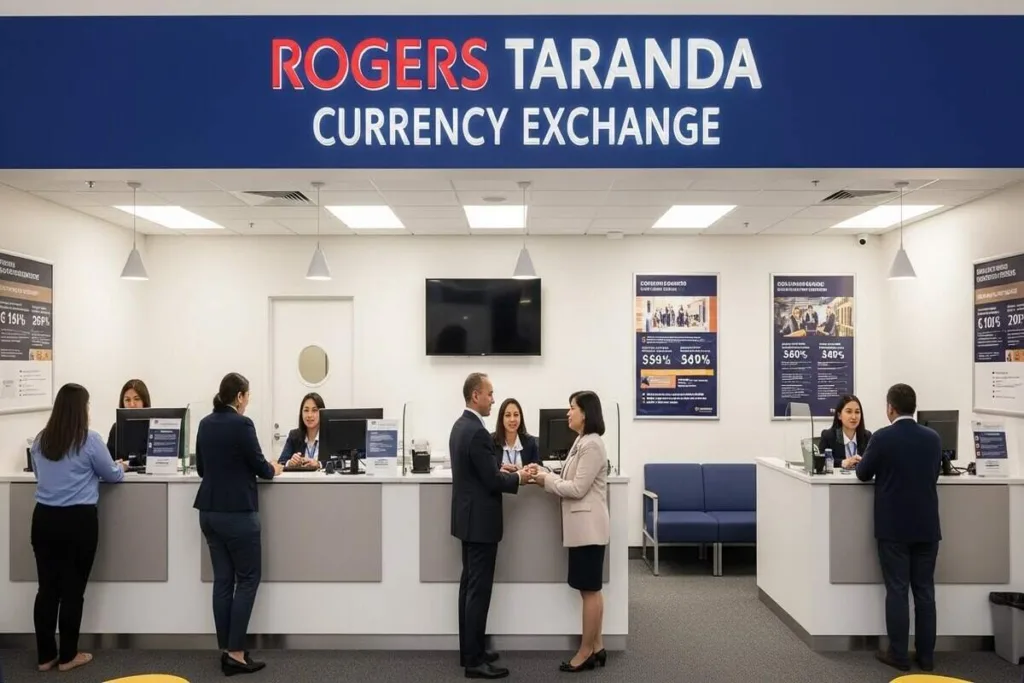
Currency exchange verification prevents fraud by confirming customer identity and validating transaction legitimacy before funds move. It reduces criminal misuse by enforcing documentation thresholds and monitoring transaction patterns in real time.
Consumers preparing to exchange currency often focus on rates, yet verification safeguards matter equally. These controls protect your funds while keeping the broader financial system secure. If you are exploring exchange services within our broader guide on currency exchange fundamentals for consumers, verification represents a critical protection layer during every transaction.
Why Currency Exchange Identity Checks Are Your First Line Of Defense
Currency exchange fraud prevention protects both consumers and providers by ensuring every significant transaction is properly documented and traceable. At Order Express, foreign currency is not released until identity is confirmed, reporting thresholds are applied and transaction records are retained to reduce impersonation, structuring and anonymous cash movement. These layered controls do more than satisfy regulatory obligations. They create a secure transaction environment where large exchanges cannot occur without accountability. By combining identification standards, aggregation rules and long-term record retention, currency exchange providers significantly reduce fraud risk while preserving smooth processing for legitimate customers.
Identity Verification Confirms The Person Conducting The Exchange Is Legitimate
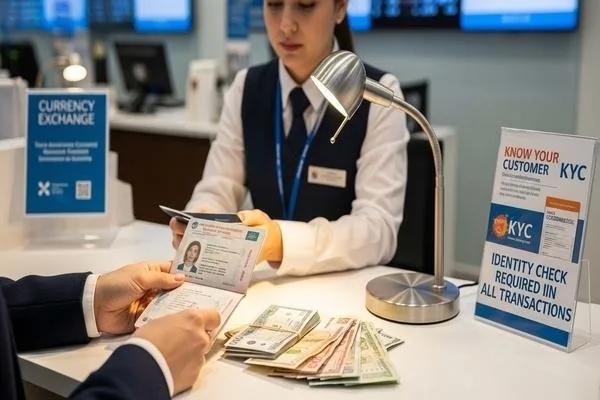
Identity verification confirms that the person requesting currency exchange matches valid government-issued documentation. This step prevents impersonation, stolen identity use and unauthorized financial activity.
Federal recordkeeping rules require money services businesses to collect and retain identifying information when currency exchange transactions equal or exceed $1,000 in a single business day.
Verification typically includes reviewing:
- Government-issued photo identification
- Identification number and issuing authority
- Date of birth and nationality when applicable
Government oversight agencies such as the Financial Crimes Enforcement Network and its anti-money laundering regulations establish identification and reporting standards that financial institutions must follow. By confirming identity before releasing foreign currency, providers reduce exposure to identity theft schemes and account misuse.
Transaction Thresholds Trigger Enhanced Documentation And Review
Transaction thresholds trigger enhanced documentation to prevent criminals from avoiding reporting requirements through structuring. Structuring occurs when someone breaks larger exchanges into smaller amounts to evade detection. Federal regulations require a Currency Transaction Report (CTR) must be filed when cash transactions exceed $10,000 in a single business day, including aggregated transactions. According to FDIC Currency Transaction Report guidance for financial institutions, all same-day transactions count toward this total, even if completed separately.
When thresholds are met, services must collect:
- Valid identification
- Internal compliance documentation
- Additional documentation such as source-of-funds information may be requested under internal anti-money-laundering policies when transactions present
These requirements discourage fraud because individuals cannot anonymously convert large amounts of cash. Criminal actors typically avoid environments where documentation connects them directly to the funds.
Record Retention Creates Accountability Beyond The Transaction Date
Record retention strengthens fraud prevention by preserving transaction documentation for regulatory review. Federal regulations require currency exchange providers to retain transaction records for a minimum of five years. Government agencies responsible for monetary oversight, including the U.S. Treasury exchange rate policy division and its international analysis, monitor broader foreign currency value trends that influence compliance expectations across the financial system.
This retention period creates long-term accountability, discouraging fraudulent attempts that rely on short-term anonymity. Knowing that documentation remains accessible for years reduces incentives for illicit currency conversion. For consumers, this means your legitimate exchange history remains documented and traceable if questions arise later. Consumers can also access general financial education tools such as the FDIC Money Smart consumer education program to better understand how financial documentation protects them.

How AML Monitoring Systems Detect Currency Exchange Fraud
Currency exchange fraud prevention does not rely on identity checks alone, it depends on continuous monitoring and structured reporting systems that detect suspicious behavior in real time. Providers track transaction patterns, review aggregated activity across locations, and escalate questionable exchanges when thresholds are triggered. This proactive oversight helps identify structuring attempts, near limit transactions, and unusual activity before funds move further through the financial system.
According to Federal Reserve foreign exchange rate data reporting standards, exchange rate transparency supports market stability while financial institutions maintain internal compliance monitoring. By combining automated alerts with mandatory reporting timelines, currency exchange services create multiple checkpoints that reduce criminal opportunity while maintaining transparency for legitimate customers.
Automated Alerts Identify Unusual Aggregation And Near-Threshold Behavior
Automated monitoring systems generate alerts when customers approach reporting limits or exhibit structured behavior. For example, systems flag currency exchange transactions of one thousand dollars or more within 48 hours .
Additional alerts monitor aggregated activity nearing ten thousand dollars thresholds to detect possible structuring. These alerts prompt compliance teams to review patterns before fraud escalates. This layered review reduces the likelihood that repeated smaller exchanges slip through unnoticed. Consumers who frequently move funds internationally may also encounter similar monitoring standards when using money transfer services, where reporting thresholds apply.
Suspicious Activity Reporting Escalates Potential Fraud To Authorities
Money Services Businesses must file a Suspicious Activity Report (SAR) when suspicious transactions involve or aggregate at least $2,000.
Reports must be filed within 30 calendar days after detecting suspicious activity . This timeline ensures rapid communication with financial crime enforcement authorities.
Transactions may be considered suspicious when they:
- Involve funds derived from illegal activity
- Appear structured to evade reporting requirements
- Lack a clear lawful purpose
By escalating questionable exchanges, services disrupt fraud schemes before funds circulate further. Consumers seeking clarification about documentation requirements may contact providers directly through official channels such as the Order Express contact page for service-related questions.
Aggregation Rules Prevent Criminals From Splitting Exchanges Across Locations
Aggregation rules prevent fraudsters from dividing exchanges across branches to avoid reporting thresholds. Multiple cash transactions in one business day are treated as a single aggregated transaction .
According to federal guidelines, this rule applies even when transactions are made at different branches or involve separate services. Aggregation closes loopholes that criminals might otherwise exploit. For legitimate consumers, aggregation ensures transparency without requiring repeated explanations during compliant transactions.
Key takeaways:
- Currency exchange verification prevents fraud by confirming identity before completing transactions above defined thresholds.
- Documentation requirements discourage structuring and anonymous large cash exchanges through mandatory reporting triggers.
- Automated monitoring systems detect unusual patterns and near-threshold aggregation in real time.
- Suspicious Activity Reports escalate questionable exchanges to authorities within 30 calendar days.
- Record retention for five years creates accountability that deters short-term fraudulent activity.
Order Express operates as a licensed Money Services Business (MSB) and follows federal anti-money-laundering regulations established under the Bank Secrecy Act (BSA) and monitored by the Financial Crimes Enforcement Network (FinCEN).
Conclusion
Currency exchange verification prevents fraud through two coordinated mechanisms: identity-based documentation and continuous monitoring. Identification thresholds ensure meaningful exchanges connect directly to verified individuals. Aggregation rules prevent criminals from splitting transactions to avoid detection. Automated alerts identify unusual patterns before fraud escalates. Suspicious Activity Reports provide rapid escalation when transactions appear unlawful. Record retention preserves accountability for years after completion.
For everyday consumers, these controls mean your legitimate exchange remains protected against impersonation, structuring and criminal misuse. While verification may add brief steps at the counter, it significantly reduces fraud exposure during currency conversion.
If you are ready to exchange currency, proceed confidently knowing verification safeguards protect your transaction from start to finish.
Disclaimer: This article provides general informational guidance regarding currency exchange verification processes and does not constitute legal advice.
FAQs
Why do I need to show identification for a currency exchange?
Federal rules require identification when currency exchange transactions total one thousand dollars or more within a 48-hour period. This helps prevent impersonation and keeps exchanges traceable.
What happens if I split my exchange into smaller amounts?
Federal guidelines require that multiple cash transactions in the same business day be added together. If the total exceeds the threshold, a report must be filed, even if each exchange is done separately.
Does verification mean my transaction is suspicious?
No. Verification applies automatically when thresholds are met. It protects both customers and providers from fraud.
How long are currency exchange records kept?
Transaction records must be retained for at least five years, as required by federal law, to ensure accountability and allow for regulatory review.
What triggers a Suspicious Activity Report in currency exchange?
Transactions involving two thousand dollars or more that appear structured, unlawful or lacking clear purpose may require reporting.

John is a Content & SEO Specialist who enjoys breaking down complex financial topics, like cross-border payments and money transfers, into content that’s easy to understand. He focuses on creating practical, search-driven content that helps people find answers and make informed decisions.