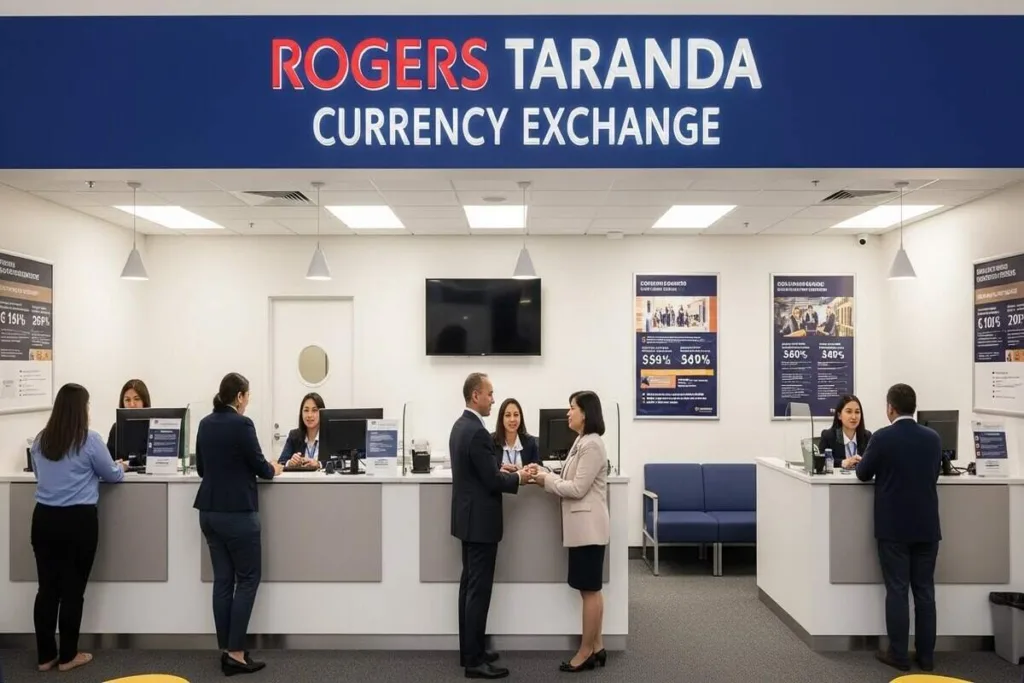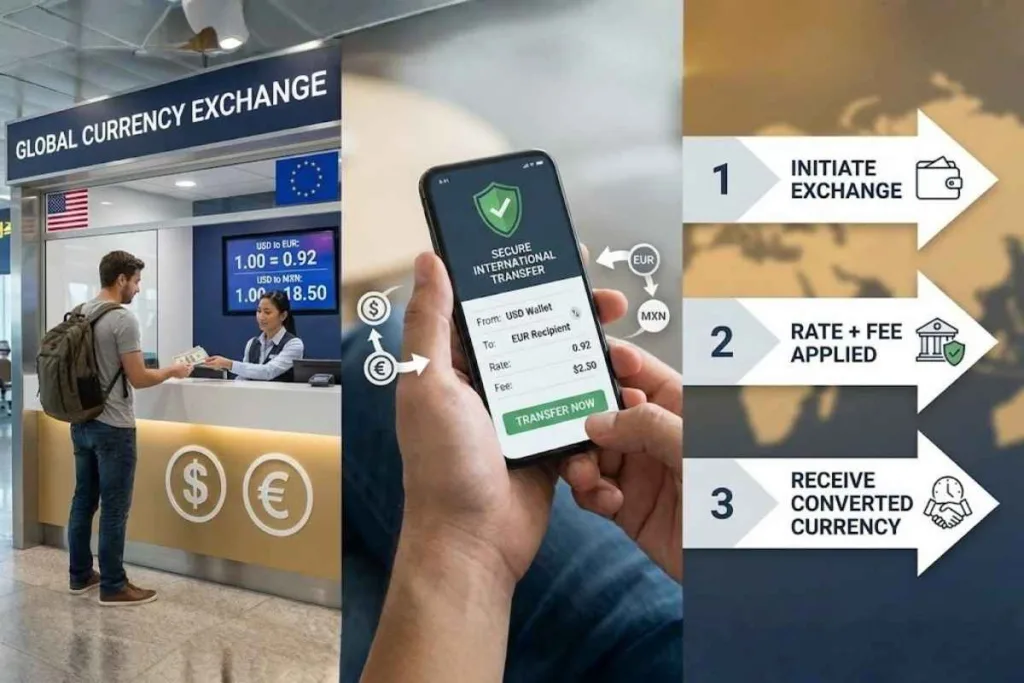
Currency exchange is the process of converting one country’s money into another so transactions can occur across borders. It allows individuals and businesses to pay, receive, or store value when dealing with different national currencies through banks and licensed money service providers, including Order Express.
Order Express operates as a licensed Money Services Business under federal and applicable state regulations. For everyday transactions, currency exchange focuses on practical conversion rather than speculation or long-term investment strategies.Most people encounter currency exchange when traveling, sending money internationally, or purchasing foreign goods or services.
Understanding how it works helps reduce surprises related to rates, fees, and timing during real transactions.
How Currency Exchange Functions During Real Transactions
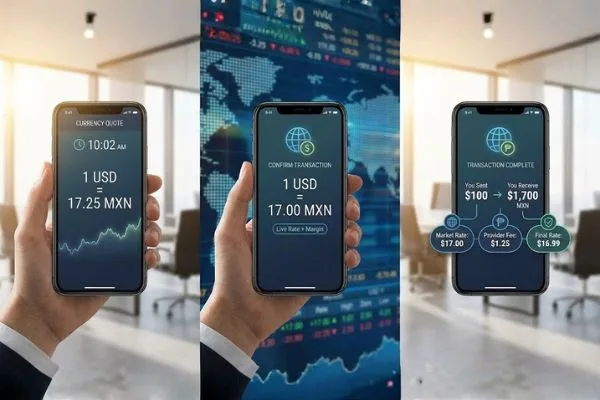
Currency exchange functions during real transactions by applying live market rates at the exact moment a conversion is completed.
This process determines the final amount received based on timing, provider pricing, and transaction authorization conditions.
What Currency Exchange Means At The Point Of Transaction
Currency exchange means swapping one currency for another at a quoted rate offered by a provider at that moment.
The exchange rate determines how much foreign currency you receive in return for your original currency amount.
Rates change constantly based on supply, demand, and market conditions affecting global currency trading.
For consumers, the applied rate reflects both market pricing and the provider’s operational margin.
Currency exchange at transaction time applies a live rate plus a provider margin, producing the final amount received.
How Exchange Rates Are Set And Displayed
Exchange rates originate from global currency markets where financial institutions trade currencies continuously throughout each business day.
Providers reference benchmark data, including official figures published in Federal Reserve foreign exchange rate data, and add a markup to cover risk, costs, and operational services.
The displayed rate usually differs from the mid-market rate seen on financial news or internet sources.
U.S. Treasury exchange rate policy guidance provides broader context on how governments monitor currency valuation internationally.
Knowing these differences helps users compare offers realistically before completing a transaction.
Common rate components include:
- Base market rate used as a reference
- Provider margin added for service coverage
- Timing adjustments based on transaction execution
When The Exchange Actually Occurs
The exchange occurs when the transaction is authorized, not when you initiate a quote or request information.
Rates can change between quote time and execution, especially during volatile market conditions or off-hours processing.
Some services lock rates for a short window, while others apply the rate at completion automatically.
Understanding timing prevents confusion if final amounts differ slightly from initial expectations.

Where Currency Exchange Takes Place For Consumers
Currency exchange takes place for consumers through several accessible channels designed to support everyday transactions.
These channels determine how currency is delivered, how rates are applied, and what steps consumers must complete.
1. Currency Exchange Through Physical Locations
Physical exchange locations include bank branches, airport kiosks, and licensed money service providers. These locations handle cash-based exchanges and often support related services such as check cashing services.
Convenience often comes with higher margins due to staffing, security, and cash handling requirements. Customers preparing cash transactions should confirm any identification or verification steps required by the provider beforehand.
Typical in-person exchange steps:
- Present identification if required by regulation
- Request a currency and amount
- Review and accept the quoted rate
- Complete the exchange and receive funds
2. Currency Exchange Through Digital Services
Digital currency exchange occurs through online platforms, mobile apps, or integrated payment services. These services convert currency electronically and deposit funds into accounts or deliver them to recipients, often alongside international money transfer services.
Digital exchanges often offer more competitive rates due to lower overhead and faster settlement processes. Consumers can review protections and disclosures outlined by the Consumer Financial Protection Bureau on sending money abroad before confirming transactions.
For international money transfers, federal regulations require providers to disclose exchange rates, fees, and the total amount received before the transaction is completed.
Users must ensure account details and recipient information are accurate before confirming transactions.
3. Currency Exchange Embedded In Payments
Many card payments and international transfers include automatic currency exchange without a separate user step.
The exchange happens behind the scenes using rates set by card networks or payment processors.
This convenience can obscure applied margins unless users review transaction disclosures carefully.
Some providers bundle these conversions within broader financial and payment services, making review especially important.
Awareness helps users decide whether to accept automatic conversion or choose alternatives.
What To Expect When Using A Currency Exchange Service
When using a currency exchange service, consumers should expect clear steps, required information, and defined timing for completion. Understanding costs, documentation needs, and processing speed helps prevent delays and unexpected outcomes during transactions.
Regulatory requirements apply to service providers, while customers follow the provider’s stated process during a transaction.
1. Fees And Costs Involved In Currency Exchange
Currency exchange costs include explicit fees, embedded margins, or a combination of both structures.
Some providers charge flat fees, while others rely entirely on rate markups for compensation.
The total cost appears in the final amount received rather than as a separate line item.
Consumer education programs such as the FDIC Money Smart program help explain how pricing affects financial decisions.
Reviewing disclosures ensures users understand the true exchange cost before confirming.
Common cost types include:
- Service or transaction fees
- Rate markups included in pricing
- Network or processing fees for cards
2. Information Required To Complete An Exchange
Most exchanges require basic personal information to meet regulatory and security requirements. Higher transaction amounts may trigger additional identification or documentation requests.
Money Services Businesses are required under the Bank Secrecy Act and FinCEN regulations to implement anti-money laundering programs, verify customer identity when required, and monitor certain transactions. Providers collect customer information as part of these regulatory obligations.
Providing accurate information prevents delays or cancellations during processing.
3. How Long Currency Exchange Takes
Cash exchanges usually complete immediately once approved at the service location.
Digital exchanges may process instantly or take several hours depending on delivery method.
International transfers involving exchange can take one to three business days. Timing depends on banking systems, processing cutoffs, and internal review steps used by providers.
Currency exchange timing varies by delivery method, with cash fastest and international digital transfers taking longer.
Conclusion
Currency exchange plays a critical role in everyday transactions by ensuring money can move smoothly across borders, platforms, and payment methods.
When you understand how rates are applied, where exchanges occur, and what costs or timing to expect, you reduce risk and gain control over your transaction outcomes.
Before completing any exchange, compare providers, review disclosures carefully, and confirm whether rates are locked or applied at authorization.
For broader context, you may explore currency exchange fundamentals for everyday transactions to build deeper familiarity.
As you prepare for your next transaction, choose a currency exchange service that aligns with your timing, delivery, and transparency needs.
Disclaimer: This content is for general informational purposes only and does not constitute financial, legal, or investment advice.
Frequently Asked Questions
Q: What Is Currency Exchange In Simple Terms?
A: Currency exchange converts one currency into another so payments can occur across borders.
- A provider applies a live rate
- A margin or fee is included
- You receive the converted amount
Q: When Does The Exchange Rate Actually Apply?
A: The rate applies when the transaction is authorized.
- Not when you request a quote
- Rates may change before completion
- Some services lock rates temporarily
Q: Why Does My Exchange Rate Differ From Online Rates?
A: Providers add margins to market rates.
- Market rate is a reference
- Margin covers costs and risk
- Final rate reflects total pricing
Q: What Information Is Required For Currency Exchange?
A: Requirements vary by amount and provider.
- Basic personal information
- Government-issued identification for higher amounts
- Accurate details prevent delays
Q: How Long Does Currency Exchange Usually Take?
A: Timing depends on the delivery method.
- Cash exchanges are immediate
- Digital exchanges may take hours
- International transfers take one to three business days

John is a Content & SEO Specialist who enjoys breaking down complex financial topics, like cross-border payments and money transfers, into content that’s easy to understand. He focuses on creating practical, search-driven content that helps people find answers and make informed decisions.