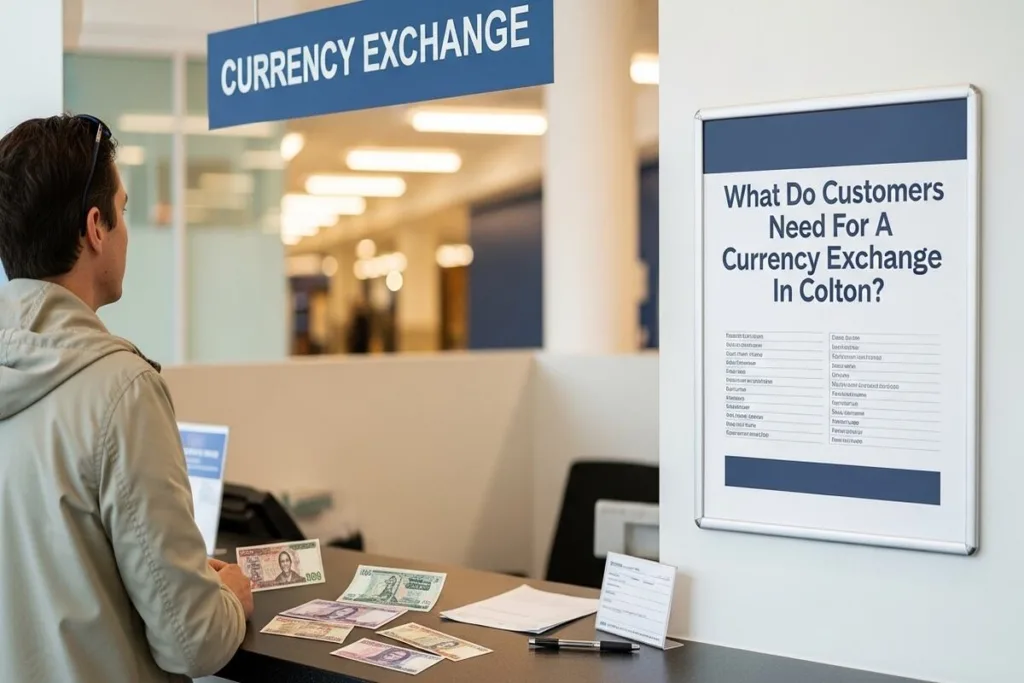
To complete a currency exchange in Colton, customers need to bring valid photo identification and, for larger transactions, proof of where their funds originated. Requirements vary by amount exchanged but typically include a government-issued ID and supporting documents like bank statements or tax returns. Agents verify identity, review documentation, and follow federal compliance rules before processing the exchange.
Understanding what to bring and how the process works helps customers avoid delays, meet legal thresholds, and complete transactions smoothly at any authorized Colton location. The steps described reflect both federal compliance standards and how Order Express handles currency exchange at its authorized branches, where applicable. For more context, see our full page on currency exchange services for consumers.
What You Need To Verify Your Identity For A Currency Exchange In Colton
Before completing a currency exchange in Colton, customers must meet specific identification and documentation requirements that help ensure safety, legitimacy, and compliance with federal regulations. These rules apply to everyone, whether you’re exchanging a modest amount or completing a higher-value transaction, and they vary depending on how much currency is involved.
Understanding which forms of ID are accepted, when extra documentation is needed, and how thresholds affect verification will help you avoid delays and complete your exchange with confidence. These verification steps reflect a combination of federal rules and Order Express procedures used at company-owned locations.
Quick Reference Table: What Customers Need for a Currency Exchange in Colton
The list below summarizes the essential requirements customers must meet before completing a currency exchange in Colton. These points reflect the core details explained throughout your article.
| Requirement | Why It Matters |
| Valid Government ID | Verifies identity and prevents fraud |
| Additional Documentation | Required for large exchanges |
| Source of Funds Verification | Ensures funds are legal and traceable |
| Threshold Awareness | Determines when ID or reports are required |
| Compliance Understanding | Avoids delays or denials |
| Required Items for Visit | Ensures smooth processing |
| Clear, Accurate Information | Helps transactions finalize efficiently |
These points outline everything customers must prepare for a successful currency exchange in Colton. With proper identification, documentation, and awareness of compliance rules, visitors can complete their transactions smoothly and confidently.
Valid Forms Of Identification Accepted In Colton Exchanges
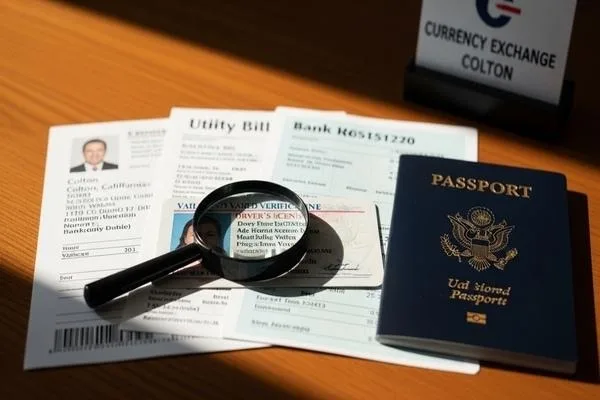
To complete a currency exchange in Colton, customers must present a valid form of government-issued photo identification. Acceptable forms include a U.S. driver’s license, state ID card, passport, or permanent resident card. These documents must be current, signed, and clearly display identifying information.
The ID types listed include those generally accepted under federal law as well as those permitted under Order Express policy, such as consular identification cards or a Mexican voter ID that meets expiration date criteria. If an ID lacks the necessary features, the exchange provider may deny the transaction based on noncompliance.
When Additional Documents Are Required
If you’re planning a large currency exchange, be prepared to provide proof of where your funds came from. Financial regulations require exchange agents to verify that high-value transactions involve money from a legal, traceable source. Order Express follows this requirement with its own documentation review process for certain exchanges at company-owned locations. You’ll need documents that match your identification and clearly confirm the legitimacy of the funds; without proper paperwork, your transaction may be delayed or declined.
Here are common examples of accepted documents:
- Recent bank statements showing the deposit or withdrawal
- Payroll stubs from your current employer
- Finalized property sale agreements
- Filed income tax returns from the current or prior year
Make sure these documents are valid, clear, and easy to verify. Agents will review them before authorizing your exchange, especially when large amounts are involved. If something doesn’t match or appears incomplete, the transaction may be placed on hold. Having the right paperwork ready helps you avoid unnecessary delays and keeps your transaction fully compliant. For further financial literacy on documentation, refer to the FDIC Money Smart consumer education program.
Minimum Thresholds For Customer Identification
In Colton, any customer conducting currency exchanges beyond a specific amount in a short timeframe must complete identity verification. This applies even if the exchange includes smaller transactions that together reach the applicable threshold.
Agents are trained to aggregate transactions within the designated time window and will request identification once the cumulative limit is met. Thresholds may vary based on the provider. At Order Express, our compliance team may review related activity across a defined time window to ensure transactions meet compliance requirements without overlap into unrelated policies.
Understand Transaction Limits & Reporting Thresholds In Currency Exchange
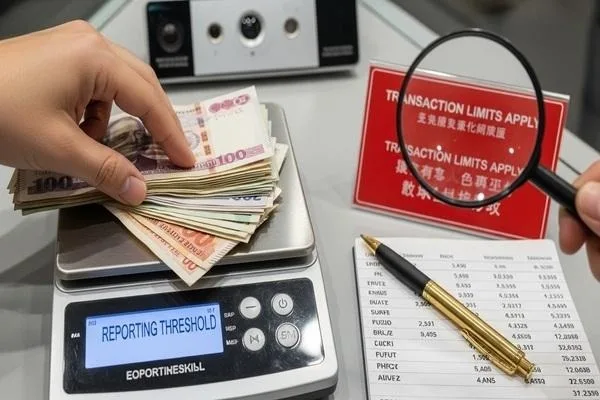
When customers complete a currency exchange, certain transaction amounts or behaviors may trigger mandatory regulatory reporting. To ensure transparency and prevent financial crimes, businesses must follow strict rules under the Bank Secrecy Act.
Understanding these thresholds, how agents detect structuring, and when suspicious activity is reported can help customers navigate the process confidently and avoid unintended delays.
Cash Transaction Thresholds For Reporting To FinCEN
Currency exchanges involving significant cash amounts require agents to submit a Currency Transaction Report (CTR) to FinCEN. These reports are mandatory even when multiple related transactions collectively exceed regulatory thresholds.
If an agent knows that smaller transactions are related, they must treat them as one and report the total accordingly. For the rules governing CTRs.
What Structuring Means And How To Avoid It
Structuring occurs when a customer splits one large transaction into smaller ones to avoid ID or reporting rules. This practice is illegal under federal law and considered a form of financial deception.
Agents are trained to identify structuring attempts and are required to report any suspicions to the compliance department. Transactions may be paused or denied if structuring is suspected.
Suspicious Activity Triggers And SAR Filings
Any transaction with unclear purpose, hidden ownership, or signs of criminal activity may trigger a Suspicious Activity Report (SAR). If activity appears suspicious, the business may be required to report it to the appropriate authorities. Reports are confidential.
SARs must be filed confidentially through the BSA E-Filing System within a set time period after the initial detection of suspicious behavior. Customers who want to better understand these protections can explore the Consumer Financial Protection Bureau’s guidance on safe financial practices.

Prepare For The In-Person Currency Exchange Experience At A Colton
When visiting a Colton location for a currency exchange, preparation helps ensure the process is quick, compliant, and frustration-free. Knowing what to bring, how agents verify your information, and why some transactions may be denied empowers you to complete your exchange without delay. Whether you’re exchanging a modest amount or handling a high-value transaction, understanding the on-site process reduces surprises and supports secure service delivery.
This guidance applies to locations that are operated by or affiliated with Order Express, and processes may differ at independently run exchange providers in Colton. For additional services offered at the same locations, you can explore money transfer solutions from Order Express.
What To Bring With You To The Location
Before visiting a currency exchange in Colton, bring a valid government-issued photo ID and any supporting documents for larger transactions. Have the currency amount ready in cash, and bring recipient details if needed for related services.
For high-value exchanges, bring documentation verifying where the money originated. The agent will check these materials before releasing any funds.
How Transactions Are Processed And Reviewed
When you arrive at a Colton location for a currency exchange, the agent verifies your identification, reviews the amount and documentation, and ensures everything meets compliance standards, with each transaction evaluated in real time to protect both the customer and the provider. Agents also screen for suspicious patterns or inconsistencies, and if any red flags arise, such as behavioral concerns, documentation gaps, or unusual transaction history, the process may be paused for further compliance review to prevent fraud and ensure all legal obligations are met. To learn about other regulated financial services offered on-site, visit Order Express check cashing services.
Here’s what agents typically verify before completing your currency exchange:
- A valid, government-issued photo ID that matches the transaction
- The source of funds documentation for larger amounts
- Any unusual activity or patterns in recent transaction history
- That the total amount does not trigger reporting thresholds without proper documentation
Once your information clears all internal reviews, the agent finalizes the transaction and issues a printed receipt for your records. This receipt serves as your proof of exchange and confirms the transaction was completed successfully. If anything is unclear during processing, you’re encouraged to ask questions on the spot to avoid delays. By understanding the review process, you can help ensure a smooth and efficient currency exchange every time.
What Happens If The Transaction Is Denied
Currency exchanges may be denied if identification is missing, documentation is incomplete, or structuring is suspected. Agents also have authority to refuse service when a transaction appears unlawful or violates internal policies.
If denied, the customer may ask for clarification and return with the correct information to complete the process successfully. Denials follow Order Express procedures at company-owned locations; independent providers may follow different review steps or policies. If you need additional help, use the Order Express contact form to reach a representative directly.
For more foundational knowledge on how currency exchanges operate, see our pillar page: Understanding Currency Exchange Services for Consumers.
Conclusion
Completing a currency exchange in Colton is straightforward when you’re prepared with the right documents, clear identification, and an understanding of transaction thresholds. By knowing what triggers compliance reviews and how agents process your request, you can avoid delays and ensure everything proceeds smoothly. Always bring a valid ID, stay within reporting limits, and be ready to show proof of funds for larger exchanges. Some policies may reflect federal law, while others may be part of Order Express’s internal compliance program. If you’re ever unsure, ask the agent on-site for guidance, they’re trained to support you through each step. Whether it’s your first time or a regular transaction, being informed helps protect your money and keeps the process efficient. Take the next step by visiting a trusted currency exchange provider in Colton and complete your transaction with confidence.
Disclaimer: This article is for informational purposes only and does not constitute legal or financial advice. Always follow official instructions from your currency exchange provider.
Ready to exchange currency in Colton? Contact Order Express location today and complete your transaction with confidence.
FAQs
What documents are required for a currency exchange in Colton?
Bring a valid government-issued photo ID. For larger exchanges, also bring supporting documents like bank statements or pay stubs that verify your source of funds.
What are the steps to complete a currency exchange in Colton?
- Present valid photo ID
- Provide source of funds documents if needed
- Agent verifies and screens the transaction
- Receive your exchange and printed receipt
When is a Currency Transaction Report (CTR) filed?
A CTR is filed when a transaction, or related transactions, exceeds federal reporting thresholds. This includes cash-in or cash-out activity during a single business day.
Federal rules may require reporting for certain cash transactions; the agent will guide you if your transaction triggers reporting.
What is structuring in currency exchange and how can I avoid it?
Structuring is splitting one large exchange into smaller ones to avoid ID or reporting rules. To stay compliant. Do not break up transactions to avoid reporting/ID requirements. If you have questions, ask the agent.
Why would a currency exchange transaction be denied?
Denials can occur due to missing ID, incomplete documents, suspected structuring, or irregular behavior. Customers can clarify issues and return with corrected information to proceed.
Note: Currency exchange services at Colton locations may be provided by independent businesses. Order Express does not directly operate all exchange points, and provider policies may vary based on ownership.

John is a Content & SEO Specialist who enjoys breaking down complex financial topics, like cross-border payments and money transfers, into content that’s easy to understand. He focuses on creating practical, search-driven content that helps people find answers and make informed decisions.