


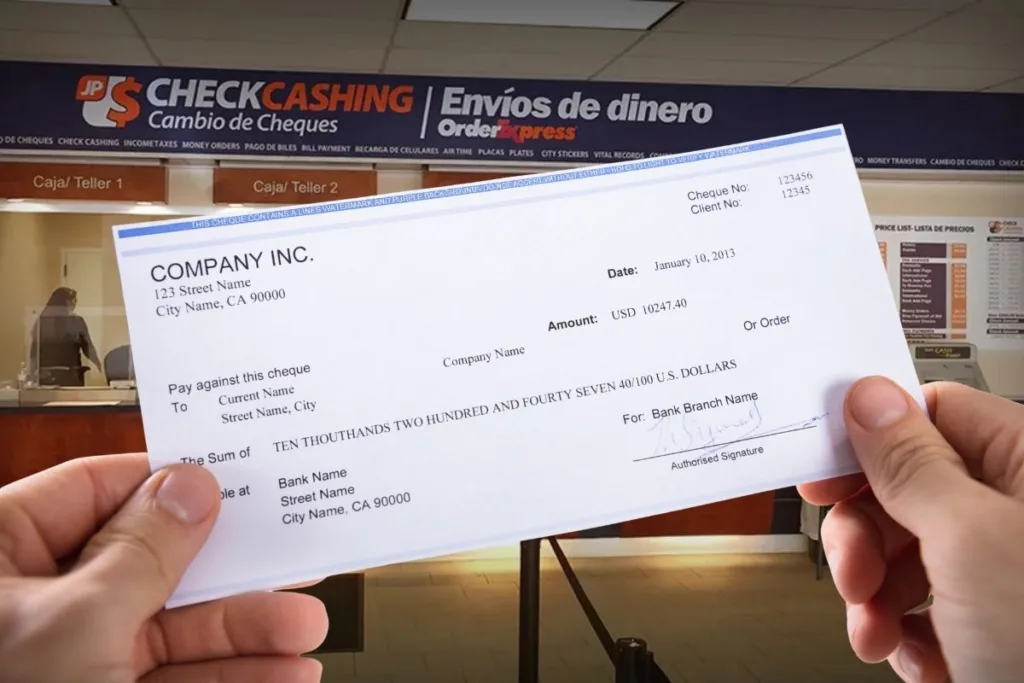
Check cashing services allow customers to exchange eligible paper checks for cash without depositing them into a bank account. Their main potential benefits are convenient access to funds, flexible service hours, and an option for people who do not use traditional bank accounts. Availability, verification, fees, and processing times vary by provider and location. Understanding these benefits alongside the costs and risks can help you decide whether check cashing is the right choice for your needs.
Before deciding whether a check cashing service is the right option, understanding how check cashing works provides valuable context on eligibility, verification, service fees, and the protections that support a secure transaction.
Understanding The Role Of Check Cashing Services
Check cashing plays an important role in today’s financial system by serving diverse needs across different communities. From people without bank accounts to those seeking faster access to funds, these services fill important gaps. To better understand their impact, it helps to look at who uses them, why they are chosen, and where they operate.
Who Uses Check Cashing?
Check cashing serves both unbanked and underbanked customers. Unbanked individuals have no bank account at all, often due to unpaid fees, poor credit history, or limited access to local banks. Underbanked individuals may have accounts but still rely on alternative services like money orders, prepaid cards, or check cashing.
Some customers simply prefer these services for their speed. Even those with active bank accounts sometimes choose check cashing because they cannot afford to wait days for deposited funds to clear. They may value the possibility of receiving cash sooner, depending on the provider’s verification process and whether the check is accepted.
Check cashing is also helpful for customers in rural areas. Not all communities have a nearby bank, and some households lack consistent internet access for mobile deposits. Local check cashing outlets give these communities a practical financial solution.
Why People Choose These Services
One reason people choose check cashing is the possibility of accessing funds without waiting for a deposited check to become available. Bank deposit availability depends on the check, account, and applicable rules. When bills are due or unexpected expenses arise, customers may compare the cost and timing of check cashing with their banking options.
Another factor is convenience. Many outlets are open during evenings and weekends, serving people who work long or irregular hours. Locations in grocery stores or community centers make it easier for customers to combine errands.
Finally, some individuals feel more comfortable with cash than with digital banking. For them, check cashing offers control, predictability, and confidence in managing day-to-day needs. Guides on financial literacy and consumer protection can also help households decide when it makes sense.
Where These Providers Operate
Check cashing outlets exist in nearly every city and town. They operate as standalone stores, part of retail chains, or within financial service centers. Many outlets also offer additional products such as bill payment, money transfers, and prepaid debit cards.
Availability varies by community, but check cashing providers can offer another way to access funds where traditional banking options are limited. You can explore Order Express branches to find a location and confirm which services are available before visiting.
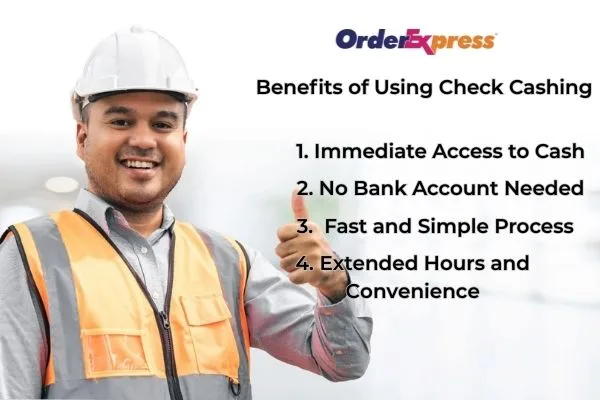
Benefits And Considerations Of Using Check Cashing
While check cashing can be a valuable service, it comes with both advantages and important trade-offs. For many customers, the speed and accessibility are clear benefits, but fees and potential risks should also be understood. By looking at the positives, the costs, and the challenges together, customers can make more informed choices about when and how to use these services responsibly.
Benefits of Immediate Access
A major potential benefit of check cashing is convenient access to funds. If a provider accepts the check and completes its verification requirements, the customer may receive cash without first depositing the check into a bank account. This can be useful when expenses are time-sensitive, although availability is not guaranteed and fees should be considered.
Check cashing outlets also offer extended hours. Unlike banks, which typically operate during business hours, many outlets remain open evenings and weekends. This flexibility makes financial services more accessible to workers with demanding schedules.
Another benefit is accessibility for some people who do not have a bank account or prefer not to deposit a check. Check acceptance and customer eligibility still depend on the provider’s requirements. For information about additional services, explore Order Express financial services.
Fees and Costs to Expect
Check cashing providers may charge a flat fee, a percentage of the check amount, or another fee permitted by applicable law. The amount depends on the provider, check type, and location. Customers should ask for the total fee and the cash amount they would receive before agreeing to a transaction.
Fee rules and service requirements vary by state and provider. Identification and additional verification may be required, and customers should not assume that checks below a particular amount are exempt. Comparing the full cost with bank, credit union, and retail alternatives can help customers choose an appropriate option.
For occasional use, the cost may be reasonable. However, frequent use can add up to hundreds of dollars each year. Over time, these fees reduce take-home income and can make it harder for households to build savings.
Risks and Challenges
Check cashing also carries certain risks. Carrying large amounts of cash can create safety concerns, especially when leaving an outlet in busy areas. Customers should plan ahead and use discretion when managing their money.
Cash received from a check cashing transaction is not a bank deposit protected by FDIC deposit insurance. FDIC insurance generally protects eligible deposits at insured banks if the bank fails; it does not insure cash carried by a customer against loss or theft. Customers should consider how they will store or use cash safely. Learn more from the FDIC’s deposit insurance guidance.
Frequent check cashing fees can add up over time. Customers who regularly receive paper checks may benefit from comparing the ongoing cost with a checking account, direct deposit, or other available options. Check cashing itself does not establish a credit history, so it should be evaluated separately from products intended to help build credit.
What To Check Before Using A Check Cashing Service
Check cashing providers may be subject to federal and state requirements, including applicable financial crime prevention and consumer protection rules. Requirements vary by provider, service, and jurisdiction. For customers comparing their options, the most useful questions concern fees, identification, check acceptance, and transaction documentation.
Ask About Fees and Check Acceptance
Before presenting a check, ask whether the provider accepts that type of check and what the transaction will cost. Check cashing fees and restrictions can vary, and the provider may need to review the check before deciding whether to accept it.
Bring Identification and Be Prepared for Verification
Providers may request identification or other information to verify a customer and evaluate a transaction. Requirements depend on applicable law and provider procedures. Bring an accepted form of identification and contact the location in advance if you are unsure what is needed.
Keep Your Receipt and Protect Your Information
Review the transaction details before leaving and retain your receipt. Share personal information only through the provider’s authorized channels. If you have questions about a charge or transaction, contact the provider using its official customer service information.
For a closer look at provider types and practical preparation, read Where Can You Use Check Cashing Safely And Legally Today after that article’s compliance corrections are completed.
Alternatives and Smart Use of Check Cashing
When Check Cashing Makes Sense
Check cashing may be useful when someone needs access to funds and does not want to wait for a bank deposit. It can be worth considering for time-sensitive expenses, provided the check is accepted and the customer understands the fees. Customers should compare the available options before relying on the funds for a deadline.
Check cashing may also be useful in communities with limited access to bank branches or where customers prefer an in-person service. Availability varies, so it is important to confirm that a nearby provider accepts the check type and offers the needed service.
For individuals with past banking problems, check cashing offers a bridge. It allows them to access funds while working toward rebuilding their relationship with traditional banks. Learning about your rights in remittance and transfers can also provide added financial confidence.
Alternatives for Regular Use
For recurring payments, direct deposit into an eligible bank or credit union account may reduce the need to cash paper checks. Account fees, deposit availability, and eligibility vary, so customers should compare terms.
Some prepaid cards support direct deposit and everyday purchases. Fees, account features, and protections vary by product; customers should review the card’s terms before choosing one.
Some financial institutions offer accounts designed for people who have had previous banking difficulties. These accounts may provide another way to receive payments and manage expenses, subject to their requirements.
Banks, credit unions, retailers, and grocery stores may also offer check cashing options, sometimes with different fees or eligibility conditions. Comparing the total cost and convenience of each option can help. The FDIC’s consumer education resources provide additional information about banking choices.
Tips for Using Check Cashing Wisely
- Compare fees: Ask about the full transaction cost and the amount of cash you would receive.
- Confirm requirements: Check which types of checks are accepted and what identification may be needed.
- Handle cash carefully: Plan how you will carry, store, or use the cash after the transaction.
- Keep records: Save receipts and review how much you spend on fees over time.
For questions about Order Express services, visit the official contact page.
Conclusion
Check cashing services can offer convenience, flexible access, and an alternative for people who do not use traditional bank accounts. The value depends on the fees, the provider’s requirements, and the customer’s circumstances. Comparing options, understanding the total cost, and handling cash carefully can help consumers make informed choices. For more information about the company, visit About Order Express.
Frequently Asked Questions
What are the key benefits of check cashing services?
Potential benefits include convenient access to cash, extended hours at some locations, and an option for people without traditional bank accounts. Availability and eligibility depend on the provider.
Who typically uses check cashing services?
Primarily the unbanked, underbanked, and individuals who need money quickly. Even some bank customers use it for speed and convenience.
What risks should I know before using check cashing?
Important considerations include transaction fees, the risk of carrying cash, and the fact that cash received is not an FDIC-insured bank deposit.
How much do check cashing services usually cost?
Fees vary by provider, check type, and location. A provider may charge a flat fee or a percentage of the check amount, subject to applicable rules. Ask for the total fee before completing a transaction.
What are alternatives to check cashing?
- Direct deposit into a bank account.
- Prepaid debit cards with deposit features.
- Second-chance checking accounts.
- Retailers or grocery stores with lower-cost check cashing.

John is a Content & SEO Specialist who enjoys breaking down complex financial topics, like cross-border payments and money transfers, into content that’s easy to understand. He focuses on creating practical, search-driven content that helps people find answers and make informed decisions.


