When you compare currency exchange providers, totals often differ for the same amount and currency pair. These differences can feel confusing when advertised rates appear nearly identical at first glance. Even trusted services like Order Express may display totals that differ from competitors. Variations typically result from how each provider structures margins, service fees and rate updates. Small pricing adjustments can significantly influence the amount of foreign currency you ultimately receive.
Exchange providers apply exchange rate spreads to cover operational costs and market risk exposure. Some include fees within the quoted rate, while others list charges separately before confirmation. Timing also matters because exchange rates fluctuate continuously during global trading hours.
Understanding these mechanics helps you compare providers using the final payout rather than headline rates. Reviewing full settlement details before confirming protects you from unexpected differences at checkout.
For a broader explanation of pricing foundations and operational flow, review our guide on how everyday currency exchange services work.

What factors directly change the final exchange amount?
Currency exchange totals vary because providers adjust rates and fees differently before calculating your final payout. Even when the mid-market rate remains identical across platforms, the delivered amount can still differ meaningfully. Providers apply pricing structures behind the scenes, which directly influence how much foreign currency you receive.
Note: Currency exchange providers independently determine customer rates based on market conditions, liquidity access, operational costs and risk management policies.
Exchange rate margins reduce the amount you receive
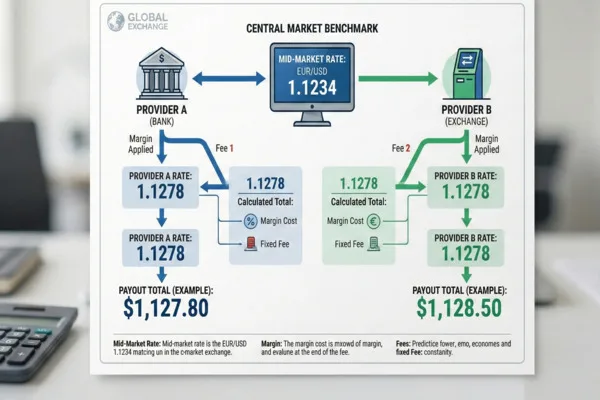
Exchange rate margins represent the difference between the mid-market rate and the provider’s offered customer rate. The mid-market rate reflects the neutral value between global buy and sell prices at a given moment. Most currency exchange providers apply a margin to generate revenue on each completed transaction.
The quoted rate therefore includes built-in costs rather than matching the live market benchmark. Public benchmark data such as the Federal Reserve H.10 foreign exchange rate release shows reference rates used for reporting purposes, but customer-facing rates include provider spreads.
Even small margin adjustments can significantly affect totals when exchanging larger currency amounts. For example, a one percent difference on a $5,000 exchange changes the payout by $50. Margins often vary depending on market volatility, transaction size or delivery method selected. Understanding how margins work helps you focus on the final payout instead of the advertised rate.
Note: Exchange rate margins are embedded in the quoted rate rather than shown as separate fees.
Fees may appear separately or be built into the rate
Currency exchange providers structure fees in two common ways, which directly impact totals. Some display transparent service fees in addition to the quoted exchange rate. Others advertise zero fees while embedding costs inside a less favorable rate.
When comparing services, focus on the final amount you will receive, not the headline rate. Providers may include:
- Flat transaction fees
- Percentage-based service charges
- Delivery or pickup fees
- Card processing costs
Consumer education resources such as the FDIC Money Smart financial education program explain how fee transparency supports informed financial decisions. A provider advertising no fees may still deliver a lower payout due to rate adjustments. Always review the total settlement figure before confirming your transaction.
Note: The total payout matters more than whether a provider labels costs as fees.
Timing and market movement affect real-time quotes
Currency exchange rates fluctuate continuously due to global trading volume, economic data releases and geopolitical developments. As explained in the U.S. Treasury exchange rate policy overview, exchange rates reflect ongoing market supply and demand dynamics rather than fixed government pricing.
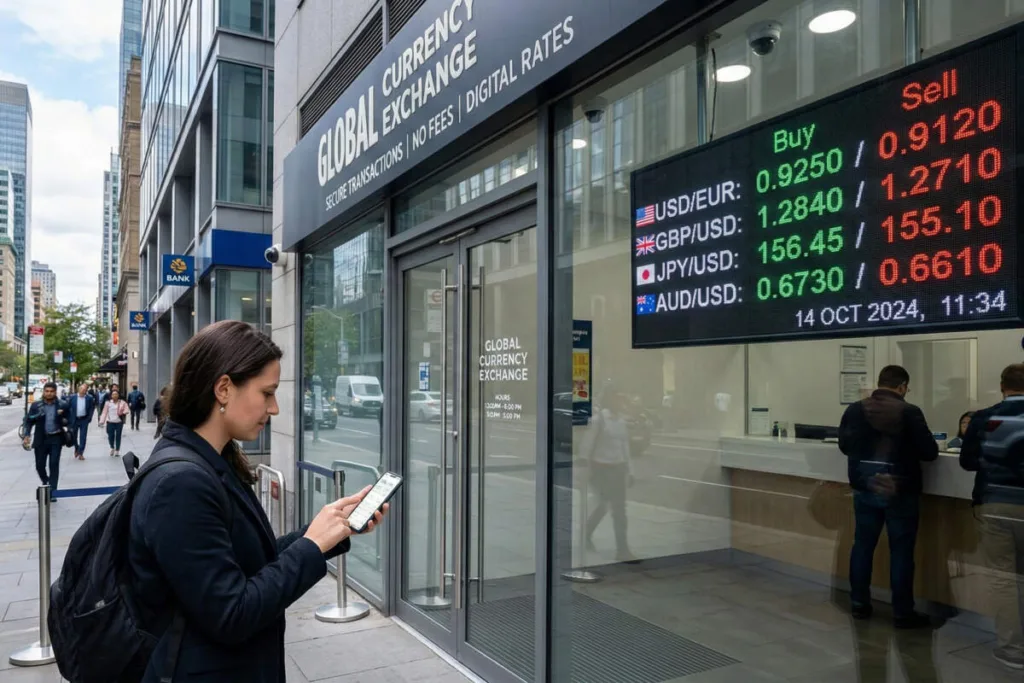
Providers update their quoted rates at different intervals depending on technology and liquidity access. A rate displayed even minutes earlier may already reflect different underlying market conditions.
When markets move quickly, totals can change between the moment you check and the moment you confirm. Some services refresh pricing every few seconds to match live interbank movements. Others update less frequently, which can temporarily display rates that lag behind active markets.
These timing differences explain why two platforms can show different totals simultaneously. The variance does not always signal hidden fees or unfair pricing practices. Instead, it often reflects how quickly each provider integrates real-time market data into customer quotes.
Compare the final payout, not just the rate
The most reliable way to compare providers is by calculating the exact foreign currency you will receive. Multiply your source amount by the quoted exchange rate and subtract any clearly listed service fees. This step reveals the actual settlement total rather than relying on advertised rate figures alone.
If you plan to send funds internationally after converting currency, reviewing guidance from the Consumer Financial Protection Bureau on sending money abroad can help you understand total cost disclosures and protections.
A provider may promote a slightly stronger rate while adding a flat transaction fee. In that case, your final payout could be lower despite the better headline rate. Another provider might offer a modestly weaker rate but charge no additional fees.
That structure can sometimes result in a higher overall payout after calculations are complete. Always review the full settlement breakdown before confirming your transaction. The final delivered amount remains the only accurate comparison metric between currency exchange services.
For customers who convert funds as part of a broader transaction, services such as secure money transfer services may also influence how total costs are structured.
Note: The correct comparison metric is the final currency delivered after all adjustments.
Check quote validity and timing rules
Quotes may expire quickly due to live market fluctuations, which can alter totals. Some providers lock the rate once you initiate payment, while others lock only after funds settle. Understanding this timing prevents confusion if totals shift unexpectedly.
Before transacting, confirm:
- How long the quote remains valid
- When the rate becomes fixed
- Whether cancellation penalties apply
These details clarify whether the displayed total will remain unchanged during processing. Federal reporting and compliance requirements, including Currency Transaction Report obligations under 31 CFR 1010.311 issued by FinCEN, apply to financial institutions when certain thresholds are met. These regulatory frameworks shape how transactions are processed and documented, though they do not change the exchange rate itself.
If your exchange also involves related financial services such as check cashing, confirm how timing and settlement rules interact across services.
How do service models influence pricing differences?
Service models influence pricing because operational costs and risk exposure vary between providers. Physical locations, online platforms and airport kiosks all operate under different cost structures. Those structural differences translate into rate adjustments or service fees.
Physical locations have higher overhead costs
Brick-and-mortar currency exchange counters carry significant operational expenses that directly influence their pricing structures. Rent, employee wages and on-site security create fixed costs that online platforms often avoid. Providers incorporate these expenses into wider exchange spreads to maintain sustainable business operations.
Locations inside airports and major tourist districts typically apply even higher margins. These environments generate strong demand from travelers who prioritize speed and accessibility. Limited competition in secure terminals also reduces pressure to offer tighter rates.
When you exchange currency at an airport kiosk, you often pay for immediate service convenience. Providers price transactions higher to offset overhead and fluctuating daily transaction volumes. As a result, airport totals frequently appear lower than those offered by banks or digital platforms.
Note: Higher overhead often leads to wider exchange spreads for in-person transactions.
Online platforms reduce some operational expenses
Online currency exchange platforms operate with lower overhead compared with traditional brick-and-mortar exchange counters. They eliminate storefront rent, reduce staffing requirements and centralize operations through digital infrastructure. These efficiencies often allow providers to offer narrower exchange spreads than physical locations.
However, lower operating costs do not automatically guarantee the most competitive rate. Pricing still depends on transaction volume, currency liquidity and internal risk management policies. Providers adjust margins based on market exposure and anticipated settlement timing.
Digital services may also enforce minimum amounts or delivery thresholds for preferred pricing tiers. If your exchange falls below certain limits, the quoted rate may widen slightly. Always review the complete cost breakdown before assuming an online provider offers the best overall value.
Banks follow internal rate schedules
Banks publish exchange rates based on internal pricing models and liquidity strategies. These rates may not match independent exchange specialists or online platforms. Banks also sometimes differentiate between account holders and walk-in customers.
Internal policies can influence:
- Minimum transaction amounts
- Preferred currency inventory levels
- Relationship-based pricing adjustments
Because banks prioritize financial stability over competitive retail pricing, totals may appear less favorable. Always confirm the net payout before completing the exchange.
Review transparency before confirming payment
Transparent providers clearly display rate, fees and total payout before confirmation. If a service hides fees until the final step, proceed cautiously. Clear breakdowns indicate predictable pricing and reduce last-minute surprises.
Look for these transparency signals:
- Real-time rate display
- Explicit fee disclosure
- Locked-in rate confirmation
- Clear expiration timing for quotes
If you need clarification before completing a transaction, reaching out through the Order Express contact page can help ensure you understand settlement details in advance.
These elements help ensure the amount shown matches the amount delivered. Reliable services allow you to review every detail before final authorization.
Conclusion
Currency exchange totals vary because providers apply different margins, fee structures and rate update practices. Even small differences in spreads or timing can noticeably affect the final amount you receive. Service models, operational costs and internal pricing policies further shape how each provider calculates totals. That is why comparing only the advertised rate often leads to misleading conclusions.
Instead, calculate the exact payout after all fees and confirm when the rate becomes locked. Review transparency signals and quote validity before authorizing payment. Order Express clearly displays rates and settlement details so you can evaluate your transaction with confidence. Before completing your next exchange, compare the full payout and choose a provider that prioritizes clarity. When you are ready, check your live rate with Order Express and secure your currency with confidence.
Disclaimer: This article provides general educational information about currency exchange pricing structures. It does not constitute financial advice or guarantee specific exchange outcomes. Rates and fees vary by provider and market conditions at the time of transaction.
Order Express operates as a Money Services Business (MSB) and complies with all applicable federal and state regulations, including the Bank Secrecy Act (BSA), FinCEN reporting requirements and anti-money laundering (AML) obligations.
FAQs
Why do two providers show different totals for the same exchange amount?
Providers apply different exchange rate margins, fee structures and update intervals, which directly affect the final payout calculation.
How can I accurately compare currency exchange offers?
Multiply your amount by the quoted rate, subtract all fees and compare the final foreign currency delivered.
Do exchange rates change throughout the day?
Yes, exchange rates fluctuate continuously based on global trading activity, economic data releases and market demand.
Are airport currency exchange services more expensive?
Airport locations often charge wider spreads due to higher overhead costs and strong demand for convenience.
When does a quoted exchange rate become fixed?
A rate becomes fixed only when the provider confirms it is locked, which may occur at payment initiation or settlement.

Alvin is a Content and SEO Specialist who creates clear and helpful content about money transfers and payment systems. He focuses on making complex topics easy to understand so readers can learn how these services work in everyday situations.