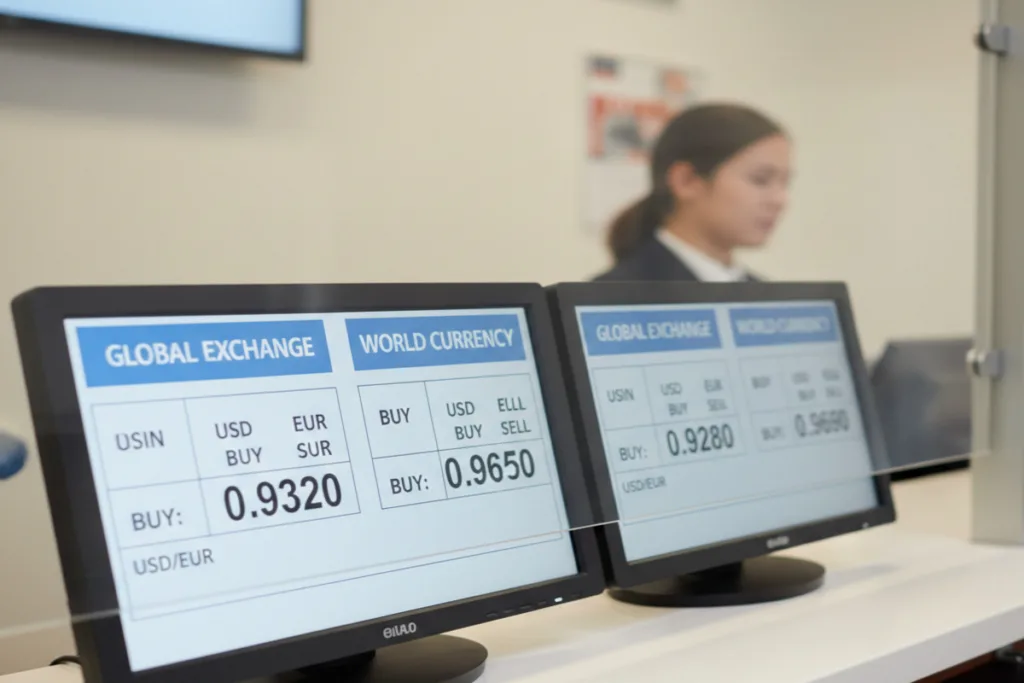
Retail currency exchange providers often display different conversion totals because each sets independent pricing policies and operational costs. If you are preparing to exchange money for travel or send funds internationally, those differences directly affect your final payout. Even small variations between providers can change the amount you receive after completing your transaction. Understanding why these variations occur helps you choose a provider confidently and avoid unexpected costs at checkout. This guide explains the exact factors influencing retail conversion differences and how they impact your transaction amount, including how established financial service companies such as Order Express operate within this competitive environment.
Retail providers operate under different business models that influence how they calculate exchange rates for customers. Some focus on high transaction volume with narrower spreads, while others prioritize higher margins per exchange. Operational expenses such as staffing, compliance requirements and currency inventory management also shape pricing decisions. These internal considerations lead to noticeable differences in quoted rates across locations and platforms.
Market timing and service structures further contribute to rate variation between competing providers. Exchange rates fluctuate throughout the day, and providers update customer pricing on different schedules. Additional service fees or payment processing costs can also change the final amount you receive. Reviewing the full transaction breakdown helps you identify the most cost-effective option available.
For broader insight into why conversion rates differ from one counter to another, review our pillar guide, Understanding How Everyday Currency Exchange Services Work. That overview provides essential context to help you evaluate retail provider differences and avoid paying more due to unclear pricing structures.
Retail exchange providers apply different exchange rate markups
Retail providers rarely use the mid-market rate you see online because they must include operating margins within displayed prices. That markup creates the first and most visible reason currency conversions vary between providers at the point of sale.
Note: Rates and fees may vary by location, payment method, and time of day, and are subject to change.
Providers build margins into the quoted rate
Most retail currency exchange providers adjust the base interbank rate before presenting it to customers online or in branches. They incorporate a margin that reflects operational costs, liquidity risk and expected profit for each transaction. This adjusted figure becomes the customer-facing rate rather than the raw market rate you may see elsewhere. Even small percentage differences between providers can significantly affect your final payout, especially on larger exchanges.
The interbank rate changes continuously during global trading hours based on supply and demand conditions. Public benchmark data, including Federal Reserve foreign exchange rate releases (H.10), illustrate how reference rates move throughout trading sessions. Retail providers decide how quickly to pass those movements through to their customer pricing. Some update rates frequently throughout the day, while others adjust pricing at scheduled intervals. These update policies can create noticeable differences between providers during periods of currency volatility.
Margins also account for inventory exposure when providers hold physical or digital currency reserves. If a provider anticipates market swings, it may widen its spread to reduce potential losses. Another provider with different risk tolerance may maintain tighter pricing temporarily. Understanding this margin structure helps you interpret why quoted rates differ at the point of exchange.
Note: Retail providers do not typically use the live interbank rate without adjustments.
Instead, they display a customer rate that already includes their margin and risk considerations.
Risk management policies affect pricing decisions
Each retail currency exchange provider evaluates market volatility and liquidity exposure differently when setting customer conversion spreads. If a currency begins moving rapidly, one provider may widen its spread to limit potential losses. Another provider may temporarily maintain narrower pricing based on internal forecasts or hedging arrangements. These risk management decisions create legitimate differences in the rates displayed across branches and digital platforms.
Providers also monitor internal currency inventory levels when determining the rates offered to customers. A branch experiencing strong demand for euros may increase its margin to manage limited supply. Conversely, a location holding surplus inventory may narrow its spread to encourage transactions. These adjustments reflect stock management strategy rather than arbitrary pricing differences.
Retail currency businesses in the United States operate under federal compliance frameworks administered by agencies such as the Financial Crimes Enforcement Network (FinCEN). These legal obligations apply to financial institutions and include anti money laundering monitoring and reporting standards. Compliance costs and oversight responsibilities can indirectly influence operational pricing structures across providers.
When reviewing exchange options, recognize that rate variation often signals differing risk tolerance and inventory conditions. Providers balance customer competitiveness with financial protection in constantly changing currency markets. Understanding this dynamic helps you interpret rate differences without assuming one provider is inaccurate.

Additional fees and service structures change the final amount
The second major reason currency conversions vary involves fees that apply beyond the displayed exchange rate. Some providers advertise competitive rates while recovering revenue through structured service charges during checkout. Consumers can review educational materials from the Consumer Financial Protection Bureau on sending money abroad to better understand how total costs affect cross border transactions.
Transaction fees alter the effective conversion rate
Retail currency exchange services sometimes charge flat fees or percentage-based commissions on each transaction. Even when the headline rate appears strong, added charges reduce the amount you ultimately receive. Many financial education programs, including the FDIC Money Smart consumer education program, encourage reviewing full fee disclosures before completing financial transactions.
Common fee structures include:
- Flat transaction fees applied regardless of exchange size
- Percentage-based commissions calculated on the total exchanged amount
- Delivery or branch pickup service charges
If two providers show similar rates but one adds a five percent commission, your effective rate changes noticeably. Always calculate the total you receive after fees rather than comparing rate displays alone.
Note: The effective exchange rate equals the final payout divided by the amount you provided.
This calculation reveals the true cost of conversion more accurately than the posted rate alone.
For customers who also use related financial services, reviewing transaction structures across services such as check cashing services can reinforce the importance of understanding total payout amounts rather than headline figures.
Payment method influences total conversion cost
The payment method you select can directly influence the total conversion amount quoted by a provider. Retail currency exchange services sometimes adjust pricing to reflect costs associated with different payment types. Card payments often involve processing fees that providers incorporate into the final exchange calculation. As a result, the effective rate may differ from what you would receive using cash.
Cash transactions may carry separate handling, storage and security considerations that affect operational expenses. Some providers reflect those costs through slightly adjusted spreads or service charges at the counter. Online transfers can also receive different pricing due to lower staffing and physical infrastructure requirements. Digital processing efficiencies occasionally allow providers to offer marginally improved rates for certain transactions, similar to how pricing structures are disclosed in money transfer service models.
Before confirming your exchange, review whether your selected payment method changes the final quoted payout. Ask for the total amount you will receive after all adjustments have been applied. This verification step helps you compare providers accurately and avoid unexpected differences at authorization.
Market timing affects the rate you receive
Currency values fluctuate continuously during global trading hours based on real-time supply and demand conditions. Exchange rate policy analysis published by theU.S. Treasury Department on exchange rate oversight explains how global economic forces influence currency valuation trends. If you compare retail providers at different times, normal market movement may explain noticeable pricing differences. These changes do not necessarily reflect better or worse policies between competing services.
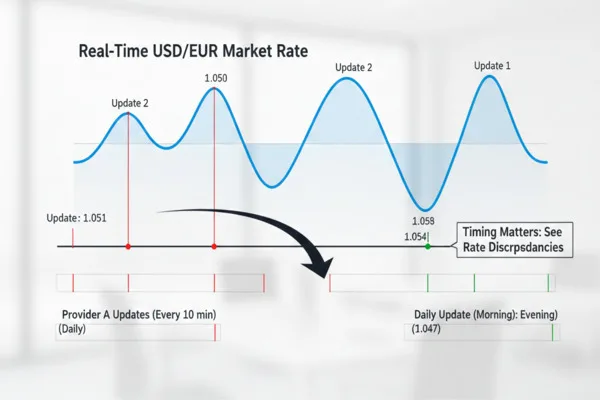
Even within the same hour, providers may update their customer rates on different schedules. One branch might refresh pricing every 15 minutes, while another updates only several times daily. Online platforms may adjust automatically, while physical counters rely on internal update procedures. These timing differences can create short-term discrepancies between displayed conversion totals.
When evaluating options, compare rates within a narrow time window to improve accuracy. This approach helps you isolate provider pricing differences from broader market fluctuations. Asking when the rate was last updated can also clarify whether timing influenced the quote. Careful timing comparisons support more confident transaction decisions.
Note: Exchange rates are dynamic and reflect global currency supply and demand conditions. Retail providers adjust their customer rates in response to these market movements.
Physical location impacts operational pricing
Geographic location influences operating costs, which indirectly shape conversion pricing across retail providers. Airport kiosks, for example, often face higher rental expenses than neighborhood financial service centers.
Higher overhead can result in wider spreads or additional fees to maintain profitability. Conversely, providers operating in lower-cost areas may offer tighter margins in competitive markets.
Location-based pricing differences commonly reflect:
- Rental and staffing costs within premium commercial areas
- Local competition levels among nearby exchange providers
- Volume of tourist or business traveler demand
If convenience matters, you may accept slightly higher pricing for immediate access in transit hubs. If cost matters more, comparing providers outside high-traffic zones can improve your net payout. You may also request clarification directly through a provider’s customer support contact page to understand location-based pricing factors.
Key takeaways
- Currency conversions vary between retail providers because each controls its own pricing structure and operational model.
- Rate markups, internal risk policies and supply management create visible differences across competing services.
- Additional transaction fees and payment method adjustments further influence the effective exchange amount.
- Timing and physical location also affect pricing due to market movement and operating cost differences.
- Always compare total payout amounts, not just posted rates, before completing your exchange.
Conclusion
Currency conversion differences are not random, and they rarely indicate mistakes or hidden manipulation. They reflect each provider’s margin strategy, fee structure, risk tolerance and operational costs. When you understand these factors, you move from guessing to calculating. Always compare the effective rate, confirm total payout and check whether timing or payment method changes the outcome. Small percentage differences can significantly impact larger transactions.
Taking a few extra minutes to review the full breakdown protects your money. Order Express prioritizes transparent pricing and clear transaction details so you know exactly what you receive. Before completing your next exchange, review the total amount, ask questions and choose the provider that delivers clarity and value. Make informed currency decisions today by checking your rate and confirming your final payout in advance.
Disclaimer : This article provides general educational information about retail currency exchange pricing structures. It does not constitute financial advice or recommendations for any specific provider or transaction.
Order Express is registered with FinCEN as a Money Services Business (MSB) under the Bank Secrecy Act (BSA). We maintain an anti-money laundering (AML) program, including customer identification procedures (as applicable), monitoring, and recordkeeping consistent with federal and state requirements.
FAQs
Why do two providers show different rates at the same time?
Providers use different margins, update schedules and risk policies, which can create visible rate differences even within the same market conditions.
What is the effective exchange rate?
The effective exchange rate is the actual rate you receive after all fees, commissions and adjustments are included in the final payout.
Do exchange rates change during the day?
Yes, exchange rates fluctuate throughout global trading hours based on supply, demand and economic activity.
Are airport currency exchange services always more expensive?
Airport locations often have higher operating costs, which can result in wider spreads or additional service fees.
How can I reduce costs when exchanging currency?
Compare total payout amounts, review fee structures, confirm payment method impacts and check when the rate was last updated.

Alvin is a Content and SEO Specialist who creates clear and helpful content about money transfers and payment systems. He focuses on making complex topics easy to understand so readers can learn how these services work in everyday situations.