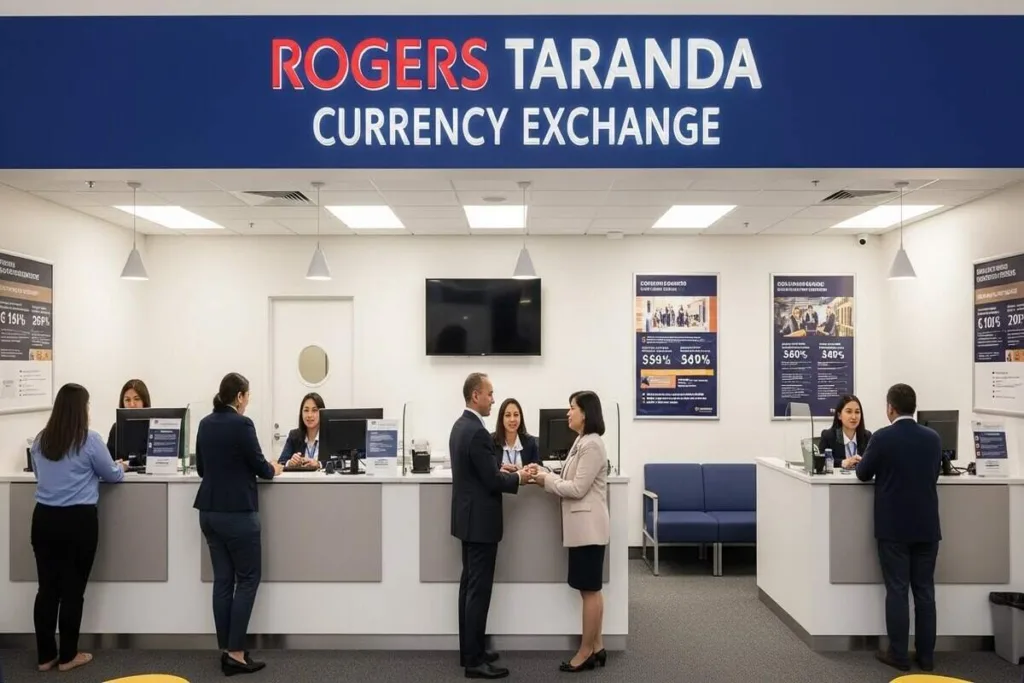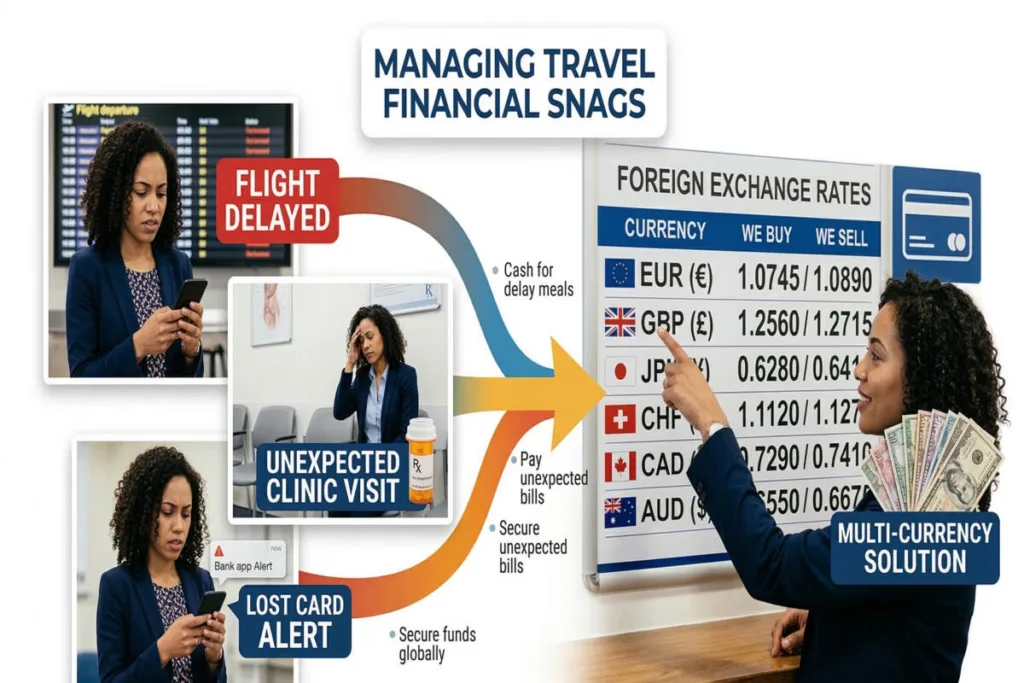
Unexpected expenses often require immediate access to local currency when traditional payment methods are unavailable or delayed. Currency exchange becomes useful when urgent costs arise during travel, cross-border work, or international transactions that require physical cash. Understanding when to use exchange services helps you avoid higher fees, payment disruptions and unnecessary financial stress during emergencies.
For a broader overview of service mechanics, review our pillar guide on how everyday currency exchange services work, which explains rates and service structures clearly.
What types of unexpected expenses require immediate currency exchange?
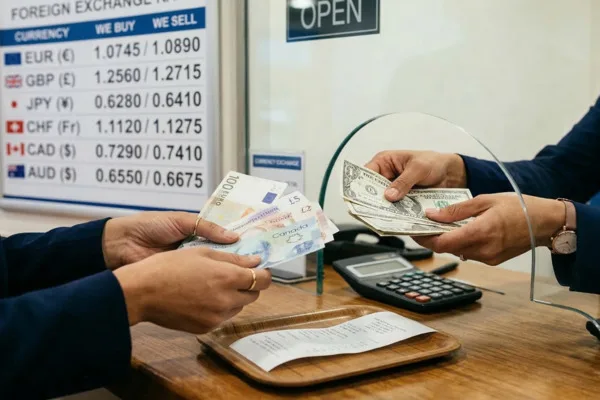
Certain urgent situations demand physical local currency because digital payments or cards may not be accepted. Currency exchange is especially helpful when timing and location limit access to banking services.
Note: Exchange rates and fees vary by location, market conditions, and transaction size. Customers should review posted rates before completing a transaction.
Emergency travel costs that require local cash
Emergency travel costs often require local cash when transport providers or small vendors do not accept cards. Situations like last-minute taxis, roadside assistance or urgent ticket changes may require immediate payment in local currency.
These situations commonly include:
- Paying a taxi driver after a missed flight connection late at night
- Covering baggage penalties when airport systems temporarily decline foreign cards
- Purchasing replacement tickets from smaller regional transit operators
In these moments, accessing a currency exchange service ensures you can settle costs without delay or negotiation stress. If you need to locate a nearby provider quickly, reviewing available Order Express branch locations can help you plan access efficiently.
Medical or safety-related expenses abroad
Medical or safety-related expenses abroad may require upfront cash before treatment or assistance is provided. Smaller clinics, pharmacies or local authorities sometimes request immediate payment in domestic currency without processing international cards.
Examples include:
- Paying for urgent prescriptions after losing essential medication
- Covering minor injury treatment at a walk-in clinic
- Settling police or municipal documentation fees
Currency exchange services allow you to convert funds quickly so you can focus on resolving the emergency rather than locating an ATM. For additional consumer protection guidance, review the Consumer Financial Protection Bureau resources on sending money abroad.
Temporary banking or card access disruptions
Temporary banking disruptions can prevent card approvals even when sufficient funds are available in your account. Fraud alerts, network outages or international transaction blocks may interrupt payments at inconvenient times.
Note: Currency exchange becomes useful when digital payment systems fail and immediate local currency resolves the transaction barrier.
When cards decline unexpectedly, exchanging a small amount of currency can bridge the gap while your financial institution resolves the issue. Financial institutions that provide exchange services operate under reporting and monitoring obligations established by FinCEN under the Bank Secrecy Act, which apply to institutions rather than individual customers.
How does currency exchange provide flexibility during financial surprises?
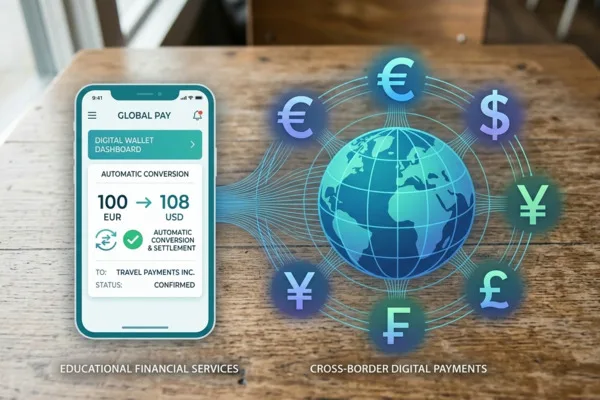
Currency exchange offers liquidity and flexibility when unexpected expenses disrupt carefully planned travel budgets. It gives you control by converting available funds into usable local cash without relying entirely on electronic approvals.
Immediate liquidity without relying on ATMs
Immediate liquidity is often necessary when nearby ATMs are unavailable, closed or experiencing service interruptions. In tourist areas or transportation hubs, exchange counters may remain accessible beyond standard banking hours.
Currency exchange is particularly helpful when:
- ATMs impose withdrawal limits below your urgent expense amount
- Machines temporarily run out of cash in high-traffic locations
- Your card issuer blocks foreign ATM withdrawals
Exchanging currency directly provides predictable access to funds without depending on machine availability. For practical financial education tools, consult the FDIC Money Smart consumer education program.
Predictable access to accepted payment formats
Predictable access to accepted payment formats reduces stress when vendors clearly prefer domestic cash transactions. Some service providers offer faster assistance when payment occurs in local currency rather than through international processing systems.
Note: Currency exchange supports transaction certainty by aligning your payment format with local acceptance preferences.
When you understand how everyday currency exchange services work, you can anticipate fees, identification requirements and rate differences before initiating the transaction. According to Federal Reserve foreign exchange rate data, exchange rates fluctuate regularly, which reinforces the importance of converting only what you need during urgent situations.
Bridging short-term gaps between currencies
Bridging short-term currency gaps allows travelers to handle immediate costs without transferring large sums unnecessarily. Converting only what you need reduces exposure to rate fluctuations while maintaining financial flexibility.
Consider exchanging smaller amounts when:
- Waiting for an international wire transfer to clear
- Anticipating reimbursement from an employer or insurer
- Managing daily expenses until card access resumes
This targeted approach keeps your funds accessible while minimizing unnecessary conversion volume. If you later need to move funds across borders, structured options such as international money transfer services may provide an alternative to large cash exchanges.
When digital payments are fully functional
Digital payments are preferable when systems function properly and vendors accept international cards without added fees. Using your existing payment method may provide stronger exchange rates than physical currency conversion.
Before exchanging money, confirm:
- Whether the vendor accepts card payments without surcharge
- If your bank offers competitive international transaction terms
- Whether mobile payment platforms are widely accepted locally
If digital systems operate normally, exchanging cash may introduce unnecessary costs. Broader oversight context is available through U.S. Treasury exchange rate policy guidance.
When exchange rates significantly impact large transactions
Exchange rates matter more when converting larger sums that exceed immediate emergency needs. Small emergency exchanges typically limit exposure, but large conversions can magnify rate differences.
Note: Currency exchange is best for short-term urgent needs rather than substantial planned expenditures.
If you are evaluating provider credentials before completing a large transaction, reviewing the company background on the Order Express about us page can provide helpful context.
When fees outweigh the urgency of the expense
Fees should be evaluated carefully when the unexpected expense is minor or can be delayed. Exchange margins, service charges or location premiums may exceed the convenience benefit.
Ask yourself:
- Can the expense wait until card access is restored
- Is there a nearby ATM with lower fees
- Does the vendor accept delayed or partial payment
Using currency exchange strategically prevents overpaying simply for convenience. If you need clarification about documentation requirements before visiting a location, you can use the Order Express contact page to ask specific questions.
Key takeaways:
- highlight that currency exchange serves practical purposes during urgent, cash dependent situations abroad for prepared travelers worldwide.
- It becomes especially useful when electronic payments fail, timelines tighten, or recipients require specific denominations for immediate settlement locally.
- Understanding these triggers helps you approach a currency exchange counter with clarity and confidence during stressful moments abroad overseas.
Conclusion
Unexpected expenses rarely arrive at convenient moments, especially when you are traveling or managing cross-border obligations. Currency exchange becomes a practical solution when cash is required immediately and digital systems fail or stall. By recognizing situations that demand local currency, you can act quickly without overreacting or overconverting funds. Focus on urgency, accepted payment formats and transaction size before making a decision. Small, strategic exchanges often solve short-term disruptions while protecting your broader budget.
Planning ahead also strengthens your response during stressful moments abroad. Order Express helps you prepare by offering reliable currency exchange services designed for speed and clarity. Before your next trip or international transaction, identify a trusted provider and understand the process. Take control of unexpected costs by securing access to local currency when it matters most.
If you anticipate travel or cross-border payments, locate a reputable currency exchange provider in advance to ensure smoother transactions when unexpected expenses arise.
Disclaimer: This article provides general educational information and does not constitute financial or legal advice. Always review current rates, identification requirements and service terms before completing any currency exchange transaction.
Order Express is registered with FinCEN as a Money Services Business (MSB) under the Bank Secrecy Act (BSA). We maintain an anti-money laundering (AML) program, including customer identification procedures (as applicable), monitoring, and recordkeeping consistent with federal and state requirements.
FAQs
What types of unexpected expenses usually require local cash abroad?
Emergency transport, small medical clinics, local documentation fees and independent service providers often require immediate payment in domestic currency.
How much currency should I exchange during an emergency?
Exchange only the amount necessary to cover immediate expenses, which helps limit exposure to rate fluctuations and service fees.
Can currency exchange help if my international card keeps declining?
Yes, exchanging a small amount of cash can help you complete urgent payments while resolving issues with your bank.
Are exchange counters available outside regular banking hours?
Many exchange counters operate in airports, transit hubs and tourist areas where extended hours support urgent traveler needs.
How can I reduce fees when using currency exchange services?
Compare rates in advance, avoid converting large sums unnecessarily and confirm whether digital payments remain a viable alternative.

Alvin is a Content and SEO Specialist who creates clear and helpful content about money transfers and payment systems. He focuses on making complex topics easy to understand so readers can learn how these services work in everyday situations.