


Smudging ink on a Money Order affects how financial institutions verify the document. A licensed money transfer provider must confirm each detail before accepting a payment. Any unclear field can delay processing because businesses follow strict compliance standards designed to prevent fraud.
Customers want to know whether their document is still valid, how to verify it and what steps to take next. The answer depends on readability. If the amount, payee or signature becomes unclear, the issuer may require a replacement to protect secure transfers. Clear documents support fast verification and reduce the risk of rejection.
Understanding why clarity matters helps customers avoid delays and meet general financial compliance expectations used across the industry. Visit Order Express to explore secure financial service options.
Why A Clear Money Order Matters
A Money Order must remain easy to read. Financial institutions rely on accurate information to verify the sender, amount and payee. When any section becomes unclear, the reviewing party may request replacement or refuse to process the payment until the issue is resolved. Order Express provides secure services for consumers who need reliable transaction options, so this topic matters for anyone sending guaranteed payments. Customers using services such as money transfers may benefit from preparing readable documents to support faster review.
How Smudging Affects Financial Verification
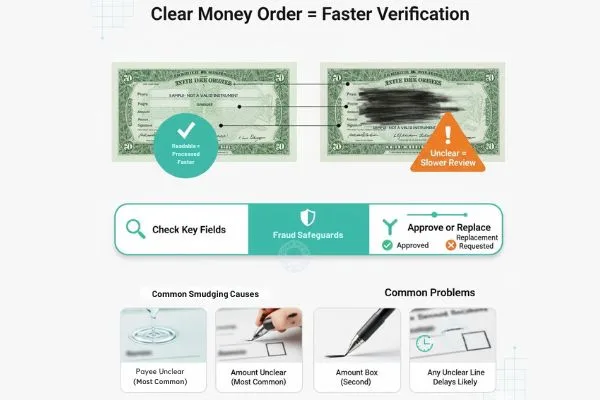
A smudge can hide numbers, blur names or distort instructions. Institutions use clear fields to confirm legitimacy. This protects customers from fraud attempts, altered payments or unclear authorizations. When any detail becomes unreadable, the organization must slow down review or take steps to prevent misuse.
A damaged document affects your timing, not because of penalties, but because verification requires clarity. General financial standards require institutions to follow safeguards for fraud prevention. For general educational context, industry guidance is discussed by the FDIC Consumer Resource Center. This reference is provided for informational and external linking purposes only and does not describe Order Express policies.
This part of the process relates to general financial standards used across the industry. Institutions must protect senders and recipients. When a document appears tampered with, even by accident, staff may treat it with caution. That caution ensures safety for both sides.
Why Issuers Require Accuracy
Issuers build security features into every document. These features work only when the information remains intact. Ink that smears across lines may hide key markers. When the affected section includes the payee line, the amount box or the signature area, customer service teams may ask you to replace the document to prevent errors. The replacement step protects your payment from denial or dispute. Issuers follow internal controls and validation procedures.
Consumer education resources published by the CFPB provide general background information on these topics and are referenced here solely for educational purposes. These resources do not define Order Express procedures.
Customers should know that this concern reflects general financial industry practices.
Examples Of Common Smudging Problems
Customers often report similar issues. Ink spreads when the surface gets wet. Pens bleed on certain paper. Accidental rubbing causes letters to blur. Even small marks can cause interpretation problems. The most common issue occurs when the payee name becomes unclear. A second common issue appears when the amount box loses definition. Any unclear line can lead to delayed acceptance by another business.
The best solution starts with prevention. Still, knowing what to do after damage occurs helps you avoid losing time or money. Customers who use services such as check cashing should ensure documents remain clear before presenting them for processing.
What To Do When Your Money Order Becomes Smudged
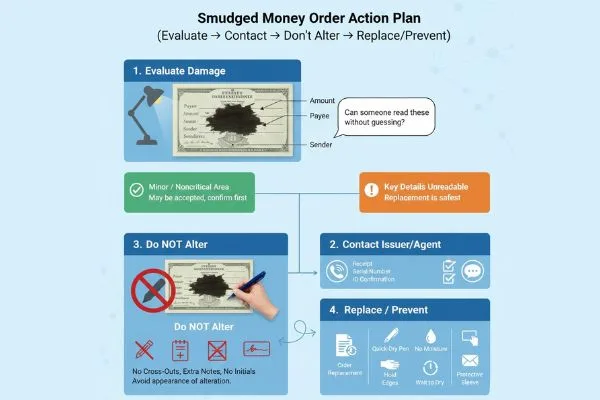
A small error does not always ruin a money order. What to do next depends on how much information is unreadable. To protect your payment and avoid delays, follow a clear plan:
- Evaluate how serious the smudge is.
- Contact the issuer for instructions.
- Avoid writing over smudged areas.
- Request a replacement if key details are unreadable or the issuer requires it.
1. Evaluate How Serious The Smudge Is
Look at the document under good lighting. Ask yourself a simple question: can a person who does not know the details understand the amount, payee and sender information without guessing? If the answer is no, replacement is usually the safest option. When the smudge covers only a small part of a noncritical area, the institution may still accept the document. You should still confirm this with the issuer before submitting the payment. Verification practices vary by institution and are governed by internal compliance programs.
For general industry reference and external linking purposes, customer identification concepts are discussed in 31 CFR 1022.210. This citation is informational only and does not represent Order Express policy requirements.
This review supports accuracy and prevents disputes. Customers benefit when the receiving party can read every detail without confusion.
2. Contact The Issuer For Instructions
Each issuer has its own replacement policies. These policies protect customers from fraud and ensure proper validation. You should contact the company that issued your document to request guidance. The issuer may require a receipt, serial number or identity confirmation. Follow the instructions carefully so your replacement arrives without delay.
Order Express does not control the replacement process of external issuers. Customers must speak directly with the original issuing company. This separation supports transparency and ensures customers receive information specific to their document. For additional support, customers may contact Order Express customer service.
3. Avoid Writing Over Smudged Areas
Never write over a damaged section unless the issuer instructs you to do so. Writing over a smudge may appear like an alteration. Many institutions decline altered payment instruments because they cannot confirm intent. Alterations create the appearance of modified values or changed names. Avoid adding extra notes, crossing out content or adding initials. Let the issuer decide whether correction or replacement is required.
Institutions rely on internal verification controls to assess document integrity. FinCEN publishes general informational resources for money services businesses, which are referenced here for educational and external linking purposes only and do not describe Order Express internal procedures.
This step protects your payment from unnecessary review and prevents misinterpretation. Staying within the issuer’s instructions keeps the process smooth.
4. Prevent Future Smudging With Simple Steps
Use a pen with quick-drying ink. Write on a flat surface. Avoid moisture near the document. Hold the edges rather than the written areas. Allow a few seconds for the ink to dry before handling. Place the completed document in a protective envelope. These simple habits preserve clarity and prevent issues before they occur.
Clear documents pass verification faster. Customers who use secure handling find payments move without delay. Customers who make regular payments or transactions may explore additional Order Express service options.
How Order Express Helps Customers Avoid Delays
Order Express provides financial services that support secure transactions. While the company does not determine whether an issuer accepts a damaged document, the service helps customers send payments reliably once the instrument remains valid and readable. The staff can guide customers to contact the issuer when needed and offer general payment insights.
This guidance helps customers complete their transaction smoothly and with confidence. Customers who want to understand how identity verification (KYC) supports secure cross-border transactions can explore more details on how verification requirements may affect processing and approvals.
Order Express focuses on safe service delivery. The company follows strict standards to protect financial activity and relies on readable documents to ensure accuracy. When customers bring clear, legible instruments, transactions move quickly and securely.
Financial Industry Practices That Affect Smudged Payments
Financial institutions must review documents for accuracy. This section explains general industry practices, not Order Express rules. Understanding how organizations think about document clarity helps you prepare your payment correctly.
Why Institutions Examine Unreadable Details Closely
Unreadable sections challenge verification. Staff members must confirm that a document matches the sender’s intent. When any detail becomes unclear, institutions slow down processing to prevent risk. These procedures follow guidance in the FFIEC BSA AML Manual. The goal is customer protection. Legible documents pass review quickly because they maintain trust in the payment.
This step applies across the financial sector. Clear writing keeps your payment moving on time.
How Unclear Fields Can Trigger Additional Review
A bank or business may request proof before accepting a smudged document. Staff may ask for identity confirmation or a clean replacement. These requests do not imply wrongdoing. They simply support accuracy. A readable document removes uncertainty. Customers avoid further steps by presenting a clean instrument from the start.
Review policies are established by individual institutions based on risk and operational needs. FinCEN commentary related to the AML Act of 2020 discusses broader regulatory themes. This reference does not define Order Express review standards.
This expectation reflects broad industry practice. Preparing a clean document eliminates avoidable delays.
Why Prevention Saves Time And Supports Secure Transactions
Prevention always works better than correction. A clean document reduces handling questions and avoids issuer reprocessing. Customers protect their payment when they complete the document carefully and store it securely. Anyone sending important payments benefits from these habits. Clear and accurate information supports efficient transaction review.
For general informational purposes, Suspicious Activity Reporting concepts are discussed in 31 CFR 1022.320. This citation is provided for educational context only and does not describe Order Express reporting procedures.
A neat instrument strengthens the receiving business’s confidence. This leads to smoother payments and reliable timelines.
Conclusion
A smudged Money Order can disrupt your payment plans, but you can take simple steps to protect your transaction. Always review the document for readability, avoid writing over damaged areas and contact the issuer if any key field becomes unclear. Clear information speeds up verification and helps businesses process your payment without delays. Store your document safely, handle it with dry hands and use quick-drying ink to prevent future issues.
If you need to send a payment, bring a clean, legible instrument to ensure a smooth experience. Order Express supports secure financial transactions, and preparing your document correctly helps you complete your payment with confidence.
Take a moment now to review your document before sending it. Ready to complete your transaction? Visit Order Express today and send your payment securely and with confidence.
Disclaimer: This article provides general educational information only. It does not replace guidance from the issuer of your financial document. It does not describe internal Order Express policies or federal regulations and should not be treated as legal or compliance advice.
Frequently Asked Questions
Q: What Should I Do First If I Smudge Ink On My Money Order?
A: Check if all details remain readable. If the payee, amount or signature is unclear, contact the issuer for replacement instructions.
Q: Will Businesses Accept A Money Order With Minor Smudges?
A: Yes, if all key fields remain clear. If any information appears altered or unreadable, the receiving business may reject it.
Q: How Can I Prevent Smudging On A Money Order?
A:
- Use quick-drying ink
- Write on a firm surface
- Let ink dry before handling
- Store the document in a protective envelope
Q: Can I Fix A Smudged Money Order By Rewriting Over The Damaged Area?
A: No. Writing over smudges may appear like an alteration. Always contact the issuer before making corrections.
Q: Who Decides Whether A Smudged Money Order Must Be Replaced
A: Only the issuing company can confirm whether the document is still valid. Contact the issuer for official guidance.

John is a Content & SEO Specialist who enjoys breaking down complex financial topics, like cross-border payments and money transfers, into content that’s easy to understand. He focuses on creating practical, search-driven content that helps people find answers and make informed decisions.


