


Small businesses use Check Cashing to turn received checks into usable cash quickly, support payroll, and keep operations moving. Licensed providers verify identity, disclose fees upfront, and release funds after verification. This option helps when banks hold slow access to money or when businesses prefer in-person service with extended hours. To stay compliant, owners confirm licensing with state regulators, present valid ID, and keep receipts for records. Federal rules require BSA and AML controls, recordkeeping, and FinCEN reporting for qualifying cash activity. Order Express applies separate company policies that add monitoring and documentation.
Quick checklist:
- Verify the provider’s license
- Bring government-issued ID
- Review posted fees before cashing
- Know federal thresholds and recordkeeping
- Save receipts for accounting and audits
From managing payroll to improving cash flow, business owners have many reasons to use check cashing services. Who Uses Check Cashing Services? Benefits And Use Cases explains how different individuals and organizations benefit from these financial solutions every day.
Note: This article is for informational purposes and does not constitute financial or legal advice.

How Check Cashing Supports Business Cash Flow
Small businesses thrive on steady cash flow and dependable access to funds. Check Cashing services bridge the gap between receiving payments and putting that money to work. By providing fast access to verified funds, these services help business owners manage operations efficiently, avoid delays, and maintain financial stability even when traditional banking timelines fall short.
Immediate Access To Operating Cash
Cash flow is the lifeline of any small business. When payments arrive as checks, waiting several days for bank holds can cause financial strain. Licensed Check Cashing providers allow business owners to receive funds immediately after proper verification. This access helps maintain payroll, vendor payments, and operational stability without interruptions.
For example, a contractor who receives multiple checks weekly can convert them into cash quickly to buy materials or pay workers. This ability to turn receivables into available funds ensures steady business continuity.
Time Efficiency And Reduced Administrative Delays
Traditional banks often impose waiting periods, especially for business checks from new or out-of-state clients. Business owners may spend valuable time navigating bank processes or waiting for funds to clear. Licensed Check Cashing providers streamline this process by focusing on speed and service efficiency while adhering to identification and verification requirements.
Transactions occur face-to-face, allowing owners to manage their finances in real time. These services help save time that can instead be devoted to managing and growing the business.
Reliable Financial Alternatives
For small businesses that may not qualify for traditional business accounts or that experience limited access to banking services, Check Cashing locations provide an accessible alternative. These providers offer a structured and regulated financial solution that supports cash-based operations. Licensed providers follow both state and federal compliance requirements, ensuring safety and transparency while maintaining service flexibility.
Understanding The Real Costs Behind Check Cashing
Managing business finances requires clarity, especially when every dollar affects operations. Many small business owners discover that predictable fees and transparent pricing from licensed Check Cashing providers can be easier to manage than traditional banking costs. This section explores how service fees, transparency, and trust help small businesses make informed financial choices.
The True Cost Of Cashing A Business Check
Most Check Cashing providers charge a small service fee, which is disclosed upfront before the transaction is completed. While traditional banks may advertise “free” checking, hidden fees often apply. Businesses might face maintenance fees, overdraft penalties, or transfer fees that accumulate monthly.
When compared, the fixed service fee for Check Cashing is often more predictable and easier to budget. For small businesses, knowing the exact cost at the time of the transaction provides clarity and control over their finances.
Avoiding Hidden Banking Fees
Some banks impose minimum balance requirements or charge additional fees for cash handling, account money transfers, or excess transactions. These conditions can create challenges for small businesses that experience fluctuating cash flow.
By contrast, Check Cashing providers operate with transparent fee structures. All service charges are disclosed at the point of service and posted visibly in-store. Customers always know the exact cost before proceeding. This transparency builds trust and aligns with consumer protection principles under federal financial guidelines.
Financial Transparency And Customer Trust
Transparency is a key element of responsible financial service. Licensed Check Cashing providers maintain clear communication about fees, verification requirements, and transaction limits. They do not impose hidden or recurring charges. Each transaction occurs with customer consent and full disclosure.
This clarity benefits both providers and business owners. It eliminates confusion, supports informed decision-making, and fosters long-term relationships built on honesty and reliability.
The Customer Experience And Regulatory Standards
Personal connection still matters in financial services. While technology continues to evolve, many small business owners prefer trusted professionals who understand their needs. Licensed Check Cashing providers combine personal service, modern convenience, and strict federal compliance to make every transaction secure, efficient, and transparent.
Human Service And Convenience
In an increasingly digital financial world, many small business owners value face-to-face service. Licensed Check Cashing centers employ trained representatives who can verify identification, confirm transaction details, and complete processing within minutes.
These professionals ensure that each transaction meets legal and procedural standards while delivering personal service. Many centers operate extended hours, including evenings and weekends, offering flexibility for business owners managing unpredictable schedules.
Technology and service options
Modern Check Cashing providers integrate digital tools to simplify the customer experience. Some allow customers to begin verification or pre-registration online before visiting a physical location. This feature speeds up in-person transactions while maintaining compliance with required verification standards.
Businesses can also register as repeat customers, reducing processing time for future transactions. These services combine convenience and security, ensuring both compliance and efficiency.
Federal standards and identification verification
Under federal law, all licensed Check Cashing providers must comply with the Bank Secrecy Act (BSA) and Anti-Money Laundering (AML) requirements. This includes proper identification, transaction recordkeeping, and suspicious activity monitoring.
Every transaction requires a valid form of identification, and additional verification applies when amounts meet or exceed federal reporting thresholds. Providers must retain transaction records for at least five years and report certain transactions through the Financial Crimes Enforcement Network (FinCEN). These federal requirements help prevent financial crimes and protect legitimate businesses.

Maintaining Compliance And Transparency In Check Cashing
Strong compliance practices are the foundation of reliable financial services. Order Express maintains this integrity by enforcing rigorous internal controls, clearly distinguishing its company policies from federal laws, and educating customers about safe financial behavior. This approach helps protect consumers, promote transparency, and reinforce ethical operations across every level of service.
Order Express Policies For Responsible Service
Order Express follows a distinct internal compliance program, as outlined in its BSA/AML Corporate Compliance Manual. The program includes customer verification, training for all personnel, and detailed reporting procedures for transactions exceeding specific thresholds.
For check cashing services, Order Express requires the presentation of valid government-issued identification and documentation supporting the nature of the transaction. Any check or group of checks exceeding $3,000 requires full compliance with verification, reporting, and recordkeeping standards.
These internal policies align with federal regulations but are applied separately to maintain clarity between company policy and government requirements. Order Express implements enhanced monitoring to identify and report suspicious or structured transactions, ensuring continued adherence to BSA and AML laws.
Separation Of Company And Federal Standards
Order Express distinguishes its company policies from federal regulatory requirements. Federal rules such as the BSA establish minimum legal obligations, including reporting, record retention, and anti-money laundering controls.
Order Express policies, on the other hand, extend these standards to provide additional oversight for its agents and employees. These company-specific measures include internal alerts, agent monitoring, and periodic compliance reviews. This structure ensures that Order Express services, such as Check Cashing, operate ethically, transparently, and within full regulatory boundaries.
Note: Federal rules (BSA/AML) establish mandatory legal reporting thresholds and recordkeeping obligations applicable to all MSBs. Order Express policies go beyond these requirements by adding additional layers of monitoring, documentation, and internal auditing. These company measures are internal controls specific to Order Express and not extensions of federal law.
Consumer Protection And Financial Education
Licensed providers emphasize customer awareness. Business owners should always use reputable and properly registered Check Cashing services. Consumers can verify licensing with state regulators or through FinCEN’s Money Services Business (MSB) registration database.
Providers that comply with AML and KYC (Know Your Customer) requirements protect both customers and the financial system. Educating clients about these safeguards fosters responsible financial behavior and strengthens community trust.

Advantages Of Choosing Regulated Check Cashing Providers
For many small business owners, regulated Check Cashing services create the balance between accessibility and accountability. They combine speed, transparency, and consumer protection under federal oversight, ensuring businesses can access their funds confidently and continue growing without unnecessary financial barriers.
Simplicity And Speed
Regulated Check Cashing services streamline access to funds. The process typically involves presenting identification, verification, and check endorsement. Funds are then provided immediately or within minutes. This speed supports small businesses that operate with tight cash flow schedules.
Predictable Costs And Transparency
Every transaction involves a clearly stated fee disclosed before completion. There are no hidden costs or long-term commitments. Small businesses can plan for these expenses as part of their operating costs, ensuring predictable cash management.
Regulatory Protection And Data Security
Licensed Check Cashing providers must safeguard customer data under both the Gramm-Leach-Bliley Act (GLBA) and their internal privacy policies. This includes protecting nonpublic personal information from unauthorized access.
Order Express and other licensed MSBs maintain secure systems for storing transaction records and identification data. Compliance with privacy standards protects customers while maintaining transparency in financial operations.
Community Accessibility And Reliability
Check Cashing locations serve as financial access points for communities where traditional banking may be limited. These centers often operate extended hours and offer bilingual support, making financial services accessible to a diverse business community.
Through regulated operations, these providers contribute to financial inclusion, ensuring that small businesses and entrepreneurs can maintain liquidity and stability.
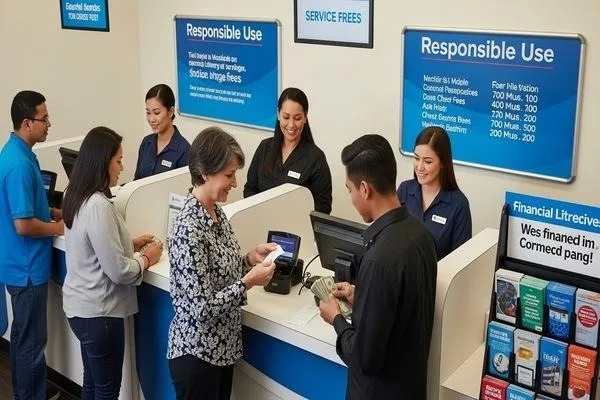
Responsible Use Of Check Cashing Services
Every Check Cashing provider and business has a shared responsibility to maintain transparency and follow regulatory rules. Knowing how to verify legitimacy, observe transaction thresholds, and maintain accurate records keeps operations lawful and helps prevent financial crimes or reporting violations.
Verifying Legitimacy And Licensing
Before using a Check Cashing service, businesses should confirm that the provider is licensed under state money services business regulations. Licensed providers must follow strict reporting, recordkeeping, and AML procedures to remain in good standing.
Understanding Transaction Limits
Check Cashing transactions exceeding specific dollar thresholds may require additional identification or documentation. For example, federal regulations require reporting for cash transactions exceeding $10,000, while Order Express policy requires additional review for check cashing amounts above $3,000.
These measures protect both customers and the financial system by ensuring all large transactions remain traceable and compliant.
Note: Order Express follows detailed internal thresholds for verification and reporting. Transactions of $3,000 or more (or equivalent aggregates within 48 hours) require full identification and documentation under company policy. In Arizona and Louisiana, this threshold begins at $1,000. Additionally, transactions aggregating $5,000 within a week or $10,000 in twelve months require ongoing review under company guidelines.
Maintaining Documentation For Business Records
Small business owners should retain copies of their cashed checks and receipts for bookkeeping and tax purposes. These records provide verification for accounting audits and support compliance with federal and company-specific reporting standards.
By maintaining organized records, businesses ensure financial accountability and make it easier to identify potential discrepancies or fraudulent activity.
Note: According to Order Express policy, all transaction and identification records, including copies of checks, endorsements, and receipts, must be securely retained for a minimum of five (5) years. This requirement supports audit readiness and compliance with both company and federal AML standards.
Conclusion
Small businesses thrive on dependable cash flow, and Check Cashing services deliver a fast, transparent, and compliant solution. By choosing licensed providers, business owners gain immediate access to funds while maintaining full regulatory protection and peace of mind. Understanding transaction limits, verification requirements, and documentation practices keeps operations efficient and compliant. Whether managing payroll, purchasing supplies, or maintaining liquidity, reliable Check Cashing services empower entrepreneurs to focus on growth, not red tape. Take control of your cash flow today by working with a trusted, licensed provider committed to security, transparency, and compliance.
FAQs
How can small businesses benefit from Check Cashing services?
Check Cashing services give small businesses fast access to funds, transparent fees, and extended service hours, helping maintain steady cash flow and avoid banking delays.
How do I verify if a Check Cashing provider is licensed?
Check your state’s money services business registry or the FinCEN MSB database. Always confirm the provider’s license before cashing checks.
What are the federal reporting limits for Check Cashing transactions?
Providers must report cash transactions exceeding $10,000 under federal law. Transactions above $3,000 may require additional verification or documentation.
What identification is needed for Check Cashing?
Customers must present valid government-issued photo identification. Some providers may request additional documents for large transactions or new customers.
How should small businesses maintain Check Cashing records?
Keep copies of cashed checks, receipts, and related documentation for at least five years. Organized records support audits, tax filings, and compliance verification.

John is a Content & SEO Specialist who enjoys breaking down complex financial topics, like cross-border payments and money transfers, into content that’s easy to understand. He focuses on creating practical, search-driven content that helps people find answers and make informed decisions.


