


Yes, you can send money transfers to pay freelancers abroad, but doing so requires the right method and compliance checks. Businesses often face challenges such as banking restrictions, high transfer fees, currency conversion, and strict reporting rules.
Order Express (OE) helps streamline international freelancer payments by offering secure money transfer solutions that are fast, cost-effective, and fully compliant with U.S. and global regulations. Whether through marketplace platforms, digital wallets, or direct bank transfers, OE ensures payments are delivered reliably while protecting both businesses and freelancers.
Disclaimer: This content is for informational purposes only and should not be considered legal, tax, or financial advice. International money transfer rules vary by jurisdiction, and businesses should consult qualified professionals before making payments. Order Express (OE) provides licensed services subject to compliance requirements and applicable regulations.

Understanding Global Payment Challenges in Money Transfer
Paying freelancers across borders involves more than just sending funds. Businesses face obstacles tied to banking rules, currency expectations, and regulatory compliance. These challenges can affect cost, speed, and reliability of international money transfer transactions. Order Express (OE) helps customers navigate these hurdles while maintaining transparency and compliance. The following subsections outline the main challenges businesses should understand before making global freelancer payments.
Diverse banking landscapes
Freelancers live across many regions with different banking regulations. Some banks restrict international money transfer services or apply heavy charges. Rural areas often lack strong financial infrastructure, which makes payouts harder to complete. These issues create friction for smooth global transactions. Order Express (OE) must carefully route every transfer through compliant channels. By understanding diverse global banking systems, OE ensures accuracy, timeliness, and regulatory alignment when paying freelancers abroad. Reliable systems protect businesses and freelancers from costly mistakes.
International banking networks vary in complexity. Some countries rely heavily on correspondent banks, adding extra costs. Other countries encourage faster, local settlement systems. OE adapts by leveraging trusted partners in each region. This adaptability is critical for maintaining uninterrupted payments. Without this flexibility, delays and errors could harm freelancer trust and project continuity.
Currency preferences and timing
Freelancers prefer payments in their home currency. Delayed settlements or currency shifts reduce their actual income. Traditional bank wires take several days and cost too much. This makes small invoice payments especially inefficient. Timeliness is essential to freelancer satisfaction and financial stability. OE uses faster settlement methods, including global ACH and licensed payout partners. These reduce costs, improve speed, and provide better delivery transparency.
Predictable timing is key to freelancer trust. Payment delays can create serious project risks. Transparent fee structures build credibility between businesses and freelancers. By delivering on-time payments, OE strengthens long-term freelancer relationships. Clear exchange rates also prevent misunderstandings and protect both sides. Providing accurate estimates upfront makes the process easier and less stressful for freelancers relying on payments.
Compliance and documentation
Cross-border transfers require documentation and compliance oversight. U.S. companies must collect W-8BEN forms before disbursing payments (per IRS requirements for payments to non-U.S. persons). OE enforces Know Your Customer (KYC) checks when transfers reach USD 3,000 within 48 hours. These rules verify identities and protect against fraud or sanction violations. Accurate identity data reduces risks for both payers and freelancers. Documentation also supports U.S. tax obligations and international reporting duties, as explained in IRS virtual currency reporting guidance.
Companies that skip compliance expose themselves to penalties and reputational harm. OE provides a compliance framework that ensures every money transfer follows legal standards. Tax forms, reporting, and accurate records prevent costly issues later. Following documentation rules builds freelancer confidence and avoids interruptions. Compliance reduces friction, protects brand reputation, and supports global workforce expansion.
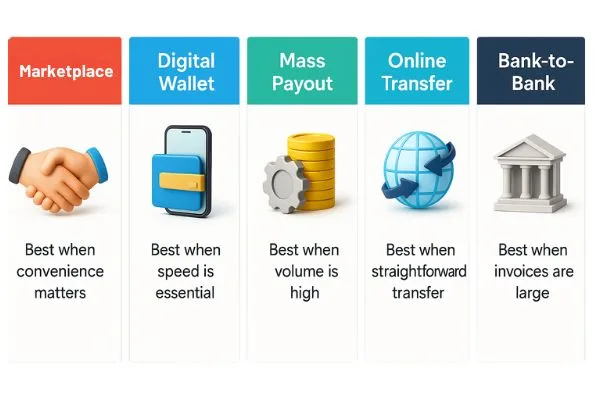
Solution Categories for Cross-Border Money Transfer Payments
Businesses paying overseas freelancers have many options for sending funds. Each solution type offers unique advantages, limitations, and costs. Choosing the right method depends on volume, urgency, compliance needs, and freelancer preferences. Order Express (OE) partners with licensed money transmitters and other regulated providers so customers can choose secure channels that meet diverse requirements. OE itself offers money transmission, money orders, bill payment and in-branch currency exchange services approved in its compliance manual.
Marketplace platforms
Marketplace platforms connect businesses with freelance talent. These platforms manage projects and process payments within their systems. Clients are invoiced after milestones or project completion. Platforms pay freelancers after deducting service fees, often around ten percent. They manage exchange conversions and issue invoices on behalf of freelancers. This option is best for clients prioritizing convenience.
- Pros: Fast setup, built-in invoicing, predictable payout cycles, reduced compliance burden.
- Cons: High service fees, long support resolution times, exposure to fraudulent profiles.
Best time to choose: When convenience and project matching outweigh cost considerations.
Marketplace platforms are popular for short-term or project-based hiring. They create a structured environment for agreements and disputes. For businesses new to international freelancers, they simplify payment logistics. However, they require businesses to accept high fees in exchange for outsourced administration. Guidance on consumer remittance protections further supports transparency when using such services.
Digital wallet services
Digital wallet providers allow fast payments using email or wallet IDs. Freelancers can withdraw funds to local bank accounts or connected cards. Many wallets support instant transfers and multiple currencies. Digital wallets also provide extra security with encryption and two-factor authentication. They are widely adopted in the gig economy.
- Pros: Quick global transfers, broad reach, ability to spend funds directly.
- Cons: Extra withdrawal costs, hidden exchange spreads, possible regional restrictions.
- Best time to choose: When freelancers already use wallets and quick money transfer is essential.
Wallet services are common among younger freelancers and online providers. They are flexible and help freelancers manage multiple income streams.
Mass payout software
Mass payout solutions can connect with customers’ accounting systems to issue bulk payments. When a customer uses approved third-party software, OE will transmit the funds once compliance checks are complete. These tools validate freelancer data, apply automated payment rules, and reconcile accounts instantly. They are designed for high-volume international transactions.
- Pros: Efficient for global businesses, automated compliance, strong fraud protection.
- Cons: Requires ERP integration, freelancer invoices still needed, implementation effort required.
- Best time to choose: When businesses handle frequent, high-volume global transactions.
Mass payout systems also support multiple payment methods in one batch. This reduces manual work and errors. Businesses can save time by issuing hundreds of payments simultaneously. OE ensures payments remain accurate, compliant, and transparent. Firms seeking broader financial efficiency may consult reputable consumer resources on managing business payment costs.
Online money transfer providers
Licensed transfer providers deliver payments directly to freelancer bank accounts, and OE can act as the money transmitter where permitted. They provide competitive exchange rates and transparent fees. OE uses these providers for one-time invoices and smaller batches.
- Pros: Broad coverage, reliable settlement, low transparent costs.
- Cons: Requires account setup, costs may rise for small transfers.
- Best time to choose: When businesses want straightforward, secure, and fast transfers.
These providers suit businesses needing occasional freelancer payments. They balance cost and speed without requiring major system integration. OE partners with such providers to ensure wide coverage and compliance. Freelancers comparing options may consult NerdWallet’s guide on best ways to send money.
Bank-to-bank transfer services
Bank-to-bank transfers move funds directly between international accounts. Providers often set minimum transaction thresholds. OE uses them for larger invoices and recurring payments.
Pros: Strong regulation, favorable exchange rates, secure transactions.
Cons: Not efficient for small transfers, requires detailed beneficiary information.
Best time to choose: When payments exceed minimum thresholds and freelancers prefer direct deposits.
Bank-to-bank transfers are trusted for larger professional contracts. They provide stability and predictable exchange management. OE ensures these transfers meet all reporting requirements and safeguard against fraud. Businesses also benefit from reviewing FinCEN SAR filing instructions to understand suspicious transaction obligations.
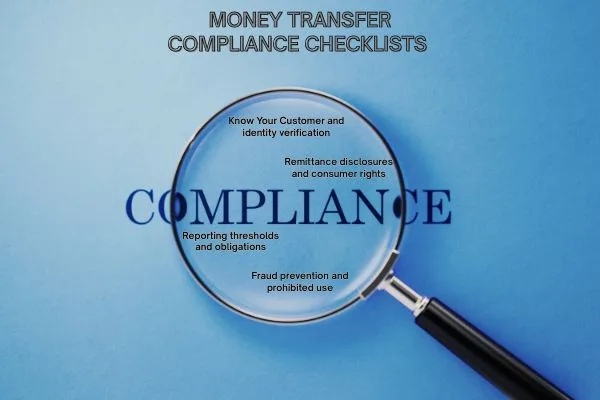
Compliance Checklist and Best Practices For Money Transfers
Ensuring compliance is essential for safe and reliable international payments. Order Express (OE) follows strict regulatory standards to protect customers, freelancers, and the business. Each part of the compliance process reduces risks, prevents fraud, and builds transparency.
Know Your Customer and identity verification
OE collects ID when total transfers reach USD 3,000 in 48 hours. Staff must record name, address, and tax identification numbers. In Arizona the threshold is USD 900 within 48 hours, and in Oklahoma the threshold is USD 1,000 within 24 hours. These measures align with the USA PATRIOT Act and OE’s policies. W-8BEN forms ensure IRS compliance and prevent penalties. Identity checks reduce fraud risks and improve security for both parties. More information can be found in FinCEN guidance on BSA/AML.
Remittance disclosures and consumer rights
OE issues pre-payment disclosures with transfer amount, fees, rates, and delivery value. Receipts confirm the details and show delivery dates. Customers may cancel within 30 minutes and report errors within 180 days. These protections build trust, transparency, and accountability. They also reduce disputes and increase customer satisfaction. Further support comes from FDIC guidance on Regulation E disclosures.
Reporting thresholds and obligations
Cash transactions above USD 10,000 require a Currency Transaction Report (CTR) within 15 days. Suspicious transactions of USD 2,000 or more trigger a Suspicious Activity Report (SAR). Structuring to avoid reports is strictly prohibited. Employees must never advise customers to evade thresholds. Violations can cause fines, legal action, and reputational damage. Compliance training is mandatory for all OE staff. U.S. Treasury OFAC sanctions screening is also part of every review.
Fraud prevention and prohibited use
OE blocks transfers linked to illegal activities or sanctioned entities. Screening tools flag suspicious activity in real time. Patterns such as repeated small transfers totaling large amounts raise alerts. Staff must escalate red flags immediately. Monitoring systems and human oversight combine to prevent fraud. This protects businesses, freelancers, and OE’s reputation. Fraud prevention is central to maintaining trust and regulatory approval. Businesses expanding services should consider OE’s check cashing options options and other regulated offerings to diversify safely.
Practical tips for smooth payouts
Gather freelancer information during onboarding. Maintain contracts and invoices to support all payments. Use non-cash funding methods to avoid excess reporting. Track cumulative transfers to prevent surprises. Confirm services are legal in both countries. Automate processes where possible for speed and accuracy. Educate customers about compliance requirements early. Transparent processes reduce stress for clients and freelancers alike. Strong communication builds lasting, trust-based relationships. Companies seeking help can visit OE’s official support page for tailored support.
Common Mistakes to Avoid When Paying Freelancers Abroad
Not collecting tax forms before first payment
One of the most common mistakes businesses make is paying freelancers without collecting required tax forms. U.S. companies must gather W-8BEN forms before releasing the first payment. Skipping this step can cause IRS reporting errors, penalties, and delays. Order Express (OE) guides customers to collect these documents early. Having the right forms ensures smooth money transfer reporting compliance from the beginning.
Ignoring cumulative thresholds that trigger reporting
Another mistake is overlooking cumulative transaction amounts. Even if individual transfers seem small, together they may exceed reporting thresholds. For example, USD 3,000 in total within 48 hours triggers KYC obligations. Cash transfers over USD 10,000 require Currency Transaction Reports. Failing to recognize these totals can lead to non-compliance. OE’s systems track cumulative amounts to protect customers and ensure timely reporting. Customers can also review OE’s about us page for more background on company safeguards.
Using non-licensed providers or unverified wallets
Businesses sometimes use unlicensed payment apps or unverified wallets to save costs. This approach is risky. Non-licensed providers may not follow anti-money laundering laws or safeguard customer data. Payments may be delayed, blocked, or even lost. OE works only with licensed and regulated partners to guarantee secure, legal money transfer services. Customers should avoid shortcuts that could compromise safety or compliance.
Structuring transactions to avoid limits
Some customers attempt to split payments into smaller amounts to avoid reporting requirements. This is called structuring, and it is illegal. Structuring can trigger Suspicious Activity Reports and lead to investigations. OE staff are trained to identify and escalate such activity. The correct approach is to follow compliance rules honestly. Customers benefit by maintaining transparency and avoiding potential legal consequences. Attempting to manipulate money transfer limits risks severe penalties.
Conclusion
Paying overseas freelancers can be simple, safe, and compliant with Order Express. Businesses can choose the right method depending on volume and urgency. By following OE’s compliance steps, companies protect themselves and support freelancers. KYC, disclosures, and reporting ensure every transaction is transparent and legal. Fraud prevention safeguards the payment chain and maintains trust. Freelancers benefit from predictable, cost-effective, and timely payouts. Businesses gain efficiency, scalability, and reduced risk. By balancing speed, compliance, and cost, OE makes international freelance money transfer services secure and reliable. This approach empowers global talent, supports economic growth, and strengthens international partnerships.
Frequently Asked Questions
1. Can I legally send money transfers to freelancers abroad?
Yes, you can send money transfers abroad, but regulations apply. Businesses must follow KYC, tax reporting, and anti-fraud requirements. Using licensed providers ensures compliance. Order Express supports legal and secure transactions. Always collect tax forms before paying international freelancers to avoid penalties.
2. What is the safest method to pay freelancers overseas?
The safest method depends on your needs. Bank transfers are secure but slower. Digital wallets are faster but sometimes costly. Marketplace platforms simplify compliance but charge fees. Order Express provides multiple licensed money transfer options. Choose based on cost, speed, and freelancer preference.
3. How much are typical fees for international freelancer payments?
Fees vary by method. Bank wires often cost over USD 30. Wallets may charge withdrawal fees and spreads. Marketplaces deduct about 10 percent in fees. Order Express provides transparent pricing for all transfers. Choosing the right channel minimizes hidden costs.
4. Do I need to collect tax forms before sending money transfers?
Yes, U.S. companies must collect W-8BEN forms before payment. Without these, IRS compliance becomes difficult. Missing forms risk penalties and reporting errors. Order Express supports onboarding freelancers with required documentation. Collecting forms early speeds payment and protects both parties.
5. What mistakes should I avoid when paying freelancers abroad?
Avoid paying without tax forms, ignoring reporting thresholds, or using unlicensed providers. Never split payments to avoid limits. Structuring is illegal and triggers investigations. Always use licensed and compliant money transfer services. Order Express helps prevent errors through secure systems and compliance checks.

John is a Content & SEO Specialist who enjoys breaking down complex financial topics, like cross-border payments and money transfers, into content that’s easy to understand. He focuses on creating practical, search-driven content that helps people find answers and make informed decisions.


