


Money transfer timing for bill payments starts when a licensed money transfer provider accepts the transaction. Timing does not begin when customers plan a payment. It begins when the payment posts in the system and a receipt is issued. Order Express operates as a licensed money transfer provider offering regulated financial services through its nationwide network.
Order Express follows verification, compliance and fraud prevention requirements designed to support secure transfers and accurate delivery. These practices reflect the company’s internal operating standards and customer protection approach.
Separately, federal agencies such as the Financial Crimes Enforcement Network publish guidance that outlines regulatory expectations for money services businesses.
Customers should understand how timing works before paying a bill. Knowing when funds move helps avoid late fees and service disruptions. Reviewing the receipt, verifying biller details and planning ahead are key steps. Order Express supports transparency through clear disclosures and regulated processes designed to protect customers.
How Money Transfer Timing Works For Bill Payments
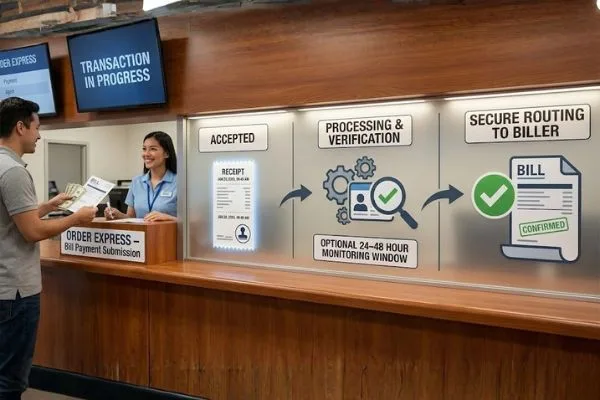
Bill payment timing begins once Order Express accepts the transaction. Customers should understand how processing windows, verification steps and routing affect delivery. Money Transfer services prioritize accuracy, security and proper handling rather than instant movement. Customers interested in sending funds through regulated channels can review Order Express money transfer services.
How A Bill Payment Transaction Begins
A bill payment starts when a customer submits funds at an Order Express location or authorized channel. The system records the transaction immediately. Order Express generates a receipt that confirms acceptance. Timing does not begin when a customer plans a payment. Timing begins once the transaction posts in the system.
The transaction then enters a processing stage. Order Express reviews transaction details for accuracy. This step helps prevent misdirected funds and supports a smoother customer experience.
Separately, verification requirements for financial institutions are established under 31 CFR §1022.210 Customer Identification Program rules, which outline how money services businesses must identify and verify customers, as published in the Electronic Code of Federal Regulations.
Each bill payment moves through internal systems before reaching the biller. These systems route funds based on biller requirements. Customers should expect this structured process for every payment.
Processing Windows And Location Differences
Processing windows vary by location. Some states apply a twenty four hour monitoring period. Other states apply a forty eight hour monitoring period. These windows support consistent transaction handling and operational review.
Separately, federal oversight of transaction monitoring for money services businesses is addressed in the FFIEC BSA/AML Examination Manual, which provides supervisory guidance for compliance programs.
Customers should not assume identical timing across all locations. Location affects how transactions process. Customers should plan payments early, especially for urgent bills. Processing windows do not represent delivery guarantees. They represent review and handling periods. Customers should rely on receipt disclosures for expected delivery timing.
This structure supports consistent service across regions. It also protects customers from processing errors. Customers who use additional regulated financial services, such as check cashing, should review service specific details before completing a transaction.
Why Bill Payments Are Not Instant
Bill payments differ from cash pickups or account transfers. Billers often require batch processing. Some billers process payments on business days only. These factors affect when funds post.
Separately, the Consumer Financial Protection Bureau provides general consumer education resources related to financial transactions and payment timing.
Order Express routes payments according to biller systems. Customers should not expect real time posting. The system prioritizes accurate delivery over speed. Customers should schedule payments several days before due dates. Early planning reduces stress and late fees. Money Transfer timing works best when customers allow enough processing time.
What Customers Should Know Before Making A Money Transfer
Customers play an important role in successful bill payments. Understanding receipts, rights and responsibilities helps avoid delays. Order Express encourages customers to review details carefully before completing transactions.
Understanding Receipt Based Timing Disclosures
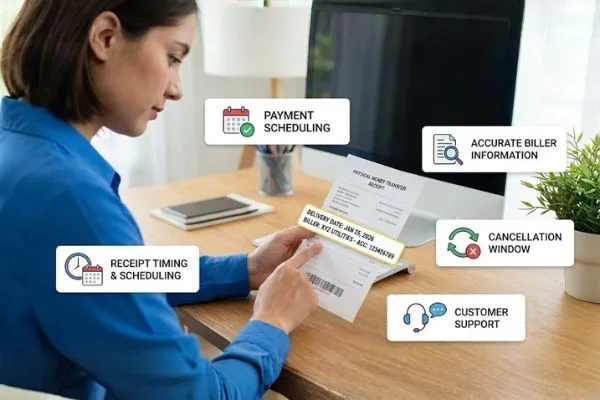
The receipt provides the most reliable timing information. Customers should review it immediately. The receipt lists the expected delivery date. Customers should rely on this date rather than verbal estimates. Receipts document transaction details for customer records. Customers should keep receipts until bills post.
Receipts support follow up questions if issues arise. Customers should verify biller information on the receipt. Incorrect details may cause delays. Reviewing the receipt protects customers from avoidable problems.
Separately, federal consumer protection standards related to disclosure and transparency are addressed through educational resources published by the Federal Deposit Insurance Corporation Consumer Resource Center.
Money Transfer timing always ties to receipt disclosures provided at payment.
Customer Planning And Payment Scheduling
Customers should plan bill payments ahead of due dates. Waiting until the last day increases risk. Processing windows and biller schedules affect posting times. Customers should consider weekends and holidays. Some billers do not post payments on non business days.
Order Express staff can explain receipt details. Customers should request clarification when needed. Informed planning leads to smoother transactions. Scheduling payments early gives customers flexibility. It also allows time to address issues if they occur. Customers who need help or have service questions can reach official customer support.
Cancellation Options And Timing Awareness
Some transactions allow cancellation within a limited period. Customers must act quickly. Cancellation availability depends on transaction status. Customers should contact Order Express promptly if plans change. Once funds route to the biller, cancellation may no longer apply.
Timing plays a critical role in eligibility. Customers should confirm details before submitting payment. Careful review reduces the need for cancellation. Money Transfer services function best when customers finalize information before paying.
Handling Delays And Reporting Concerns
Delays may occur due to incorrect information or biller processing issues. Customers should compare the receipt date with biller posting. If funds do not post by the disclosed date, customers should act.
Order Express provides channels for reporting concerns related to customer transactions. Customers should provide transaction details when contacting support. Clear records help resolve issues efficiently. Customers should report concerns within the allowed timeframe. Acting early improves outcomes.
Separately, regulatory expectations for reporting and recordkeeping for financial institutions are outlined under 31 CFR §1022.320 Suspicious Activity Report requirements.
Why Accurate Information Matters
Accurate biller information ensures timely delivery. Customers should double check account numbers and biller names. Small errors may cause delays or misapplied payments. Order Express relies on customer provided information. Verification helps reduce errors.
Customers should ask staff to review details if unsure. Correct information supports faster routing. It also reduces the need for corrections. Customers who verify details experience smoother transactions. Money Transfer timing depends heavily on accurate data entry.
Conclusion
Understanding money transfer timing for bill payments helps customers avoid late fees, service interruptions and unnecessary stress. Timing starts when Order Express accepts the transaction, not when customers plan the payment. Receipts provide the most reliable delivery expectations, so reviewing them carefully is essential. Processing windows, location differences and biller schedules all affect when payments post. Customers who plan ahead, verify biller information and keep transaction records experience smoother outcomes. If delays occur, acting quickly and using official support channels leads to faster resolution.
Order Express operates as a licensed money services business in applicable states and complies with federal reporting and recordkeeping requirements. Order Express maintains anti-money laundering and customer identification procedures consistent with applicable federal regulatory requirements.
Schedule your bill payment early, confirm details at the counter and rely on your receipt for timing clarity. Visit an Order Express location today and complete your bill payment with confidence and transparency.
Disclaimer: This content is provided for general informational purposes only and does not constitute financial, legal or tax advice. Service availability, timing and fees may vary by state and transaction type.
Frequently Asked Questions
Q: When Does Money Transfer Timing Start For Bill Payments?
A: Timing starts when Order Express accepts the transaction.
- Payment posts in the system
- Receipt is issued
- Processing begins immediately
Q: How Long Do Bill Payments Usually Take To Process?
A: Timing varies by location and biller.
- Some states use twenty four hours
- Others use forty eight hours
- Receipt shows expected delivery date
Q: Why Are Bill Payments Not Instant?
A: Billers use batch processing.
- Business day schedules apply
- Verification steps occur
- Accuracy takes priority over speed
Q: What Should I Do If My Bill Payment Is Delayed?
A: Take these steps:
- Compare biller posting with receipt date
- Gather transaction details
- Contact Order Express support promptly
Q: How Can I Avoid Delays When Making A Bill Payment?
A: Follow best practices:
- Pay before the due date
- Verify biller information
- Review your receipt carefully

John is a Content & SEO Specialist who enjoys breaking down complex financial topics, like cross-border payments and money transfers, into content that’s easy to understand. He focuses on creating practical, search-driven content that helps people find answers and make informed decisions.


