


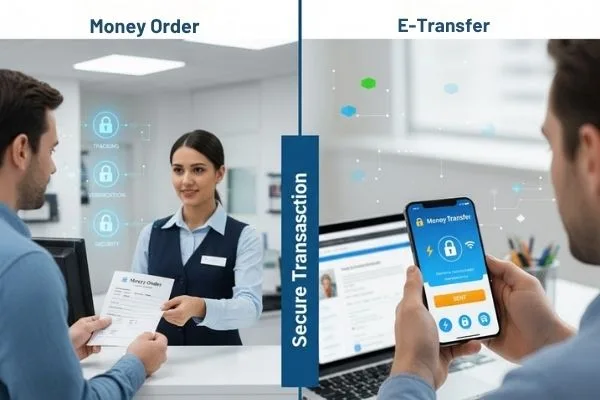
Money orders and e-transfers differ by speed, verification, and processing method. A money order is a prepaid paper payment, while an e-transfer sends money electronically. Both are secure and regulated by federal financial laws.
Order Express, a licensed money transfer provider, ensures every transaction meets strict verification and compliance standards. Customers can send funds confidently knowing services align with the Bank Secrecy Act (BSA), USA PATRIOT Act, and FinCEN guidelines.
Use a money order when you want a physical, trackable payment. Choose an e-transfer for fast, digital convenience. Both options protect your money through secure transfers, real-time monitoring, and identity verification.
Learn how to choose the right method, why verification matters, and what steps ensure your transaction remains compliant and fraud-free.
Whether you choose a money order or an e-transfer, understanding safe money transfer practices helps you verify recipients, recognize fraud warning signs, and protect your funds before, during, and after every transaction.
Understanding Your Options For Secure Transactions
Sending money locally or abroad has never been easier. Still, each transaction type has unique features that can affect your choice.
What Is A Money Order?
A money order is a prepaid paper payment instrument. You pay a set amount upfront, and the issuer guarantees that payment to the recipient. This makes money orders safer than carrying large sums of cash. You can buy them at Order Express branches and other authorized outlets across the United States.
Money orders are ideal for customers who prefer tangible proof of payment. Each order includes a tracking number so you can confirm when the recipient cashes it. You can use a money order to pay rent, bills, or send funds to family members without needing a bank account. Because it is prepaid, there is no risk of overdraft or credit exposure.
A money order is especially helpful if you want a secure, trackable way to pay someone you don’t know personally. It also helps prevent fraud because the funds are verified at the time of purchase. Order Express ensures every transaction follows federal and state regulations, protecting your financial information in accordance with the OFAC Compliance Framework.
What Is An E-Transfer?
An e-transfer, also known as an electronic funds transfer, moves money digitally between accounts. This method is fast, efficient, and ideal for time-sensitive payments. Order Express customers use e-transfers to send money within minutes or hours, depending on destination and network.
When you complete an e-transfer, the funds are sent electronically to a recipient’s bank or mobile account. Transactions happen through secure systems and comply with the Bank Secrecy Act (BSA) and anti-money laundering (AML) requirements. You get immediate confirmation when funds are delivered.
Unlike money orders, e-transfers do not require physical paperwork. You can complete them online or through authorized Order Express agents. They provide speed and convenience while still meeting all verification and reporting requirements under federal financial regulations.
Choosing The Best Option For Your Needs
Your choice between a money order and an e-transfer depends on how quickly you need the funds delivered, your access to banking, and your preferred payment method.
When To Use A Money Order
Use a money order when you need a reliable paper payment for personal or business use. Common examples include paying rent, settling bills, or sending money by mail. A money order can be purchased with cash or debit, and it is widely accepted across the United States.
Each Order Express money order comes with a receipt and tracking number. You can verify its status at any time. This makes it easy to keep records for accounting or proof of payment. It is also a preferred choice for those without a checking account.
Customers choose money orders for their security, convenience, and guaranteed value. Because the amount is prepaid, both the buyer and recipient can trust that the funds are valid. The purchase process requires simple identification verification, helping prevent fraud and ensuring compliance with 31 CFR §1022.210 Customer Identification Program.
When To Use An E-Transfer
Choose an e-transfer if you need to send money quickly or internationally. The funds move electronically, reaching the recipient within minutes or hours. Order Express partners with trusted remittance networks to ensure your money arrives safely wherever it’s needed.
E-transfers are perfect for recurring payments or supporting family members abroad. Customers can initiate them directly from an Order Express location or through approved digital platforms. Identification requirements are straightforward, and each transaction is securely recorded.
While both services are secure, e-transfers provide additional speed. However, they may involve small service fees depending on destination or network provider. Still, you get faster delivery and real-time confirmation of completion.
Security And Compliance For Both Methods
Both money orders and e-transfers meet strict Order Express compliance standards. Each transaction undergoes monitoring and reporting as required by the Bank Secrecy Act and USA PATRIOT Act. These safeguards help prevent fraud, money laundering, and unauthorized transfers.
Customers must present valid identification for transactions that meet federal or state reporting thresholds. Financial institutions must file reports as required under 31 CFR §1010.311 Currency Transaction Reporting.
Order Express aggregates all cash transactions conducted by or for the same customer on the same business day. If the total exceeds $10,000, a single Currency Transaction Report (CTR) is filed in accordance with 31 CFR §1010.313.
All CTR and Suspicious Activity Report (SAR) records are retained for at least five (5) years as required under the Bank Secrecy Act and company policy. When suspicious activity continues over time, Order Express files a follow-up SAR every 90 to 120 days while the activity persists, following FinCEN guidance and FFIEC BSA/AML Manual procedures.
Order Express ensures all recordkeeping, reporting, and verification follow compliance policies. This protects both the sender and the recipient while maintaining regulatory integrity.
By following clear procedures and verification checks, Order Express delivers reliable financial services that customers can trust.
Understanding Transaction Costs, Limits, And Protections
Fees And Processing Time
Money orders usually have a fixed, low service fee. The amount depends on where you purchase them and the total value sent. Processing is immediate once payment is made. The recipient can cash or deposit the money order right away.
E-transfers have variable fees depending on the destination and method. Domestic transfers are typically faster and lower-cost than international ones. Still, Order Express ensures all pricing is clearly disclosed before completion, consistent with the Consumer Financial Protection Bureau’s Remittance Transfer Rule.
Limits And Identification Requirements
Both money orders and e-transfers have transaction limits to comply with federal and state laws. For example, you may need to provide identification for transactions of three thousand dollars or more. This ensures compliance with Know Your Customer (KYC) and anti-money laundering regulations.
If you use multiple services or make several payments in one day, they may be combined to meet reporting requirements under 31 CFR §1022.320 Suspicious Activity Reporting. These procedures protect both the customer and the company by ensuring transparency.
Refunds And Error Resolution
If you lose a money order, you can request a refund or replacement once verification is complete. Keep your receipt to track the process easily. For e-transfers, refunds may be issued if the transaction cannot be completed or if you cancel within the allowed time frame.
Under federal rules, customers can cancel an e-transfer within 30 minutes and have up to 180 days to report an error. Order Express investigates all claims and provides written confirmation once resolved. This commitment to customer satisfaction reflects the company’s dedication to service integrity.
Why Customers Trust Order Express
Reliable Service And Strong Protection
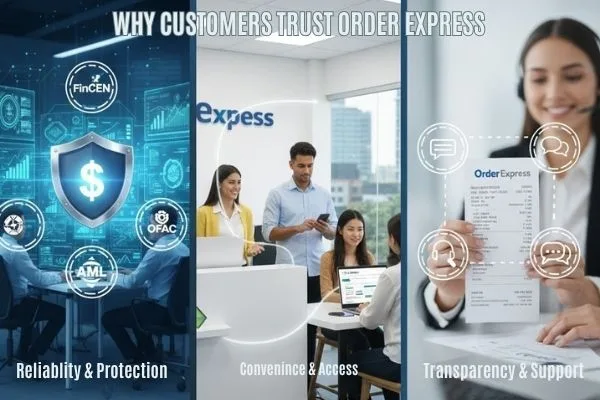
Order Express operates under full compliance with FinCEN guidelines, OFAC, and state money transmission regulations. Each employee and agent completes annual AML and compliance training to ensure safe handling of every transaction. Customers can feel confident that their funds are processed under the highest security standards and monitored according to the FFIEC BSA/AML Manual Appendix H.
All transactions are reviewed through advanced monitoring systems to detect unusual activity. This helps safeguard your money and maintain regulatory compliance. Whether you choose a money order or an e-transfer, your transaction will always meet federal and corporate standards.
Convenience And Access
Customers appreciate how Order Express combines traditional and digital services. You can visit a local agent, call customer support, or use approved partner platforms to send funds quickly. Agents follow all reporting procedures while keeping your information confidential. Learn more about additional offerings such as money transfer, check cashing and other financial solutions.
This balance between personal assistance and technological efficiency makes Order Express a trusted choice for families and businesses across the country.
Transparent Policies And Customer Commitment
Transparency is key in financial services. Order Express clearly outlines all fees, terms, and policies before completing any transaction. The company values honesty and compliance, ensuring you always know the total cost and timing of your payment.
Customers are encouraged to review transaction receipts carefully and report any issues immediately to Order Express customer support. This proactive communication supports your protection and ensures each experience remains seamless and secure.
Final Thoughts
Choosing between a money order and an e-transfer comes down to your speed, convenience, and security needs. Order Express gives you both, reliable paper-based payments and fast digital transfers, each supported by full compliance and transparency. Customers can send funds with confidence, knowing every transaction meets strict financial regulations and fraud-prevention standards. Whether you prefer a tangible receipt or instant digital confirmation, Order Express ensures your money arrives safely every time.
Take control of your financial transactions today. Visit OrderExpress.com or your nearest location to send funds safely and confidently.
Disclaimer: This article is for educational purposes only and does not constitute financial advice. All services comply with federal and state money transmission regulations. Customers should review current transaction limits, fees, and identification requirements before completing any transfer.
Frequently Asked Questions
Q: What Is The Difference Between A Money Order And An E-Transfer?
A: A money order is a prepaid paper payment, while an e-transfer sends funds electronically. Both are secure, but e-transfers are faster.
Q: When Should I Use A Money Order?
A: Use a money order for rent, bills, or mailing payments. It provides physical proof of payment and does not require a bank account.
Q: How Can I Send Money Safely With Order Express?
A: Visit an Order Express agent or OrderExpress.com, present valid ID, choose your transfer type, confirm details, and receive a receipt.
Q: What Should I Do If I Lose A Money Order?
A: Keep your receipt. Contact Order Express customer service to request a refund or replacement after verification.
Q: How Does Order Express Prevent Fraud?
A: Order Express follows BSA and AML regulations, verifies customer identity, monitors transactions, and uses secure systems to detect suspicious activity.

John is a Content & SEO Specialist who enjoys breaking down complex financial topics, like cross-border payments and money transfers, into content that’s easy to understand. He focuses on creating practical, search-driven content that helps people find answers and make informed decisions.


