


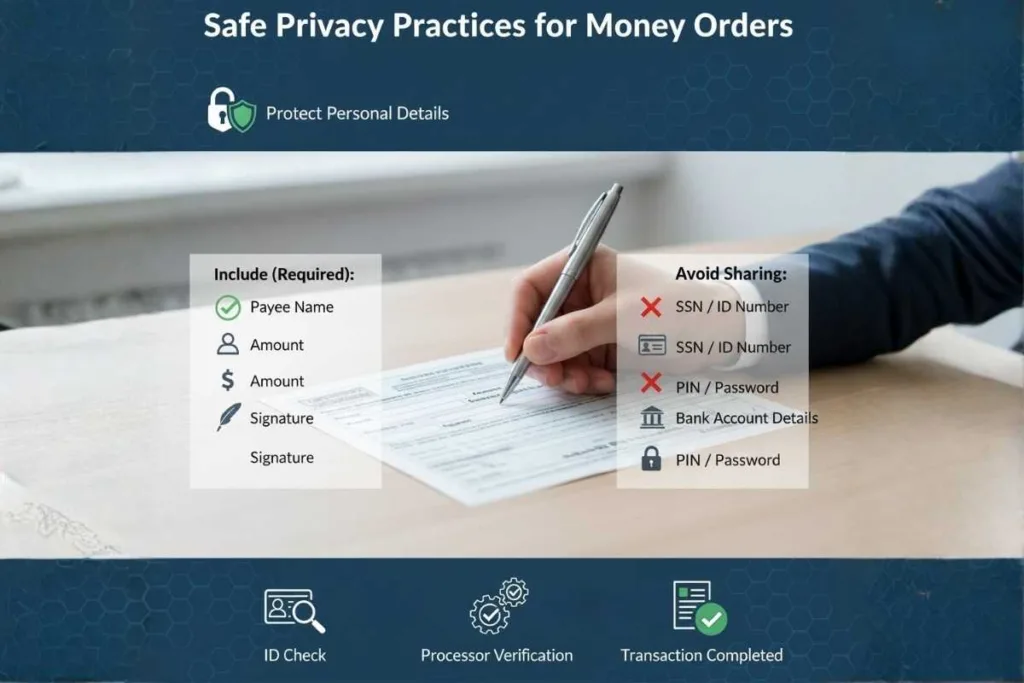
A Money Order is a prepaid payment instrument that requires accurate information to process safely. Customers must protect personal details because issuers, processors and service providers verify information before completing a transaction.
Understanding what to include, what to avoid and how verification works improves consumer safety and reduces fraud risk. Customers can also learn more about secure financial services through the Order Express homepage.
Order Express retains identification and transaction records for at least five years in accordance with federal record retention requirements under 31 CFR 1010.430.

Why Privacy Matters When Using A Money Order
- It prevents exposure of sensitive data.
- It reduces identity theft risks.
- It ensures accurate processing across different issuers.
- It supports safe transactions with financial service providers such as Order Express.
Customers value privacy when they complete transactions with any payment tool. A Money Order is a secure financial instrument, but customers should still protect personal information. Strong privacy habits build trust and reduce exposure to misuse or fraud. Order Express encourages customers to understand which details matter, why they matter and how to share information safely.
How Privacy Protects Every Step Of The Process
Privacy awareness helps customers avoid sharing excess information. Customers should share only the details needed to complete the transaction. These safe habits reduce the chance of identity theft. They also help customers stay focused on what financial institutions must follow under federal expectations such as those outlined in FDIC Consumer Resource Center guidance. This guidance applies to financial institutions and not to customers. This approach keeps customers informed and safe while avoiding confusion.
Order Express Helps Customers Stay Informed
Order Express provides clear guidance for customers who use financial services. The goal is to support safe payments, not to replace any federal requirements. Customers can rely on Order Express for transparent service information. They can ask questions at any time. The team helps customers understand what information belongs on payment forms and what information remains private. Many customers also use related services such as Order Express money transfer services to manage financial needs confidently.
Essential Information Customers Should Provide
Customers must complete the payee name accurately. They should also complete the purchaser section as required. This includes writing their name clearly. These details help payment processors deliver funds to the intended recipient. Customers should review entries before submitting any payment form. This practice keeps the instrument secure and prevents delivery errors. Consumers can learn more about safe financial behaviors through resources published by the Consumer Financial Protection Bureau.

What Information To Avoid When Filling Out A Money Order
This section focuses on safe practices for information that customers should avoid placing on payment documents. These practices protect customer privacy without conflicting with legal or processing needs. They apply broadly and support secure interactions with any financial service provider. Customers can also explore additional service options at Order Express check cashing services.
How To Keep Information Safe
- Write only the required details such as payee name and purchaser name.
- Avoid sensitive identifiers such as Social Security numbers.
- Store the instrument securely and keep the receipt.
- Verify unusual information requests before sharing anything.
- Ask a provider like Order Express for help when instructions are unclear.
Avoid Placing Sensitive Identification Details On The Form
Customers should avoid placing Social Security numbers on a payment document. They should never write a full date of birth. These items can expose customers to identity theft. The form never needs a bank account or routing number. Customers should avoid placing government identification numbers on the document. They should only show identification to authorized personnel when required. Identification requests are based on service requirements and transaction thresholds and do not require customers to write identification details on the money order itself. Financial institutions must follow regulations such as 31 CFR 1022.210 Customer Identification Program when verifying customer identity, which helps safeguard the broader financial system.
Keep Personal Contact Details Private Unless Required
Customers should avoid writing an email address or personal phone number on the form unless a provider specifically asks for it. They can still complete a safe transaction without placing this information on the instrument. If a form includes an optional address line, customers may use a mailing address instead of a home address. This practice protects privacy without limiting service access. These habits help customers stay secure while meeting all processing needs.
Use The Memo Section Responsibly For Clarity Only
Customers should write brief notes in the memo field. Short descriptions help identify a purpose, but customers should not place sensitive data in that field. They should avoid writing full account numbers or personal identifiers. A short reference or label is enough. This helps the sender track the payment while keeping privacy intact. Additional support for filling out financial documents is available through Order Express other services.
Only Sign Where The Form Instructs You To Sign
Customers should place their signature only in the required field. A second signature increases exposure to forgery. Customers should review the placement of every detail before completing the form. They should sign clearly and avoid writing their name in extra sections. This action confirms authorship and prevents misuse of the document. Clear signatures support efficient processing and improved security.
Protect The Document Before And After Payment
Customers should store the instrument securely until they deliver or mail it. They should avoid leaving it visible in public places. Once submitted, they should keep the receipt in a safe location. The receipt helps track the transaction and confirms the details. Customers should avoid sharing images of the receipt online. These habits protect financial information and support safe usage of the instrument. Institutions follow oversight frameworks like the FFIEC BSA AML Manual Appendix to maintain secure practices in financial environments.
Understand The Difference Between Required Details And Unnecessary Details
Some services may require identification when customers exceed specific transaction thresholds. Customers should understand that these requirements do not relate to the information placed on the instrument itself. They should follow provider instructions when presenting identification. They should avoid adding that information to the document. Financial institutions must comply with reporting expectations outlined in regulations such as 31 CFR 1010.311 Currency Transaction Reporting.
Cash transactions that exceed ten thousand dollars in a single business day require the institution to file a report with federal regulators within the required filing timeframe. In these situations, institutions may request source of funds documentation as part of their compliance review. These requirements apply to financial institutions and do not require customers to add this information to the money order.
For transparency, certain transaction thresholds may trigger institutional review. Cash transactions over ten thousand dollars in a single business day may require a Currency Transaction Report. Unusual transaction patterns may result in additional internal review. Federal law prohibits Order Express staff from disclosing whether a Suspicious Activity Report has been filed.
Customers should not attempt to divide transactions into smaller amounts to avoid reporting thresholds, as this activity may be reviewed by financial institutions for compliance purposes.
Avoid Placing Third-Party Information On The Form
Customers should avoid listing another person’s details outside of the payee field. They should not write internal notes about another individual. These entries can expose private information to others. The instrument needs only the payee name. Customers protect themselves and others by following simple, clear information rules. This practice strengthens privacy and prevents confusion.
Stay Alert For Common Red Flags
Customers should avoid sharing information with individuals who request unusual details. Scammers may ask for unnecessary identifiers or pressure customers for personal data. Customers should confirm requests with a trusted provider before sharing information. They should avoid filling out documents in front of strangers. Institutions follow regulatory expectations such as those outlined in FinCEN guidance for money services businesses to identify and deter suspicious activity in the financial system.
Order Express Empowers Customers With Clear Support
Order Express offers service guidance whenever customers need help understanding privacy practices. Representatives explain which fields matter and which do not. They help customers confirm safe practices before completing a payment. This support builds confidence and enables customers to complete secure transactions. Customers can ask questions at any local service point or by contacting a team member online. For assistance, customers may also reach the service team through the Order Express contact page.
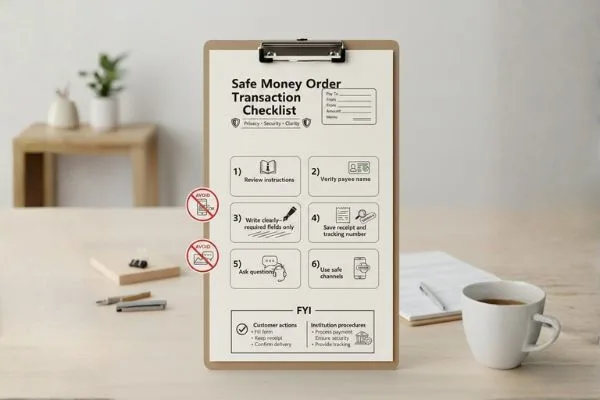
How To Complete A Transaction Safely And Confidently
Customers should follow simple steps to complete a safe payment. These steps support privacy, security and clarity in every transaction.
Review Instructions Before Filling Out The Form
Customers should read guidelines before writing anything. This prevents errors and protects privacy. Reviewing instructions keeps customers aware of required and optional fields. This step supports a smooth interaction with the service provider. Consumers can also review general safety information published by the FDIC Consumer Resource Center for broader financial awareness.
Check The Payee Information Carefully
Customers should write the correct payee name in the designated field. They should confirm spelling and accuracy. This step ensures funds reach the intended person or business. Customers should not include extra personal data in this area. A clear entry keeps the instrument secure and professional.
Use Clear Handwriting For Required Details
Customers should print details clearly. Legible entries prevent delays and processing errors. Customers should not add unrelated notes in blank sections. They should avoid writing additional identifiers. This careful approach protects information and supports efficient service.
Keep Receipts And Confirmation Documents
Every customer should save the receipt after submitting a payment. The receipt includes a tracking number and transaction details. Customers should store it securely. They should present it when requesting support or checking transaction status. Saving the receipt gives customers peace of mind and improves service accuracy.
Ask Questions During The Process
Customers can raise questions at any step. Order Express encourages open communication. Representatives help explain privacy practices and service expectations. Customers should request clarification if anything seems unclear. Asking early prevents confusion and improves transaction confidence.
Support Safe Habits Beyond The Form
Customers can protect privacy by using safe communication channels. They should avoid sending payment images through unsecured apps. They should avoid sharing personal data through unverified messages. And they should verify they speak with an authorized provider before giving information. These habits strengthen security in every financial interaction.
Customers receive a separate disclosure sheet at the time of the transaction that explains applicable terms, privacy information and required notices.
Understand The Limits Of Customer Responsibility
Customers control the information they place on the document. They also control how they store receipts and hand off the payment. Also they cannot change required service procedures. They should follow instructions from trusted financial service providers. This balance helps customers stay safe while institutions follow compliance obligations required under 31 CFR 1022.320 Suspicious Activity Reporting, which applies only to financial institutions and not to customers.
Order Express Supports Secure And Private Payment Experiences
Protecting your information starts with simple, consistent habits every time you use a payment document. When you limit unnecessary details, store receipts securely and follow clear instructions, you reduce risk and strengthen your financial safety. Order Express supports every customer with guidance that keeps each step clear and confident. You can ask questions, verify best practices and complete transactions without exposing sensitive information. Privacy protection is ongoing, so use these habits whenever you prepare a payment. Your attention today helps safeguard your financial activity tomorrow.
Take the next step with confidence and choose a secure, reliable service partner. Start your next transaction with Order Express and experience payment solutions designed for safety, clarity and customer support.
Disclaimer: This article provides general educational information. It does not replace federal requirements or Order Express policies. Customers should follow all official instructions during any transaction.
Frequently Asked Questions
Q: What information should I avoid writing on a money order?
A: Avoid Social Security numbers, dates of birth, bank details and ID numbers. Write only required information. Keep extra personal data off the document to reduce identity theft risks.
Q: How can I keep my money order secure before sending it?
A: Store it in a safe place, avoid leaving it visible, keep the receipt and do not share images online. Deliver it directly or mail it securely.
Q: What are the safest details to include on a money order?
A: Include the payee name, your name and a short memo if needed. Confirm accuracy, use clear handwriting and sign only where instructed.
Q: How do I prevent fraud when filling out a money order?
A: Follow these steps:
- Share only required details
- Avoid sensitive numbers
- Verify unusual requests
- Keep documents secure
These habits reduce exposure to scams.
Q: When should I contact a provider like Order Express for help?
A: Contact the provider when instructions are unclear, someone requests unusual information or you need confirmation about required details. Support teams help ensure secure, correct completion.

John is a Content & SEO Specialist who enjoys breaking down complex financial topics, like cross-border payments and money transfers, into content that’s easy to understand. He focuses on creating practical, search-driven content that helps people find answers and make informed decisions.


