


An in-store money transfer follows a regulated, verification-based process designed to protect customers and prevent fraud. Order Express operates as a licensed money transfer provider in the United States and delivers services through its nationwide network of locations, supported by its official website. Each transaction follows compliance standards that support secure transfers and customer protection.
Customers verify their identity, confirm recipient details and review required disclosures before payment. These steps reduce errors, support internal controls and help prevent financial misuse. Verification requirements vary based on transaction details and activity patterns.
Order Express follows established compliance procedures aligned with financial regulators. Trained associates guide customers through each step and explain fees, timing and delivery expectations. Understanding the process helps customers prepare, verify details accurately and complete transactions with confidence.

Understanding The In-Store Money Transfer Experience
An in-store visit follows a structured process designed to protect customers and support accurate transactions. Associates guide customers from start to finish. Each step focuses on clear communication, verification, and responsible service delivery.
Financial institutions in the United States operate under federal oversight, including guidance issued by the FinCEN guidance for money services businesses.
Customers using in-store services often access options described on the Order Express money transfer services page, which explains available transfer methods and destinations.
How A Money Transfer Transaction Begins
A customer starts by visiting a participating Order Express location. A trained associate welcomes the customer and asks about the transaction. The associate explains the process before collecting information.
The customer provides sender information and recipient details. The recipient’s full legal name must match identification used at pickup. Accurate details help avoid delays and collection issues.
The associate confirms the destination and payout location. This confirmation ensures funds reach the intended location. Customers should review details carefully before approval.
This step supports secure remittance services. Clear communication reduces errors and misunderstandings. Customers remain in control throughout the process.
Information You Should Bring Before Visiting
Preparation helps customers complete transactions efficiently. Customers should bring valid identification when applicable. Identification requirements vary based on transaction details and internal review factors. Financial institutions maintain customer identification programs under 31 CFR §1022.210 Customer Identification Program requirements. Financial institutions must retain customer identification and transaction records for at least five years, as required by federal recordkeeping rules.
Customers should also know the amount they want to send. They should confirm how the receiver plans to collect funds. This preparation speeds the transaction. Associates may ask clarifying questions during the process. These questions support compliance and accuracy. Customers should answer honestly and clearly.
Order Express applies internal policies consistently during this stage. These policies protect customers and the financial system. Staff members follow them at every location.
Fees, Disclosures And Money Transfer Timing
Transparency remains a key part of the in-store experience. Customers receive clear information before making payment. These disclosures help customers understand costs, timing and delivery expectations.
Associates provide a standalone disclosure sheet when required and review it with the customer before payment.
Separately, the Consumer Financial Protection Bureau consumer resources describe consumer protection principles for financial services.
How Fees And Exchange Information Work
Before payment, customers receive a written pre-payment disclosure. This disclosure shows the send amount and applicable transfer fees. It also includes exchange rate information when relevant.
The disclosure explains the total cost of the transaction. It also shows the amount expected to be delivered to the receiver. Customers can review this information carefully.
Customers may ask questions before proceeding. They can decide not to continue after reviewing the disclosure. This step supports informed financial decisions.
Fees vary based on destination and service options. Associates explain costs clearly and accurately. Transparency builds trust and confidence.
When The Receiver Can Expect Funds
Delivery timing depends on destination and payout method. Some transactions complete quickly while others require more time. The receipt shows the expected availability date.
Customers receive a printed receipt after payment. The receipt confirms transaction details and timing. Customers should keep it for reference.
The receipt also supports tracking and error resolution. It provides proof of transaction completion. Clear timing reduces confusion for senders and receivers.
This stage reinforces accountability and clarity. Customers know what to expect after sending funds. Accurate timing supports positive customer experiences.
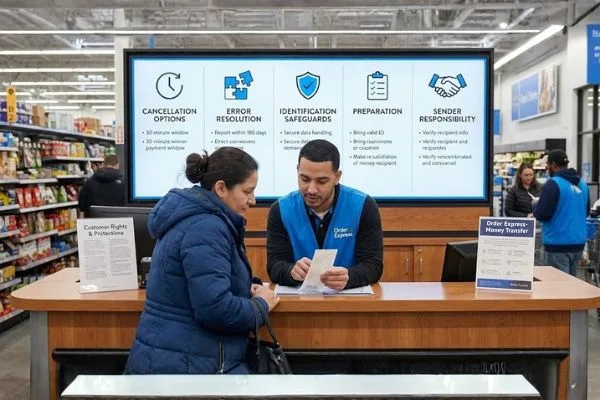
Customer Rights And Protections Explained
Order Express emphasizes customer protection throughout the transaction. Customers receive clear rights related to cancellations and error resolution.
Customers may also contact the customer support hotline at 1-800-444-3010, option seven, for assistance with transaction concerns. These protections apply after payment and reflect broader consumer education principles published by the FDIC Consumer Resource Center.
Cancellation Options And Error Resolution
Customers may request a cancellation within a limited timeframe. Associates explain eligibility during the transaction. This option provides flexibility and reassurance.
Customers can also report errors if funds do not arrive as disclosed. The company investigates reported issues promptly. Resolution follows established procedures.
Customers should report concerns as soon as possible. Keeping receipts helps speed up the review process. Prompt action supports effective resolution.
These protections reflect responsible financial services practices. Customers benefit from clear processes and accountability. Order Express handles each case carefully.
Identification And Safety Safeguards
Identification requirements help protect customers and transactions. Associates request identification based on transaction characteristics. These safeguards reduce fraud and misuse and support secure service delivery.
For higher-value transactions of three thousand dollars or more, associates may require two separate, valid forms of identification to complete verification.
Separately, financial institutions have federal reporting obligations under 31 CFR §1010.311 Currency Transaction Reporting requirements.
Customers should provide accurate and complete information. Associates verify details before processing transactions. This approach supports lawful service delivery.
Order Express applies internal safeguards consistently. These safeguards operate independently from federal regulatory requirements. Both remain separate and distinct.
Clear identification practices protect both sender and receiver. They also help maintain system integrity. Customers benefit from a secure process.
Prohibited Structuring And Suspicious Activity Monitoring
Federal law prohibits structuring to evade reporting requirements. Financial institutions may review suspicious activity at or above two thousand dollars and file Suspicious Activity Reports when required. Attempts to structure transactions to avoid review are prohibited.
Why Customers Choose In-Store Services With Order Express
Many customers prefer in-store services for personal support. Associates provide guidance and answer questions. This interaction builds trust and understanding.
In-store services also help first-time senders. Customers receive explanations about payout options and requirements. This guidance reduces mistakes.
Order Express locations offer convenience and reliability. Customers also access related financial solutions, including check cashing services.
Personal interaction helps customers feel informed. Associates clarify fees, timing and expectations. Customers leave knowing what happens next.
Preparing For A Smooth Visit
- Preparation improves the in-store experience. Customers should verify recipient details before arriving. They should also bring required identification when applicable.
- Knowing the expected amount and destination helps speed the process. Customers can ask associates about options and timing. Clear questions support better decisions.
- Customers should plan time for review and confirmation. Reading disclosures carefully matters. This step ensures understanding before payment.
- Preparation benefits both sender and receiver. It supports accurate processing and timely delivery. A prepared visit leads to smoother transactions.
Understanding Your Role As A Sender
- Senders play an important role in the transaction. Providing accurate information remains essential. Errors can delay or prevent payout.
- Senders should communicate clearly with receivers. Sharing receipt details helps with pickup. Clear communication reduces issues.
- Senders should keep all transaction records. Receipts support tracking and customer service requests. Documentation matters.
- Responsible sending supports successful outcomes. Customers who stay informed experience fewer issues. Awareness improves results.
Conclusion
An in-store visit with Order Express gives customers confidence, clarity and personal support. Each step, from sharing details to reviewing disclosures, protects accuracy and transparency. Customers stay informed about fees, timing and delivery expectations before paying. Clear receipts and defined rights support accountability after sending funds.
Bringing accurate information and asking questions helps avoid delays. In-store associates guide customers through every stage and explain options clearly. This structure supports secure, responsible transactions for senders and receivers. When customers understand the process, they make better decisions and experience fewer issues.
Visit an Order Express location today or reach out through the Order Express contact page to complete your transaction confidently.
Disclaimer: This content provides general informational guidance only. It does not replace official Order Express policies or applicable federal requirements. Transaction conditions may vary by location and circumstance.
Frequently Asked Questions
Q: What Should I Bring For An In-Store Money Transfer?
A: Bring:
- Valid identification when required
- Receiver’s full legal name
- Destination and payout details
Preparation speeds up the transaction.
Q: When Will The Receiver Get The Funds?
A: Timing depends on destination and payout method.
- Check the receipt
- Review the expected availability date
Ask the associate for clarification.
Q: Can I Cancel An In-Store Transfer After Payment?
A: Yes, in some cases.
- Act within the allowed timeframe
- Keep your receipt
Associates explain eligibility during the transaction.
Q: How Do I Know The Total Cost Before Sending Money?
A: You receive a pre-payment disclosure showing:
- Send amount
- Fees
- Exchange information
Review it before paying.
Q: Why Do Associates Ask For Identification?
A: Identification helps:
- Protect customers
- Prevent fraud
- Support secure transactions
Requirements depend on transaction details.

John is a Content & SEO Specialist who enjoys breaking down complex financial topics, like cross-border payments and money transfers, into content that’s easy to understand. He focuses on creating practical, search-driven content that helps people find answers and make informed decisions.


