


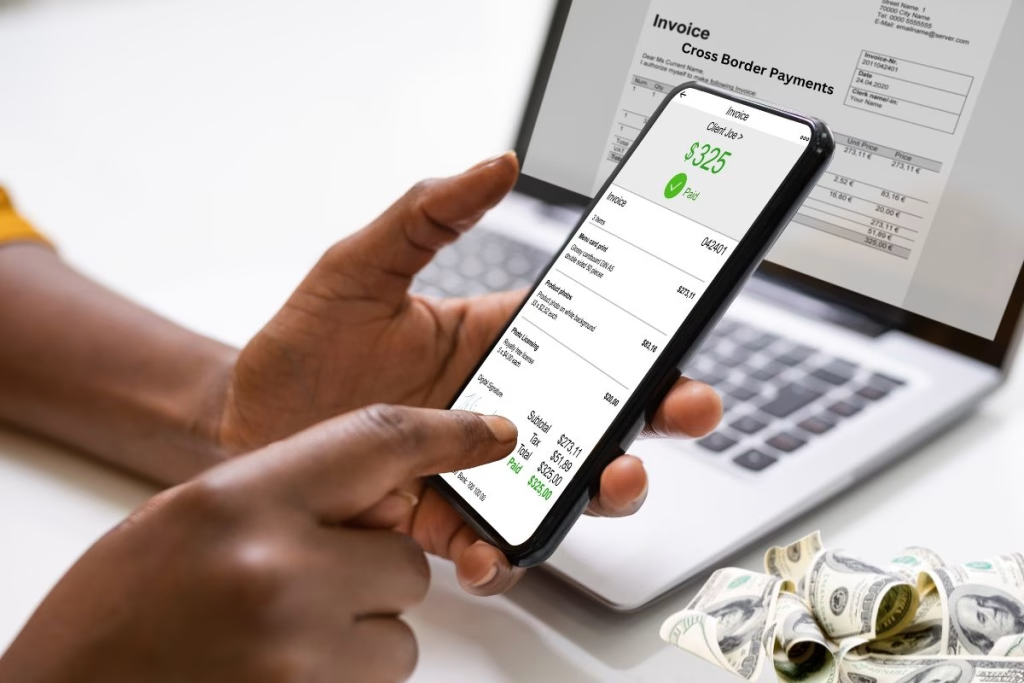
Cross Border Payments have become easier and more accessible thanks to modern tools, smart technology, and support from financial institutions. Businesses now have more ways to move money quickly and reliably across borders. With the right approach, payments can be smooth, simple, and well-suited for global growth.
This blog highlights eight common challenges in Cross Border Payments and shows how to overcome them with practical steps. You’ll learn how to improve speed, boost reliability, and manage different rules without slowing down your operations. Fintech platforms are playing a key role in this progress by offering smarter, more flexible solutions for global payments. By using the right tools, your business can expand confidently and reach new markets with ease.
Optimizing the Cross Border Payments Process
This section focuses on improving the efficiency, speed, and visibility of cross border payments. It includes topics such as reducing fees, increasing transparency, leveraging modern technology, and choosing the right payment provider to streamline international transactions.
How to Make Cross Border Payments Easier for Your Business
Cross border payments often feel slow, expensive, and complex. High transaction fees, long settlement times, and regulatory hurdles can disrupt your cash flow and delay global deals.
Fintech solutions are changing how businesses manage international transactions. These tools allow for faster transfers, better foreign exchange rates, and real-time payment tracking. They also help reduce errors, simplify compliance, and strengthen data security.
Managing currency conversion, handling regulations, and protecting customer data are easier with modern cross border payment tools. Businesses no longer need to rely on outdated banking systems that add delays and costs. If your business struggles with slow payments or high international fees, it’s time to explore better solutions. Choosing the right provider can reduce friction, save money, and give you more control over global operations.
Order Express helps businesses make smarter, faster, and more cost-effective cross border payments. Stay competitive in the global market by modernising your payment process today.
Understand How Intermediary Bank Fees Work in Cross Border Payments
Cross Border Payments often move through several banks before reaching the final destination. Each bank helps complete the transfer process. These banks may apply small service fees for handling the payment along the way. Knowing how this works helps you choose the most efficient route.
Modern solutions now offer more direct paths that reduce the number of banks involved. This can lead to faster and more predictable Cross Border Payments. By using platforms with clear pricing, you can better plan and track your international transactions.
Know What to Expect with Card Fees in Cross Border Payments
When customers use cards from other countries, some small service fees may apply. These help process international payments safely and quickly. These may include currency conversion and card network processing fees.
Understanding these fees helps businesses make informed choices when accepting cross-border card payments. Many payment platforms now offer better transparency and competitive rates. With the right setup, Cross Border Payments through card networks can be smooth and efficient.
Accepting international cards expands your reach and supports global customer satisfaction.
Improve Visibility and Control in Cross Border Payments
Clear and consistent tracking is essential for businesses sending or receiving Cross Border Payments. When visibility is limited, it becomes harder to manage costs, confirm delivery, and build trust with global partners. Traditional payment systems often lack real-time updates, detailed breakdowns, or accurate status tracking across different currencies and jurisdictions.
Complex fee structures can further obscure the true cost of international payments. Businesses may not see the total amount deducted from the payment, the actual exchange rate used, or the status of the transaction until it’s complete. This makes comparing providers difficult and planning cash flow more challenging.
Limited transparency can affect operations in several ways:
- Accounting becomes harder: Reconciliation takes longer when actual amounts differ from what was expected.
- Cash flow planning is disrupted: Businesses can’t accurately forecast inflows and outflows without timely payment data.
- Customer and partner trust may decline: Hidden fees or short payments create confusion and can damage relationships.
Modern payment solutions are solving these issues by offering greater transparency and real-time visibility:
- End-to-end payment tracking keeps senders and receivers informed every step of the way.
- Real-time notifications reduce the need for follow-up and manual status checks.
- Upfront fee and exchange rate visibility ensures no surprises in settlement amounts.
- API-based integrations allow tracking to be embedded directly into your existing finance tools.
With the right provider, Cross Border Payments become more predictable, traceable, and easier to manage, supporting smoother operations and stronger global relationships.
Speed Up Cross Border Payments with New Technology
Cross Border Payments are becoming faster thanks to modern technology and better global systems. In the past, payments often moved through several banks, which could slow things down. Time zones, manual steps, and security checks added extra time to the process. But today, smarter tools are helping businesses move money across borders more quickly.
Real-time payment systems are growing, allowing some international transfers to settle in just minutes. This reduces wait times and helps keep your business running smoothly. Around-the-clock processing is also making a big difference by overcoming time zone challenges.
Solutions like SWIFT Global Payments Innovation offer real-time tracking for better payment visibility. You can now see where your funds are and when they will arrive. This added transparency builds trust and supports faster decision-making. Projects like Nexus, led by global organizations, are working to connect local real-time systems into one seamless network.
Faster Cross Border Payments mean better cash flow, stronger supplier relationships, and more reliable operations. With the right partners and tools, businesses can avoid delays and focus on growth.
Choosing the Right Payments Provider for Cross Border Transactions
Cross border payments involve added risks because of different parties, countries, and regulations. Choosing the right provider is key to protecting your business and customers. Look for a payments provider that offers strong security across all levels. A multi-layered approach helps prevent fraud and keeps data safe.
Here are the top features to prioritize:
- Advanced fraud detection: Choose a provider that uses AI and machine learning. These tools scan transactions in real time and spot suspicious activity before money moves.
- Real-time monitoring and risk checks: Instant transaction reviews help stop fraud early and reduce your financial risk.
- Strong KYC and AML processes: Know Your Customer (KYC) and Anti-Money Laundering (AML) checks ensure your business stays compliant with global rules.
- Tokenization of sensitive data: A good provider replaces personal data with secure tokens. This adds another layer of identity protection to your process.
Working with a provider that offers these tools reduces risk, avoids regulatory problems, and keeps your cross border payments secure and efficient.
Understanding Currency Exchange Risks in Cross Border Payments
Handling currency exchange is a big challenge in cross border payments. Shifting exchange rates can eat into your profits. Even small changes in rates may impact how much money you gain or lose on a deal.
One of the biggest risks is transaction timing. Exchange rates might shift after a deal is made but before the payment happens. This can result in you paying more or receiving less than expected, which affects your bottom line.
To reduce this risk, consider using a multi-currency business account. These accounts let you accept and send money in different currencies. You can also hold funds and wait to convert them when the exchange rate works in your favor.
Managing currency well is key to staying profitable in global transactions. Smart planning and the right tools can help protect your business with strong financial education support.
How Businesses Can Manage Cross Border Payments with Confidence
Cross Border Payments can offer many advantages for growing businesses, especially when handled with the right tools and strategies. Clear pricing, faster settlements, and efficient processes make it easier for companies to compete globally. For small and medium-sized businesses, staying in control of payments helps maintain smooth operations and smart financial planning.
Using platforms that provide simple and transparent fee structures reduces guesswork. You always know where your money is going and when it arrives. Fintech solutions can cut out extra steps and give you better visibility into your transaction flow. This saves time, improves accuracy, and keeps things moving efficiently.
It also helps to combine your payment channels when possible. Consolidating flows can reduce delays and streamline back-end processes. Businesses with a high volume of payments can often work with providers to access more favorable terms.
Offering digital wallets or other modern payment options can support customer preferences and help reduce friction at checkout. These choices give customers flexibility while keeping costs low for your business. With smart planning and the right partners, Cross Border Payments can become a valuable part of your growth strategy.

Navigating Regulations and Market Challenges in Cross Border Payments
This section covers the legal, regulatory, and infrastructural barriers businesses face when making cross border payments. It also explores how compliance, data privacy, cultural preferences, and fintech innovations impact payment accessibility across various global markets.
Stay Ahead by Managing Compliance in Cross Border Payments
Cross Border Payments must follow important global rules to ensure transactions are safe and trustworthy. These include Know Your Customer checks and Anti-Money Laundering laws. Banks and providers use advanced tools to meet these rules without slowing down payments.
Strong compliance systems aligned with financial policy help protect businesses and build trust across global markets. Choosing partners with solid compliance processes helps your payments run smoothly. This also reduces risk and keeps operations aligned with international standards.
With the right support, compliance becomes a strength in your global payment strategy.
Simplify Global Compliance in Cross Border Payments
Cross Border Payments must meet various rules depending on the country where the payment is sent or received. These include anti-money laundering checks, know your customer requirements, sanctions screening, and foreign exchange controls. Regulatory frameworks are continually evolving, requiring ongoing monitoring and adaptation. Data privacy laws, such as GDPR, also impact compliance approaches with strict requirements for how personal data is handled and protected.
Each country may have different standards, which can create conflicting requirements. For example, KYC procedures that satisfy one country’s rules may not meet another’s. Thankfully, smart tools now help manage these differences efficiently. Automation allows businesses to complete KYC and AML checks for multiple countries in one place. This speeds up onboarding and reduces manual work across markets.
RegTech solutions also help improve compliance while saving time and reducing the need for manual review. Working with trusted providers who have the right licenses across regions is another smart move. These partners handle regulatory requirements and offer guidance when entering new markets. With the right tools and understanding, Cross Border Payment can remain compliant and efficient while supporting global business growth.
How Data Privacy Rules Impact Cross Border Payments
Handling personal data across countries adds legal challenges to cross border payments. Strict privacy laws shape how businesses must operate.Laws like the EU’s GDPR apply even to companies outside Europe. For U.S. customers, Order Express also complies with the privacy safeguards required by the Gramm-Leach-Bliley Act (GLBA). Additional ITIN guidance is especially helpful for immigrant financial access. If you handle EU residents’ data, you must follow GDPR rules.
You need legal reasons to transfer data overseas. Most use tools like Standard Contractual Clauses or Binding Corporate Rules. But recent court decisions demand even more care in how these are applied.
Security is also a must. Companies should minimize the data they collect, encrypt it, and control who can access it. In many cases, getting clear consent from users is required.In Asia, countries like Singapore enforce similar rules. Data transfers must ensure protection equal to what’s required by local laws.
Ignoring these rules risks big fines and damage to your brand. Some countries even require companies to store data locally, which adds more complexity.
To stay compliant, businesses should:
- Map all cross border data movements.
- Use approved transfer tools like SCCs and BCRs.
- Set up systems to manage user consent properly.
- Keep vendor contracts updated to reflect new legal terms.
- Protect data with encryption and limited access.
- Prepare breach response plans in case something goes wrong.
- Appoint a Data Protection Officer if your data use is large-scale.
- Audit your data handling regularly to stay compliant.
Cross border payment rely on trust. Meeting privacy regulations helps build that trust and protects your business from legal risks.
Challenges in Reaching Global Markets Due to Infrastructure Gaps
Many growing markets still lack strong financial infrastructure. This makes cross border payment harder to manage effectively. Limited access to banks and underdeveloped payment systems slow down international transactions. In rural areas, internet issues and fewer smartphones make digital payments even more difficult.
These barriers make it tough to connect with customers and partners in remote regions. Businesses may lose opportunities because people in these areas can’t easily make or receive payments. On top of that, strict or unclear local rules can delay the growth of financial technology. This slows down progress in building better payment systems.
Understanding these challenges helps businesses plan smarter. Stay informed with global remittance trends. Choosing partners like Order Express, who understand local limits, can make cross border payments smoother and more reliable.
Why Cash Still Leads in Some Global Markets
In many emerging markets, cash is still the main way people pay. This affects how cross border payments work. Cultural habits often favor cash over digital methods. Many people feel safer using physical money they can see and touch.
There’s also a lack of trust in online payment systems. Some worry about fraud or don’t understand how digital payments work. Low financial literacy and lack of immigrant rights awareness add to the problem. Without the right knowledge, people may avoid using mobile or online payment tools.
For businesses, this means adapting to local preferences is key. To succeed with cross border payments, it’s important to respect how people prefer to pay and find ways to bridge the gap.
How Fintech Is Closing the Infrastructure Gap in Cross Border Payments
Fintech is helping solve major payment challenges in emerging markets. These innovations make cross border payment faster and more accessible.
- Mobile money platforms: These services allow users to send, receive, and store money using mobile phones. They don’t require traditional bank accounts and work well in areas with limited banking access.
- Digital wallets and superapps: Easy-to-use apps offer fast, real-time payments through smartphones. They simplify transactions and help people access services that traditional banks may not provide.
- Instant and real-time payments: Many countries are building systems that process payments in seconds. This improves speed and reduces waiting times for international transfers.
- Alternative credit scoring: Fintechs use data like mobile usage and transaction history to check creditworthiness. This helps people without formal credit records access financial services.
- Expanding agent networks: Fintech companies and partner banks create local agent networks. These shops provide basic banking services in areas with few or no bank branches.
These solutions are making cross border payments smoother by improving access, trust, and transaction speed, even in regions with limited infrastructure.
Conclusion
Overcoming cross border payment difficulties starts with understanding the key challenges and adopting smart, tech-driven solutions. From fee transparency and currency management to real-time tracking and regulatory compliance, every improvement strengthens your global operations. By using trusted fintech platforms, you gain faster processing, clearer visibility, and greater control over your international transactions.
Whether you’re a growing business or expanding into new markets, success depends on reducing friction and building reliable payment systems. With the right tools and partners like Order Express, cross border payments become a growth driver, not a roadblock. Now is the time to act, simplify your global payment strategy, and unlock better opportunities worldwide.
Disclaimer: This guidance is aligned with the Order Express BSA/AML Corporate Compliance Manual v25.1 (15 January 2025). Order Express is a registered Money Services Business. All services are subject to BSA/AML, OFAC, and other applicable regulations.
FAQs
What is a cross border payment?
A cross border payment is a financial transaction between parties in different countries.
Why do cross border payment takes longer than domestic ones?
They pass through multiple banks, time zones, and security checks, which can cause delays.
How can I reduce fees in cross border payment?
Use fintech platforms with transparent pricing and fewer intermediaries.
Are cross-border payments secure?
Yes, especially when using providers with strong fraud protection and encryption systems.
What affects currency exchange in cross border payments?
Exchange rates can shift daily, affecting how much money is sent or received.

Alvin is a Content and SEO Specialist who creates clear and helpful content about money transfers and payment systems. He focuses on making complex topics easy to understand so readers can learn how these services work in everyday situations.


